Name/Title
"Eau de Cologne" soap bar, wrappedEntry/Object ID
2025.1.58Description
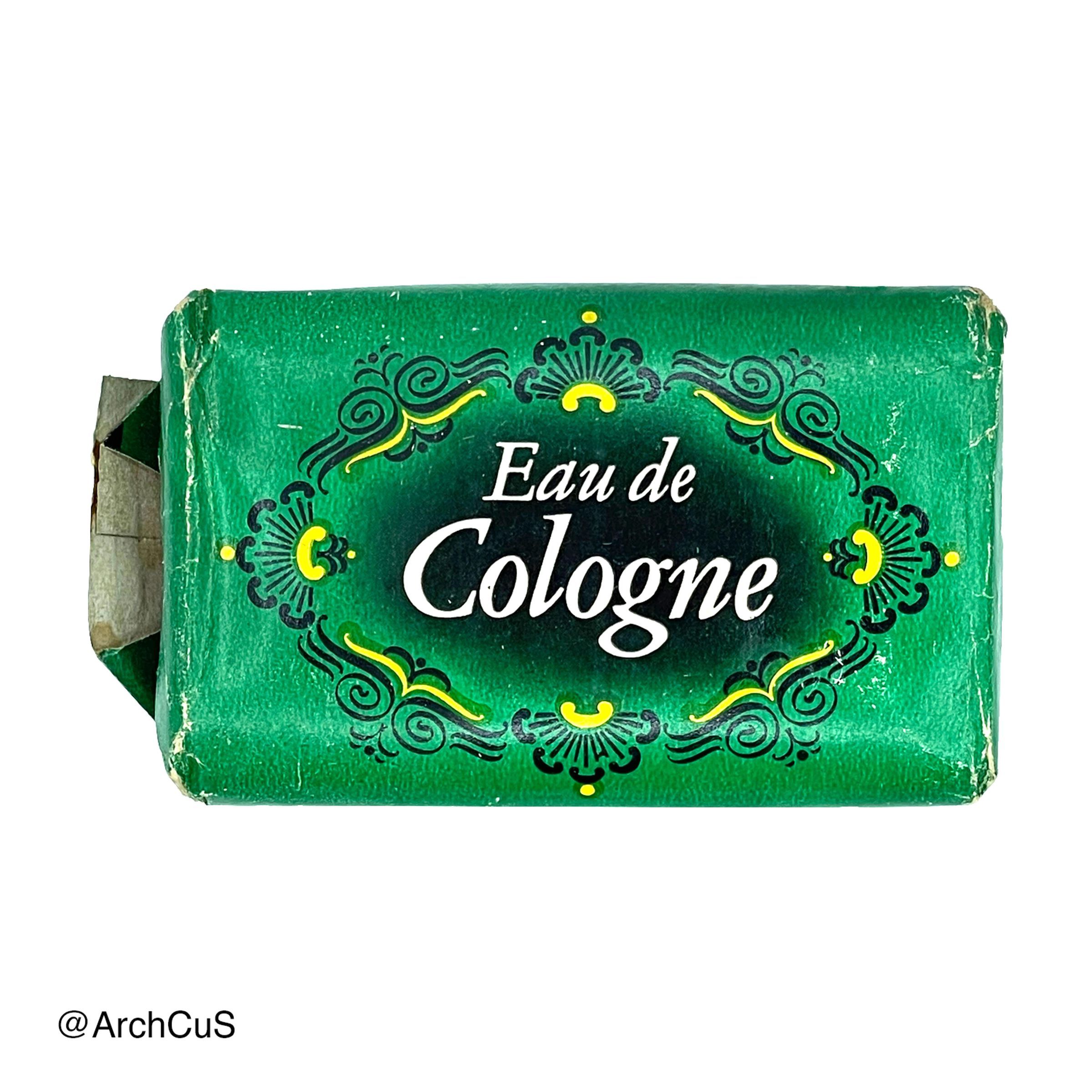
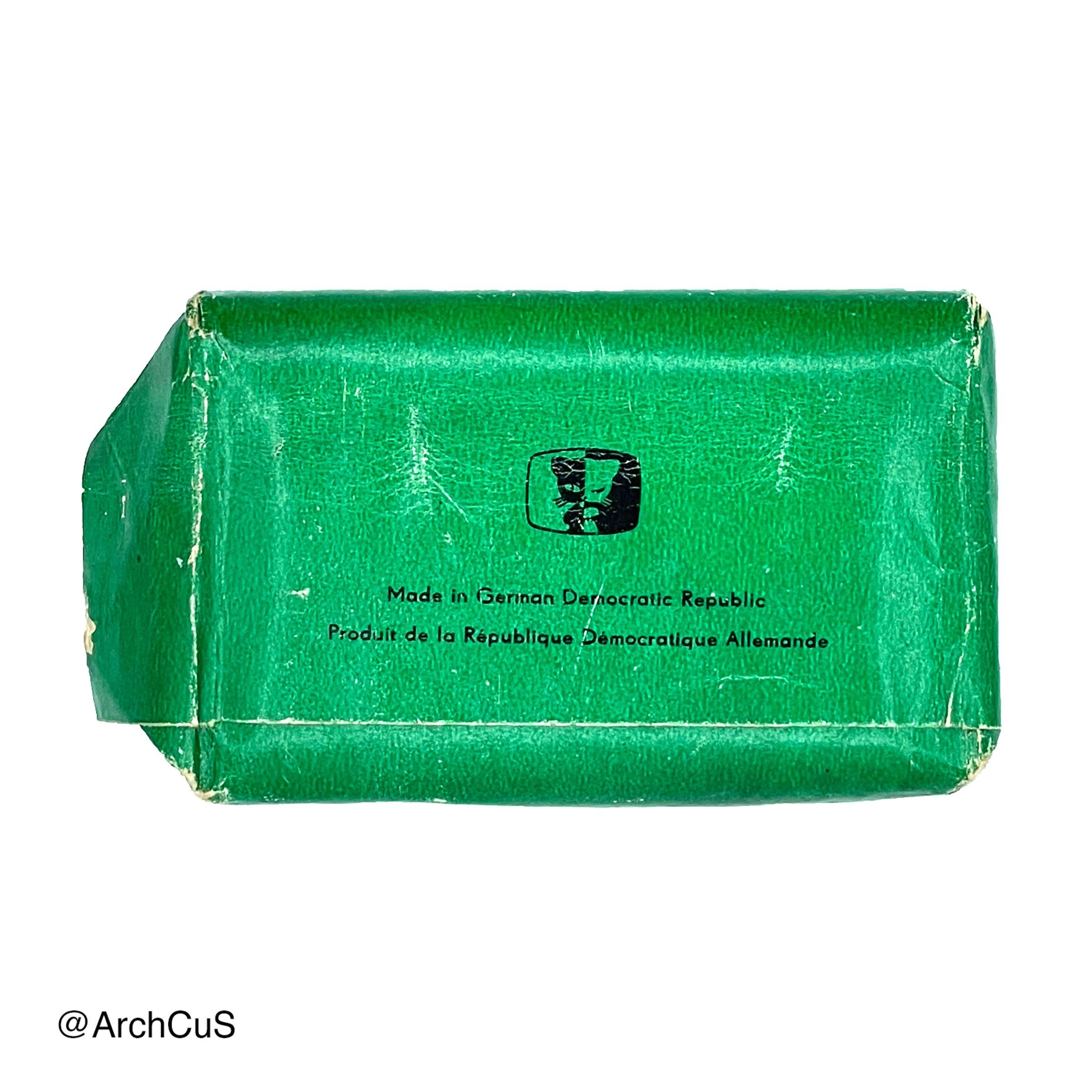
A rectangular bar of toilet soap in its original wrapper, unused. The front of the wrapper is glossy green with an ornate black-and-yellow scrollwork cartouche framing the words "Eau de Cologne" in white script. The reverse carries a small monochrome emblem (a stylized cat face/head in a square device) above bilingual country-of-origin text in English and French. The wrapper is creased and lightly scuffed but intact, with the soap still enclosed. It measures about 8 cm wide, 5 cm deep, and 2.5 cm high.Use
The soap was found in the early-2010s in a box at the Arús Caraballo's house. It had been saved with other soaps in a barbacoa storage and probably forgotten, surviving the whole Special Period.Context
Commercialized in the parallel marketCollection
The Cabrera Arús family collectionMade/Created
Manufacturer
RiesaPlace
* Untyped Place
G.D.R.Region
Central EuropeContinent
EuropeEdition
Eau de CologneNotes
GDR (1949–1990); probably 1980s.Inscription/Signature/Marks
Type
InscriptionLocation
front of soap wrapperTranscription
"Eau de Cologne"Language
FrenchTranslation
"cologne"Material/Technique
PrintedNotes
The use of French for the scent name and the bilingual English/French origin text indicates packaging intended for export.Dimensions
Height
2.5 cmWidth
8 cmDepth
5 cmParts
soap bar, paper wrappingRelationships
Related Person or Organization
Person or Organization
Gertrudis Caraballo GálvezNotes
ownerPerson or Organization
Leopoldo Arús GálvezNotes
ownerPerson or Organization
RiesaNotes
producerPerson or Organization
COMECONRelated Places
Place
City
HavanaCountry
CubaRegion
Caribbean, Central AmericaNotes
acquisitionPlace
County
Saxony* Untyped Place
G.D.R.Region
Central EuropeContinent
EuropeNotes
productionResearch Notes
Notes
This is an East German export toilet soap, scented and named (in French) "Eau de Cologne," produced at the Riesa soap works in Saxony. The bilingual English/French origin statement and the French product name mark it as packaging aimed at export markets rather than domestic GDR sale, which is consistent with how it came to be in Cuba: GDR consumer goods circulated within the socialist trading bloc and reached Cuban consumers, here, per the record, through the parallel (informal/black) market rather than ordinary state retail.
The provenance context recorded with the object is historically telling: it was sold in the parallel market, and the bar was found in the early 2010s in a box at the donor's house, where it had been saved with other soaps in a closet and probably forgotten by the owners during the Special Period. The Special Period — Cuba's severe economic crisis following the collapse of the Soviet bloc in the early 1990s — is exactly the context in which a soap would have been used. This places the soap's likely use-life in the 1980s.Created By
María A. Cabrera ArúsCreate Date
May 4, 2022Updated By
María A. Cabrera ArúsUpdate Date
June 3, 2026