Notes
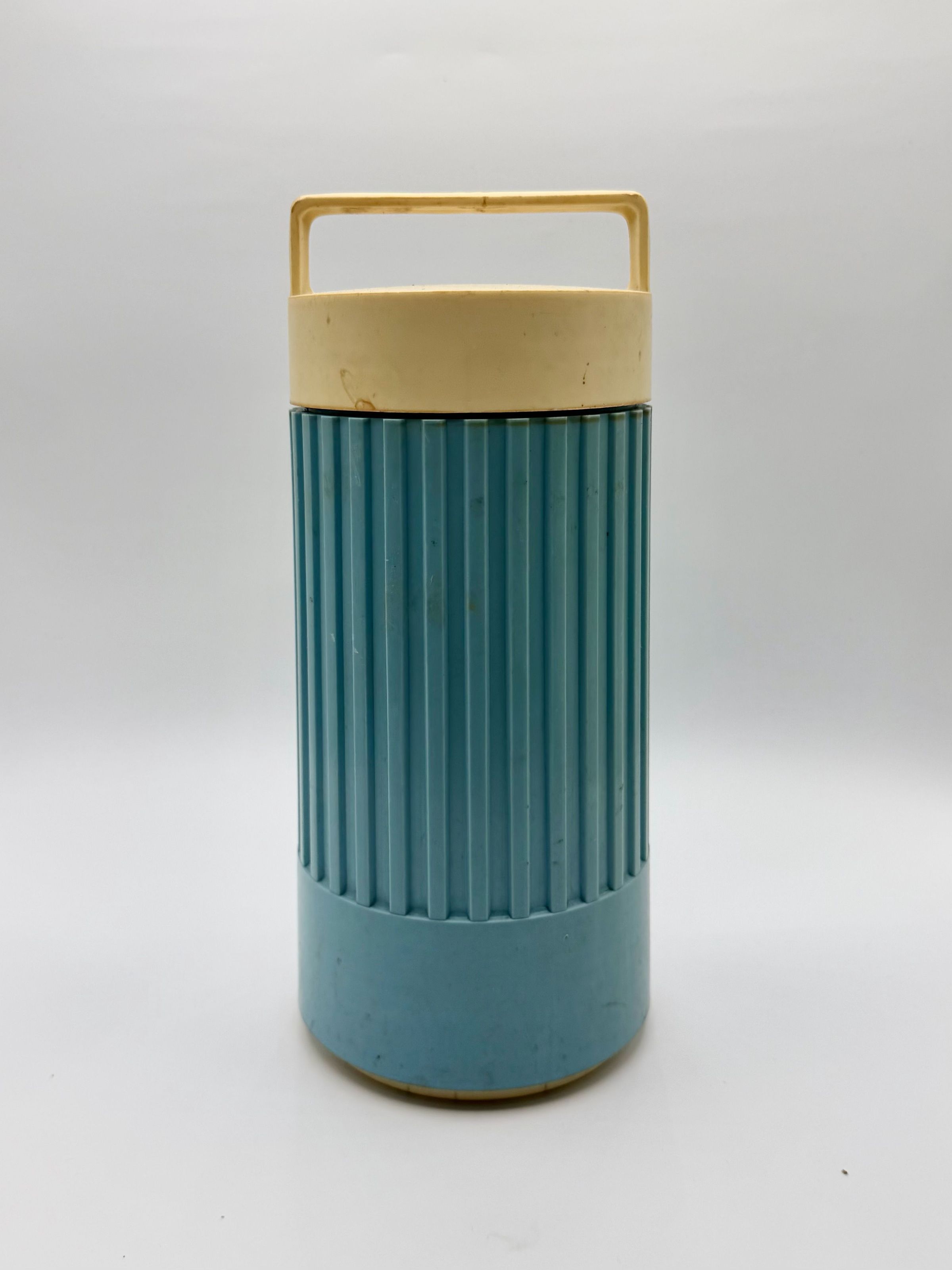
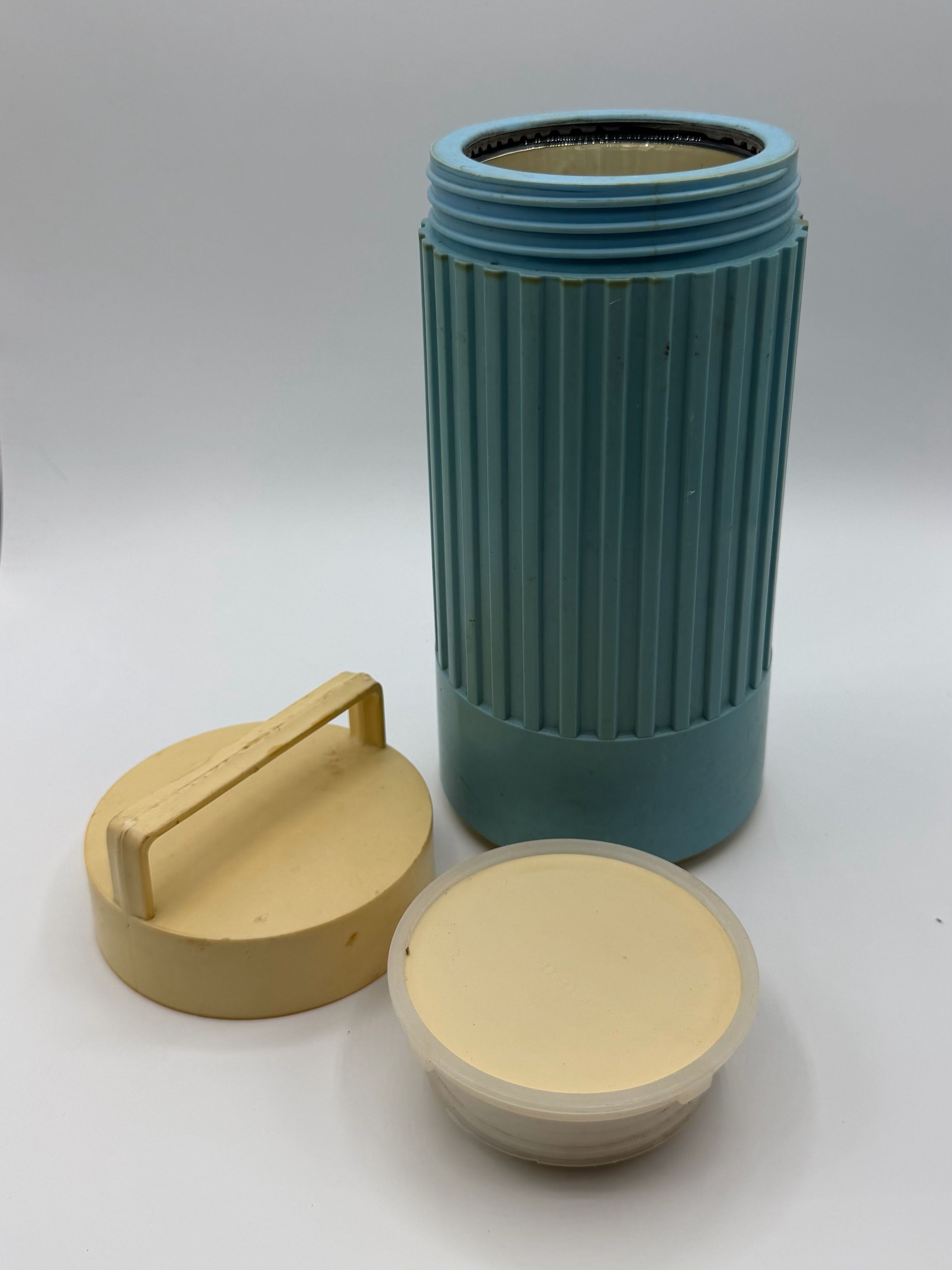
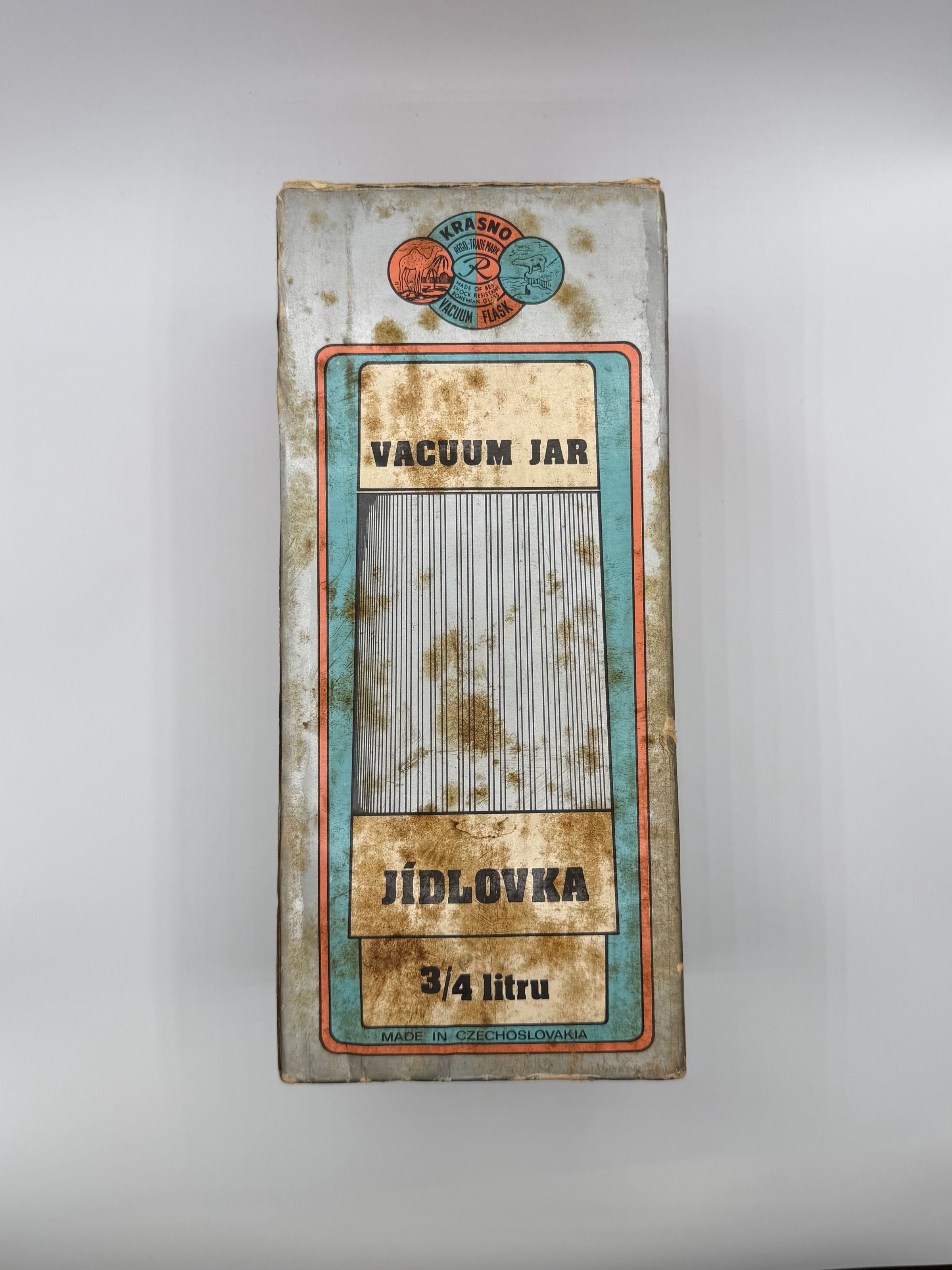
The "jídlovka" (Czech: literally "food-keeper") is the Czechoslovak vacuum-insulated container for hot or cold food — a thermos for solid or semi-solid contents rather than for liquids. It uses the same double-walled silvered-glass vacuum technology as the conventional thermos but is shaped with a wide, short interior to hold things like soup, stew, or chilled puddings rather than just coffee or tea. The "Krasno" brand was Czechoslovakia's well-known domestic line of these products.
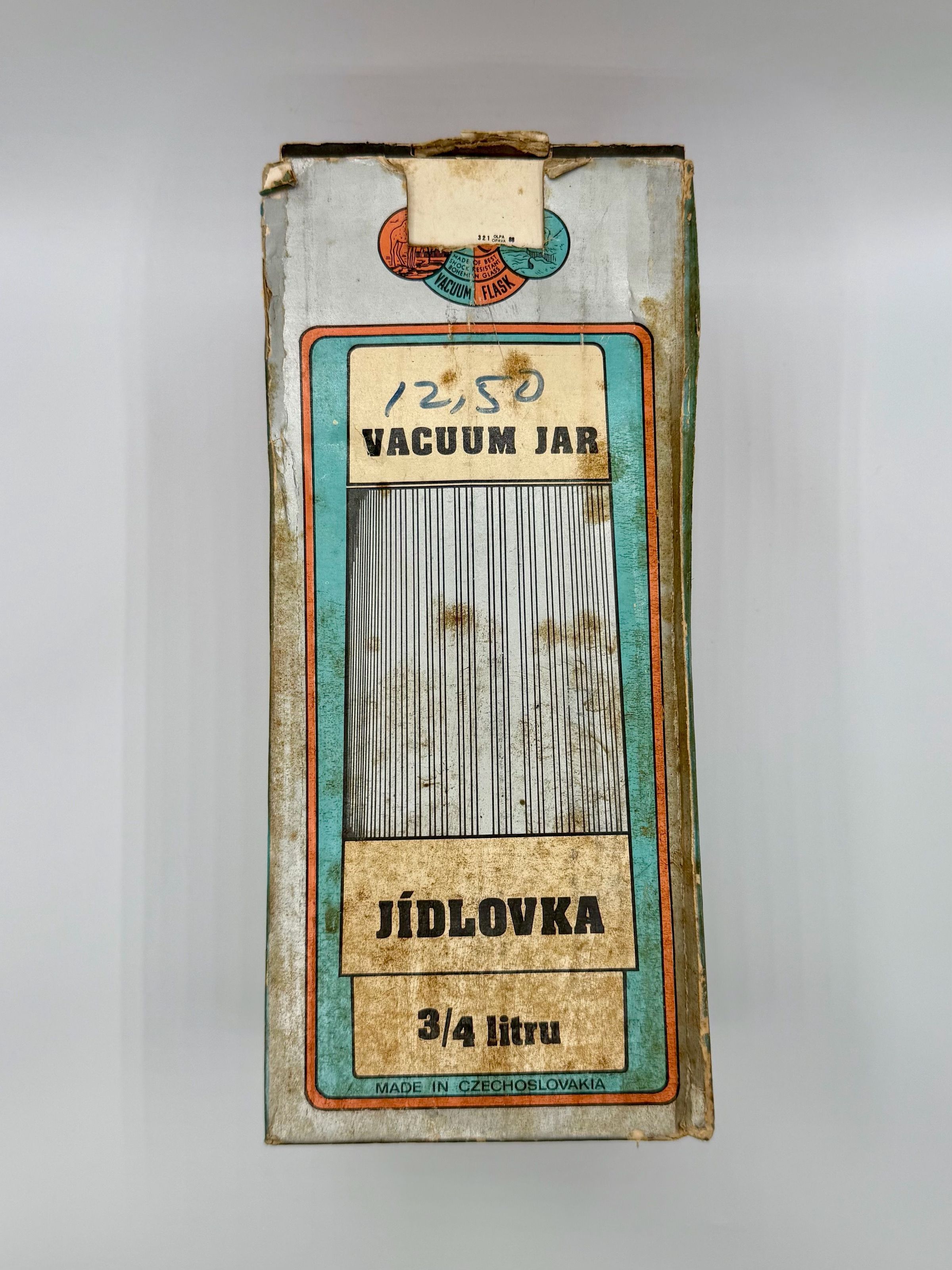
"Krasno" — Czech for "beautiful" — was the brand name for Czechoslovak vacuum flasks aimed at both domestic and export markets. The oval medallion on this box, with its camel and penguin paired across a globe, is the trademark's visual signature: the camel represents heat retention (it can survive the desert), the penguin represents cold retention (it lives at the poles) — together symbolizing the flask's bidirectional thermal performance. The phrase "MADE OF BEST SHOCK RESISTANT BOHEMIAN GLASS / VACUUM FLASK" claims the prestige of Bohemian glassmaking (a centuries-old Czech specialty with international cachet).Notes
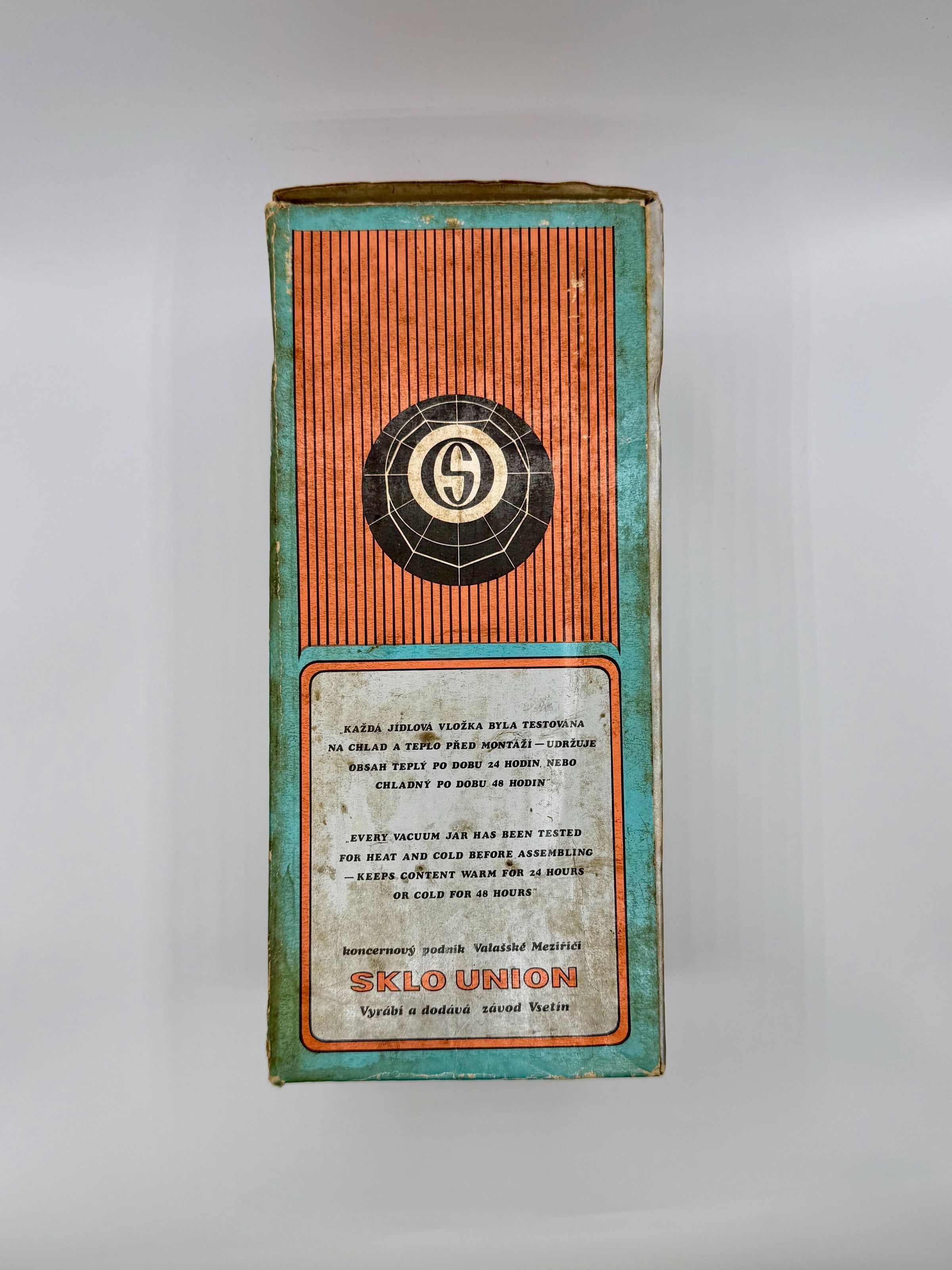
The packaging is bilingual Czech/English. It indicates the box was designed for both the domestic Czechoslovak market and Anglophone or general export — not specifically for Cuba or Latin America. Cuba's Czechoslovak imports typically used either the maker's standard export packaging (with English) or, less commonly, packaging with Spanish overprints. The absence of Spanish on this box suggests the jar entered Cuba either:
(a) through Cuban state import channels using the standard export box (with the price-tag "12,50" perhaps added by the Cuban retail store in Cuban pesos), or
(b) as personal luggage brought back to Cuba by a Cuban traveler to Czechoslovakia — a possibility especially plausible given that this same collection includes other Czechoslovak-connected family material (Leopoldo Arús Caraballo traveled to Czechoslovakia for his work with the Cuban electrical utility). If Leopoldo brought this jar back personally from a Czechoslovak trip, the box and the price tag take on a different meaning — perhaps the "12,50" is in Czechoslovak crowns rather than Cuban pesos.Notes
Czechoslovakia was one of Cuba's most important socialist-bloc trading partners between 1960 and 1989 — second only to the USSR and East Germany in volume for many years. Czechoslovak exports to Cuba included industrial machinery, vehicles (Škoda, Tatra), beer-brewing equipment, glassware (including Bohemian crystal, pressed glass, and vacuum flasks), and small consumer goods. Cuban technicians and engineers (like Leopoldo Arús Caraballo) traveled to Czechoslovakia for training, and a steady stream of Czechoslovak goods entered Cuban households both through state distribution (the network of state retail stores) and as personal items brought back by Cuban travelers.Notes
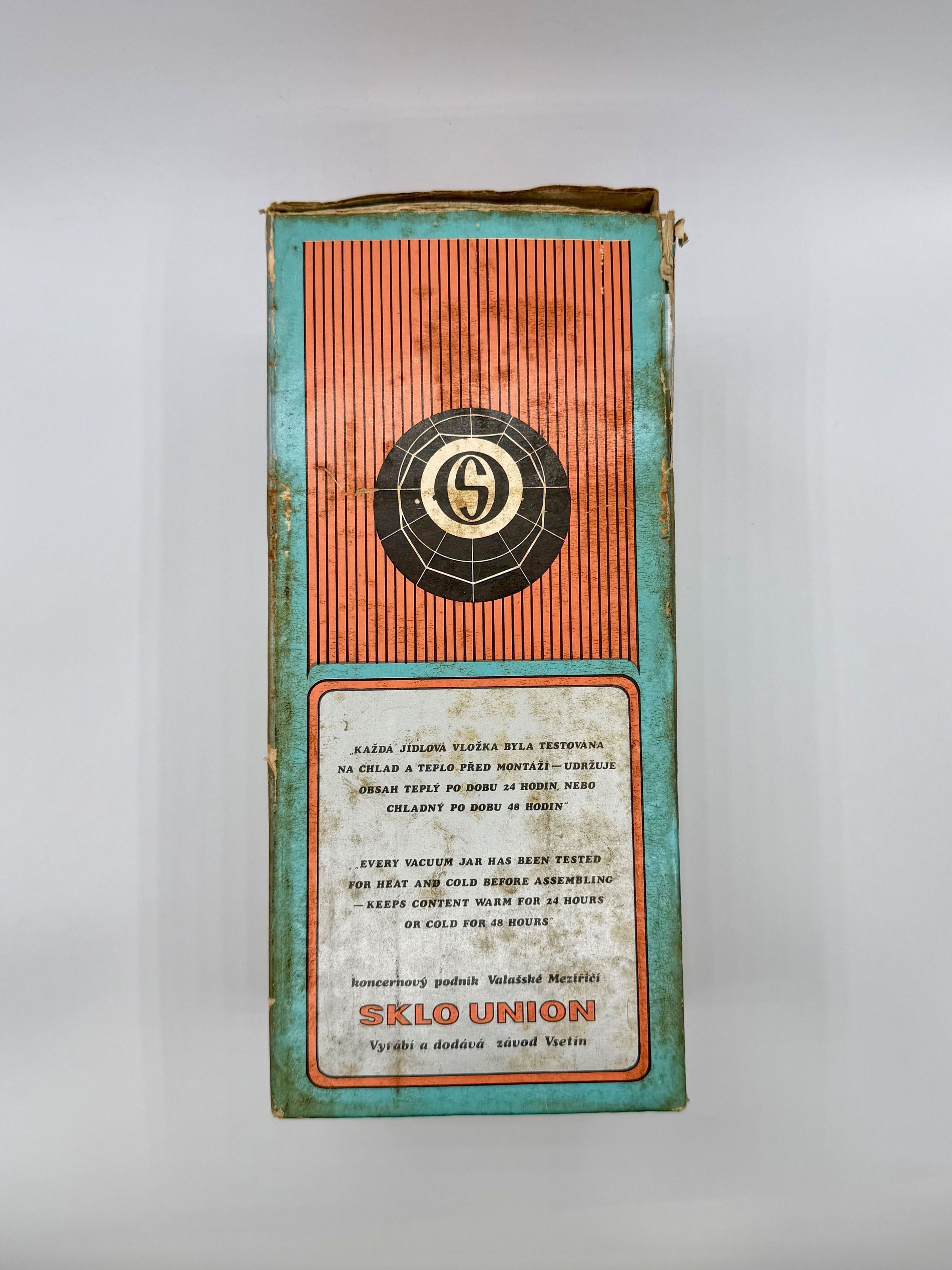
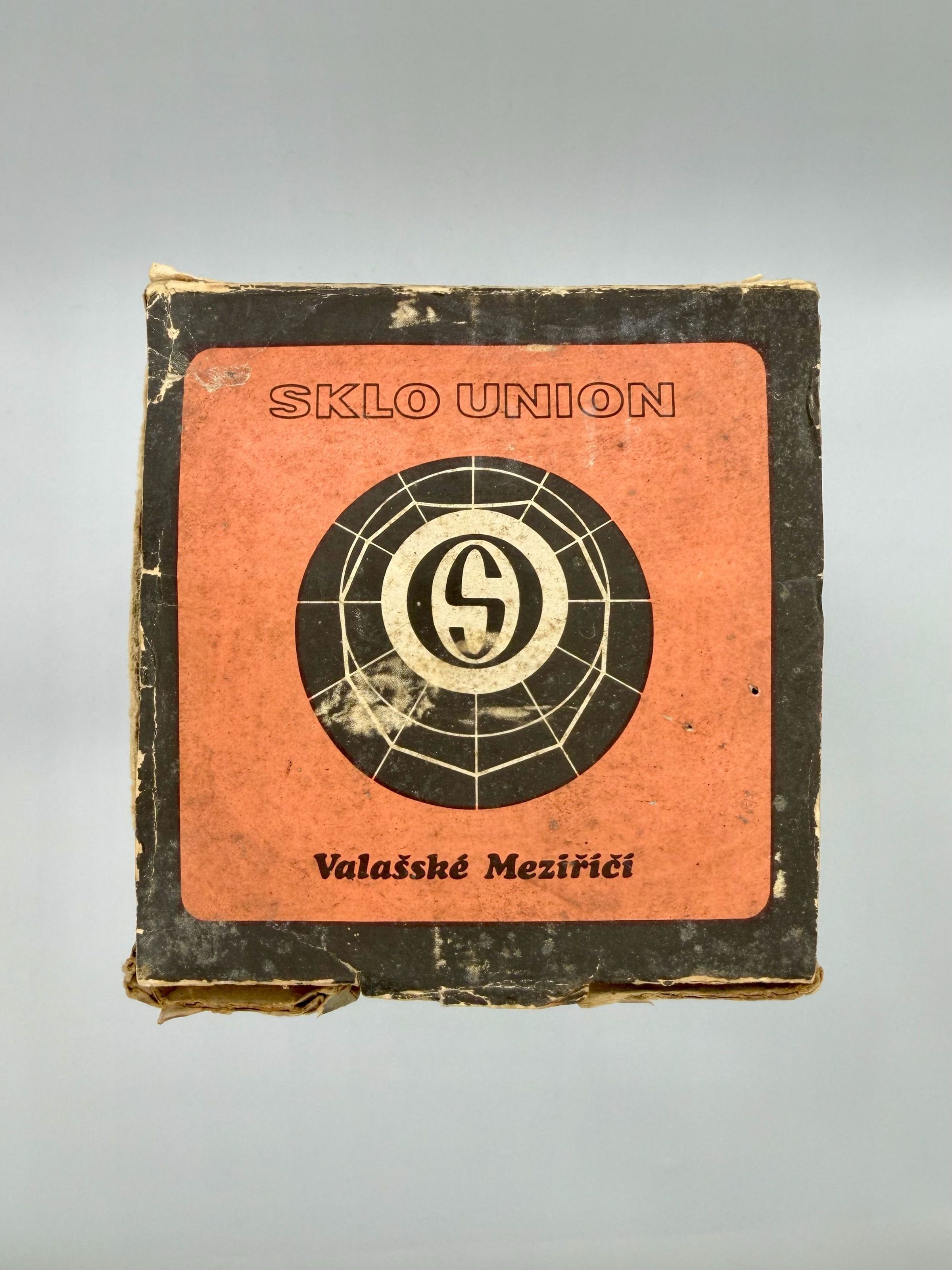
See Marcus Newhall, "Sklo Union: Art Before Industry" (the major reference work on Sklo Union, with extensive product catalogues; the book covers the history of the conglomerate and includes 4,500+ documented pieces with a searchable CD-ROM database)