Name/Title
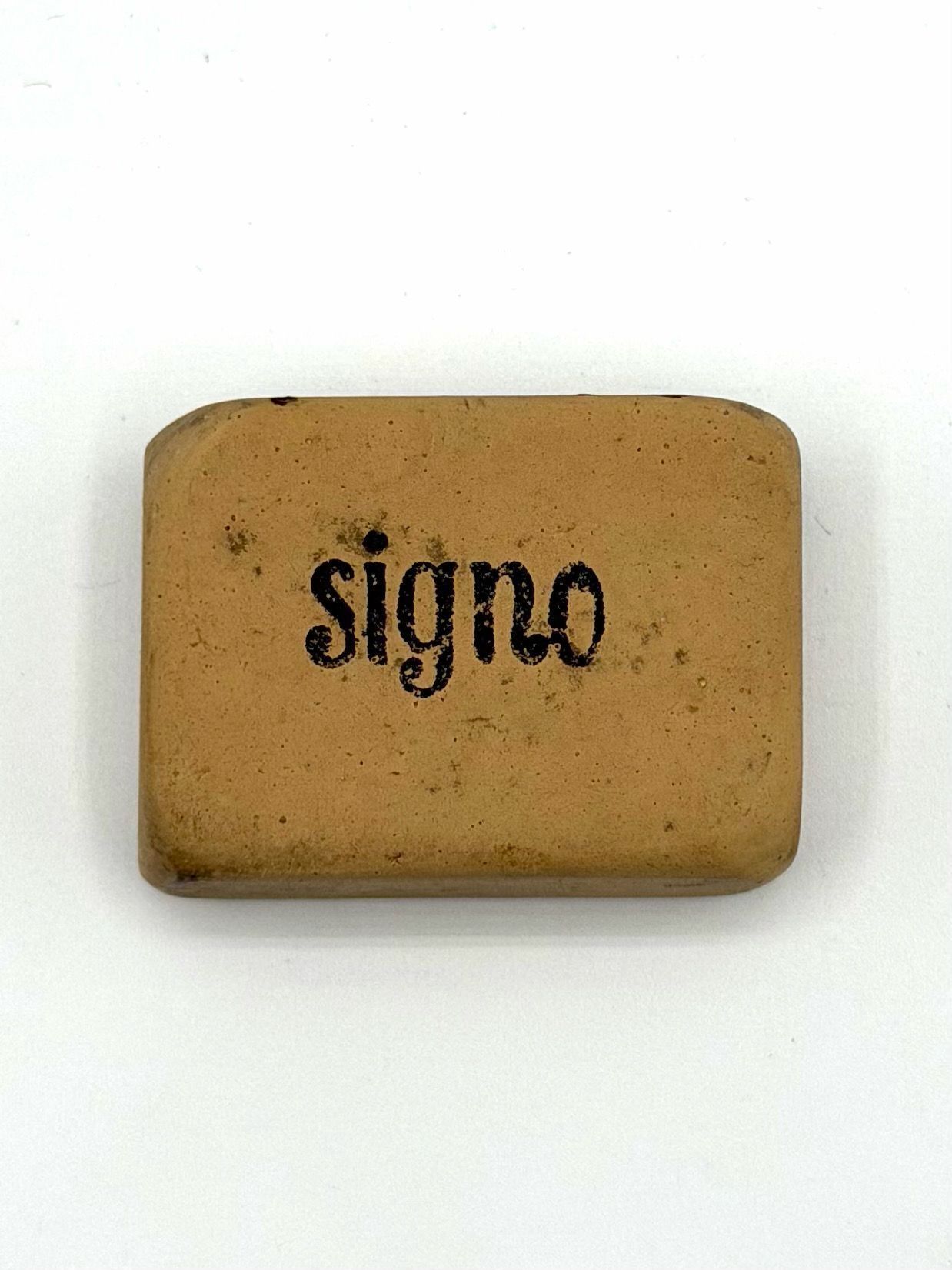
"Signo" eraserEntry/Object ID
2025.1.435Description
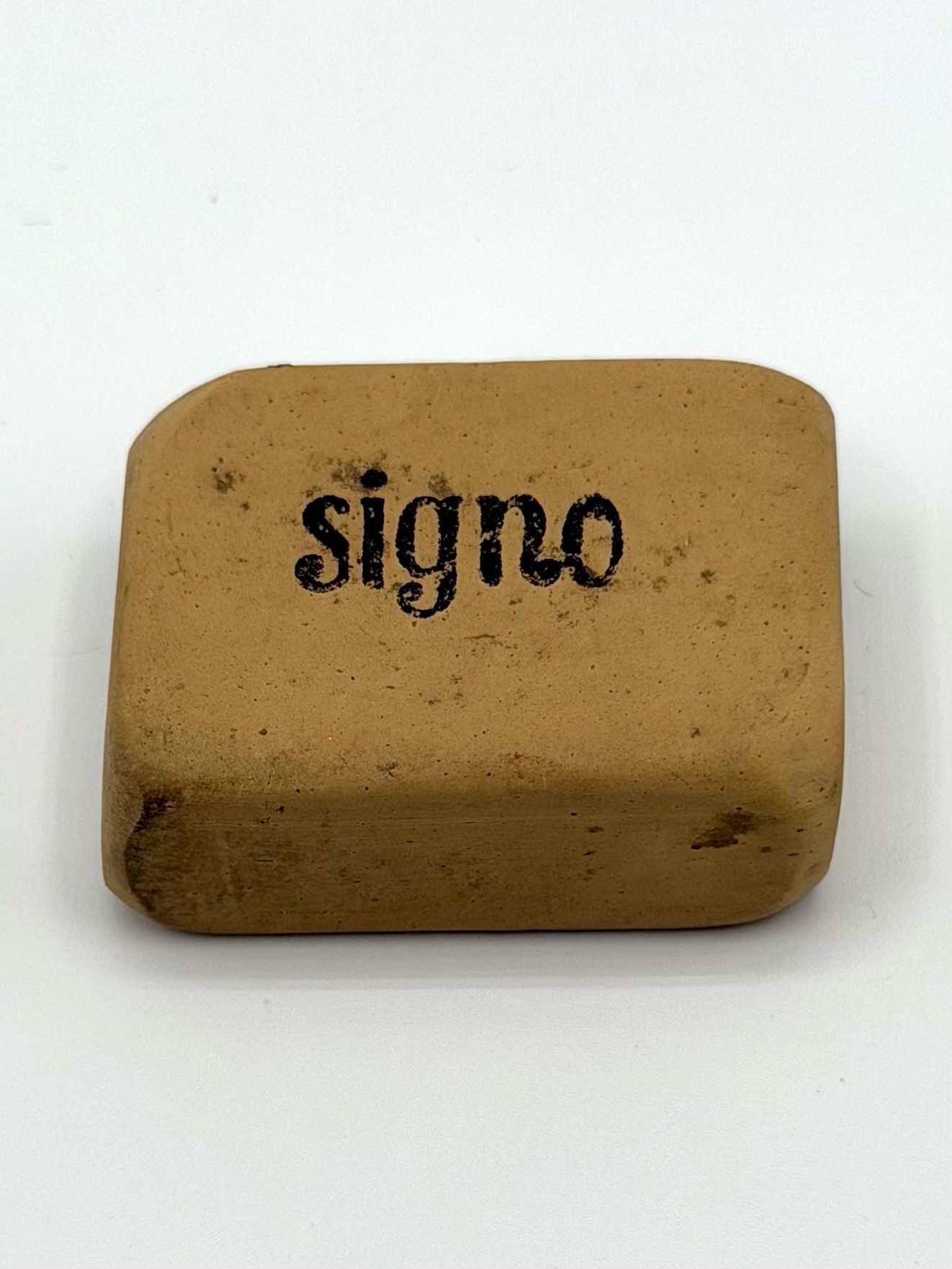
A solid rectangular block with strongly rounded corners and softly rounded edges, roughly twice as wide as it is deep and shallow in height. The surface is matte, slightly granular, and pitted with small open pores and shallow pocks.
On the broad upper face, printed in black: signo, in a lowercase serif face with a distinctly typewriter-like quality — slab-ish serifs, a double-storey g with an open descending loop, and a round dot over the i that sits slightly detached. The printing is ink on the surface, not molded or embossed, and it is worn and partly broken up, with the letters eaten into at their edges where the surface has abraded.
A faint seam or parting line runs along the lower edge of the block, visible in the first image as a change of angle and tone — consistent with a molded or extruded-and-cut form.Context
Signo was a Cuban eraser brand.
The collection's own published work on gomas de borrar cubanas names four Cuban brands — Pionero, Signo, Dual and Simplex — alongside heart-shaped erasers and scented ones. ⚠️ Most Cuban erasers were made at the José A. Fernández pencil factory at Batabanó, founded 30 March 1961, which was planned for an output of 80 million pencils and 50,000 kilograms of erasers. ⚠️ Pencil leads were imported from Czechoslovakia, and the plant also made colored leads and metal ferrules.
Only Pionero and Dual carried international hardness classifications on their packagingCollection
The Cabrera Arús family collection, Leopoldo Arús Gálvez collectionMade/Created
Manufacturer
Fábrica Cubana de Lápices José A. FernándezPlace
City
BatabanóState/Province
MayabequeCountry
CubaRegion
Caribbean, Central AmericaEdition
Signo brandMaterials
Material Notes
An eraser of this period is most likely natural or synthetic rubber with fillers, or a vinyl compound. ⚠️ The visual reading alone would equally support soap, and I had read it that way before the brand research. Confirm by handling: an eraser is slightly resilient under thumb pressure, drags on paper and sheds crumbs; soap is slick, smells, and marks the skin.
⚠️ The pitted, open-pored surface is consistent with an aged rubber compound in which fillers or plasticizers have migrated out, which is what the "hardened over time" observation describes.Relationships
Related Person or Organization
Person or Organization
Leopoldo Arús GálvezRelated Places
Place
City
HavanaCountry
CubaRegion
Caribbean, Central AmericaPlace
City
BatabanóState/Province
MayabequeCountry
CubaRegion
Caribbean, Central AmericaCreated By
María A. Cabrera ArúsCreate Date
October 1, 2026Updated By
María A. Cabrera ArúsUpdate Date
October 2, 2026