Name/Title
History Camp Looks to FutureDescription
McLean County Museum of History
Bloomington, IL
“My child … loves making new friends and learning about the history of Bloomington! I am extremely grateful for the instructors and all the local businesses who support Futures in History Camp (Camper Parent, 2019).”
Since the beginning, Futures in History Camp (FiHC) has served as an exemplar of community collaboration. This 15-year partnership between the McLean County Museum of History (MCMH) in Downtown Bloomington, IL, the David Davis Mansion (DDM), and Sugar Grove Nature Center (SGNC) has continued to evolve, expand, and explore new themes, but collaborative partnering has always been an identifying characteristic.
Traditionally FiHC is a 5-day, in-person camp for area students (entering 4th-6th grades) to explore different careers related to the field of history. Each year the Museum partners with organizations and experts throughout Bloomington-Normal to explore careers in law, archaeology, architecture, museum studies, and environmental science.
Since first announcing registration for FiHC 2020 in the spring issue of the Museum’s quarterly magazine, it felt as though everything had changed. But, two things remained constant—campers and community. In that spring magazine, we strove to highlight for our membership the many community collaborations that make Futures in History Camp possible, not knowing at all just how important those partnerships would prove as the Museum and organizations around the world pivoted to engage their communities in new ways through innovative virtual and hybrid programming.
Considering all of the variables—including the Museum’s inability to host in-person campers due to onsite renovation and restoration projects—and in consultation with fellow cultural sites that were experimenting with their own amended camp concepts, MCMH education staff determined that a hybrid virtual camp experience was the best model by which to serve our captive audiences and stretch our creative capacities in the most constructive and lasting way. That decision required quick action on the part of education staff to reimagine FiHC 2020 for our remote campers, while preserving the essence of what makes the FiHC experience unique. Thus was born Futures in History Camp 2.0.
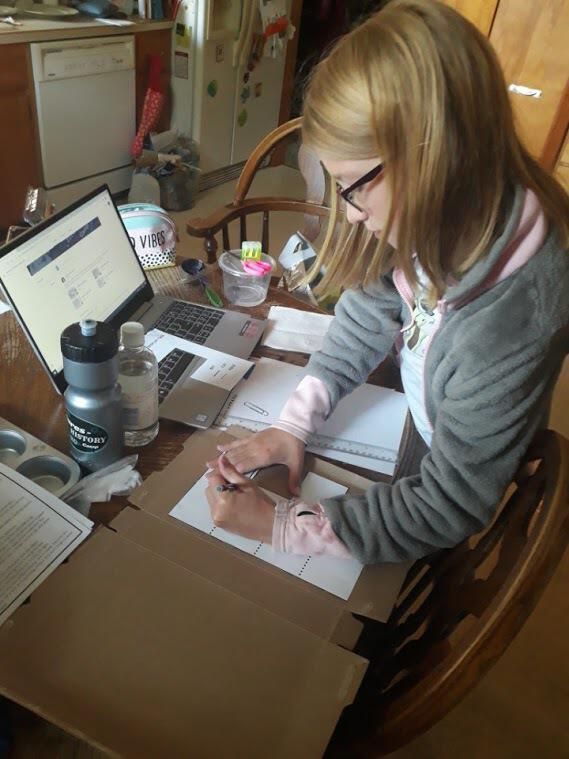
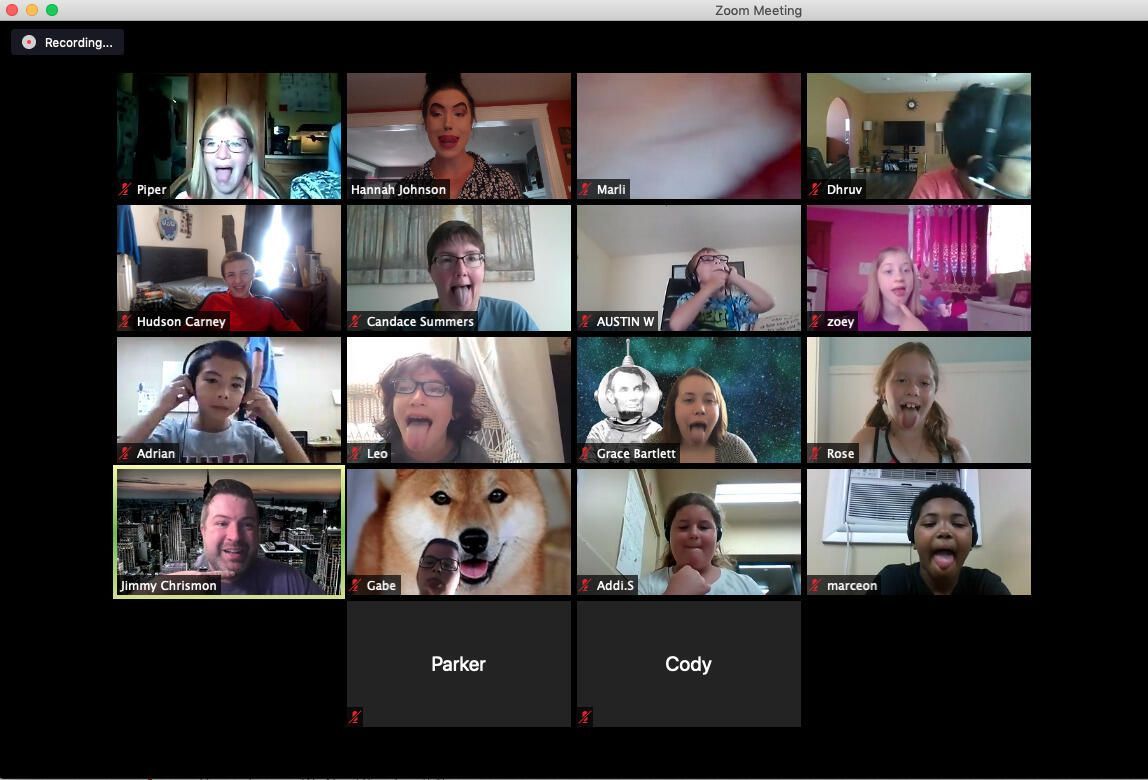
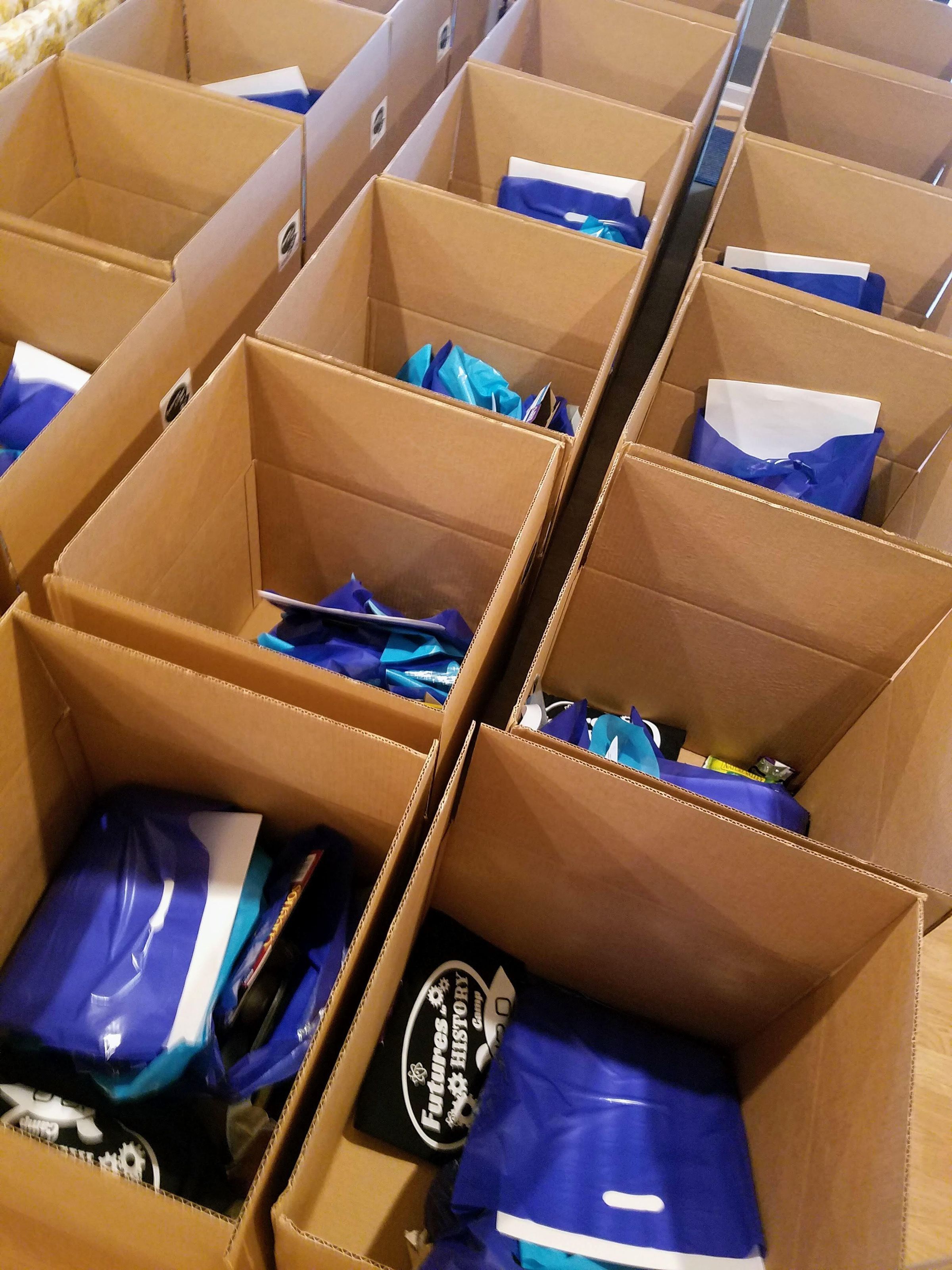
We maintained a Monday through Friday schedule that offered live, online engagement with Museum staff and other experts via Zoom from 9:00-11:45 a.m. each morning, with afternoons reserved for self-directed, hands-on activities supported by material kits that camper families picked up prior to the start of camp. These material kits included all and any supplies and instructions the campers needed to complete their morning and afternoon activities, with the addition of extra items that would enhance the FiHC 2.0 experience—including branded facemasks, t-shirts, stickers, water bottles, clip boards, craft supplies, etc. According to our camp families, “the packaging of the take home materials was especially impressive.”
The purchase and creation of these materials was aided by generous donor support, including that of the local Boys & Girls Club of Bloomington-Normal (BGCBN), with whom the Museum partnered to provide the FiHC camp experience for eight BGCBN fourth graders. In total, Museum staff spent the summer with 27 enthusiastic and intuitive campers from seven surrounding communities: Bloomington-Normal, Towanda, Clinton, LeRoy, Hopedale, Heyworth, and Hennepin, IL. Fifteen of those campers attended on full scholarship, and one camp family took advantage of discounted household pricing for their two eligible campers.
FiHC 2.0 also allowed the Museum a rare opportunity to engage education volunteers during the shutdown. We welcomed back a former intern/current ISU student/experienced FiHC volunteer who joined two Museum staff online each day, along with a three-time former camper who shared a fourth summer with us as a junior volunteer. The Museum ensured that there were never any less than two Museum staff or adult volunteers online with the campers at one time.
In addition to the efforts of Museum staff and volunteers, it was truly the contributions of our 20 collaborators who took Futures in History Camp 2.0 to the next level. These community partners included: Connect Transit, the David Davis Mansion, Children's Discovery Museum, University Galleries at Illinois State University, Department of Anthropology at Southern Illinois University—Edwardsville, PrairiErth Farm, Main Street Yoga, Bloomington Historic Preservation Commission, Landmarks Illinois, Workbench Architects, Prairie State Legal Services, School of Theatre and Dance at ISU, the Immigration Project, Sugar Grove Nature Center, the McLean County Regional Planning Commission, the Boys & Girls Club of Bloomington-Normal, Stefen Robinson, Silver Back Apparel Company, Meltdown Creative Works, and the Little Art School.
One such partner, Assistant Professor Dr. Susan Kooiman, joined us all the way from SIU in Edwardsville to treat our campers to an expert look into the career of an archaeologist, and her personal research into ancient foodways and pottery on Archaeology Day.
“It was an honor and a pleasure to participate in the Futures in History Camp 2.0,” said Kooiman. “I had never worked with kids in this age group before, and I was blown away by their attentiveness and participation, especially given the online format. The kids were highly curious about what a career in archaeology was like, even after I told them that it is nothing like Indiana Jones!”
Kooiman’s presentation on foodways was scaffolded by an original video featuring PrairiErth Farm in Atlanta, IL; a live, pinch pot-making demo; a mouth-watering cookie excavation activity; and an afternoon of self-guided, mock archaeological excavation.
“The museum team created a wonderful program of at-home activities around my research that helped reinforce those topics with the students. I received a Master's degree in Archaeology from Illinois State University, so I will forever have a deep connection with McLean County, and it felt natural to pay forward some of the lessons I learned there to the local youth of the community. It was an overall wonderful and engaging experience.”
It seems that our campers would agree, as Archaeology Day was voted the most favorite day by campers who completed the post-camp evaluation. “I just think archaeology is interesting in general,” explained one camper. “It’s fun to learn about what happened before you were alive.”
And, learning is really what FiHC is all about. Without question, everyone involved this summer—from campers, to staff, to volunteers, to community partners—learned so much about our past, our present, our possible futures, and most importantly, ourselves. Futures in History Camp 2.0 may have been a hybrid virtual experience, but the impact was no less real.
If nothing else, we can guarantee that our campers walked away with at least one lesson thanks to a local musician and friend of the Museum who composed an original 30-second earworm entitled, “Wash Your Hands Everybody!” That is a lesson all of us will take into the future.