Description
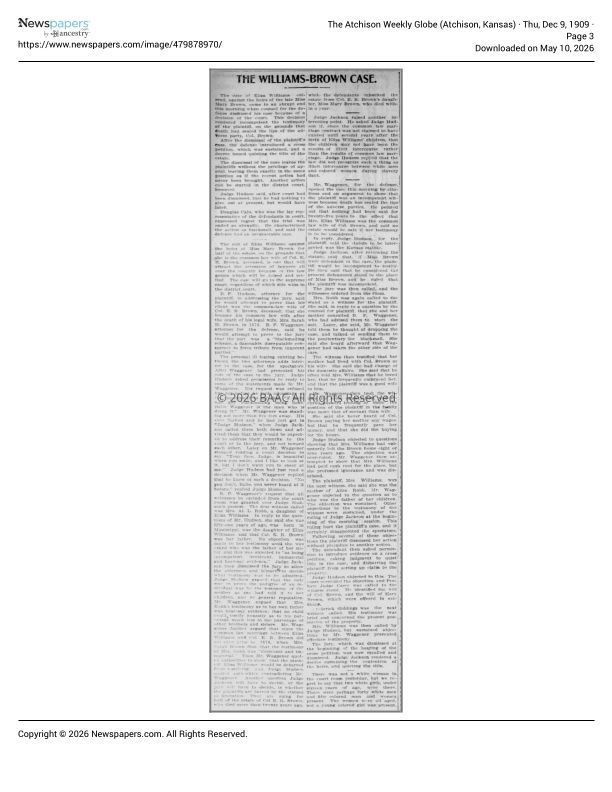
"THE WILLIAMS-BROWN CASE." - - (excerpted from longer article) - - “B. (Balie) P. Waggener’s request that all witness be excluded from the court room was granted over Judge Hudson's protest. The first witness called was Mrs. L. Robb, a daughter of Eliza Williams. In reply to the questions of Mr. Hudson, she said she was 51 years of age (born ~1858), was born in Mississippi, was the daughter of Eliza Williams and that Col. E. R. Brown was her father. No objection was made to her testimony until she was asked who was the father of her sister and this was objected to "as being incompetent, irrelevant, immaterial, and hear-say evidence.”” - - “Judge Jackson raised another interesting point. He asked Judge Hudson if, since the common law marriage contract was not claimed to have existed until several years after the birth of Eliza Williams’ children, that the children may not have been the results of illicit Intercourse rather than the results of common law marriage. Judge Hudson replied that the law did not recognize such a thing as illicit intercourse between white men and colored women during slavery days.” - - “The witness (Alice Robb) then testified that her mother had lived with Col. Brown as his wife. She said she had charge of the domestic affairs. She said that he often told Mrs. Williams that he loved her, that he frequently embraced her, and that the plaintiff was a good wife to him. Mr. Waggener then took the witness for cross examination, and secured answers tending to show the position of the plaintiff in the family was more that of a servant than wife. She said she never heard of Col. Brown paying her mother any wages, but that he frequently gave her money, and that she did the buying for the house.”Date(s) of Creation
12/9/1909