Name/Title
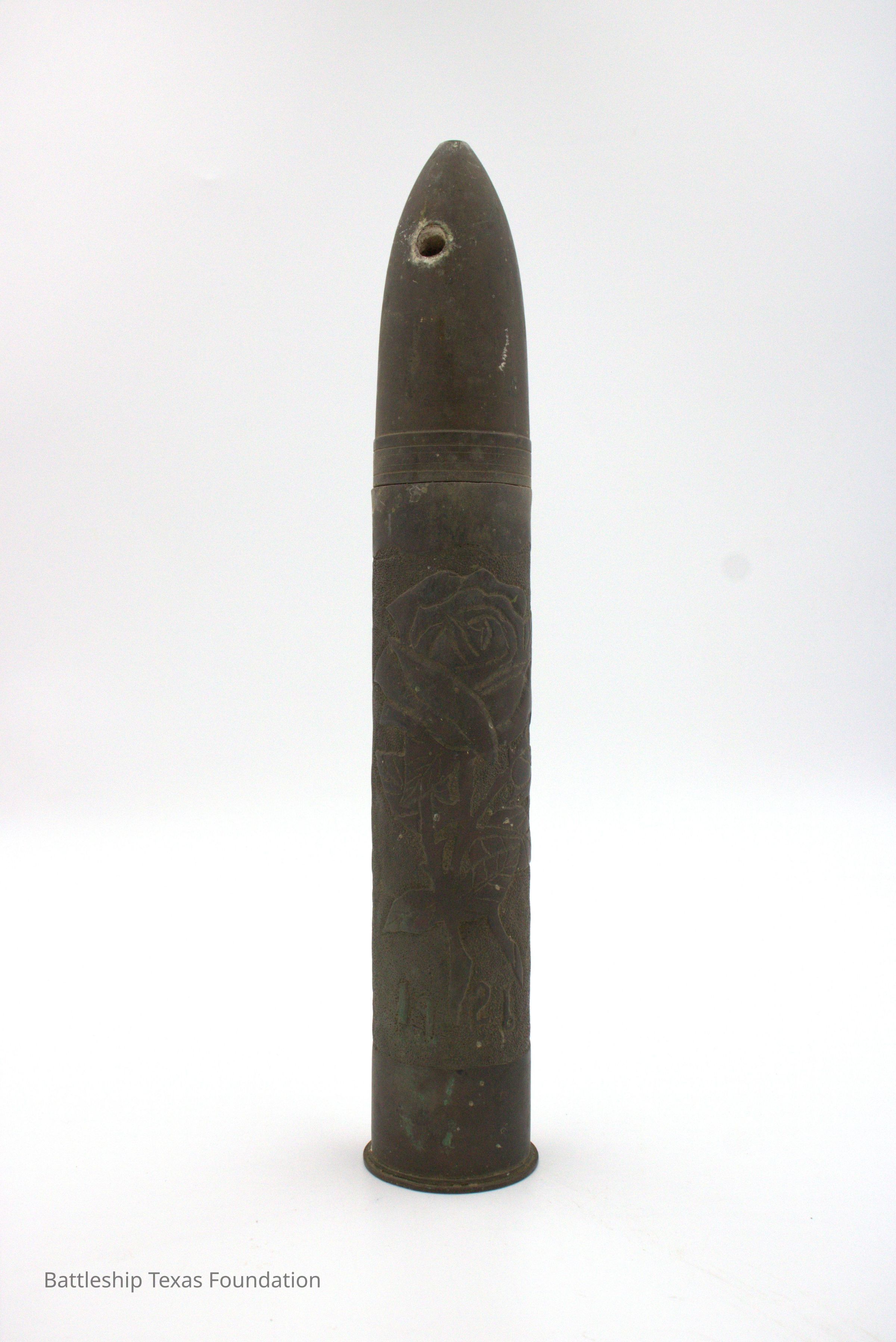
3-pounder trench artEntry/Object ID
2026.1007.1Description
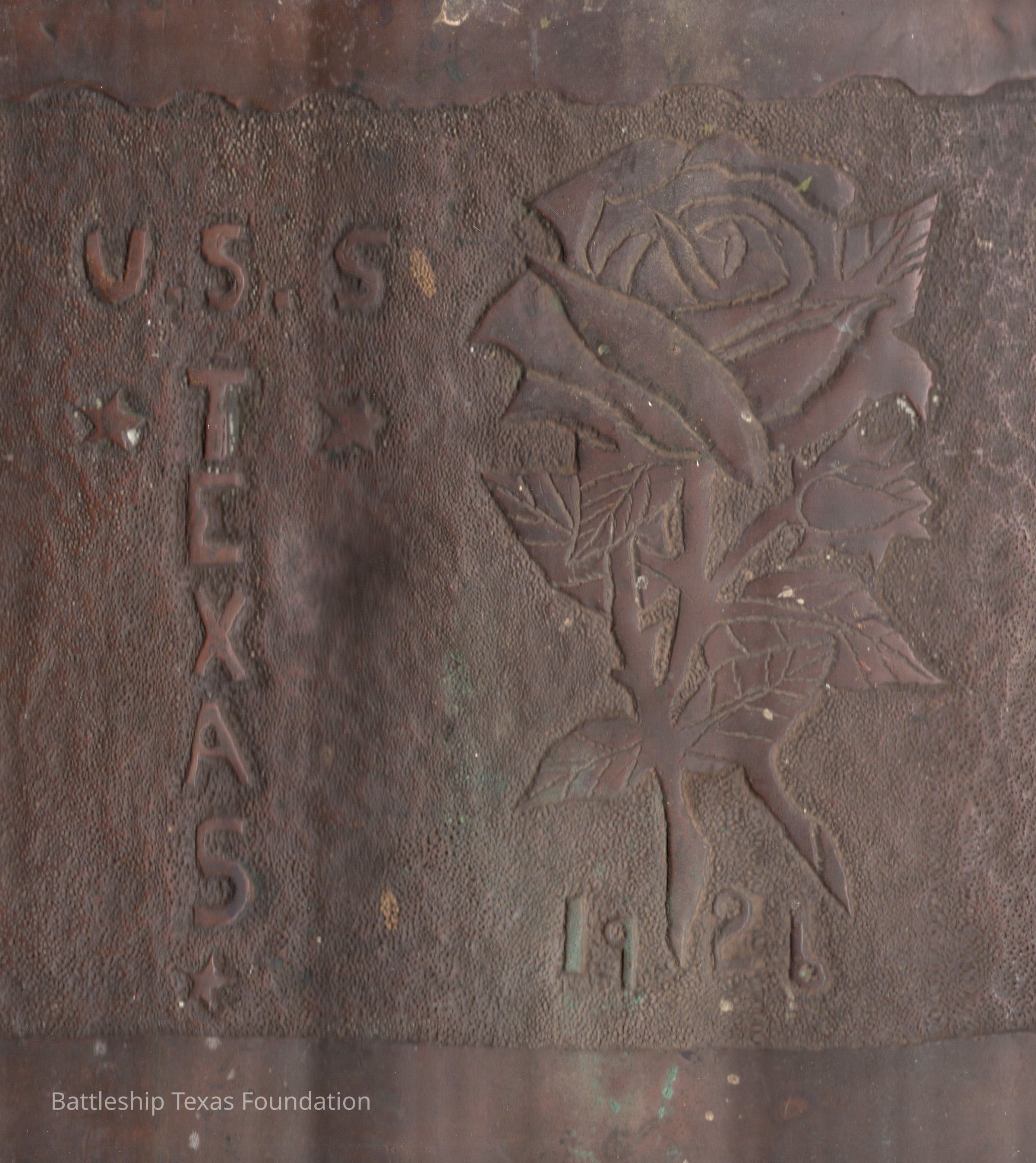
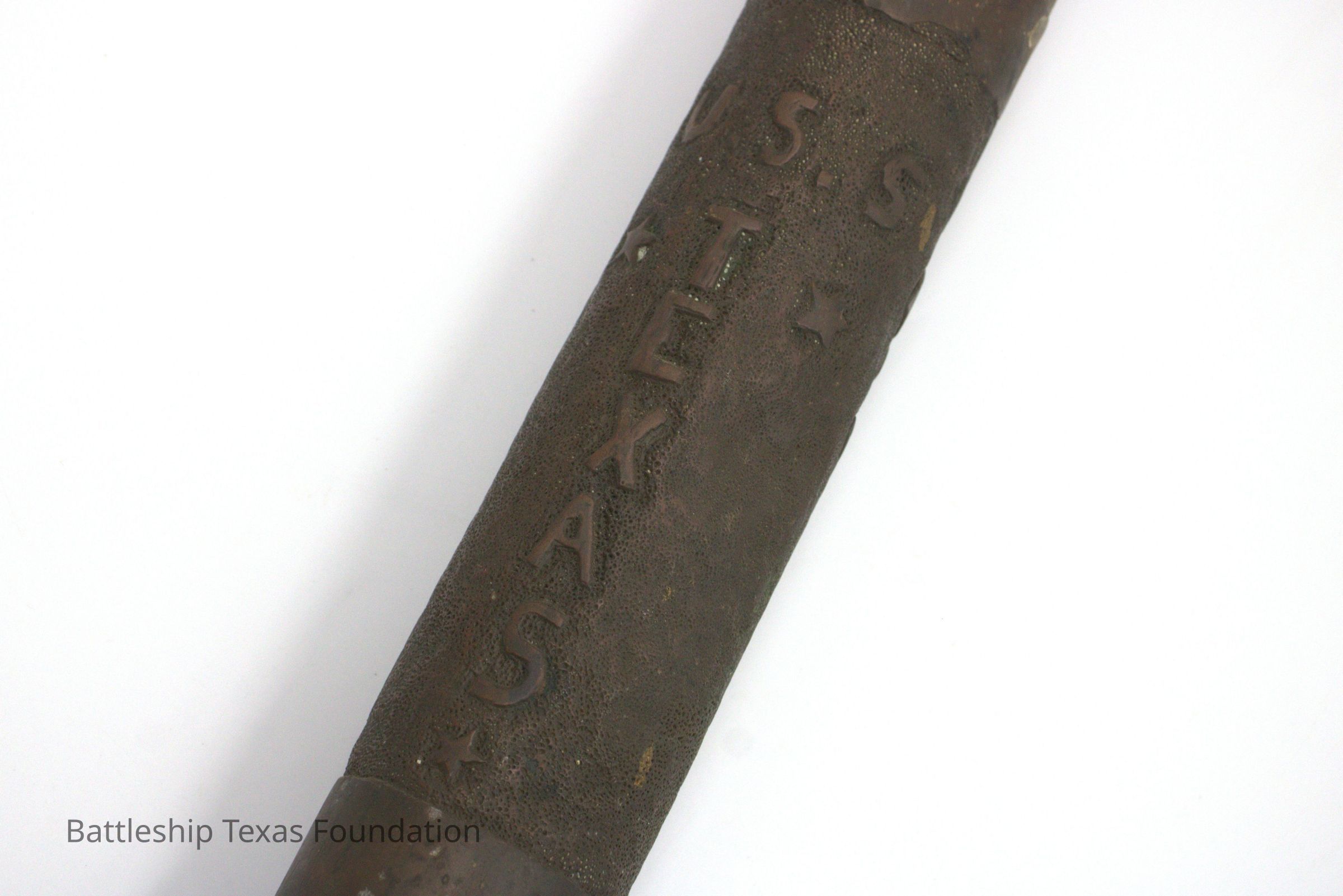
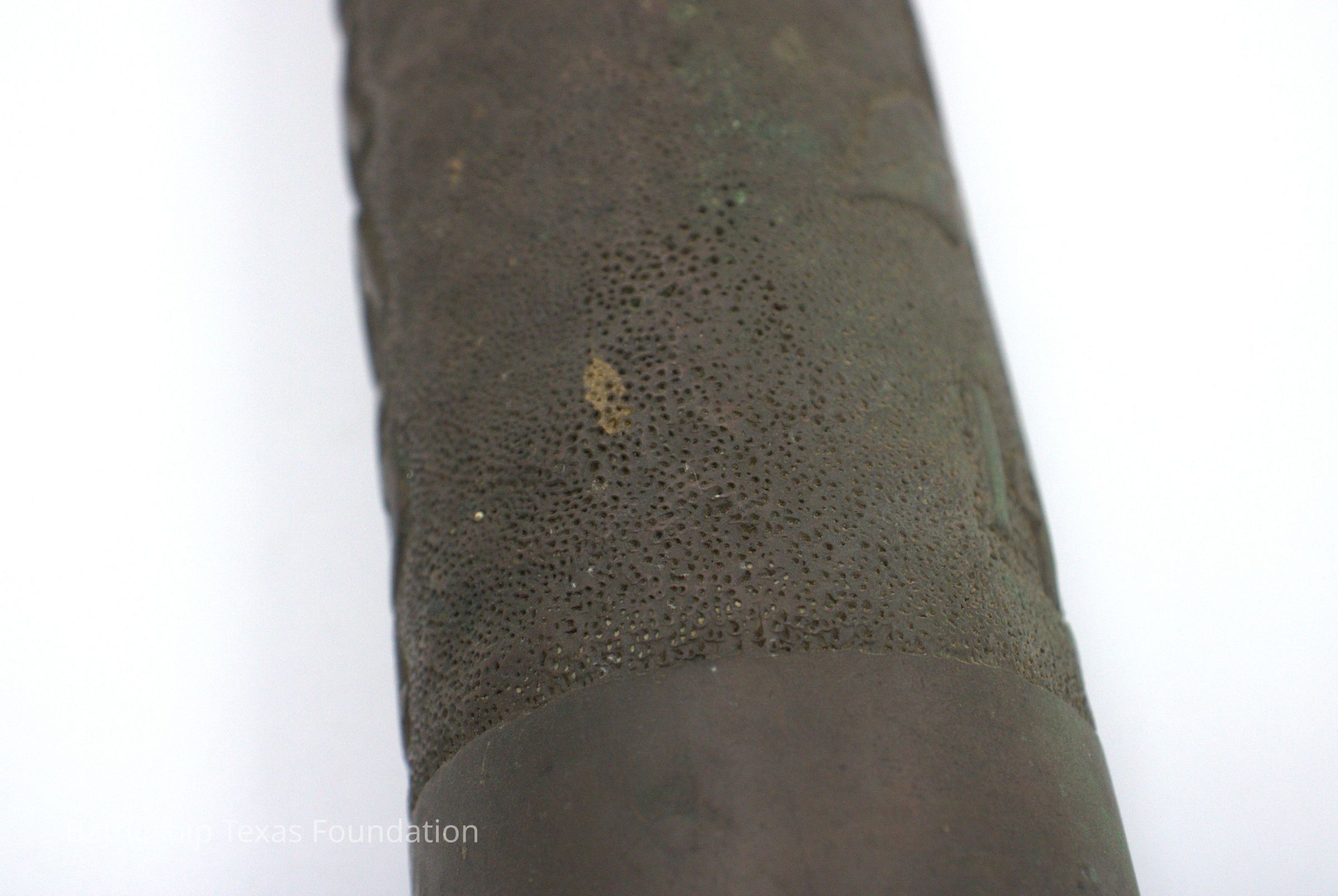
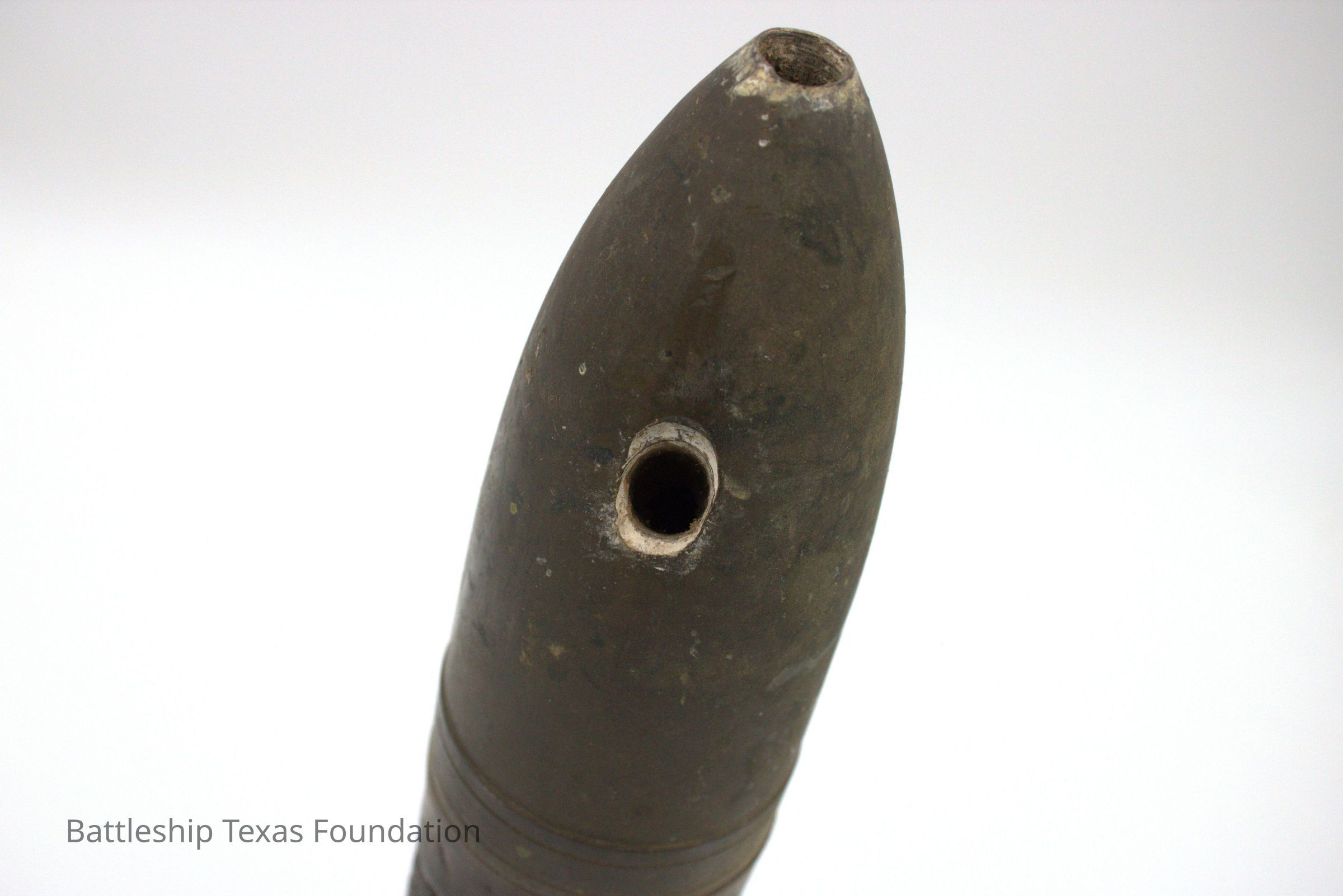
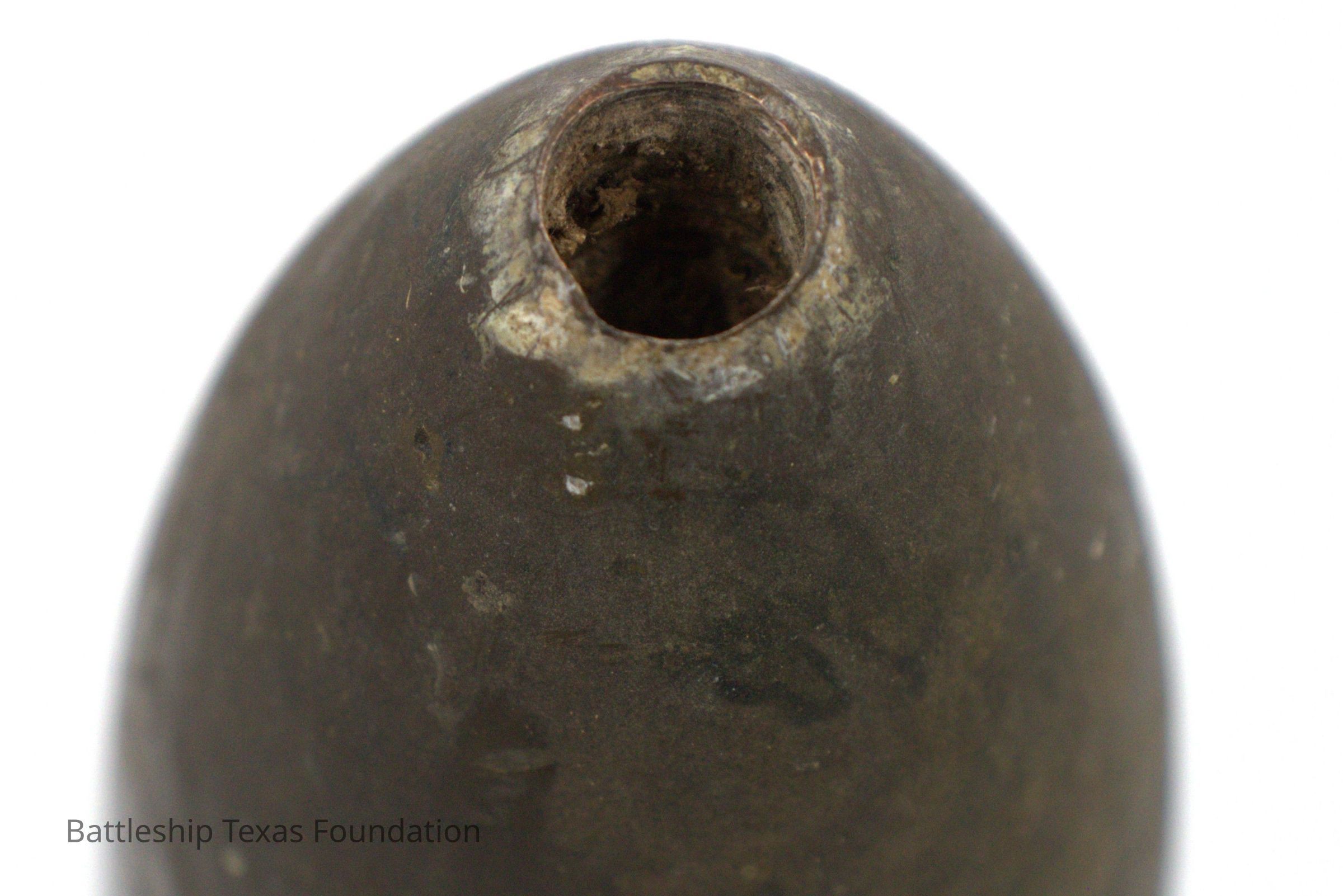
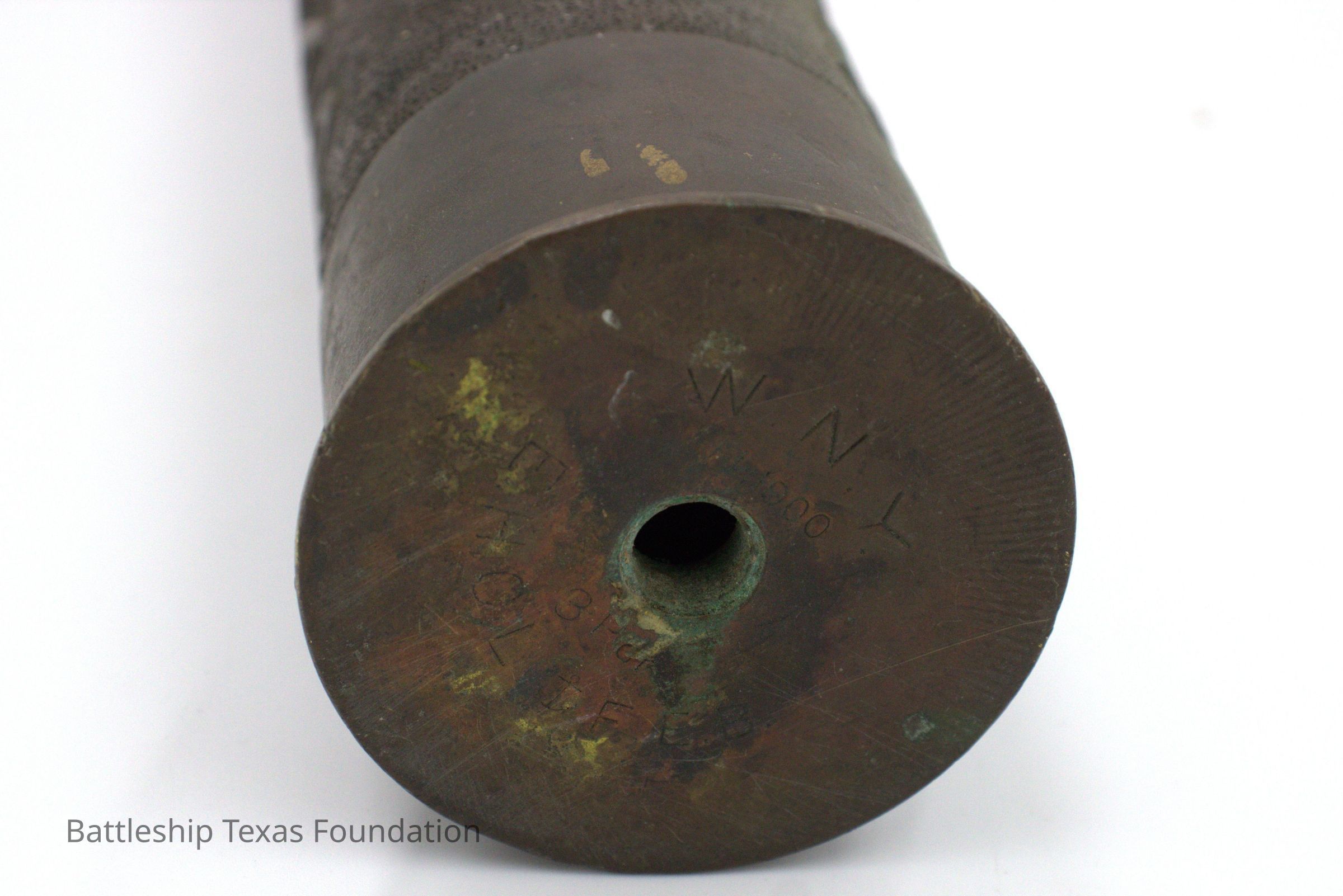
Rose etching on a 1900 3-pounder shell. "1926" around the base of the image, likely indicating the year it was made. Other side of the shell is labelled U.S.S. TEXAS. Projectile has three holes drilled into it on two sides and the nose, with the primer missing. Three holes in the top likely used in the early creation of a lamp that was never completed.
The shell was formerly owned by Walter D. Brady and donated by his grandson Lee Brady.Context
The Washington Naval Treaty was signed in 1922, ending new battleship construction for ten years. As a result, Battleship Texas underwent significant modernization from July 31, 1925, to November 23, 1926. Battleship Texas had an extensive shakedown cruise from November 23, 1926, to September 1, 1927. She had a brief period in dry dock during June and August 1927 before her speed trials.
Walter D. Brady enlisted in 1942 and was a gunner’s mate aboard USS Langley (CVL-27) from 1943 to 1945. He participated during the Philippines Liberation and throughout the Pacific Theater. Sometime during his service in World War II, he traded with a crewmember of Battleship Texas for a piece of trench art on a 3-pounder shell.
Servicemembers made sculptures most commonly from discarded ammunition shells of various calibers. The practice became popular during World War One and continued into World War Two. Shells could be reshaped, carved, etched, and soldered into myriad decorative objects.
USS Langley (CVL-27) was an Independence-class light aircraft carrier commissioned from August 31, 1943, to February 11, 1947. She was transferred to the French Navy on January 8, 1951, and later scrapped in 1964.Collection
Historical CollectionsLexicon
Nomenclature 4.0
Nomenclature Primary Object Term
Art, TrenchNomenclature Class
ArtNomenclature Category
Category 08: Communication Objects