Name/Title
1876 Horn and Calfskin ChairEntry/Object ID
1996.F.111Description
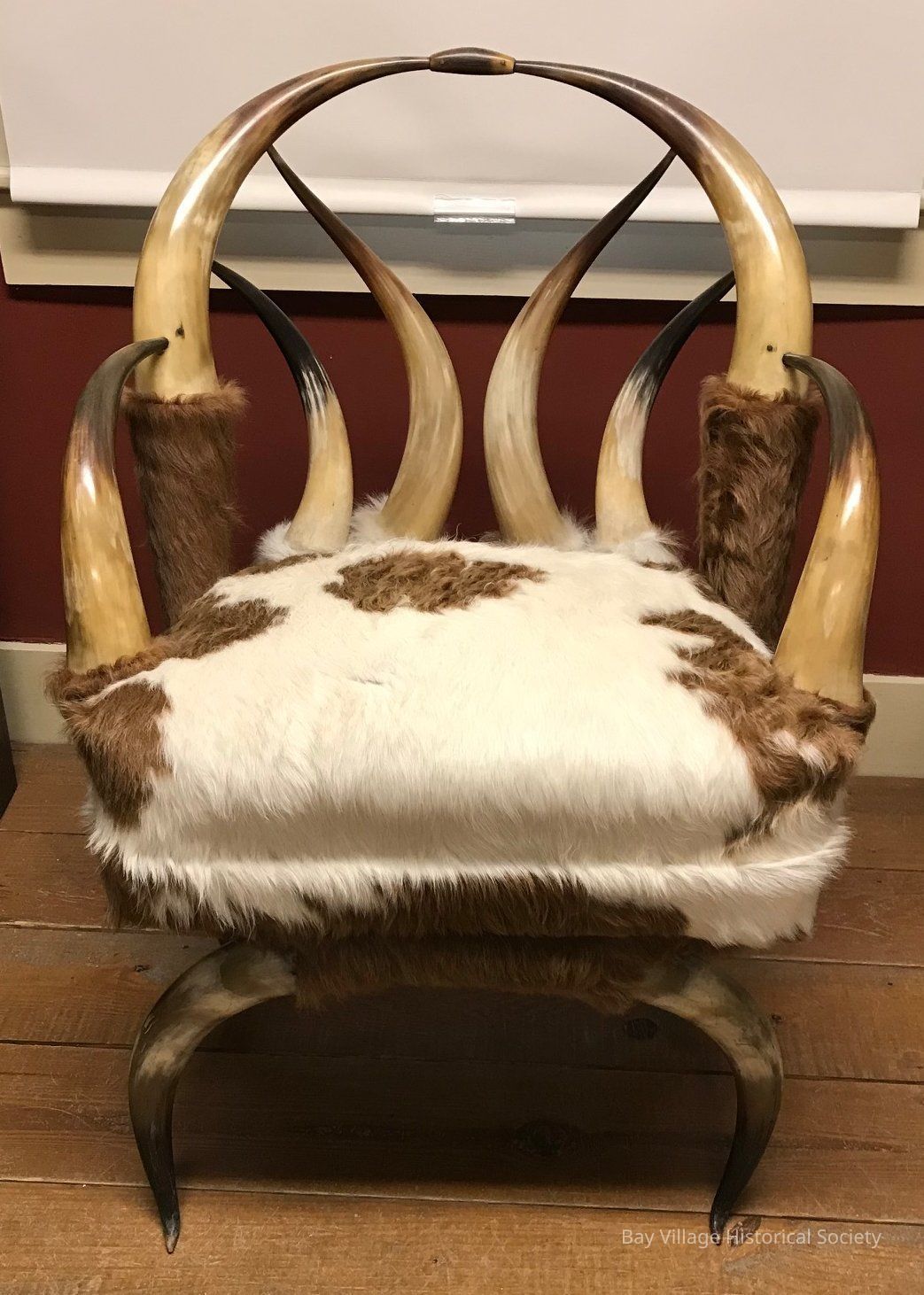
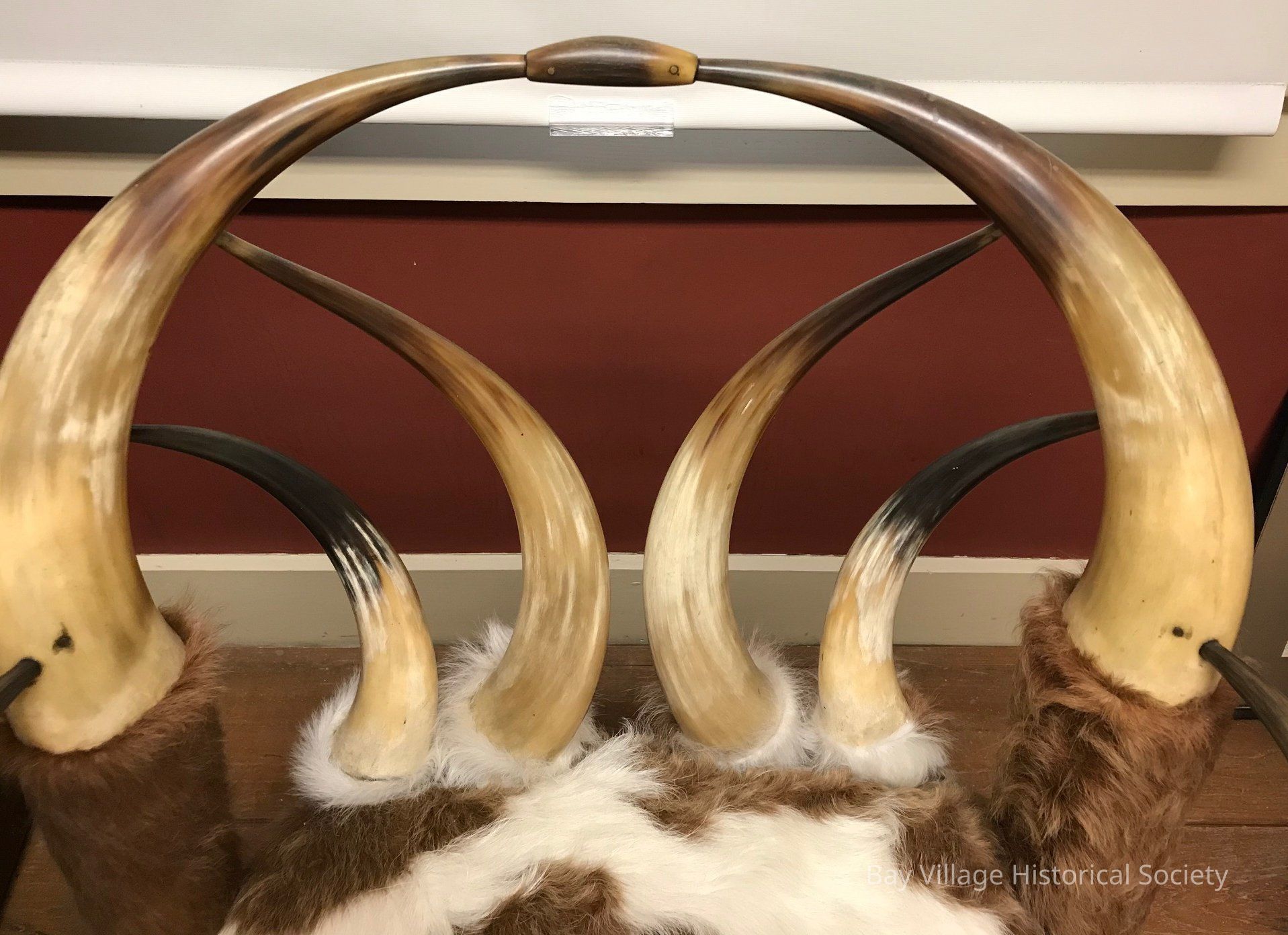
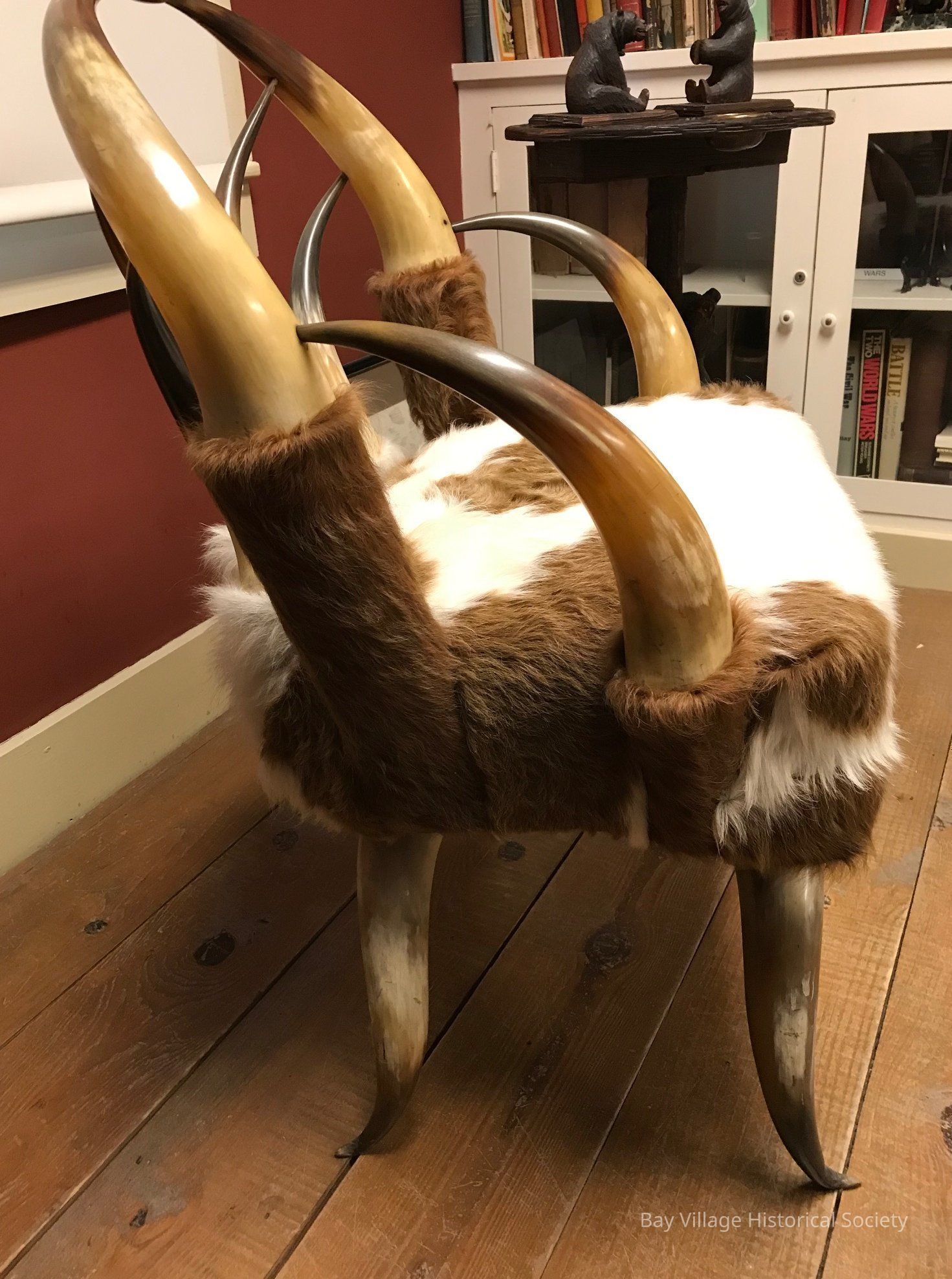
1876 horn and calfskin chair. Horns are Texas Longhorn. There are two long horns coming together in an arch with the points meeting in the middle of the back, they are connected by a small oval bead horn. These are covered with brown cowhide half way up and extend into the actual chair with the "cowhide." Four smaller horns are in a fan shape in the back, the two on the outside have black tips and the larger in the middle have brown tips. Seat is cowhide. Two horns going backward for the arms and four for the feet.
The Centennial International Exhibition of 1876, the first official World's Fair to be held in the United States, was held in Philadelphia, Pennsylvania, from May 10 to November 10, 1876, to celebrate the 100th anniversary of the signing of the Declaration of Independence in Philadelphia. Officially named the International Exhibition of Arts, Manufactures, and Products of the Soil and Mine, it was held in Fairmount Park along the Schuylkill River on fairgrounds designed by Herman J. Schwarzmann. Nearly 10 million visitors attended the exposition, and 37 countries participated in it.
Horn furniture, thought to evoke the spirit of the pioneering west, enjoyed a period of popularity in the United States from the 1880s through the early decades of the twentieth century. Many manufacturers were based in Texas, Illinois, Kansas, and Missouri, often near stockyards where there was easy access to cattle horns. Horns were fashioned into chairs, tables, and hat racks, as well as smaller accessories such as knife handles, canes, and buttons. https://pasadenahistory.org/exhibitions/horn-chair/
Cattle horn furniture is thought to have first appeared in America in 1876 when the Tobey Furniture Co. of Chicago displayed an upholstered sofa and chair with arms made of horns at the Chicago Industrial Exposition. It caught on quickly, and the making of items from horns grew and continued, tapering off around 1920. Chairs are the most common type of furniture; horn settees, horn tables, hall trees and hatracks were also made, but in lesser quantities. The making of things from cattle horns became a massive fad that swept across the country. Texas, Kansas, Missouri and Illinois all produced their share of horn furniture. It was also made as far east as New York City and Leominster, Mass. Many pieces were made by individuals, in unknown locations, who only made one or two items, and their work is usually unmarked. Among the most talented, Herman Metz of St. Joseph, Missouri made about a dozen pieces of horn furniture and related items, none of which were offered for sale. Charles Fletcher and John Crane, both of St. Louis, made furniture as a business. Makers, such as Wenzel Friedrich, Charles Puppe and William Mittmann, all of San Antonio, made furniture in larger quantities over a period of several years. The Appel Bros. of Houston made horn chairs but, seemingly, in fewer numbers. To capitalize on the craze, some home furnishing companies added a line of cattle horn furniture by modifying some of their existing pieces. Most horn furniture and items made from horn were never marked, and the makers may never be known. http://www.longhornmuseum.com/HornFurnitureWhoMadeYours.htm RHM, Staff Kitchen, N Wall, File 2, Drawer 2, Special Collection Items.Collection
Cahoon Park TrusteesDimensions
Height
23-1/2 inWidth
24-1/2 inDepth
19 inRelationships
Related Person or Organization
Person or Organization
Cahoon, Joel ButlerRelated Events
Event
Centennial International Exhibition of 1876