Name/Title
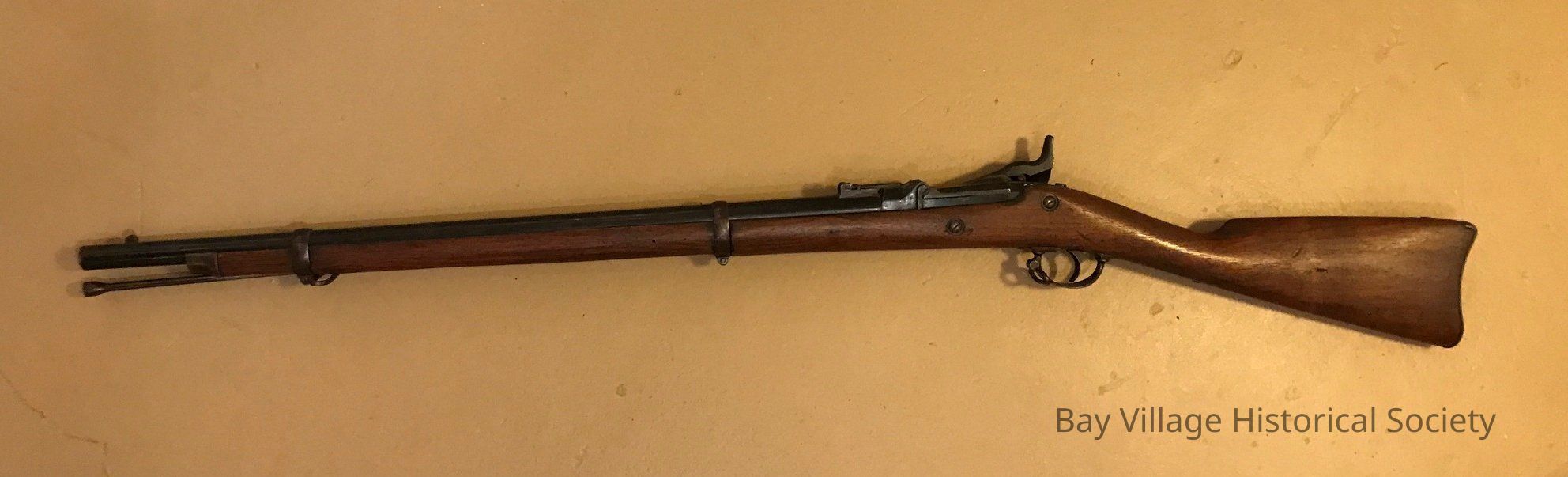
Bannerman Trapdoor RifleEntry/Object ID
1996.W.02Description
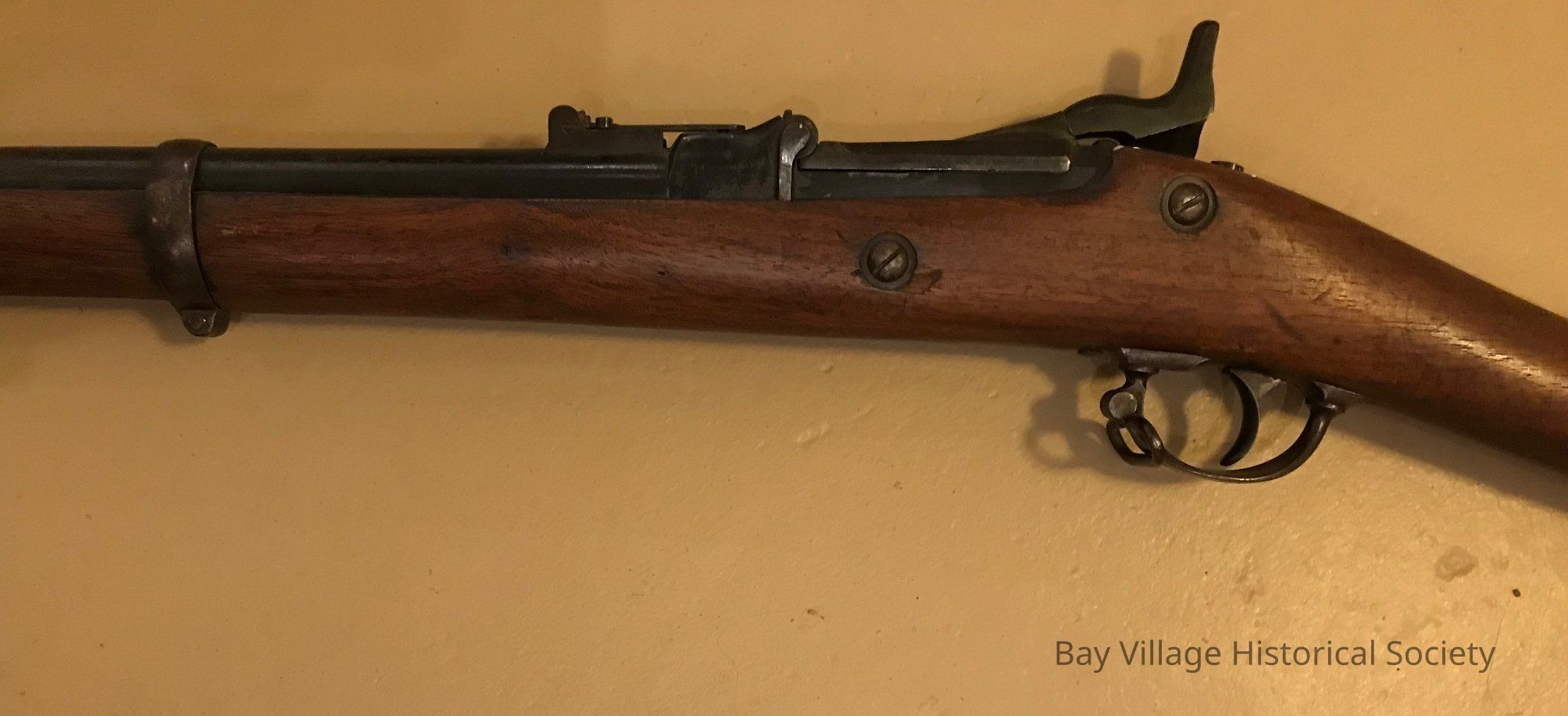
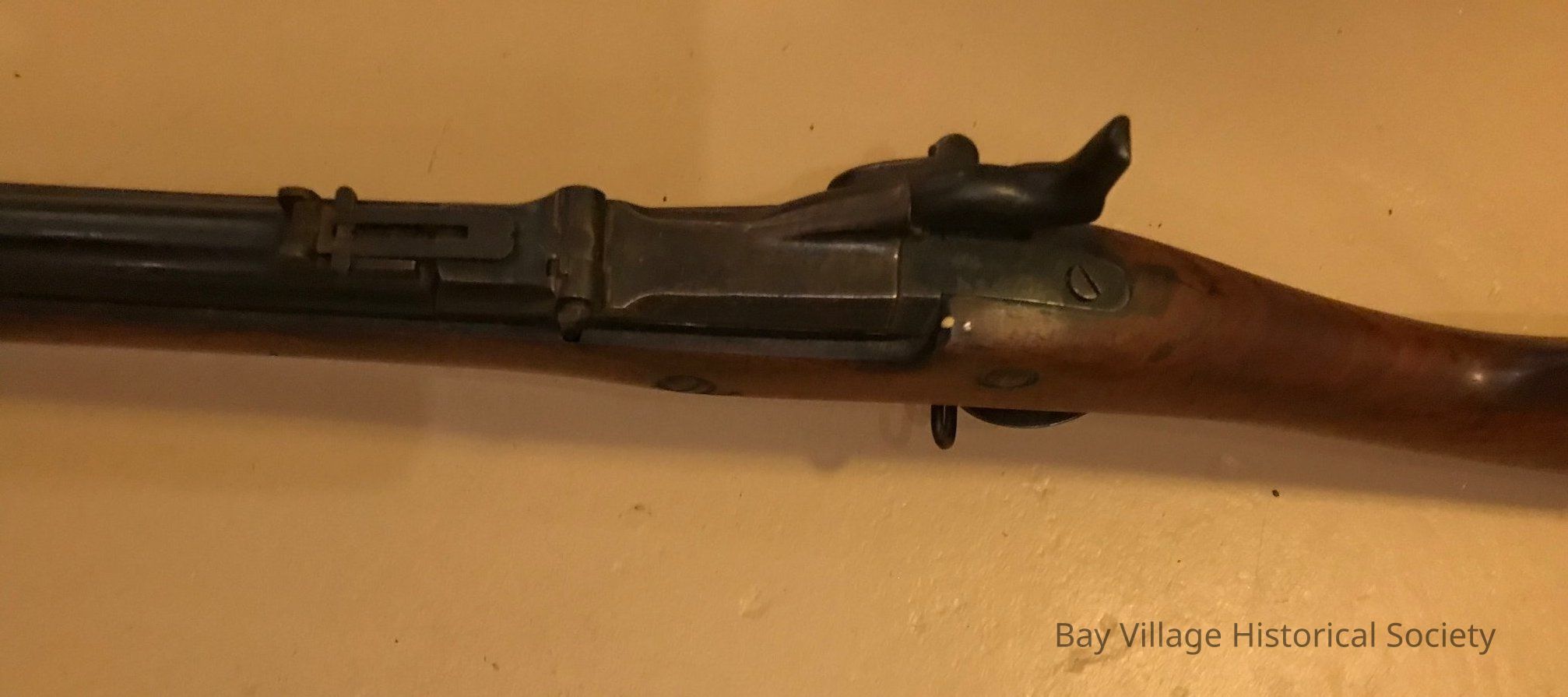
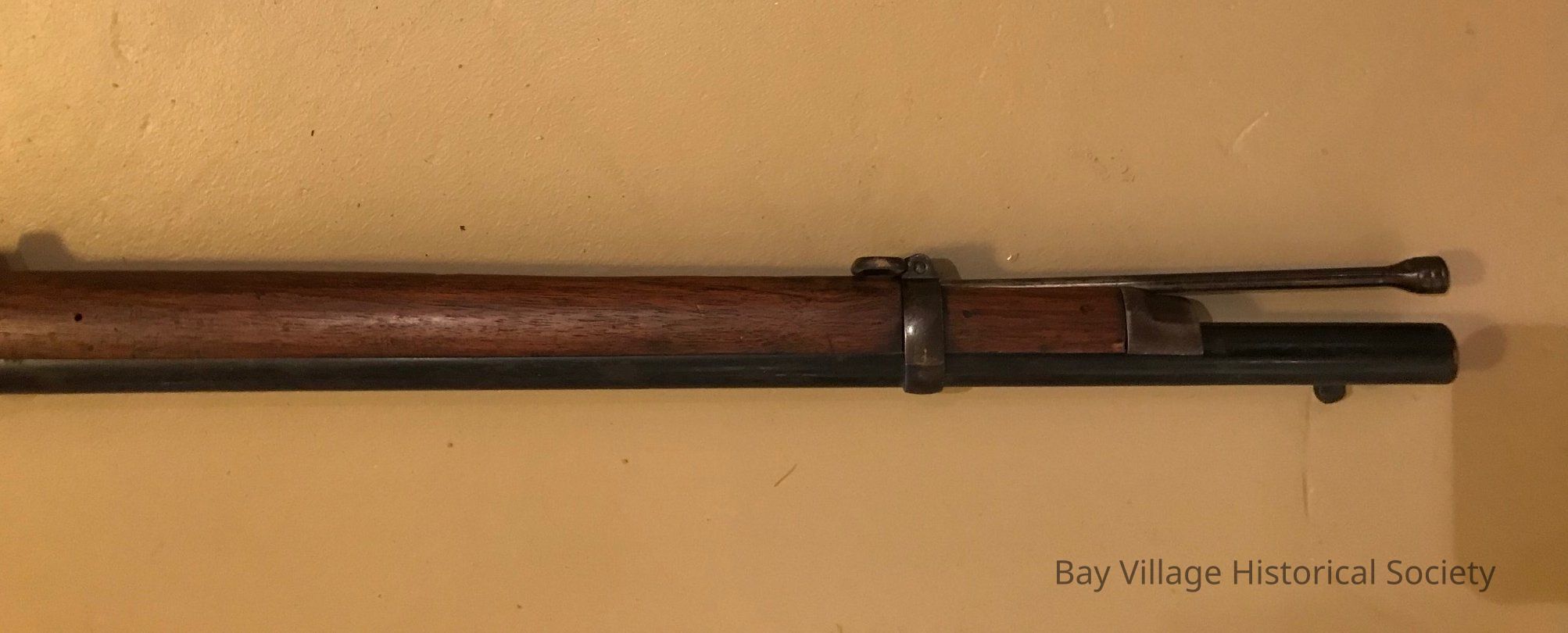
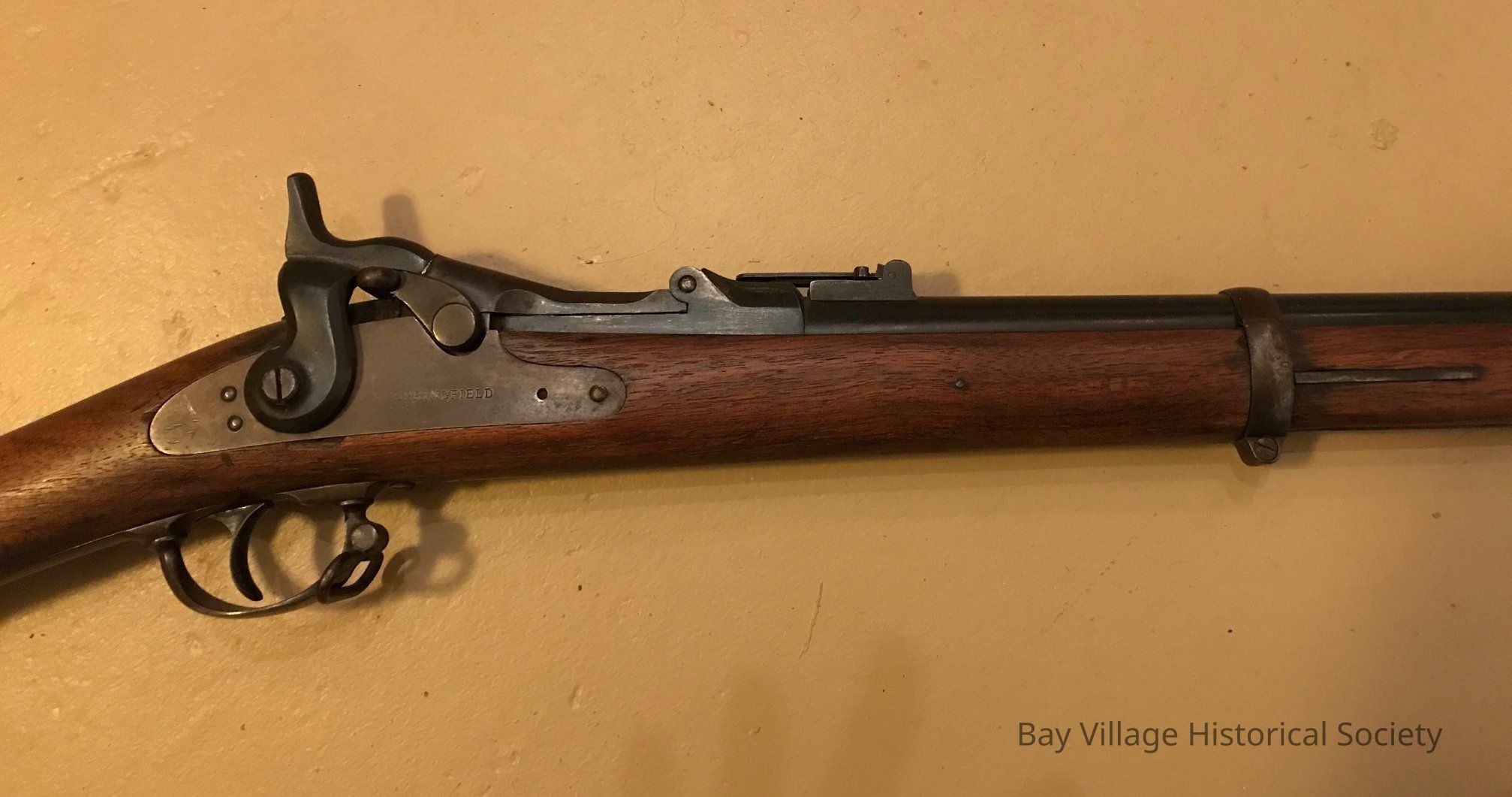
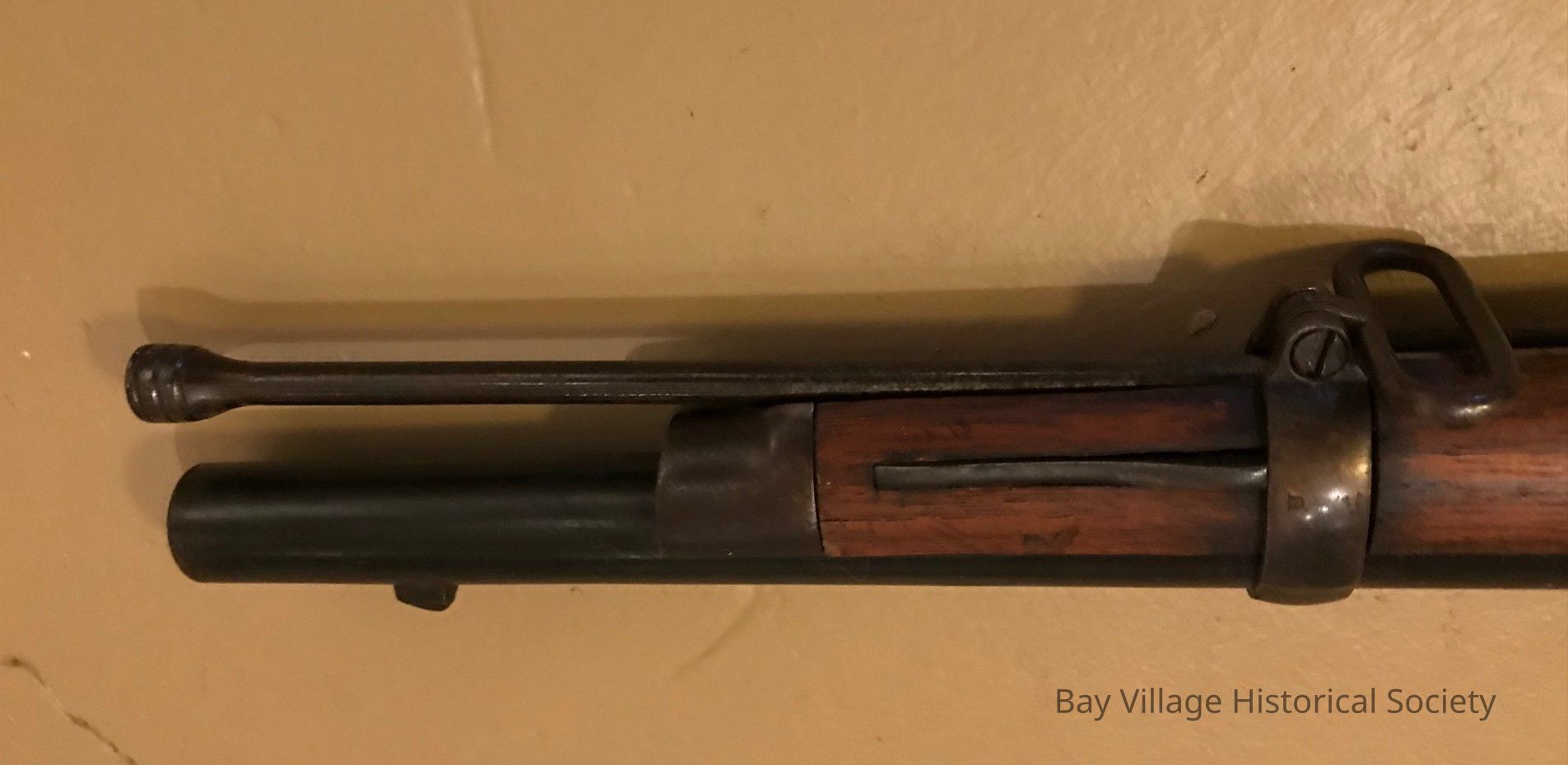
Bannerman trapdoor .50-70 caliber rifle. Walnut stock. Black powder. c Civil War
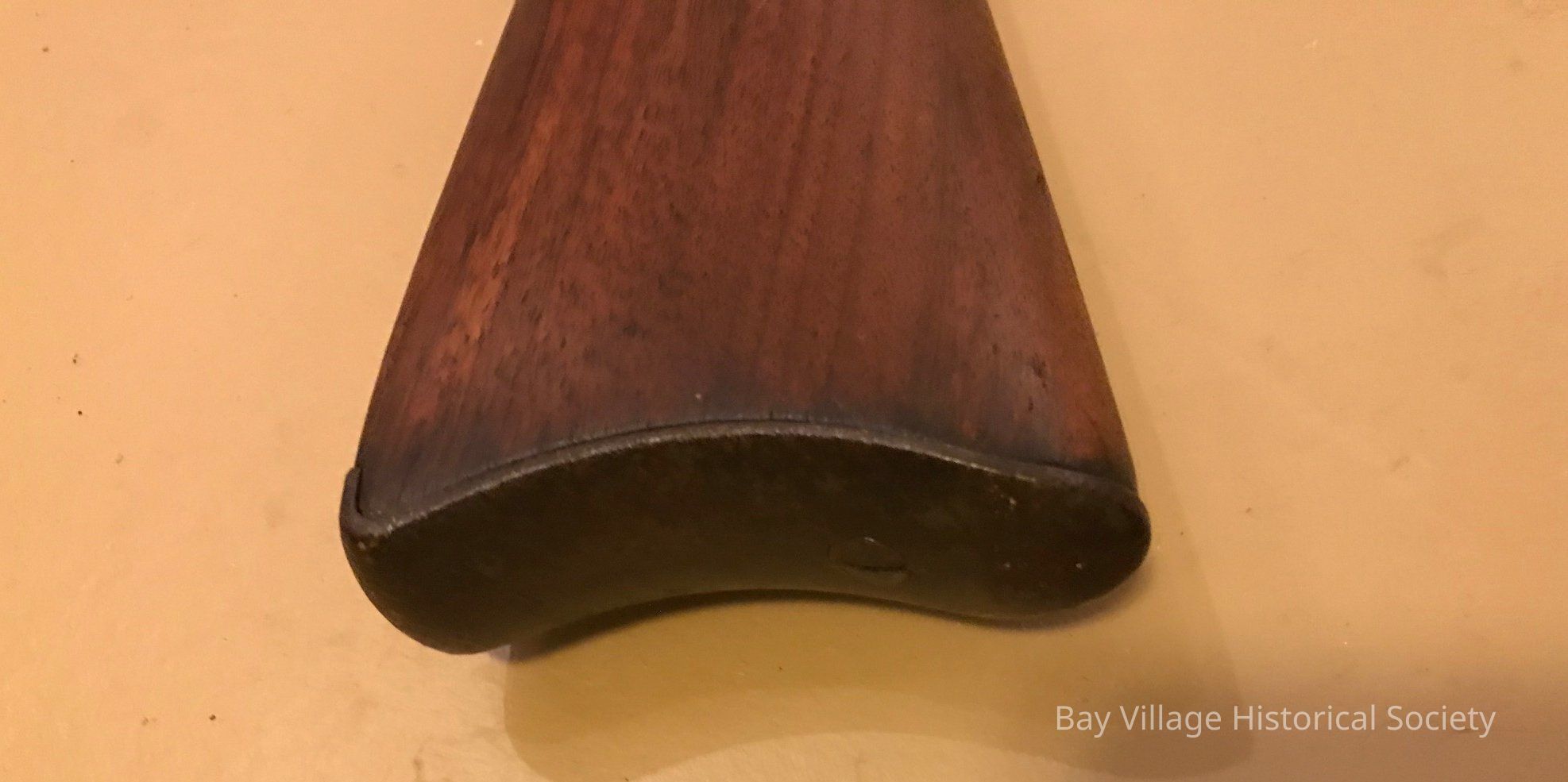
This gun was built as a military weapon, not a hunting gun. The side piece that is part of the trigger mechanism states Springfield, but the rest of the gun is not. Built originally as a muzzle loader and later changed into a breach loader. Trapdoors were originally muzzle loaders and didn't have the trapdoor mechanism but rebuilt. This gun can be reloaded faster than previous models. Not reliable over 100 yards and would just shoot in the general direction. Heavy butt plate.
This rifle is commonly referred to as a “trapdoor” rifle, based on the unique
breach-loading mechanism. The “Trapdoor” design originated in the late 1860’s as
a method to convert existing muzzle-loading rifles to utilize the then relatively new
self-contained metallic cartridges. By 1870 Springfield Armory was producing
original “trapdoor” models, in various versions until 1888. This specific example is
somewhat unique in that it does not conform exactly to any of the known models
produced by Springfield armory. This leads us to conclude it likely is linked to
another interesting part of American Small Arms history, Bannerman’s and
Bannerman Castle. This example is chambered in the .50-70 cartridge, which
preceded the still popular .45-70 Government cartridge. This chambering was
used in the 1868, 1869, and 1870 models. However, other characteristics
including barrel length, sling swivels, and stock design are not consistent with
these models. This leads us to a probable connection with Bannerman’s.
Bannerman was an eccentric New York arms dealer, most known for buying his
own island and building the Bannerman Castle to house his massive inventory of
surplus military arms. He was also known to assemble large quantities of
Trapdoor rifles from stockpiles of surplus parts and damaged firearms. These
Bannerman assembled firearms often exhibit a mix of features from various
official models. While impossible to establish with certainty, this example is
consistent with a Bannerman assembled trapdoor.
(Citations: Flayerman’s Guide to Antique American Firearms 9th edition, Pages
579-582)
The Springfield Model 1861 was a Minié-type rifled musket shoulder-arm used by the United States Army and Marine Corps during the American Civil War. Commonly referred to as the "Springfield" (after its original place of production, Springfield, Massachusetts),[5] it was the most widely used U.S. Army weapon during the Civil War, favored for its range, accuracy, and reliability.
The barrel was forty inches (102 cm) long, firing a .58 caliber Minié ball, and the total weight was approximately nine pounds (4,9 kg). The Springfield had a general effective range of 200 to 300 yards (183–274 m) but could reliably hit man sized targets out to 500 yards (457 m) when used by marksmen, and used percussion caps to fire (rather than the flintlock of the 18th century; the last U.S. flintlock musket was the Model 1840). Well-trained troops were able to fire at a rate of three aimed shots per minute while maintaining accuracy up to 500 yards, though firing distances in the war were often much shorter.
The Springfield Rifle cost twenty dollars each at the Springfield Armory where they were officially made.
The Model 1861 was certainly a step forward in U.S. small arms design, being the first rifled shoulder weapon to be produced on such a large scale (relatively few Model 1855 rifled muskets were produced, and the 1803 Harper's Ferry rifle was, and is, genuinely rare). However, some argue that its impact on the Civil war has been overstated. While more accurate in the hands of an experienced marksman, the rifled musket's accuracy was often lost in the hands of recruits who received only limited marksmanship training (the emphasis was on rate of fire). Further, most Civil War firefights were waged at a relatively close range using massed-fire tactics, minimizing the effect of the new rifle's long-range accuracy. Lastly, the .58 caliber bullet, when fired, followed a high parabolic trajectory. As a result, many inexperienced soldiers who did not adjust their sights would shoot over their enemies heads in combat. There are numerous accounts of this happening in the war's earlier battles. With this in mind, soldiers were often instructed to aim low. https://en.wikipedia.org/wiki/Springfield_Model_1861
During the Civil War over 1,5000,000 of the 1861 pattern rifle muskets were produced by the Springfield National Armory and 2 private Contractors.Collection
Military CollectionDimensions
Width
1-3/4 inLength
46 inDimension Notes
Stock: 4.25"Relationships
Related Entries
Notes
1996.W.10, 2005.W.01, 2015.W.01.01, 2023.W.FIC.01