Name/Title
Paris Exposition of 1900 CardsEntry/Object ID
2000.FIC.02.044Scope and Content
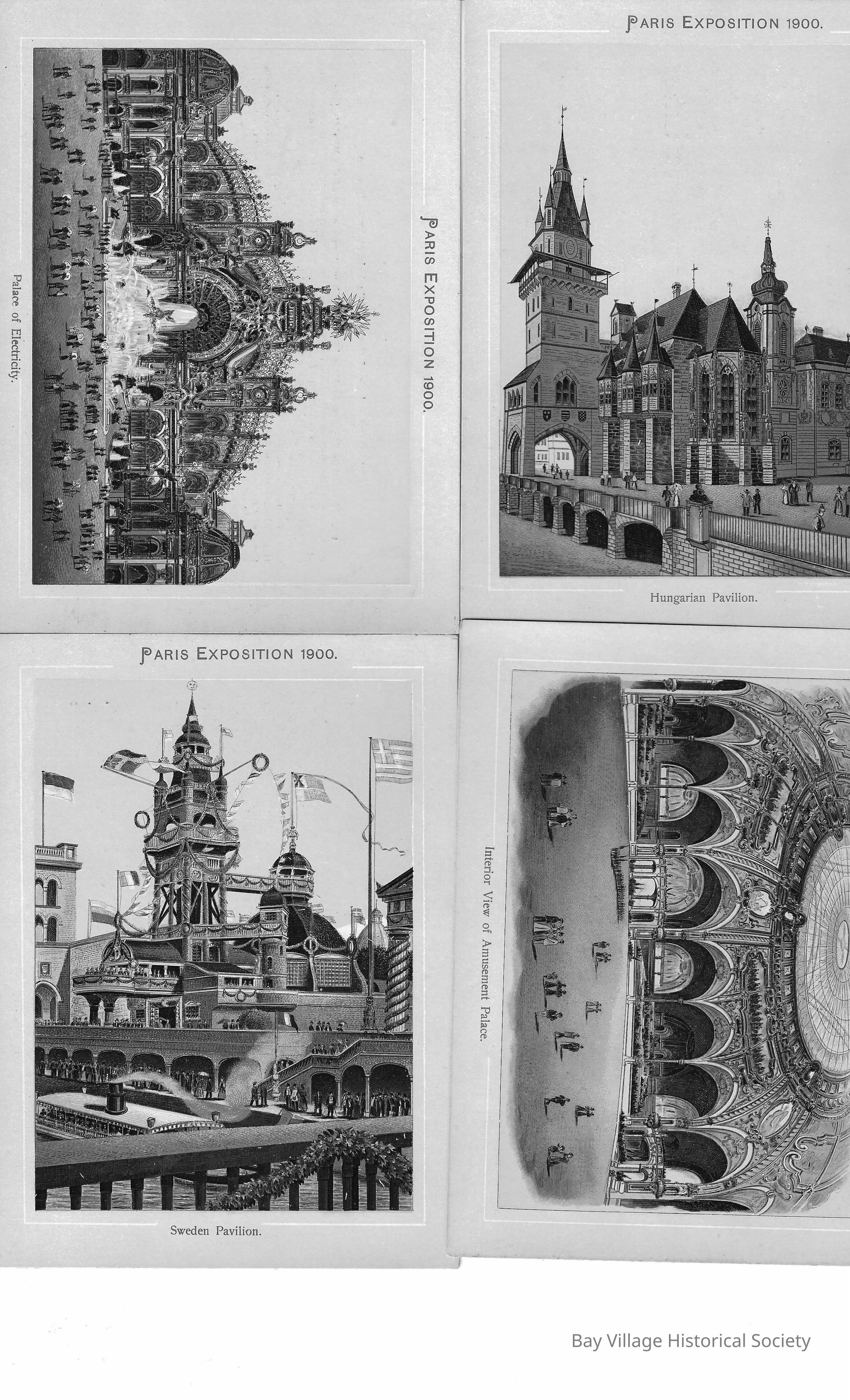
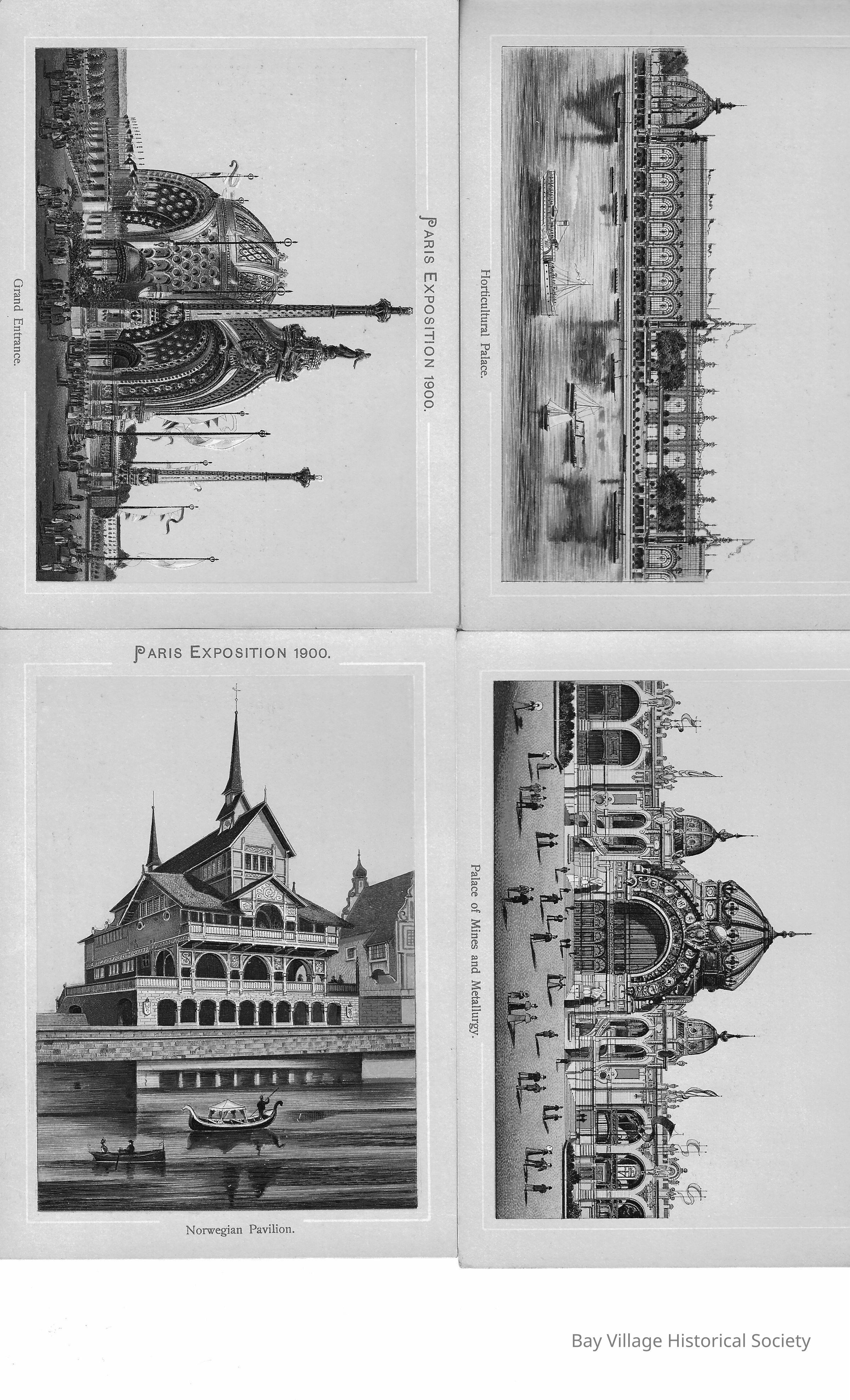
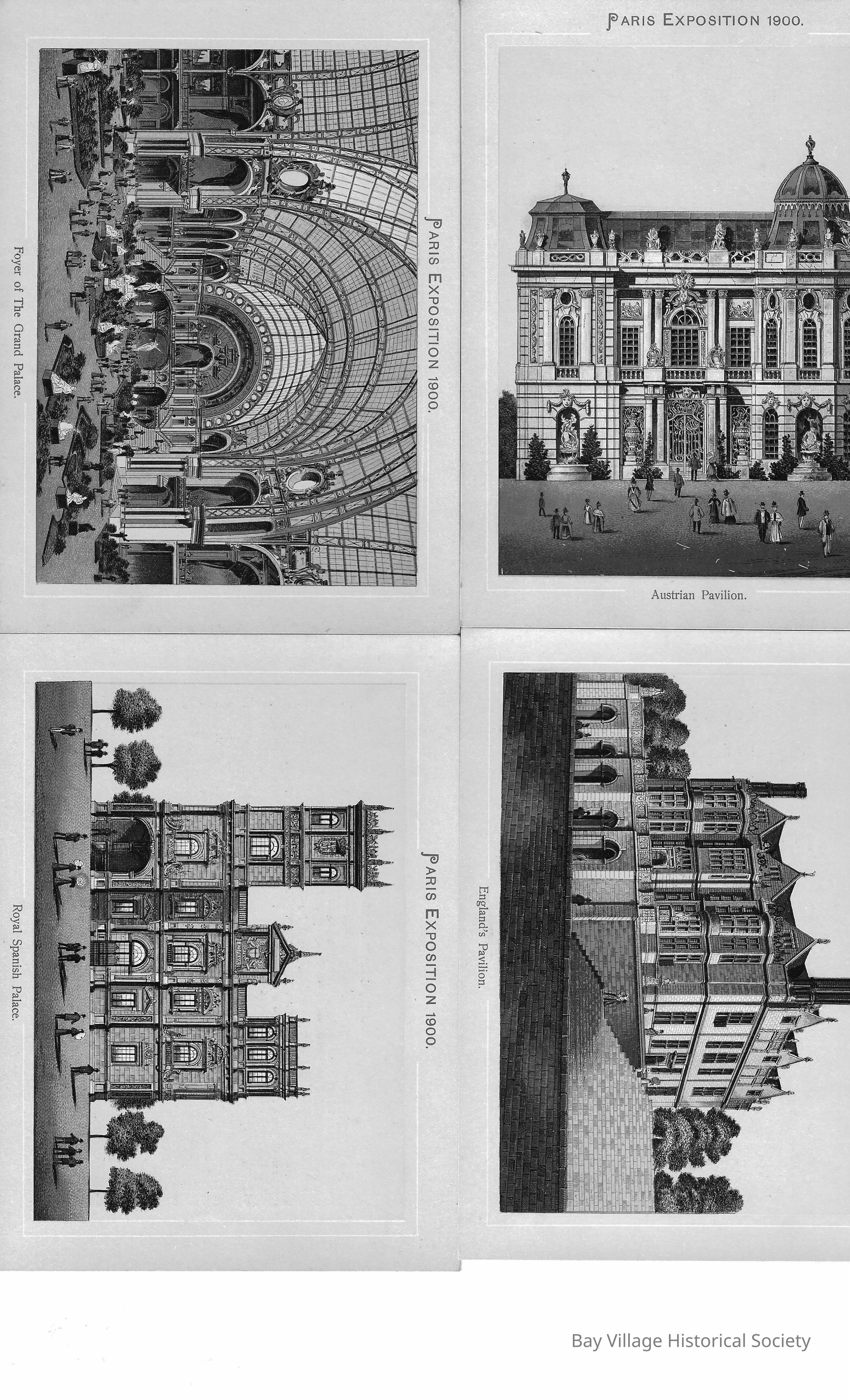
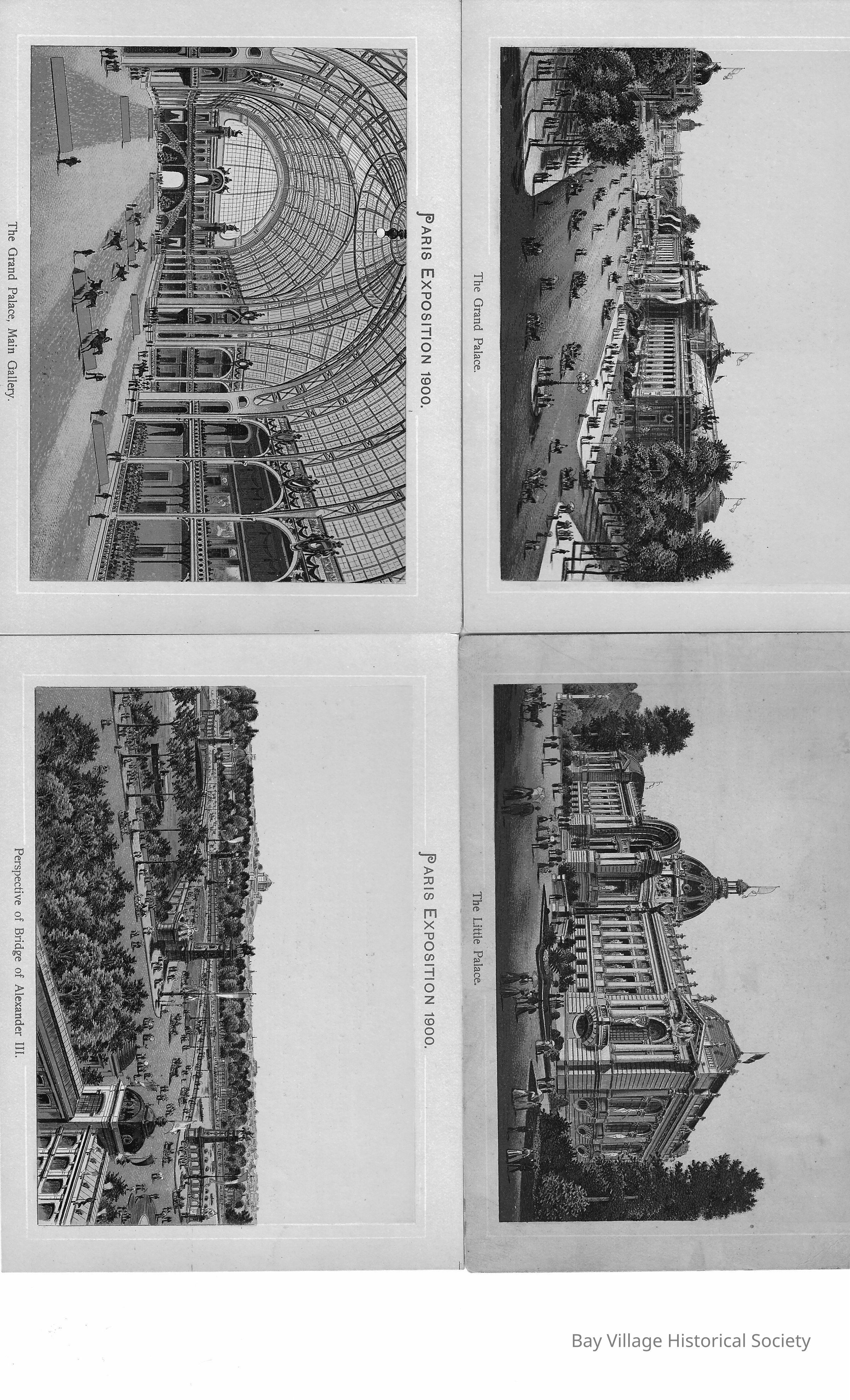
Complete set of 25 picture cards detailing the exhibits and exhibit halls of the 1900 Paris Exposition.
A. The Grand Palace Main Gallery.
B. The Grand Palace.
C. Perspective of Bridge of Alexander III.
D. The Little Palace.
E. Foyer of the Grand Palace.
F. American Pavilion.
G. Royal Spanish Palace.
H. England's Pavilion.
I. Grand Entrance.
J. Norwegian Pavilion.
K. Palace of Mines and Metallurgy
L. Horticulture Palace
M. Palace of Electricity
N. Sweden Pavilion.
O. Hungarian Pavilion.
P. Interior View of Amusement Palace.
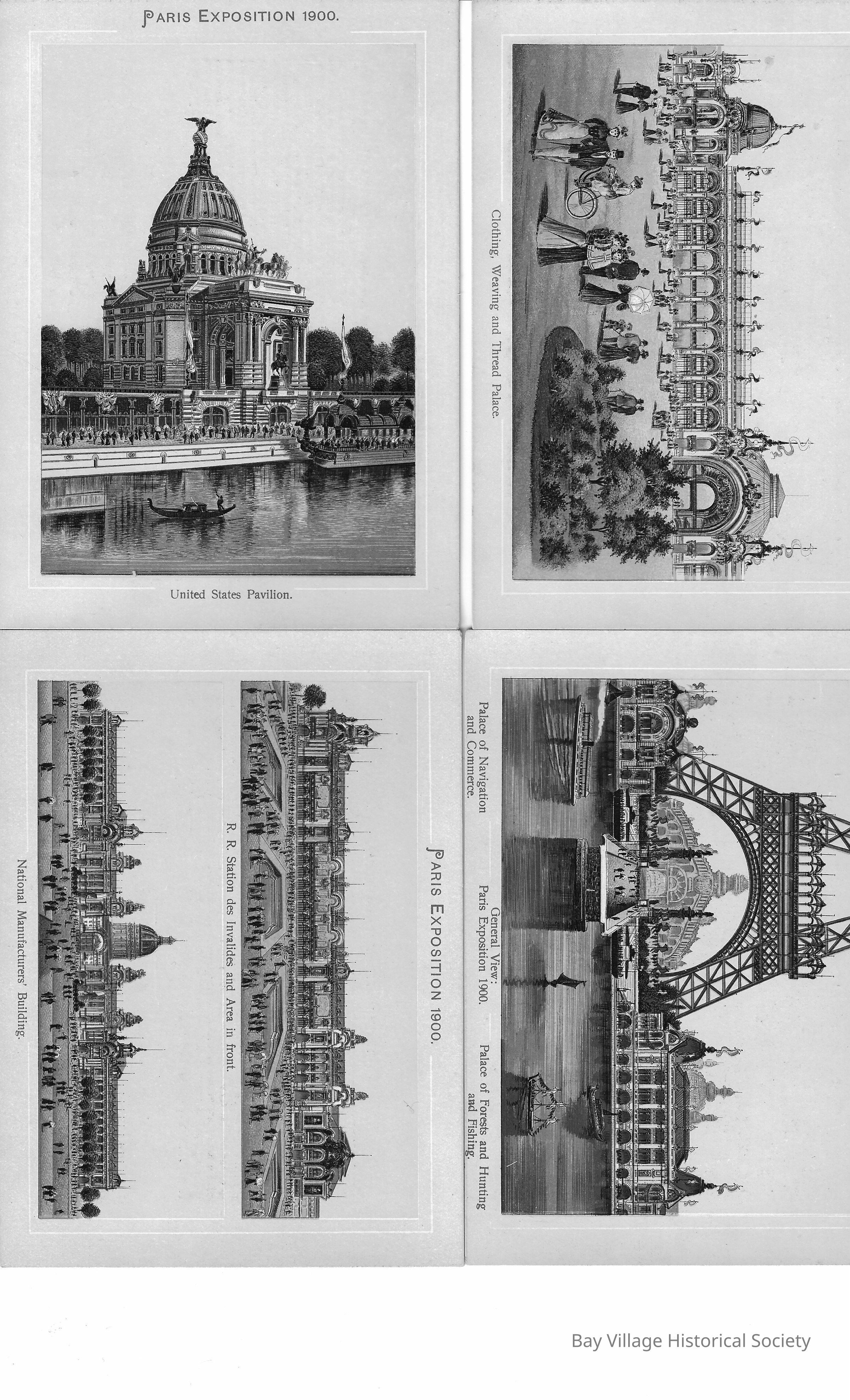
Q. United States Pavilion.
R. R.R. Station des Invalides and Area in front / National Manufacturers' Building.
S. Clothing, Weaving and Thread Palace.
T. Palace of Navigation and Commerce / General View: Paris Exposition 1900 / Palace of Forests and Hunting and Fishing
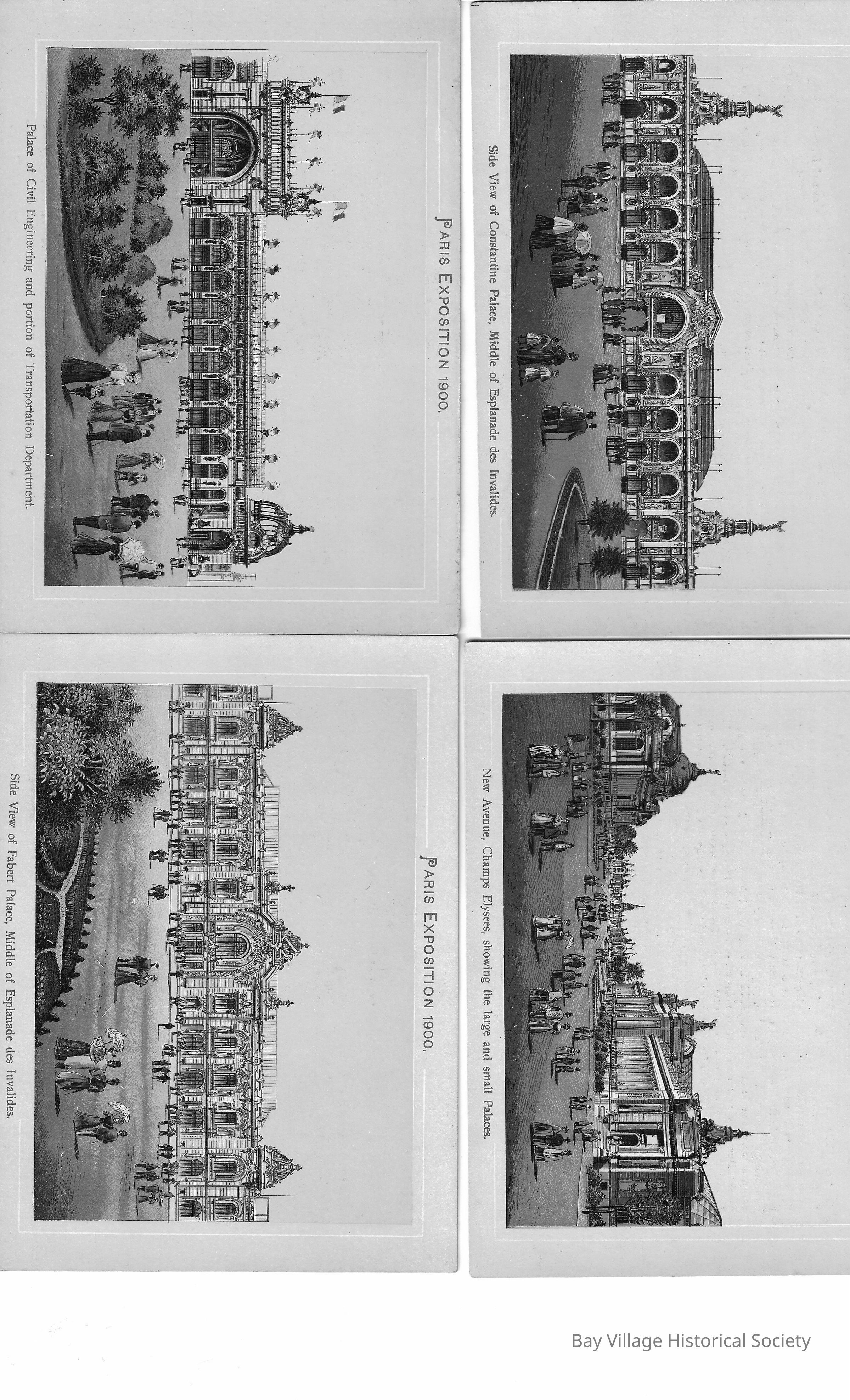
U. Palace of Civil Engineering and portion of Transportation Department.
V. Side View of Fabers Palace, Middle of Esplanade des Invalides.
W. Side View of Constantine Palace, Middle of Esplanade des Invalides.
X. New Avenue, Champs Elsees, showing the large and small Palaces.
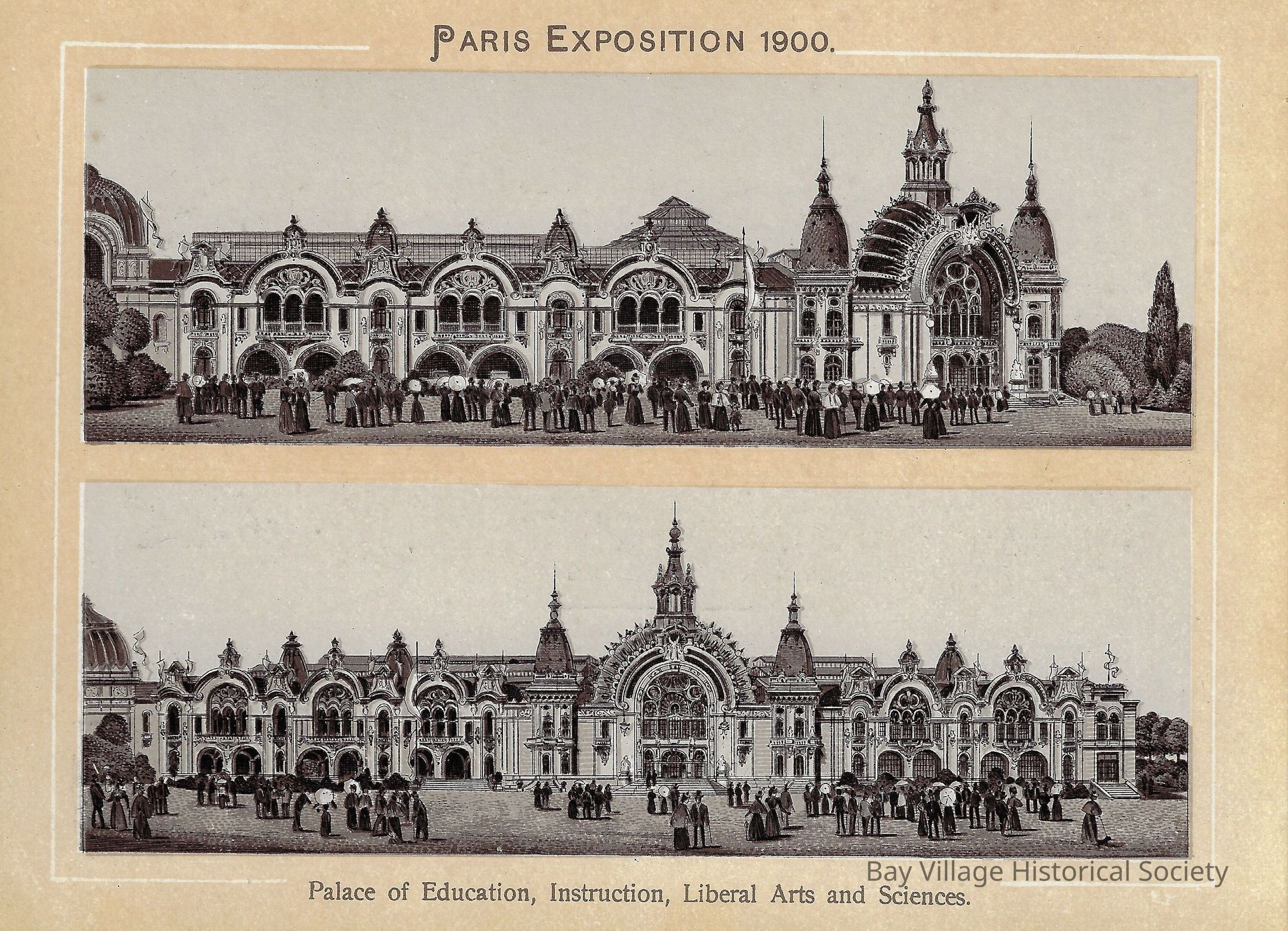
Y. Palace of Education, Industries and Liberal Arts
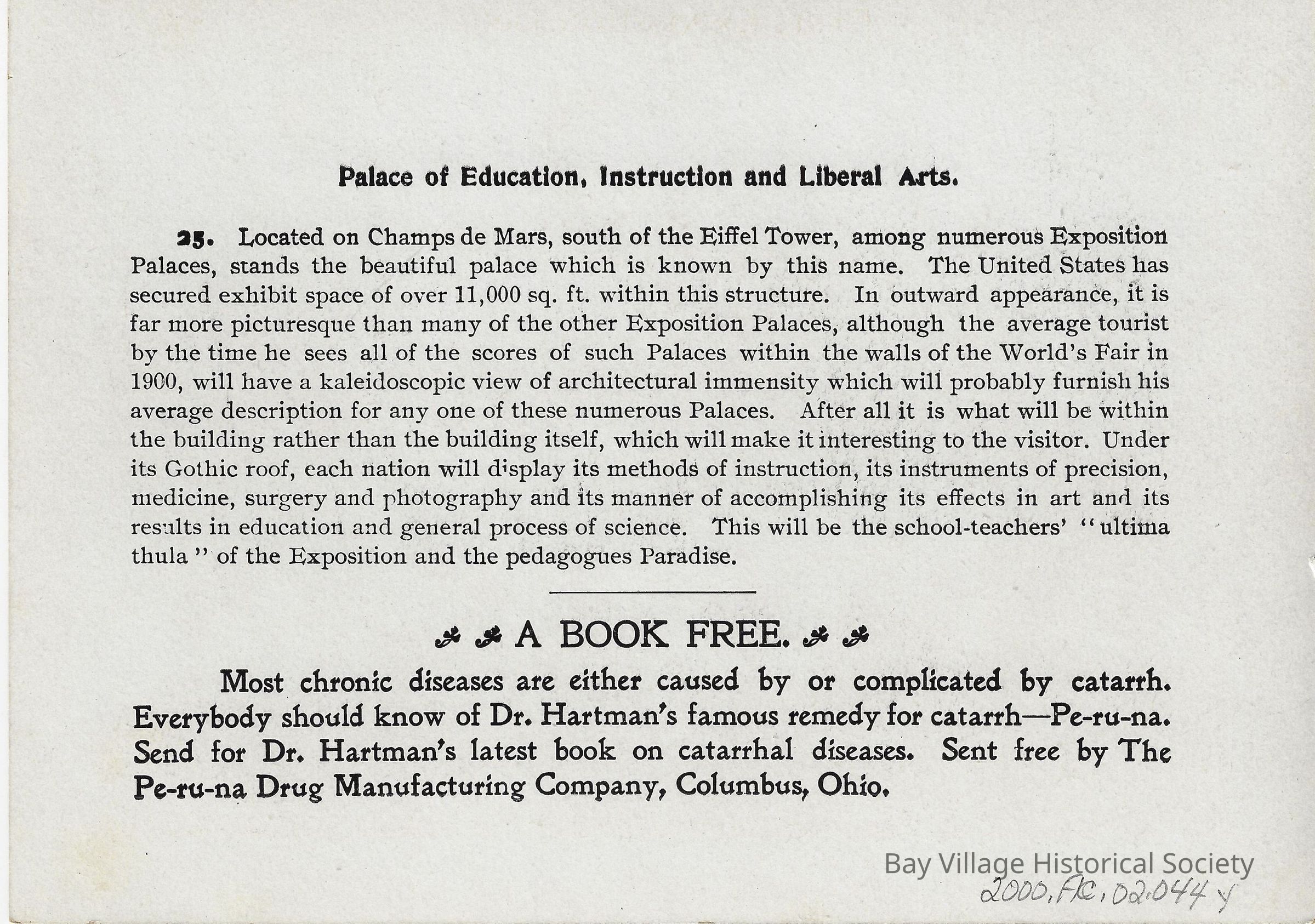
Back: Title of bldg., number of card, description of building.
Line
Symbols on the left and right with "BOOK FREE" in between.
Most chronic diseases are either caused by or complicated by catarrh. / Everybody should know of Dr. Hartman's famous catarrh remedy for catarrh. / Send for Dr. Hartman's latest book on catarrh disease. Pe-ru-na / drug manufacturer company, Columbus, Ohio
Catarrh is a build-up of mucus in an airway or cavity of the body. It usually affects the back of the nose, the throat or the sinuses (air-filled cavities in the bones of the face). It's often temporary, but some people experience it for months or years. This is known as chronic catarrh. Google
The Exposition Universelle of 1900, better known in English as the 1900 Paris Exposition, was a world's fair held in Paris, France, from 14 April to 12 November 1900, to celebrate the achievements of the past century and to accelerate development into the next. It was held at the esplanade of Les Invalides, the Champ de Mars, the Trocadéro and at the banks of the Seine between them, with an additional section in the Bois de Vincennes, and it was visited by more than 50 million people. Many international congresses and other events were held within the framework of the Exposition, including the 1900 Summer Olympics.
Many technological innovations were displayed at the Fair, including the Grande Roue de Paris ferris wheel, the Rue de l'Avenir moving sidewalk, the first ever regular passenger trolleybus line, escalators, diesel engines, electric cars, dry cell batteries, electric fire engines, talking films, the telegraphone (the first magnetic audio recorder), the galalith and the matryoshka dolls. It also brought international attention to the Art Nouveau style. Additionally, it showcased France as a major colonial power through numerous pavilions built on the hill of the Trocadéro Palace.
Major structures built for the Exposition include the Grand Palais, the Petit Palais, the Pont Alexandre III, the Gare d'Orsay railroad station and the entrances of Paris Métro stations by Hector Guimard; all of them remaining today, including two original entrances by Guimard.
Planning for the 1900 Exposition began in 1892, under President Carnot, with Alfred Picard as Commissioner-General. Three French Presidents and ten Ministers of Commerce held office before it was completed. President Carnot died shortly before it was completed. Though many of the buildings were not finished, the Exposition was opened on 14 April 1900 by President Émile Loubet
Countries from around the world were invited by France to showcase their achievements and cultures. Of the fifty-six countries invited to participate with official representation, forty accepted, plus an additional number of colonies and protectorates of France, the Netherlands, Great Britain, and Portugal.
Most of the palaces and buildings constructed for the Exposition Universelle were demolished after the conclusion of the Exposition and all items and materials that could be salvaged were sold or recycled. They were built largely of wood and covered with staff, which was formed into columns, statuary, walls, stairs. A few of the major structures built for the Exposition were preserved, including the Grand Palais and the Petit Palais, and the two major bridges, the Pont Alexandre III and the Passerelle Debilly, though the latter was later dismantled and moved a few dozen meters from its original placement. https://en.wikipedia.org/wiki/Exposition_Universelle_(1900)#cite_note-39Collection
Early Family Papers: CahoonRelationships
Related Person or Organization
Person or Organization
Hartman, Dr.