Westerwald Mug

Name/Title

Westerwald Mug

Description

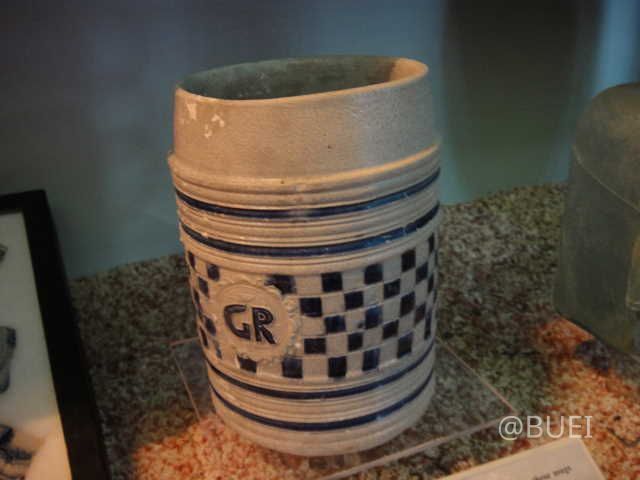
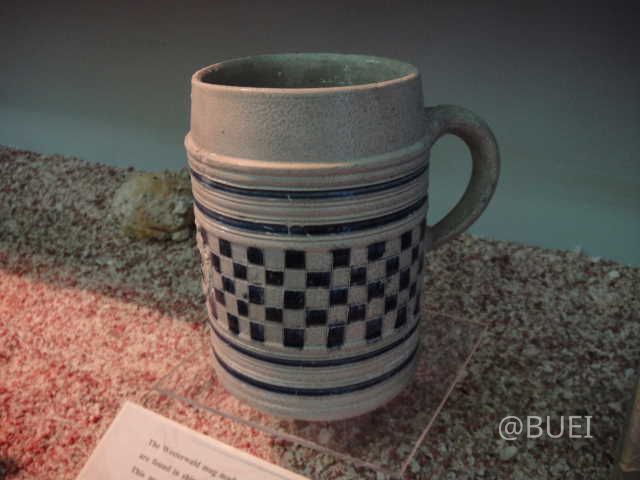
Large mug, cylindrical and uniform in size and shape. D shaped handle Mug with handle that begins just below the mouth and ends halfway down on body. Incised rings with alternating pattern of blue and grey on the top and bottom of the mug, with a checkerboard pattern of cobalt and grey squares between it.

Made/Created

Time Period

Circa 1720

Place

* Untyped Place

Germany

Notes

The medallion would have been applied by a method known as sprig-molding, where a stamp is used to impress a design on a small piece of clay which is then applied to the vessel wall. Westerwald's were salt-glazed, meaning that during the firing process large quantities of salt were introduced into the kiln. The salt vitrified (converted into a glass-like substance) upon contact with the vessels, producing a shiny glaze and a characteristic ‘orange peel’ texture on the surface of the pots.

Inscription/Signature/Marks

Type

Makers Mark

Location

Top of the handle

Transcription

"4"

Material/Technique

Inscribed

Type

Seal

Location

Body of the mug

Transcription

"GR"

Material/Technique

Inscribed

Dimensions

Height

15.24 cm

Diameter

10.16 cm

Material

Ceramic

Location

* Untyped Location

Restoration Case

Condition

Overall Condition

Good

Relationships

Related Places

Place

* Untyped Place

Dump Site, Atlantic Ocean

Island

Bermuda

General Notes

Note Type

Historical Note

Note

Fragments from mugs similar to this one are found in shipwrecks and land sites from the 15th century to the present day.

Note Type

Historical Note

Note

These decorations were applied to vessels meant for export from Germany to England and then to her colonies in commemoration of the king. King George I, II, and III ruled successively between 1714- 1820, however, because Rhenish stonewares decline in popularity towards the end of the 18th century it is more likely that GR represents the reign of either King George I (1714-1727) or King George II (1727-1760).