Description
This proverb, “He who upsets a thing should know how to rearrange it,” expresses a clear ethic of responsibility. It insists that action carries obligation: anyone who disrupts order must also possess the wisdom, skill, or discipline to restore it. The proverb is not merely a warning against carelessness; it is a statement about maturity, accountability, and the moral weight of intervention.
At a deeper level, the saying speaks to leadership and consequence. It rejects destruction without foresight and disturbance without remedy. To alter a situation; whether in family, community, politics, or daily life; is to assume responsibility for what follows. The proverb therefore honors not only action, but competent action: the ability to repair, reorganize, and bring balance back to what has been unsettled.
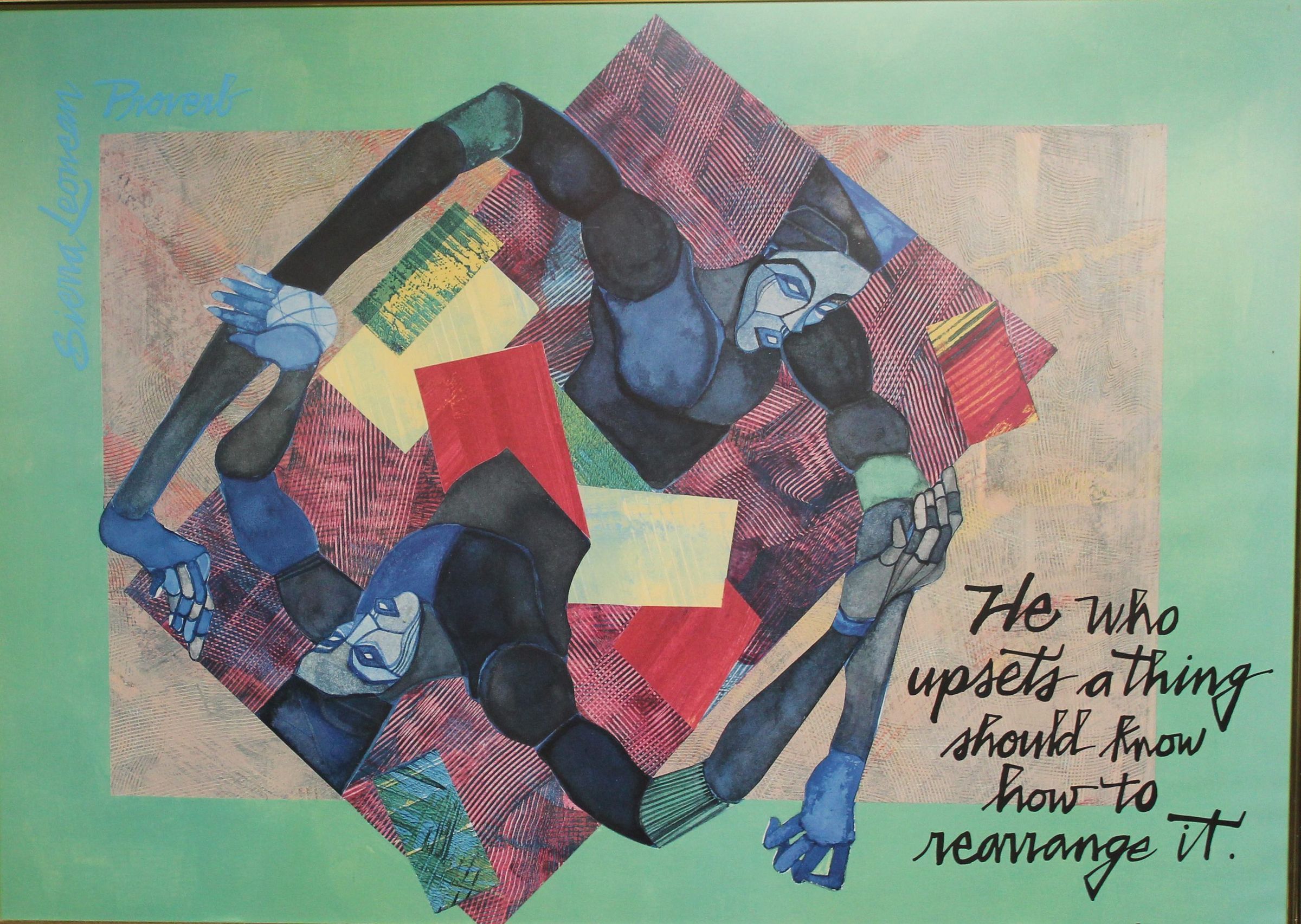
The artwork gives this idea visual form through its interlocking, twisting figures and fractured geometry. The bodies appear caught in a circular motion of strain and adjustment, suggesting both disruption and the labor of reassembly. Angular blocks of color reinforce the sense of something broken apart and actively reordered, while the linked hands imply that restoration is deliberate work rather than accidental recovery. The composition turns the proverb into a visual meditation on consequence, effort, and control.
As a proverb, it stands as a powerful statement on responsible power: to unsettle the world is easy; to restore coherence is the true measure of wisdom.Type of Print
Digital PrintCreate Date
November 29, 2023Update Date
April 17, 2026