Tags
Baseball Hall of FameDescription
Buck O’Neil played, managed, coached, scouted and served as an executive for nearly eight decades – but his incredible legacy expands far beyond just baseball.
John Jordan “Buck” O’Neil was born Nov. 13, 1911, in Carrabelle, Fla. The family later moved to Sarasota, where he spent much of his childhood. O’Neil, the grandson of a slave, was not allowed to enroll at Sarasota High School because he was Black, so he attended Edward Waters College in Jacksonville instead.
O’Neil got his start in semipro ball before spending time with various barnstorming and minor league clubs. He broke into the Negro American League with the Memphis Red Sox in 1937, then latched on at first base for the Kansas City Monarchs in 1938. He would remain with the club for nearly two decades.
From 1939-42, the Monarchs captured four consecutive Negro American League pennants, sweeping the Homestead Grays in the Negro League World Series in 1942. But O’Neil had to step away from baseball in 1943 when he was drafted into the Navy. The year he returned, 1946, Kansas City reached the World Series again, this time falling to the Newark Eagles in seven games.
In 1948, O’Neil was named player-manager of the Monarchs – a role he would hold until 1955. O’Neil discovered and developed a number of future talents, including Banks and Elston Howard, who would become the first Black player for the New York Yankees.
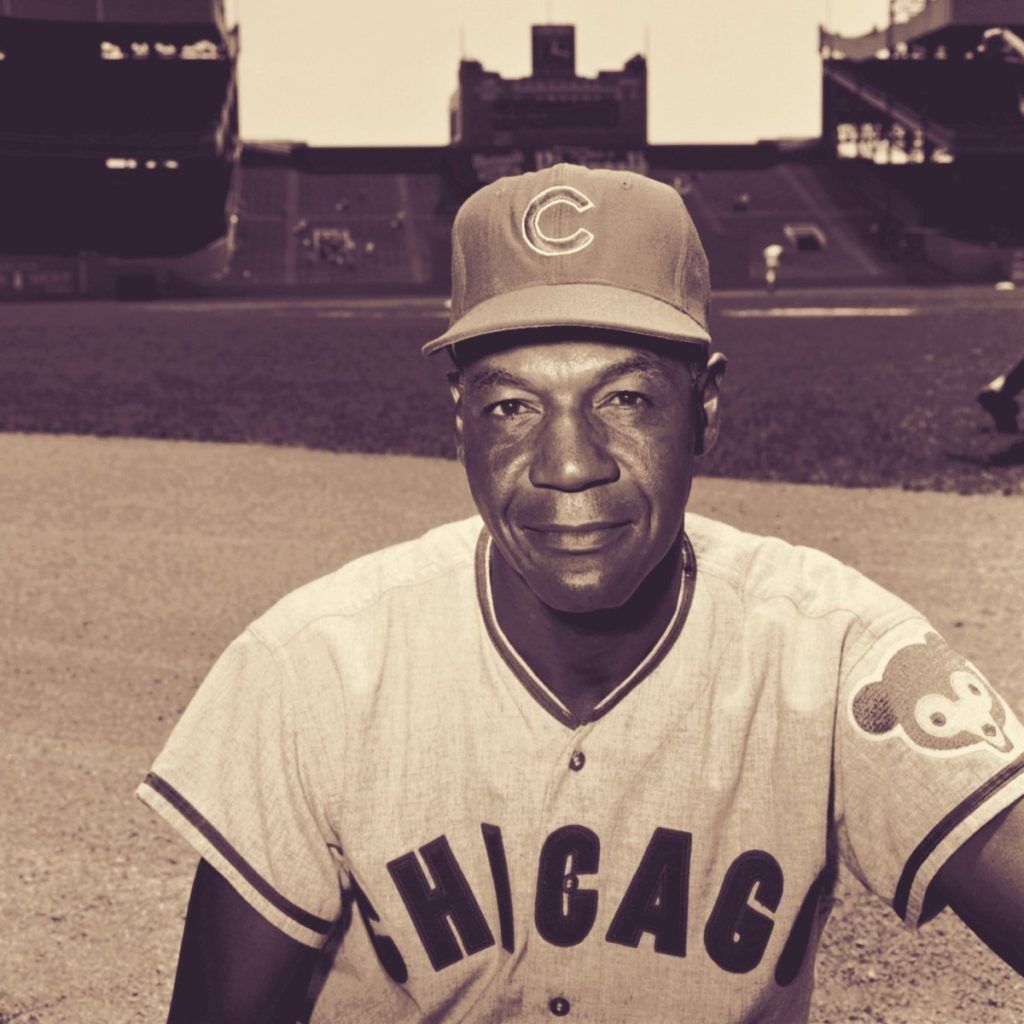
O’Neil departed Kansas City in 1955 and signed on as a scout for the Chicago Cubs. There, he continued to prove his ability for talent identification, signing future big leaguer Oscar Gamble and future Hall of Famer Lou Brock.
The Cubs promoted O’Neil to their major league coaching staff in 1962, making him the first Black coach to serve on an AL or NL roster.
He returned to scouting in 1964 and later signed future Hall of Famer Lee Smith before the Royals brought him back to Kansas City as a scout in 1988.
Upon his return to Kansas City, O’Neil was determined to create a permanent museum to honor the legacy of the Negro Leagues. The Negro Leagues Baseball Museum, located in the 18th and Vine neighborhood of downtown Kansas City, was established in 1990, with O’Neil serving as chairman.
“Sometimes, I think God may have kept me on this Earth for a long time so I could bear witness to the Negro Leagues,” O’Neil once told the Kansas City Star.
When 17 Negro Leagues legends were inducted into the Hall of Fame in 2006, O’Neil came to Cooperstown for the Induction Ceremony and spoke on their behalf.
“I’ve done a lot of things I really liked doing,” O’Neil said in his speech. “But I’d rather be right here, right now, representing the people who helped build a bridge across the chasm of prejudice.”
Less than three months later, on Oct. 6, 2006, O’Neil passed away at 94 years oldContext
O’Neil was not just giving a speech; he was serving as a living witness for an entire generation of players and executives whom baseball had recognized far too late. O’Neil had spent decades preserving Negro Leagues history, helped found the Negro Leagues Baseball Museum in Kansas City, and said he felt God had kept him alive so he could “bear witness” to that legacy. That is why him speaking in Cooperstown carried so much weight: He was one of the last great public voices who could personally connect the Negro Leagues’ past to the baseball world of 2006.
So, in context, Buck speaking on the behalf of all 17 inductee's mattered because he represented three things at once: memory, justice, and dignity. He was honoring men and women who were denied equal opportunity in their careers, denied timely recognition afterward, and then finally welcomed into Cooperstown only after they were gone. His speech made sure the ceremony did not feel like a dry correction of the record — it felt like a human tributeCollection
Negro League Baseball Cards and MemorabiliaCataloged By
Charles OmamehCreate Date
March 30, 2026Update Date
May 5, 2026