Kayamba Shakers
Object/Artifact
Black Heritage Library
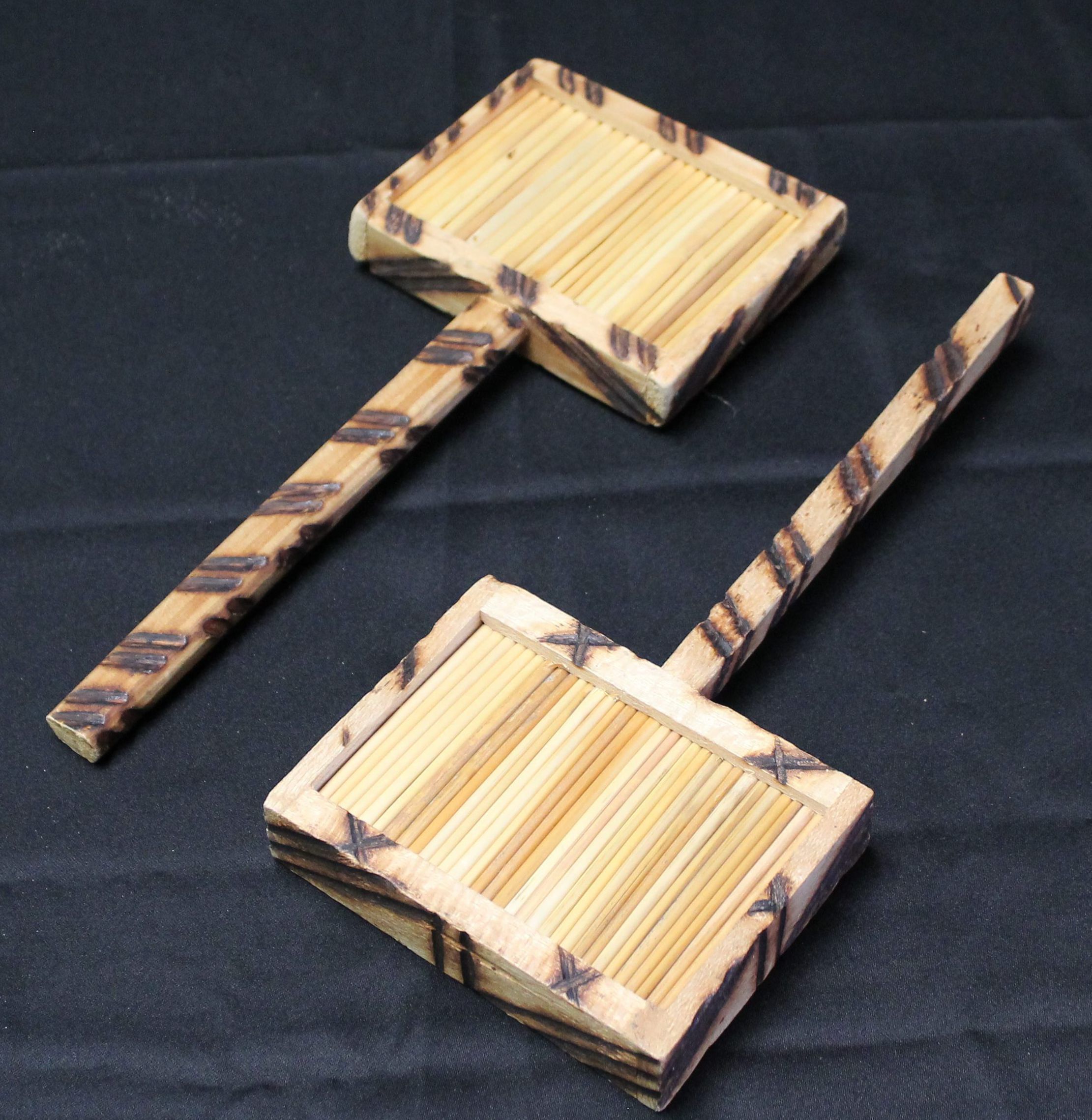
Two Kayamba Shakers
A pair of kyamba shakers made out of wood and decorated with wood burning patterns, one in "X" pattern and the other in "//"
Overview
Description
These kayamba shakers are compelling examples of percussion instruments built through repetition, balance, and controlled texture. Their flat rectangular bodies, lined with closely set reeds or slats, give them a striking architectural clarity, while the long handles extend the form into something both practical and visually elegant. The scorched decorative markings along the edges and handles introduce a rhythmic surface pattern that echoes the instruments’ sonic purpose, allowing ornament and function to reinforce one another. What gives the kayamba its significance is the way it produces sound through layered internal movement. Unlike a drum, which depends on struck tension, the kayamba creates rhythm through the shifting of enclosed material within its framed body. When shaken, it generates a dry, complex, rustling percussion that is subtle in volume but rich in texture. Its sound is therefore less about force than about pulse, density, and continuity, making it especially effective for sustaining rhythmic patterns within ensemble performance. As objects, these instruments are notable for their restraint. Their design is highly economical, yet far from plain: the clean geometry of the frame, the repeated linear slats, and the burned motifs across the wood all contribute to a strong visual identity. Even at rest, they suggest order, cadence, and movement. In museum terms, the pair stands as an elegant demonstration of how percussion instruments can embody structural intelligence as well as musical utility, translating simple materials into objects of rhythm, craft, and formal refinement.Collection
InstrumentsCataloged By
[email protected]Created By
[email protected]Create Date
June 20, 2023Updated By
[email protected]Update Date
April 20, 2026Use
Music