Mbira
Object/Artifact
Black Heritage Library
Mbira
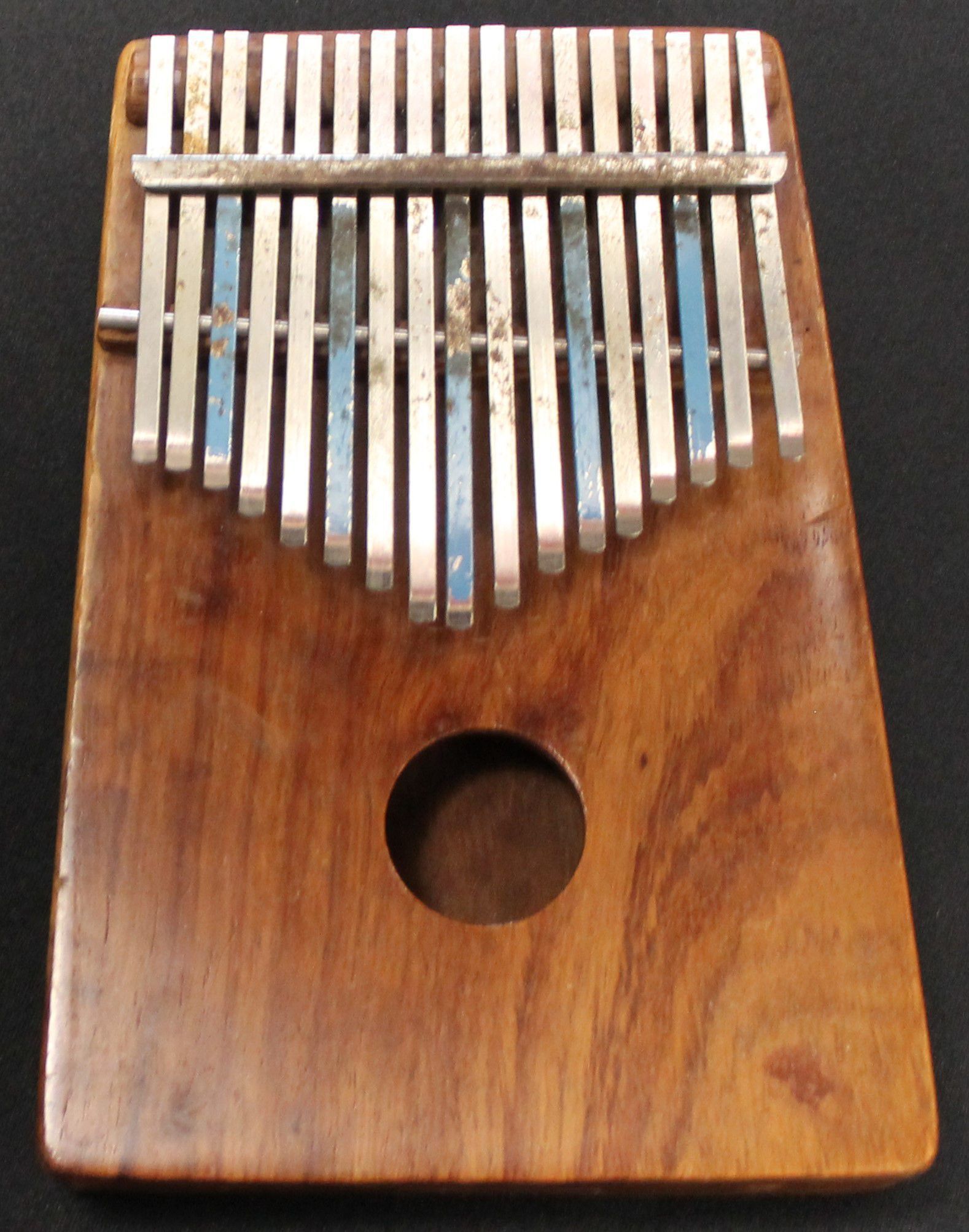
A mbira/thumb piano made of wood with a hole for resonance, and thin strips of metal that are the keys. The metal strips vary in length to create different notes, and every third key is a slightly different color
Overview
Description
This mbira presents the instrument in a more expanded and architecturally resolved form, combining visual order with acoustic sophistication. The polished wooden body is broad and carefully proportioned, while the long row of metal tines creates a striking field of repetition across the upper register of the board. The circular sound hole introduces an important structural and visual center, giving the instrument a stronger resonating presence and distinguishing it from simpler board-mounted examples. The result is an object whose clarity of design immediately communicates both precision and purpose. What gives this mbira its significance is the refined relationship between resonance and touch. Each metal tine is individually tuned, allowing the player to generate layered melodic patterns through the controlled pressure of the thumbs. The addition of the sound hole suggests a heightened concern with projection and tonal depth, expanding the instrument’s capacity to sustain and shape its voice. In musical terms, the mbira is remarkable for the way it transforms a small, intimate gesture into a complex field of rhythm and melody, often producing music that feels cyclical, meditative, and deeply resonant. As a museum object, this example is especially compelling for its formal discipline. The polished grain of the wood, the measured spacing of the tines, and the centered aperture all contribute to a composition of balance and restraint. Nothing is excessive, yet every element serves both sound and appearance. It stands as a refined statement of musical craftsmanship—an instrument in which structure, acoustics, and visual order are brought into elegant and enduring alignment.Context
This link includes a history of the mbira and an audio recording of instrument. https://qwest.tv/media/discover-the-mbira-a-brief-history/Collection
InstrumentsCataloged By
[email protected]Use
Musical instrument
Other Names and Numbers
Thumb piano
Materials
Wood, Metal