Easy chair
Name/Title
Easy chairEntry/Object ID
2009.01Description
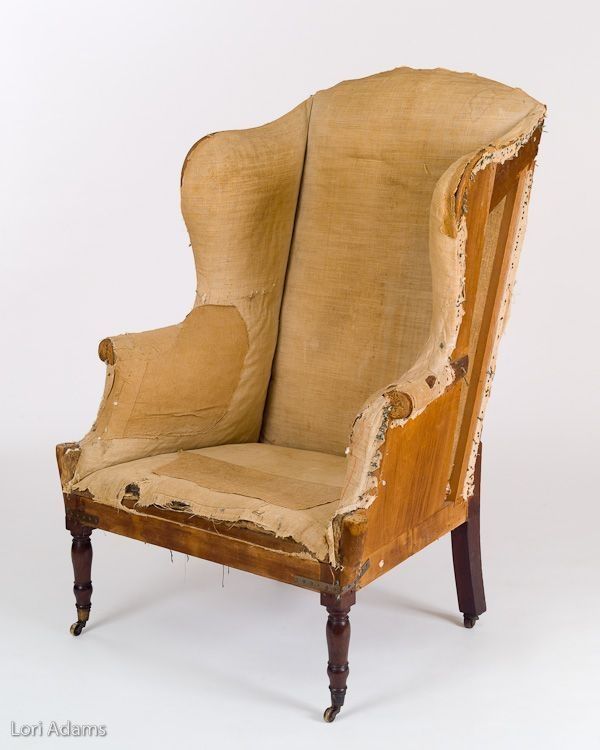
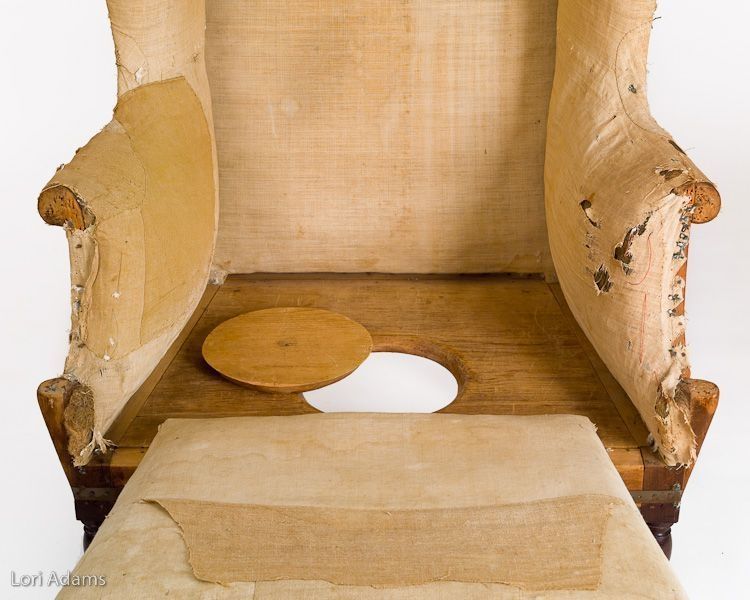
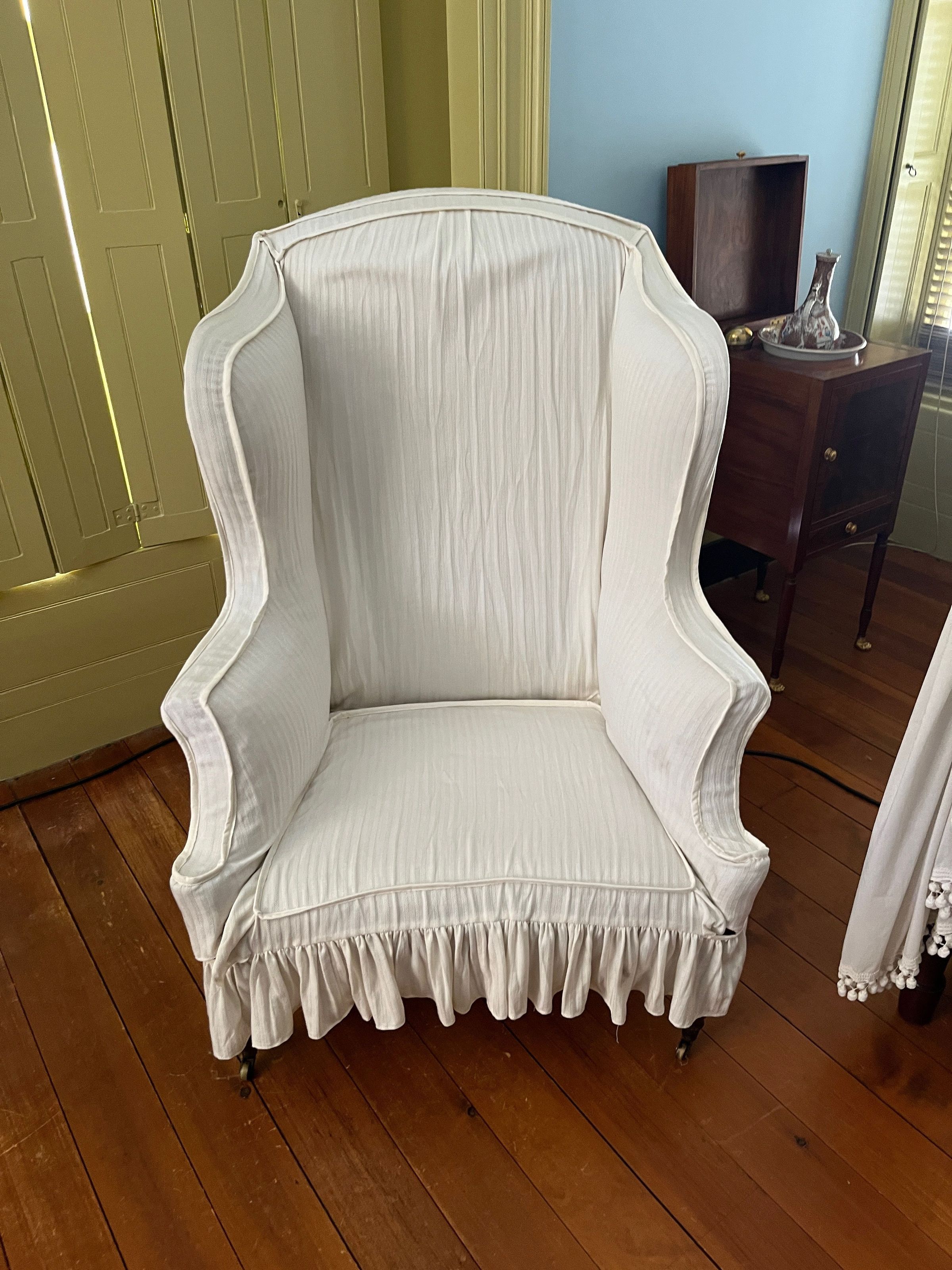
The front leg turnings are a long inverted baluster above a shorter inverted baluster, separated from the top block by a reel. Other New York furniture with this profile includes a set of armchairs made in 1812 by Lannuier for the Common Council Chamber, New York City Hall (Peter M. Kenny, Frances F. Bretter, and Ulrich Leben, Honoré Lannuier: Cabinetmaker from Paris [New York: Metropolitan Museum of Art, 1998], pl. 62) and a sofa attributed by Jones to Phyfe (Edward V. Jones, “Charles-Honoré Lannuier and Duncan Phyfe, Two Creative Geniuses of Federal New York,” American Art Journal 9, no. 1 [May 1977]: fig. 10). The French press at Boscobel (F 76.27, Tracy cat. no. 69) also has similar leg turnings.The easy chair legs stand on brass casters, which appear to be original. That on the proper right front leg has been reinstalled; the earlier screw holes are visible. The proper right front leg has split where the front seat rail tenon enters. The split stops abruptly where the decorative leg turning begins, but grain character continues into the turned section of the leg affirming that it is not a replacement. The joint has been glued relatively recently. Metal straps nailed in place have been added around both front leg stiles to secure the joints. The seat cushion is an upholstered slip seat. The original foundation upholstery remains and includes coarse woven burlap, stuffing of horsehair and tow, and linen. The underside is covered with another piece of burlap, which is an unusual addition but seams to be original. This coarser fabric is similar to the side and back panels of the chair, visible through the frame from the outsides of the chair. As reupholstered in the twentieth century, this chair also had a separate, 3-1/2 inch-high boxed seat cushion. The chair likely had no additional seat cushion originally, since the present upholstered slip seat offers adequate comfort and addition of another cushion raises the seat height significantly higher than the lower, vertical cones of the C scroll arms. Generations of use have probably flattened the loft of the slip seat an inch or so. Removal of the seat cushion exposes a white pine deck nailed to a seat rabbet formed by strips of wood nailed to the insides of the seat rails. A 9-1/2 inch circular wooden lid plugs the center hole. When delivered to Boscobel, the lid was nailed in place. Those nails were removed on September 4, 2009. Wood grain of the lid does not appear to align with that of the deck, although oxidation and tool marks on the underside are generally consistent. The lighter color of the lid may be ascribed to regular washing of the deck but not of the lid. If the lid is not original to this chair, it likely has been associated with the chair for many generations. Originally, the lid probably had a small piece of fabric attached to the center to facilitate removal. All evidence of the fabric is gone, but the nail shaft remains. The undersides of the front and rear seat rails show clear evidence of two rails running front-to-back. The rails were almost certainly rabbeted on the insides to create a track for a sliding frame to hold a chamber pot. A description printed in the 1811 Journeymen Cabinet and Chair Makers Pennsylvania Book of Prices notes a “slider under the frame, to draw out behind, with the pan,” which appears to describe the missing element in this chair. The chamber pot, probably made of pewter, dropped into a hole cut into the sliding frame; the pot was lifted out for emptying and cleaning. (A representative pewter example touch-marked by Frederick Bassett (1740-1800) of New York is in the Yale collection, acc. no. 1931.293. It is 8 inches tall; the diameter of the rim is 12 inches.) A thin strip of wood nailed front-to-back above and inside the missing proper left rabbeted rail remains in place. This single strip probably stabilized the chamber pot by running along the top of the pot rim when it was slidCategory
Furniture