Name/Title
TriopsEntry/Object ID
0101:0643Description
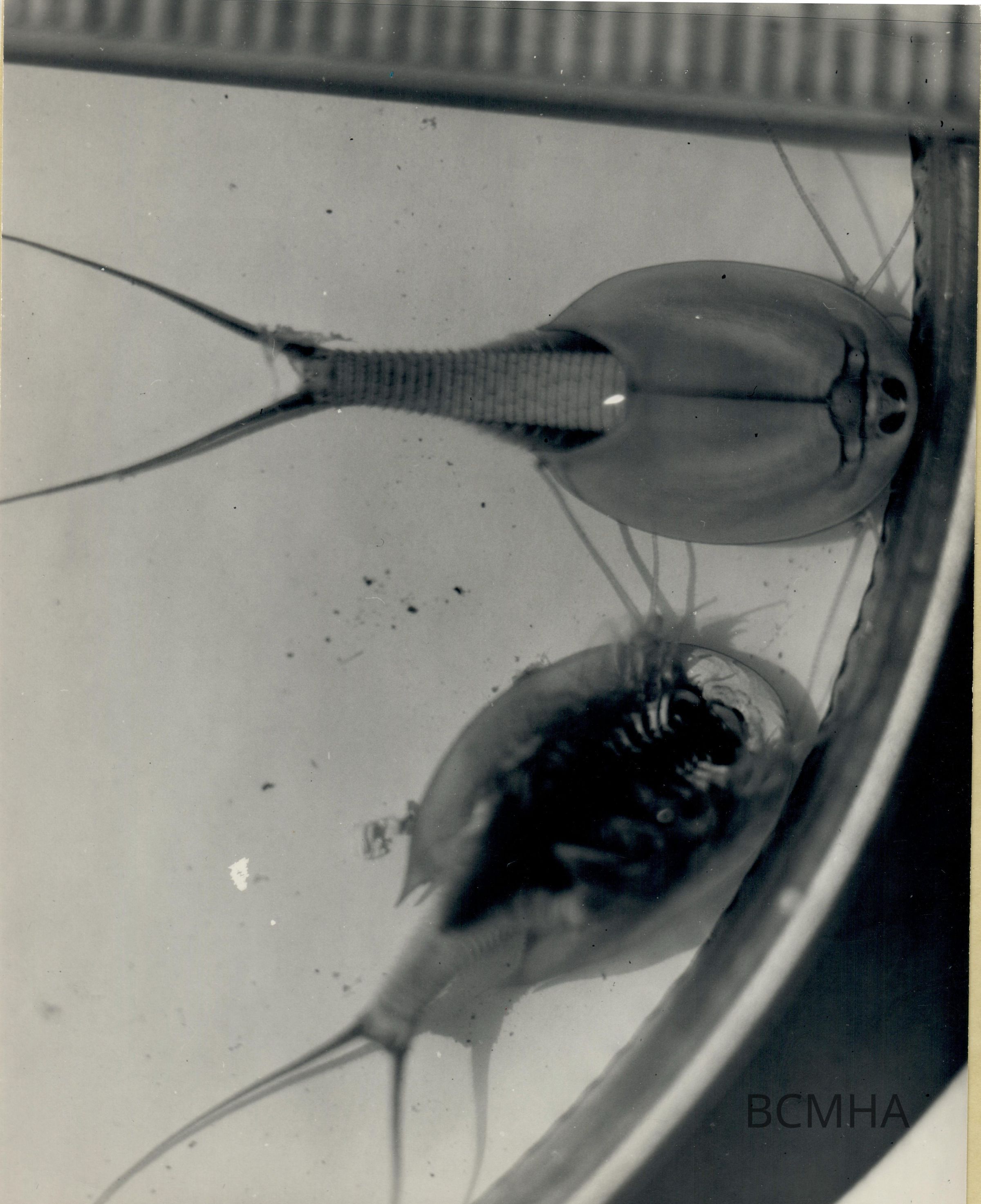
Triops; [Triops, or tadpole shrimp, are small crustaceans related to shrimp and crayfish.]
"living fossils" because they have remained largely unchanged for millions of years, and are considered to be a "living link" to the ancient past. They can be found in freshwater ponds, pools, and streams, and are often kept as pets or used in educational biology experiments.
*Possibly photographed at The Tucson Gem and Mineral Show®, founded in Tucson in 1955; is said to be the largest, oldest and most prestigious gem and mineral show in the world.; John E. Westen, photographerCollection
Photographers of Boulder CityMade/Created
Artist Information
Artist
Westen, John E.Role
PhotographerLocation
Location
* Untyped Location
Research Room, Photo Drawer 14Date
August 25, 2026General Notes
Note Type
Historical NoteNote
They're small and have a hard exoskeleton, three eyes, and two pairs of antennae.
Triops is a freshwater crustacean that looks like a small horseshoe crab. Some people refer to it as tadpole shrimp or longtail tadpole shrimp.
There are several different species of triops and some of the most common species include Triops longicaudatus, Triops australiensis, and Triops granarius.
Triops derives its name from Ancient Greek, which means "eye”, prefixed with Latin tri-, which means "three," in allusion to its three eyes.
Longicaudatus is a Latin neologism that combines the words longus ("long") and caudatus ("tailed") to describe its long tail structures.
Triops longicaudatus can be found in freshwater ponds and pools, especially in areas with few higher forms of life. Triops may currently be found on every continent except Antarctica, and there are at least 15 different species.
They are known for their ability to survive in extreme conditions and can survive in temperatures and drying conditions that would kill other aquatic animals.
The most common species of triops available for purchase is the American Triops longicaudatus.
This is a more golden-colored critter that grows significantly smaller than Triops cancriformis and prefers slightly higher water temperatures.
Despite having three eyes, Triops have terrible vision! They have several legs that serve as antennas for seeking food and breathing.
Triops may also use their legs to transfer food to their mouths. They may be observed swimming upside down half of the time, just like brine shrimp.
ASEXUAL REPRODUCTION
Triops can reproduce both sexually and asexually, meaning they can produce offspring without the need for a mate. Male-less populations are assumed to reproduce through parthenogenesis or hermaphroditism because females can produce viable eggs without without the presence of a male.
SIZE: HOW BIG TRIOPS IS?
Triops cancriformis has been observed in the wild reaching lengths of 4.5 inches (11cm) - not including the tail.Create Date
April 3, 2024Update Date
October 21, 2026