U. S. Bureau of Mines Collection - C-832-BC Melting Test Ingots of Titanium
0022:0153
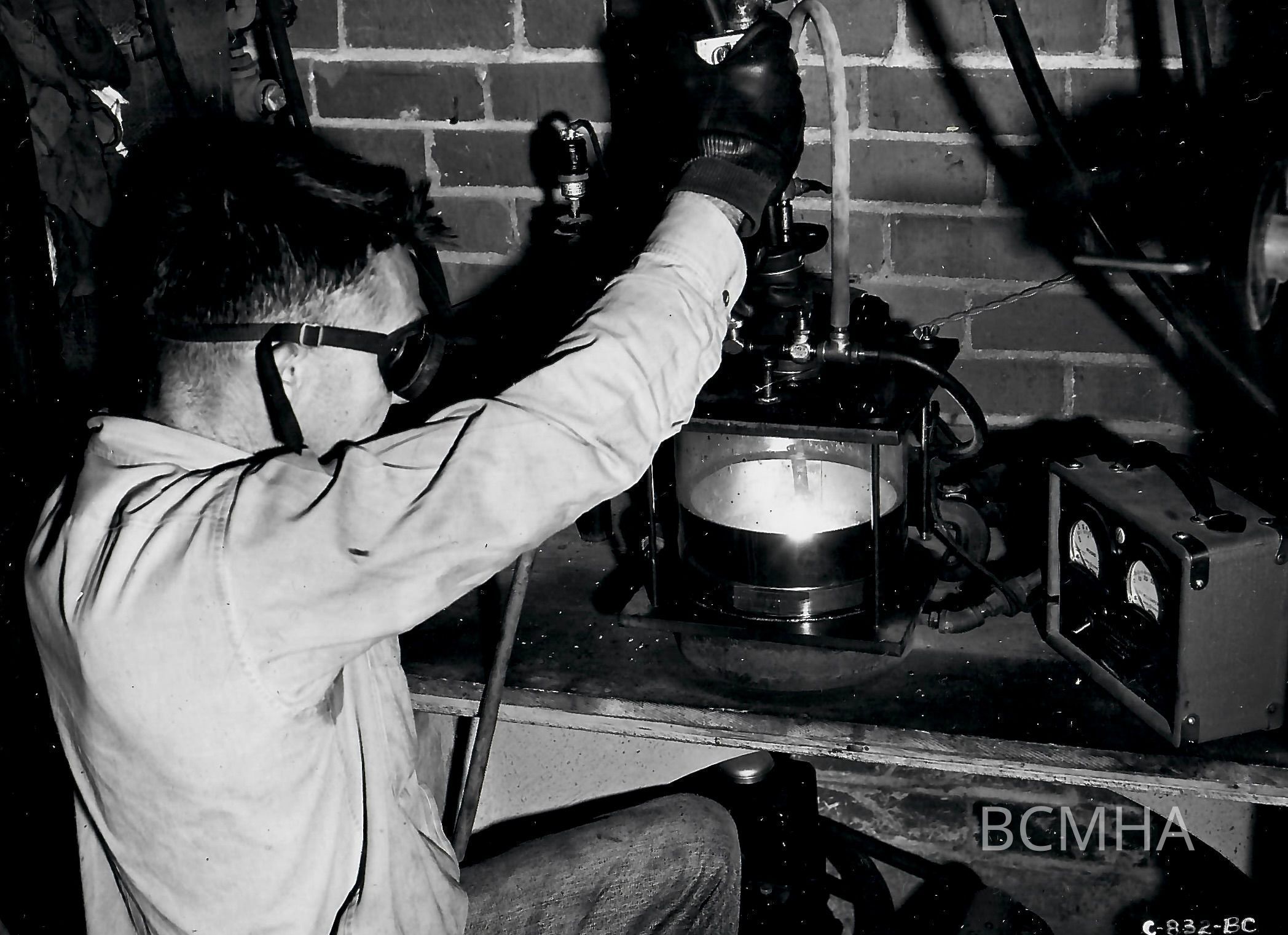
U. S. Bureau of Mines Collection - C-832-BC Melting Test Ingots of Titanium ["Since impurities act to harden titanium, a quick test of purity is to melt a sample of the sponge and measure the hardness of the resulting ingot. The softer the ingot, the greater the purity. The sample of sponge is pressed to form a small compact or briquette. Then it is placed on a water-cooled copper heart h in a small arc furnace. After a protective atmosphere of helium has been established, the compact is melted by an arc struck between it and a tungsten-tipped electrode. In the picture, the rubber-gloved operator can be seen manipulating the electrode as he melts a compact, and the flame of the arc can be seen through the glass walls of the furnace."]