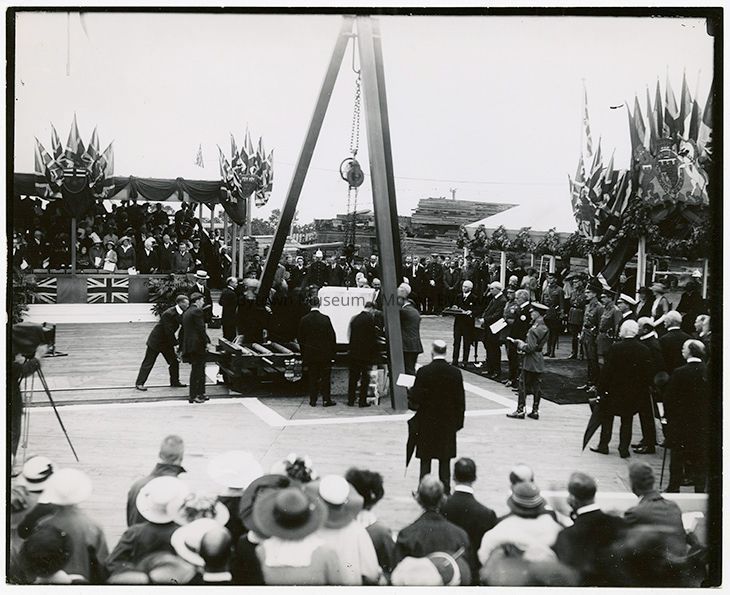
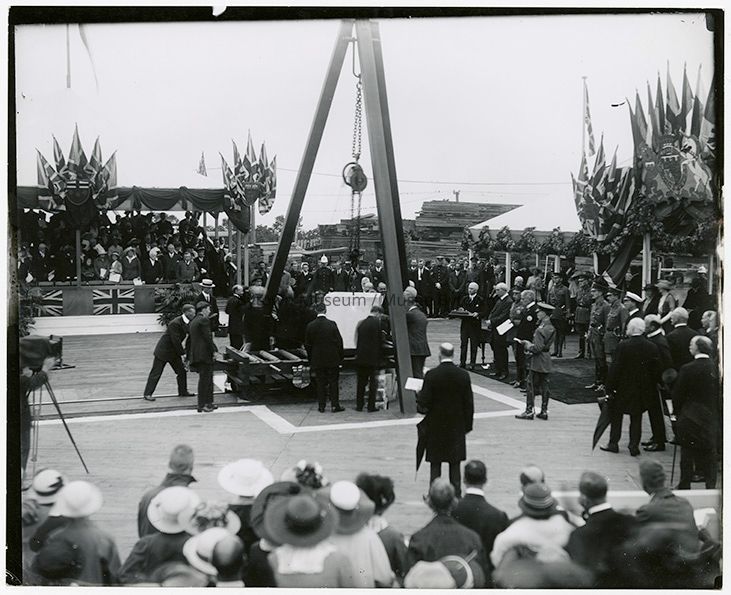
Photograph, Silver Gelatin: The Duke of Connaught laying the cornerstone for the new Parliament Buildings, Ottawa, September 1, 1916 (2 copies)
Entry/Object ID
2014.004.01.61.01-.02
Description
One black and white rectangular silver gelatin reproduction print depicting the Duke of Connaught laying the cornerstone for the new Parliament Buildings. A large tripod is holding the corner stone above it's place and grand stands have been constructed around the spot for the public to watch the ceremony. Decorations of flags, bunting, Union Jacks and Royal Crests have been used to decorate the stands and the roofs over the stands. The image seems to be taken part way through the ceremony of laying
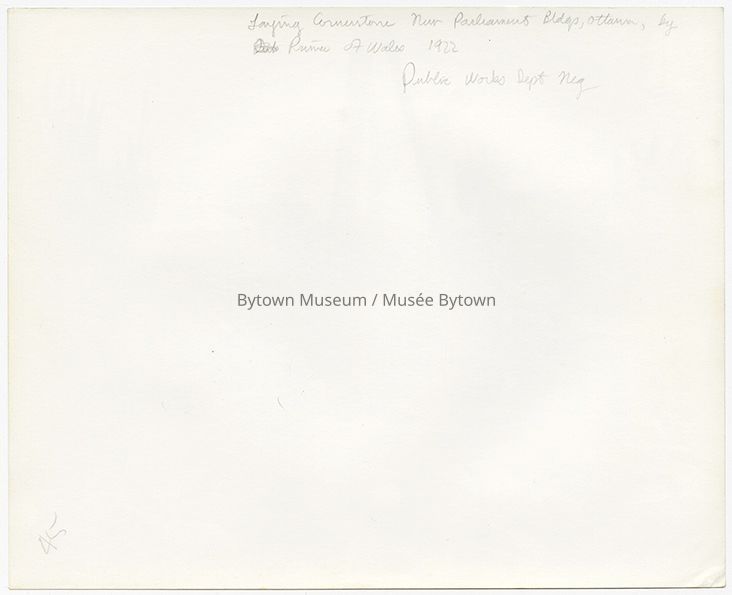
the stone. Written on the back of the photograph in pencil: "Laying Cornerstone New Parliament Bldgs, Ottawa, by // Prince of Wales 1922 [sic] // Public Works Dept. Neg".
Made/Created
Date made
1916
Notes
Quantity produced: 2
Photographic, PRINT, PRINT
Inscription/Signature/Marks
Transcription
On reverse: "Laying Cornerstone New Parliament Bldgs, Ottawa, by // Prince of Wales 1922 [sic] // Public Works Dept. Neg
Notes
Duke of Connaught laying the cornerstone for the new Parliament Buildings, Ottawa, September 1, 1916.
Lexicon
Nomenclature 4.0
Nomenclature Secondary Object Term
Print, Photographic
Nomenclature Primary Object Term
Photograph
Nomenclature Sub-Class
Graphic Documents
Nomenclature Class
Documentary Objects
Nomenclature Category
Category 08: Communication Objects
Legacy Lexicon
Object Name
Photograph, Silver gelatin
Research Notes
Notes
On September 1, 1916, the cornerstone of the new parliament building was laid by the Duke of Connaught.
On that same day in 1860, the Duke’s brother, then Prince of Wales and later King Edward, laid the cornerstone of the first parliament building. The same cornerstone was used in the 1916 ceremony.
The stone was lifted from where it was first laid underneath the Senate Building and repositioned about 100 feet away to go under the new building’s northeast corner.
The stone itself was made of Canadian marble. It was laid along with a sealed copper receptacle that contained a scroll, coins, postage stamps, and newspapers of the day.