Notes
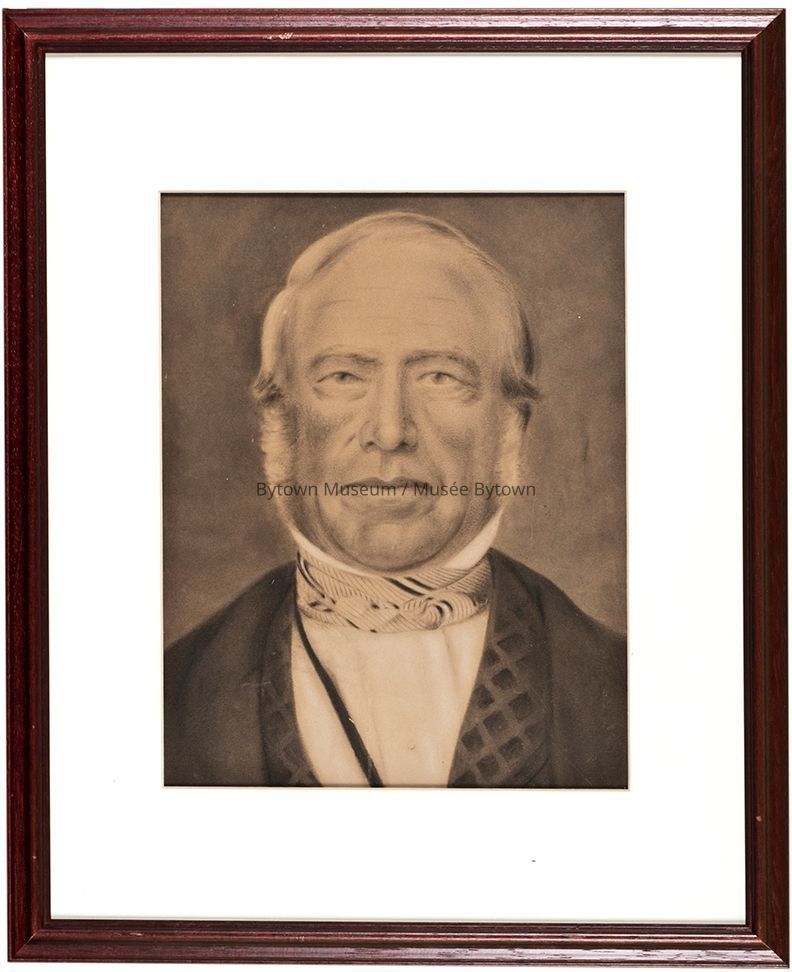
Joseph Coombs was born in Wexford, Ireland in 1789 and enlisted with the Royal Sappers and Miners at the age of 23. He has the distinction of being the only British sapper engaged with the Prussian Army during the Napoleonic Wars, during which time he, "conducted himself extremely well, and was both intelligent and active."
Corporal Coombs arrived in Bytown with the 15th Company in June of 1827 and was promoted to sergeant in December of 1830. He took his discharge in England - having served two decades with the Sappers and Miners - however, he returned with his family to Bytown in 1832.
A wheelwright by trade, Coombs became a prominent community builder. Using trees felled on his lot on Rideau Street, he constructed one of the town's first frame houses. Coombs was also a druggist, a gaoler and a lay Methodist preacher, and was instrumental in organizing Bytown's first fire company. He was described as solemn, a keen businessman, and a "disciple of the meek and lowly."
Joseph Coombs died on May 17, 1856 and was buried in the old Sandy Hill Cemetery until his remains were relocated to Beechwood Cemetery in 1877.