Label
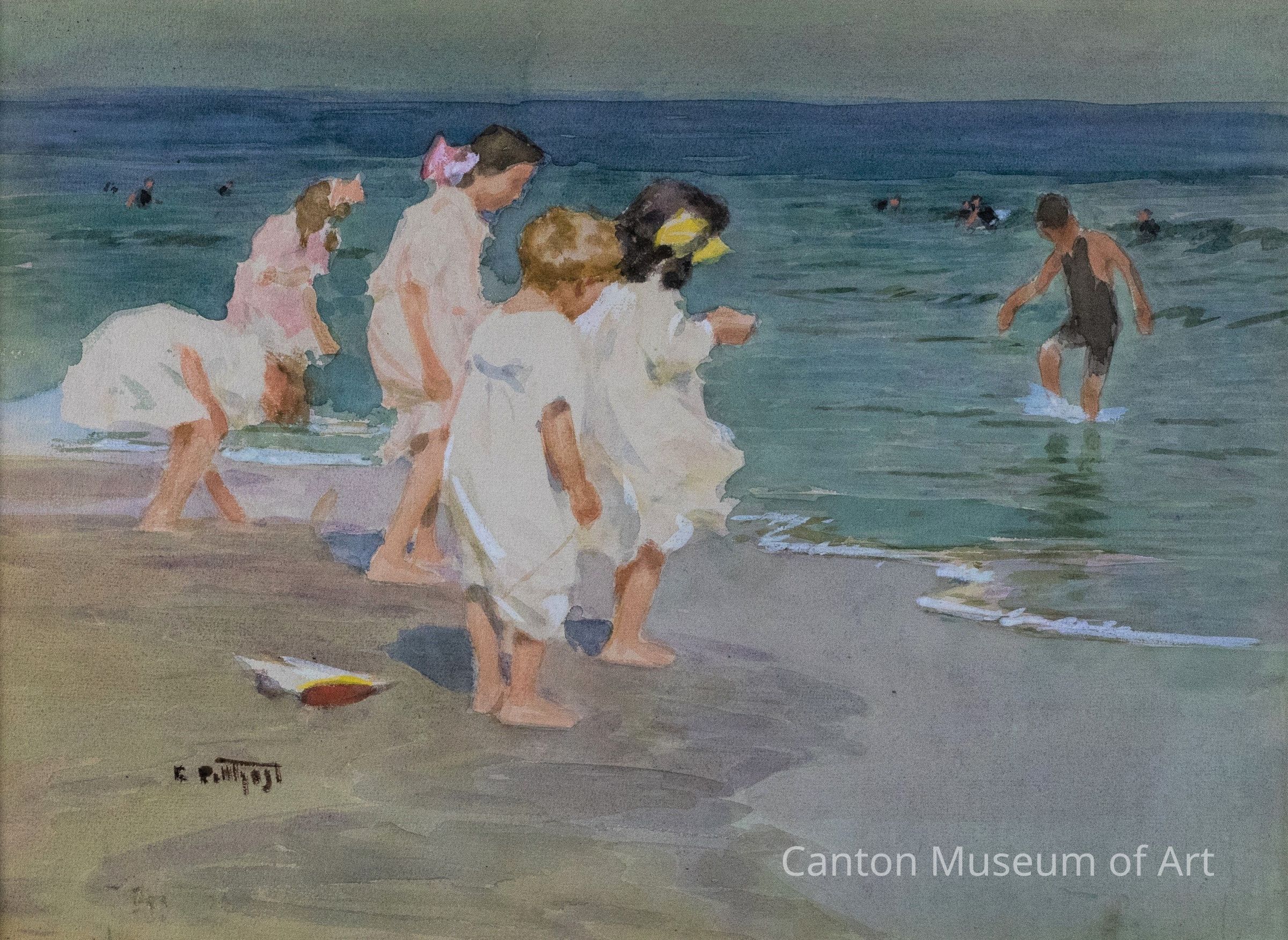
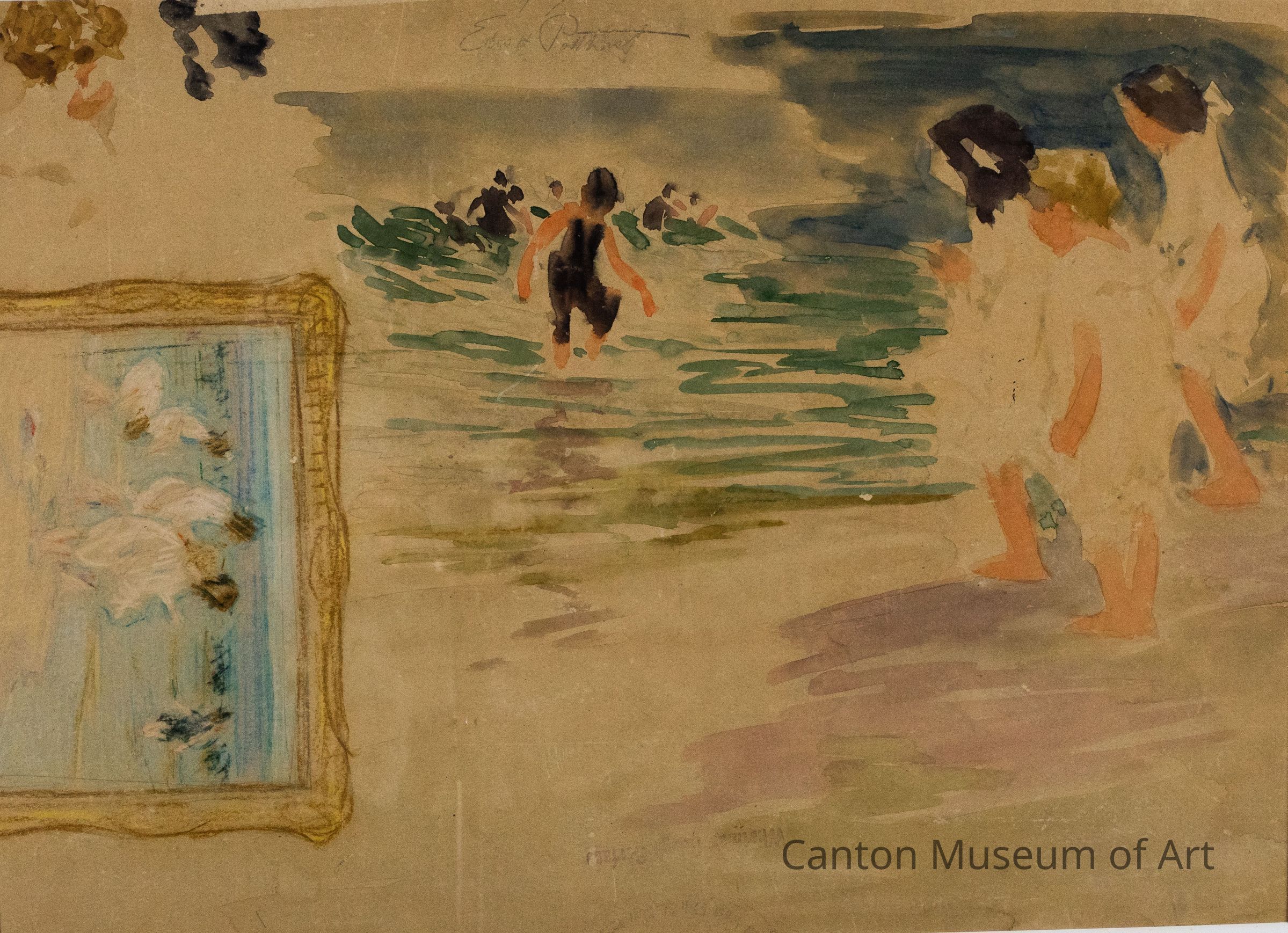
Though known as America's finest painter of beach scenes, artist Edward Potthast did not begin depicting these seashore activities until he was in his fifties. By 1915, Potthast began to portray the local beaches of New York City after moving there in 1896. During this period, the emphasis on leisure time in people's lives made beach resorts popular subjects for artists. Everyday Americans enjoying their day at the beach was a natural subject for artists, especially Impressionists, and Potthast was the master of capturing these scenes. He was especially effective at portraying the colors and hot, afternoon light at the beach.
Potthast's oceanside scenes portray the middle class, and he himself came from a working class family. The sand and surf of the coast, as well as the newly created parks within New York City, allowed a release from the pressures of urban stress.
Potthast's paintings portray mostly women and children for whom the steamer, railroad, electric trolley car, and subway made the beach more accessible. The man of the family, working five and a half or six days a week, seldom appears in Potthast's works, which were more likely painted during the less crowded weekdays to allow the artist some privacy. In those days, when the weather was fair, Potthast could be seen journeying out to the beach with his easel, paint box, and panels. "Children Playing at the Beach" was most likely painted on Coney Island, Rockaway, Manhattan Beach, or Brighton Beach, the spots in New York where Potthast was active c. 1915 to 1920.