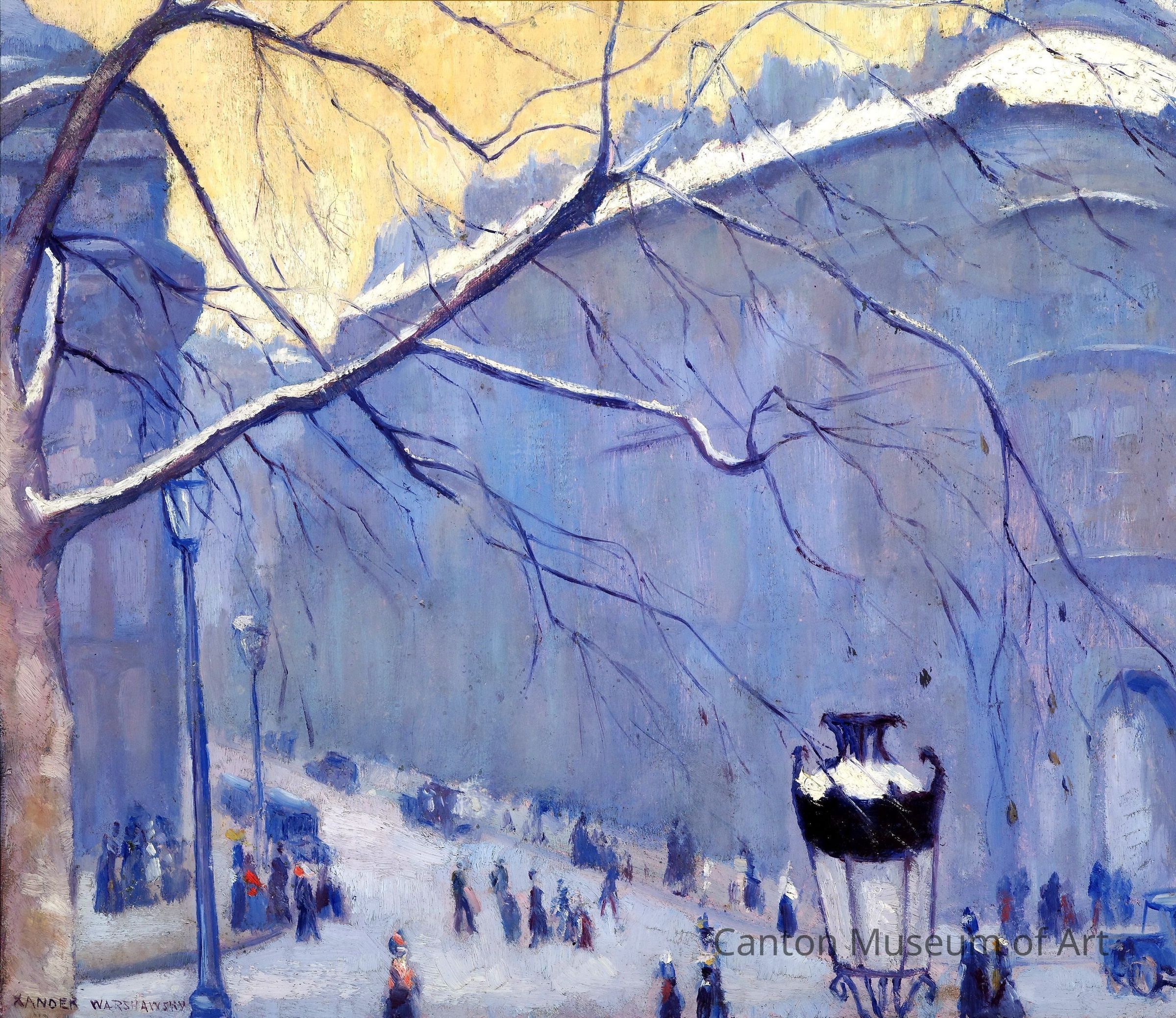
Warshawsky moved to Paris, France in 1916, where he would spend much of his early career. As an Impressionist, he was interested in capturing fleeting light in shades of pastels.
The much-used violet in Impressionist works owe much to a little-known American portrait painter named John Goffe Rand. In 1841, Rand grew frustrated with the messy practice of storing paint in a pig’s bladder, which was the prevailing method for preserving pigments at the time, and invented a more practical and portable option: a collapsible paint tube made of tin. This enabled artists to paint plein air (outdoors), easily transporting their color to outdoor locations to capture impressions of the
environment, and in turn led to the production of pre-mixed paint shades in tin tubes, such as Manganese Violet, the fi rst affordable mauve-colored paint that meant artists no longer had to mix red and blue to make purple. The Impressionists so adored the new hue that critics accused the painters
of having “violettomania.”