Label
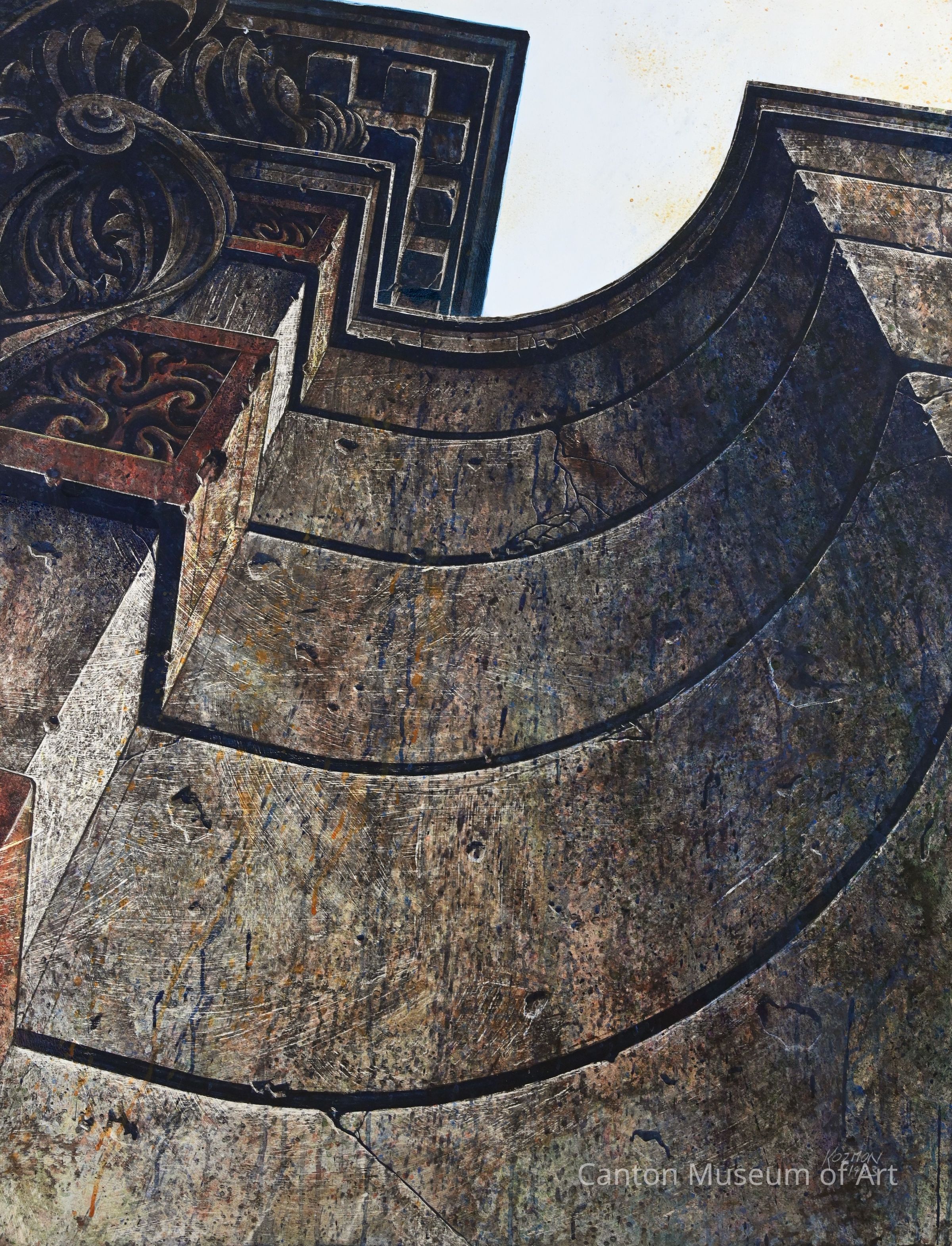
Kozmon, an American painter active in the late 20th century, is known for works that merge realism with abstraction, often rooted in architectural or industrial forms. His paintings frequently explore the passage of time through surface and structure, collapsing the boundary between representation and material presence. In this piece, he invites viewers to look closely—not just at what is depicted, but at how it has been built, worn down, and reimagined. By doing this, Kozmon turns architecture into something almost monumental and psychological. Rather than depicting a full building, Kozmon isolates fragments and pushes them into the foreground.
Kozmon’s choice to focus on architectural fragments aligns with a broader fascination among late 20th-century artists with surfaces and structures that carry memory. The worn textures, pitted surfaces, and layered grime suggest erosion and endurance simultaneously. There’s a quiet tension here: the solidity of architecture versus the inevitability of deterioration.
Technically, the work is driven by surface. Kozmon builds up and breaks down the picture plane through layered paint, scraping, and staining. The image feels almost etched into the surface rather than painted onto it, with incised lines and distressed passages that mimic the abrasions of stone or metal. His palette—muted earth tones punctuated by subtle blues and rust-like reds—reinforces the sense of age and materiality. Drips and scratches are not accidents but integral to the composition, activating the space and emphasizing process.