Label
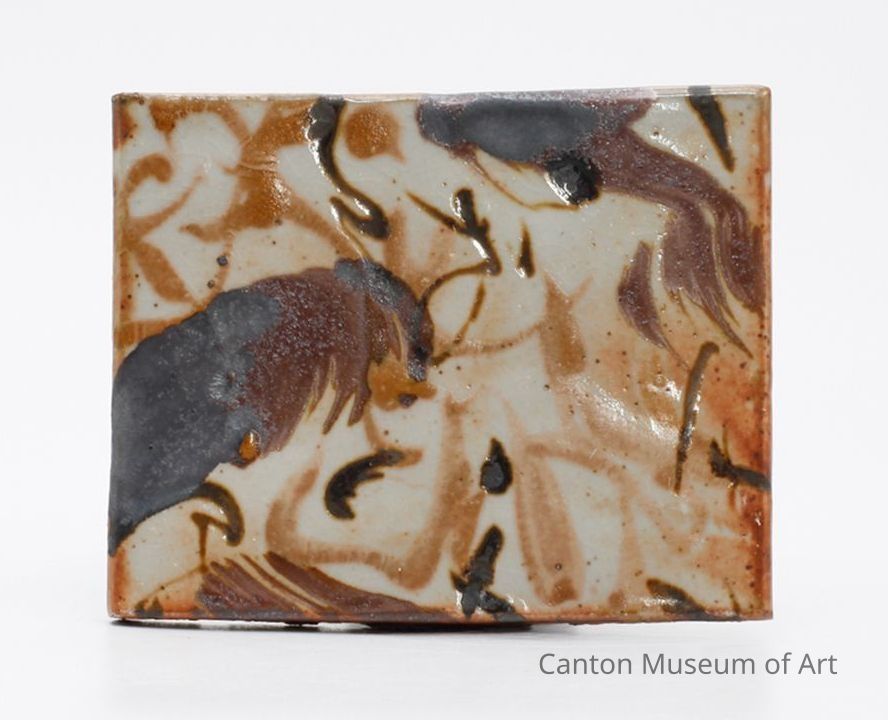
John Glick is known for functional stoneware vessels with painterly surfaces. His earlier work is characterized by simple, undecorated stoneware dinner services and functional vessels. He attended Cranbrook Academy of Art, where he was drawn to the effects of the reduction kiln, which decreases the levels of oxygen during firing, inducing the flame to pull oxygen out of the clay and glazes. This changes the colors of the glazes depending on their iron and copper content, and Glick began to achieve the rich gradients of color that would characterize his work. Later in his career, Glick developed interest in the Japanese Oribe wares, known for their lively surface decoration often expressed in a combination of naturalistic and geometric shapes. This style allowed Glick a gateway to become even more liberal with his glazing and surface embellishment.
Glick founded Plum Tree Pottery in 1964, a studio where he sold his ceramics and allowed customers to watch him work. He built an incredible community, and by 1977, his dinnerware became so popular that his waiting list had grown to be ten years long. The studio shut down in 2014 following Glick’s retirement.
As he gained confidence as a potter, he started to trust his intuition and allow chance to drive the process, which became his signature technique for the duration of his career. He once said, “I love being transported by the randomness of the things that materialize before me.” Glick is now best known for his colorful expressionistic glazes, fantastical forms, and inventive surface treatments. He produced a range of vessels with painterly decoration where the surface is drawn on and painted with slips and glazes, frequently with flower and vine motifs, sometimes built up to form relief or textured underglaze surfaces, always creating the illusion of depth.