Label
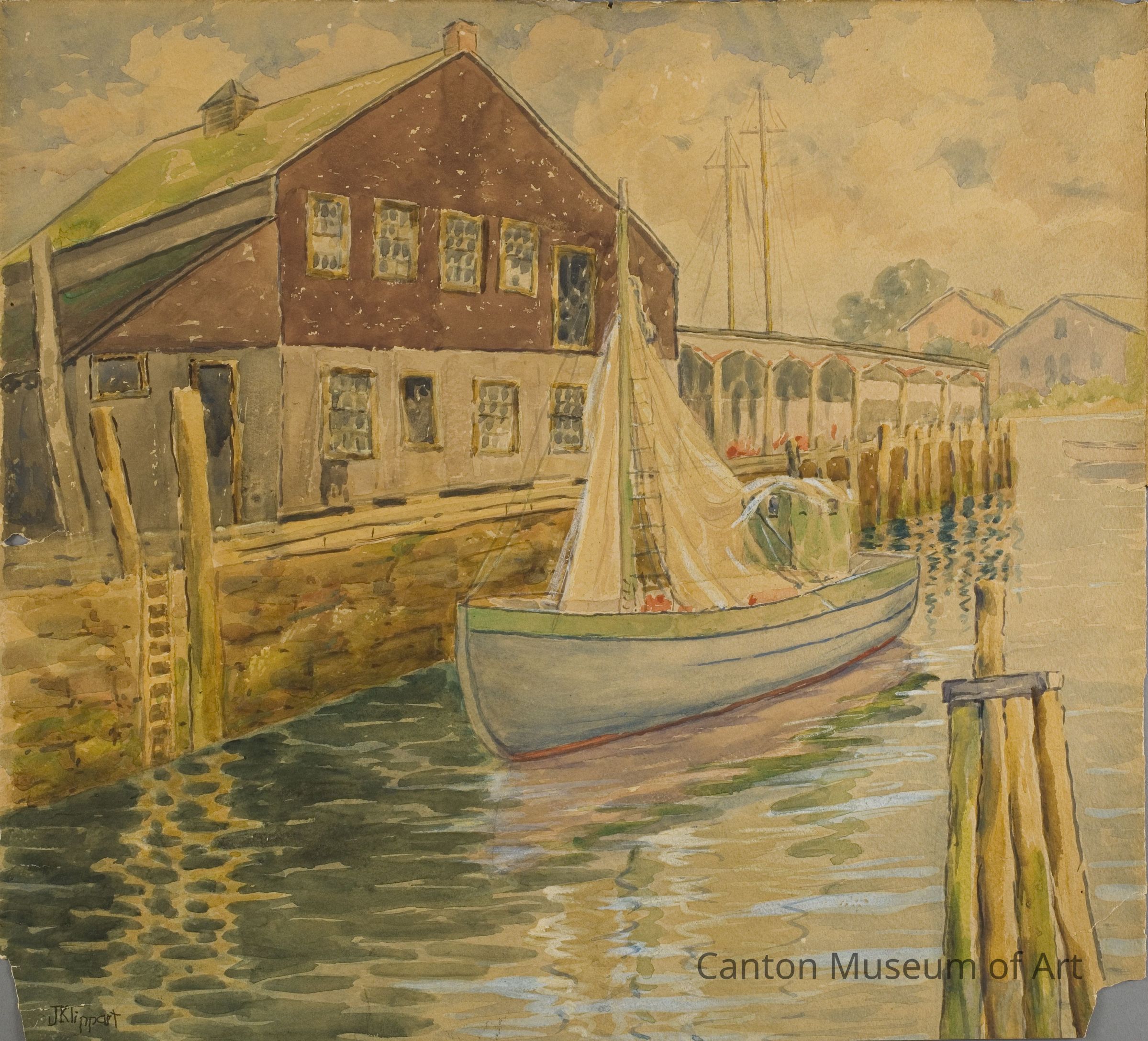
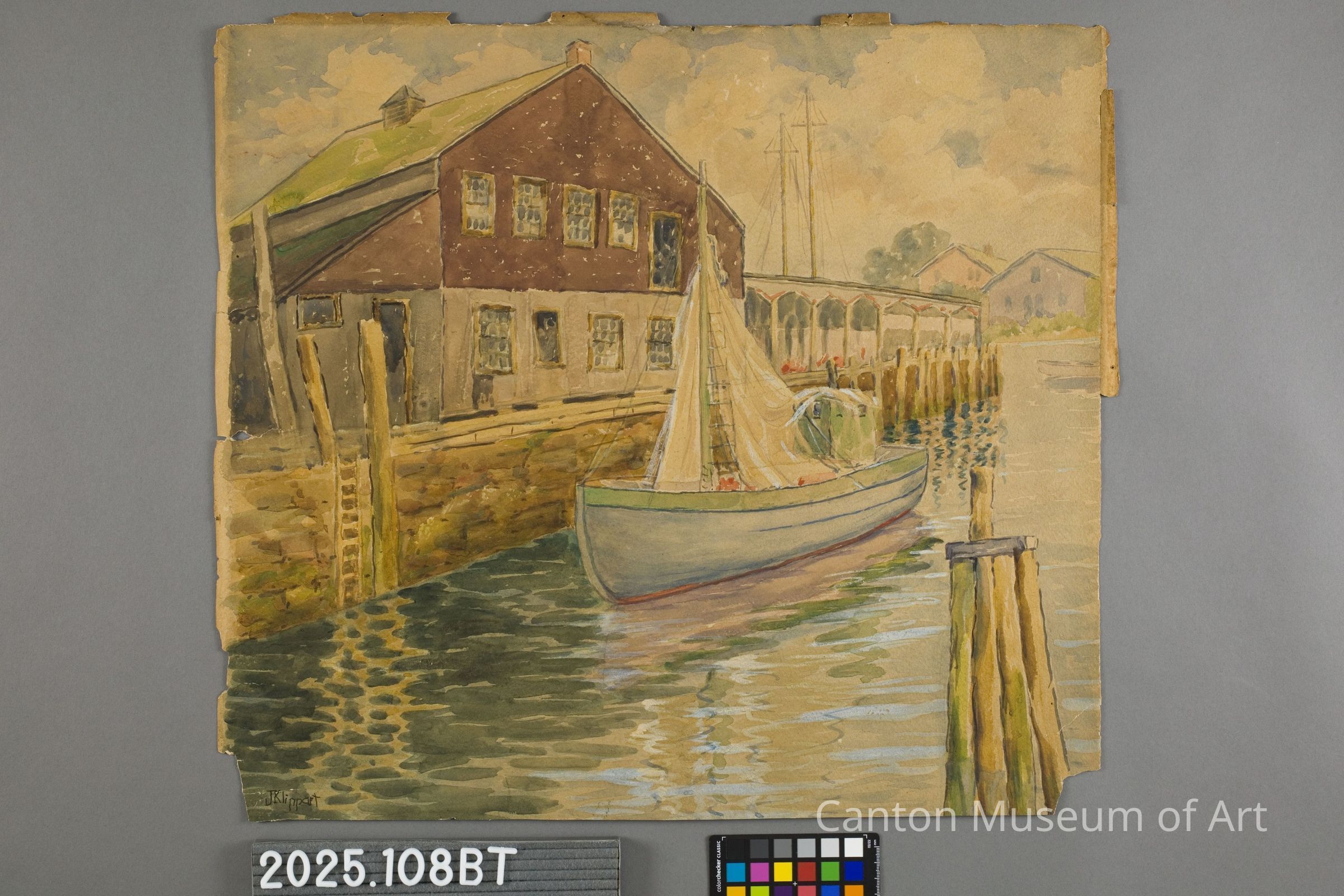
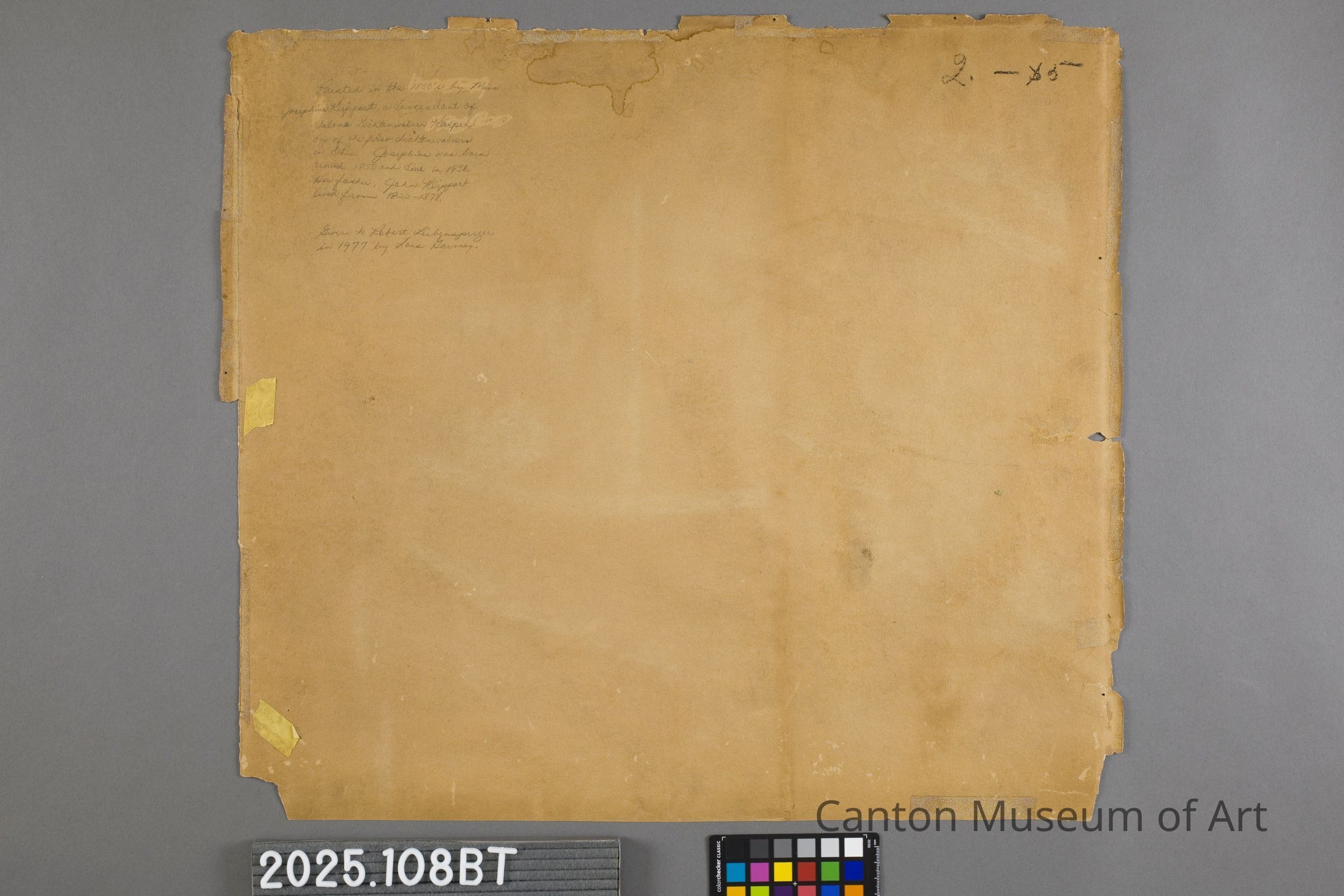
Josephine Klippart (1848–1936) was a watercolor painter and illustrator known for her detailed scientific renderings of Ohio’s fish and birds. In 1877, she completed nineteen drawings of fish species at the Ohio Hatchery in Toledo for the Ohio Fish Commissioners. Her work took her across Ohio and throughout the United States, including travels to Yellowstone in 1906 and Alaska in 1910. It was likely during one of these journeys that she painted this harbor scene, reflecting her deep and enduring interest in the natural world.
Titles such as Carmel Eucalyptus, California further reveal her fascination with both landscape and travel, pursuits that sometimes even involved journeys by boat. Working primarily in watercolor, Klippart not only mastered the medium but also championed it, helping to found the Ohio Watercolor Society in 1925. Her career reflects a spirit of independence and curiosity that shaped both her art and her life.
Klippart’s painting style in this work reflects a delicate balance between observation and atmosphere. Working in watercolor, she uses soft, translucent washes to build up the scene, allowing light to permeate the composition. Her brushwork is loose but controlled. Architectural elements like the building and dock are defined with simple, economical lines, while the water is treated more fluidly, with gentle ripples and reflections that capture movement without excessive detail.
There is also a subtle documentary quality to her approach. Likely informed by her background in scientific illustration, she pays close attention to structure and proportion, yet avoids rigidity. Instead, she prioritizes an overall sense of place—quiet, observational, and grounded in real experience.