Label
The son of German immigrants, August Biehle was one of Ohio’s most prolific and distinguished artists. From a young age he was a plein air artist, drawing scenes from nature in his sketchbook. Settling in Cleveland, Biehle frequently traveled to Berlin Heights and Zoar, painting the beauty of Ohio’s rural landscape outdoors. In Berlin Heights
he painted plein air at artist Henry’s Keller’s colony-type summer school which had been converted from a farm.
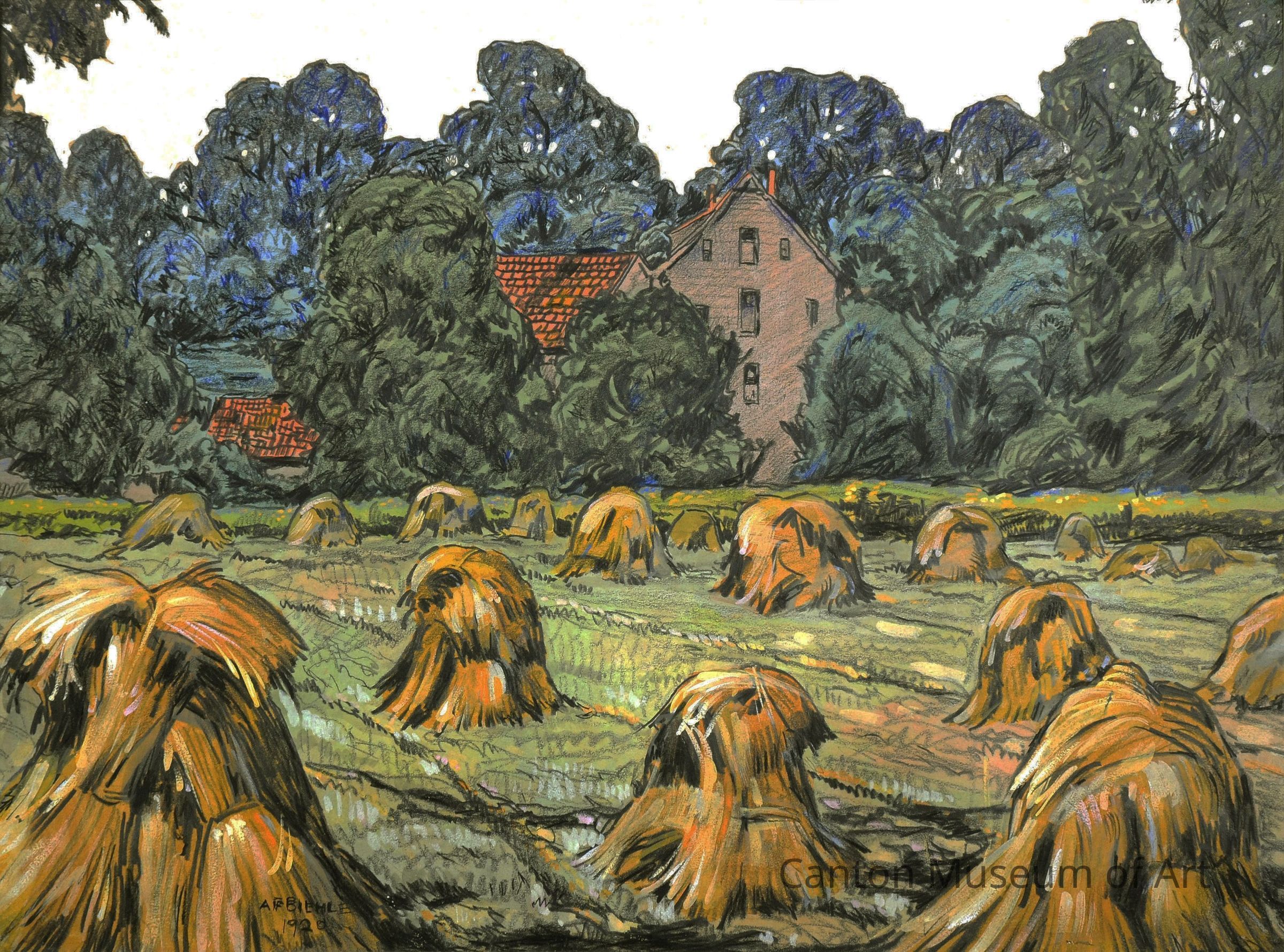
As a person of German heritage, Biehle had an interest in capturing locations that had been important to the lives of the Germans who had settled there, including Zoar. Biehle was one of many Cleveland artists who visited Zoar as a respite from the industrial city. Zoar was established in 1817 as a communal settlement by German Separatists seeking religious freedom, a history which appealed to Biehle. The house in "Wheatfield in Zoar," with its unique red clay-tiled roof reminiscent of houses in Germany, is a great example of this.
Working outdoors, Biehle found inspiration from nature and experimented with modern design and color theory. He developed a style of painting that utilized rich colors and expressive shapes rather than the straightforward and simple realism of many American scene paintings. As a result, he is one of the artists credited with bringing modernism to the United States.