Label
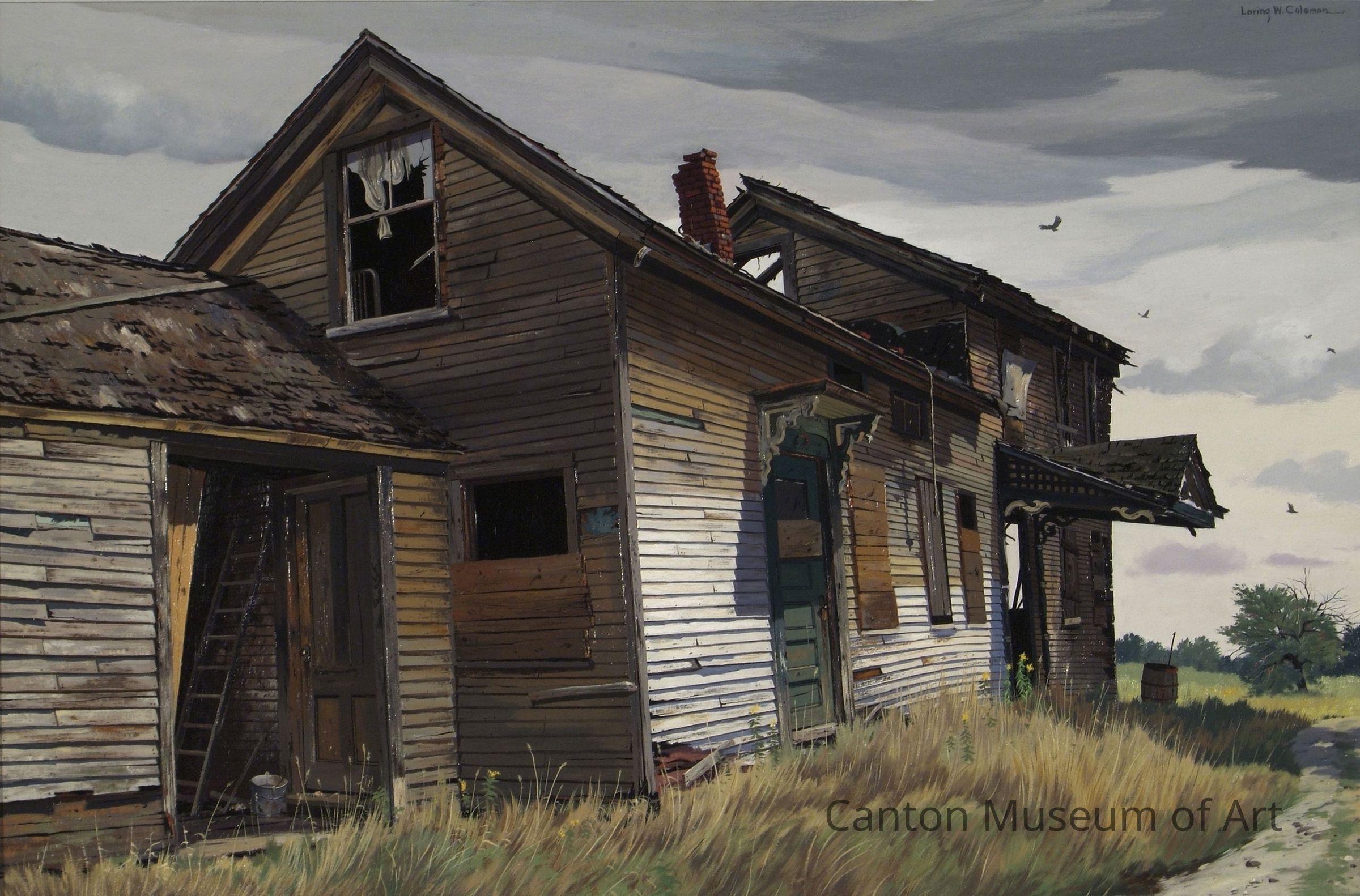
Loring Coleman painted everything plein air, from the smallest sketches to oil paintings six feet long. Early in his career, he considered becoming a portrait painter, but couldn't stand the thought of painting indoors, stating, "The outdoors became my studio."
Coleman experienced many things as a plein air painter — the police frequently stopping to question him, a cow licking the paint off of his palette, a goose breaking his eyeglasses, and an angry farmer who thought he was a spy making maps for the German government. He also learned things such as painting in cold winter weather worked well with lead white paint, while zinc white would harden.
Coleman greatly enjoyed driving through the New England countryside to discover and study old farms, sheds, barns, and houses. He always knocked on the doors of places he stopped at to meet the owner and learn the history of the place, and made many friends in the process. He was drawn to old buildings because they had meaning for him; he felt it was important to capture those disappearing objects and events. Often, after he painted a building, it would catch on fire, collapse, or be torn down. He said, "I am painting country life as it is lived in a rapidly vanishing world of yesterday."