Description
Rhode Island’s Bicentennial Parade became an important milestone for Cape Verdean-Americans because, in planning for the event, the state was pushed to officially recognize Cape Verdeans as a distinct ethnic group for the very first time. This planning also launched an organization that continues to play an essential role in Rhode Island’s Cape Verdean community almost half a century later.
Achieving recognition of Cape Verdean identity was not a simple task, however.
Rhode Island began preparations for the “RI76” celebration in 1975. The event, with 500 leaders of the local ethnic, fraternal and civic organizations participating, was a large affair created to commemorate the 250th anniversary of the day Rhode Island declared its independence from England. Each of the state’s significant ethnic communities was to be represented by their own “heritage groups,” such as those for people of Irish, British, Italian, Swedish, German, Polish, Armenian and Jewish descent.
It was Rowena Stewart, head of the Black Heritage Subcommittee, who agreed with members of the community that Cape Verdeans deserved to have their own voice here and should not be folded into the larger Portuguese group (where, truth be told, they had no voice whatsoever).
Rowena, who worked alongside artists Larry Sykes from Rhode Island College and Mahler Ryder from RISD, brought the issue to Dr. Patrick T. Conley, historian and chairman of the RI76 Commission. In support of her petition, Charles Fortes, Yvonne M. Smart and Vernon Lisbon spent hours creating presentations that told the story of Cape Verdean-Americans.
In January of 1976, Fortes, Smart and Libson, stood up before the RI76 Commission at the Old State House on Benefit Street and made their case that Cape Verdeans had had an impact on Rhode Island history.
Chairman Patrick Conley was convinced and the creation of a “Cape Verdean Subcommittee” was formally approved shortly thereafter.
Don Ramos of East Providence was elected chairman of the Subcommittee and Anthony D. Ramos, also of East Providence, was named co-chairman.
The first task of the Cape Verdean Subcommittee was to raise funds to pay for their part in the parade. Over the following months, over $3,000 was collected from the Cape Verdean community (which would be $15,000 in today’s dollars). It was matched by the RI76 Committee and the $6,000 total paid for things such as flags, banners, float materials, the band and the minibus drivers.
Among the many, many volunteers who made the Cape Verdean section of the parade a success, five men donated their time (60 hours each) to construct the float while five women donated their talents (5 hours each) as seamstresses on it, as recorded in notes in the museum's archives.
When the parade took place on May 4, 1976, the Cape Verdean Subcommittee flew the flag of the newly independent Republic of Cape Verde in downtown Providence for the first time.
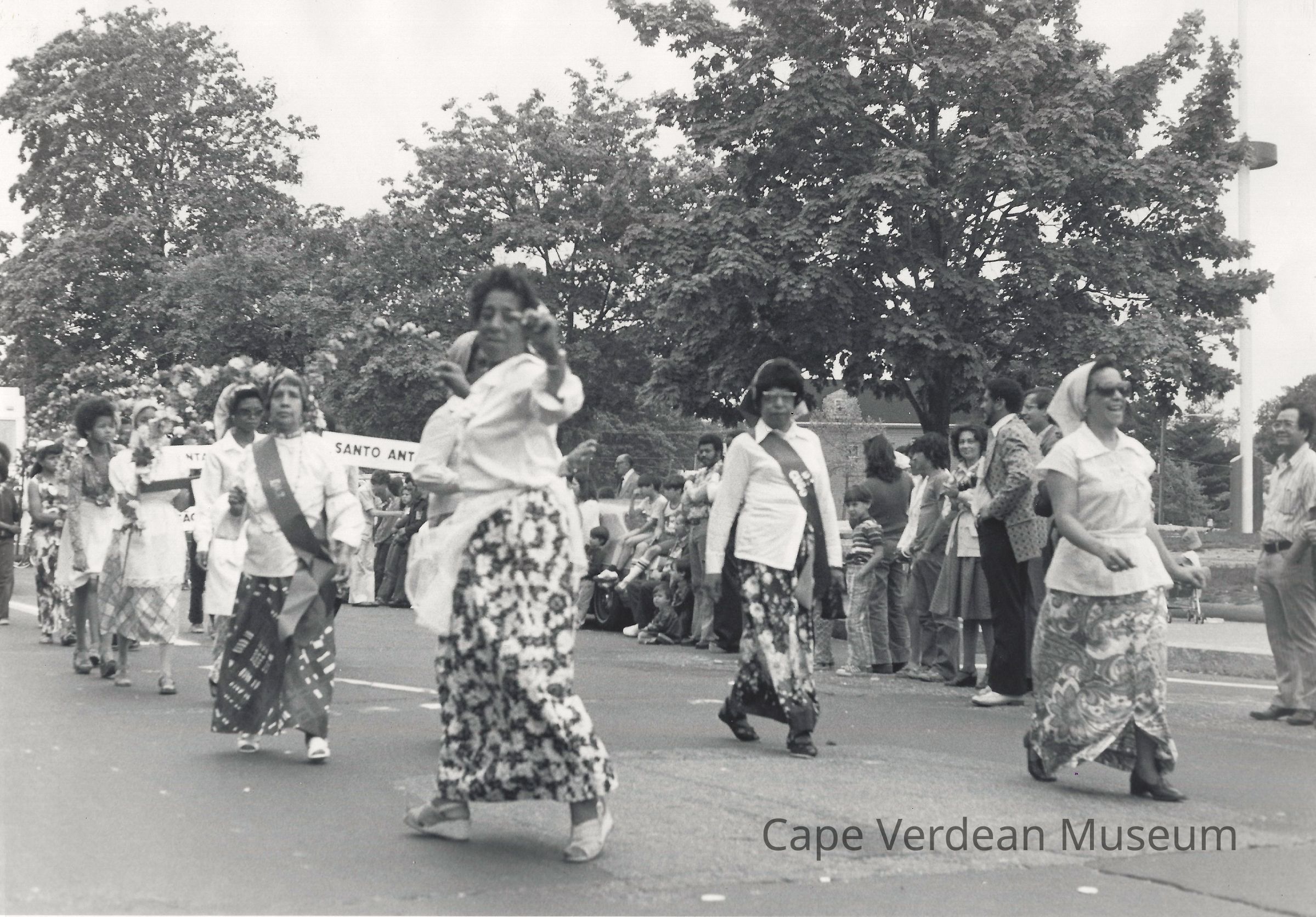
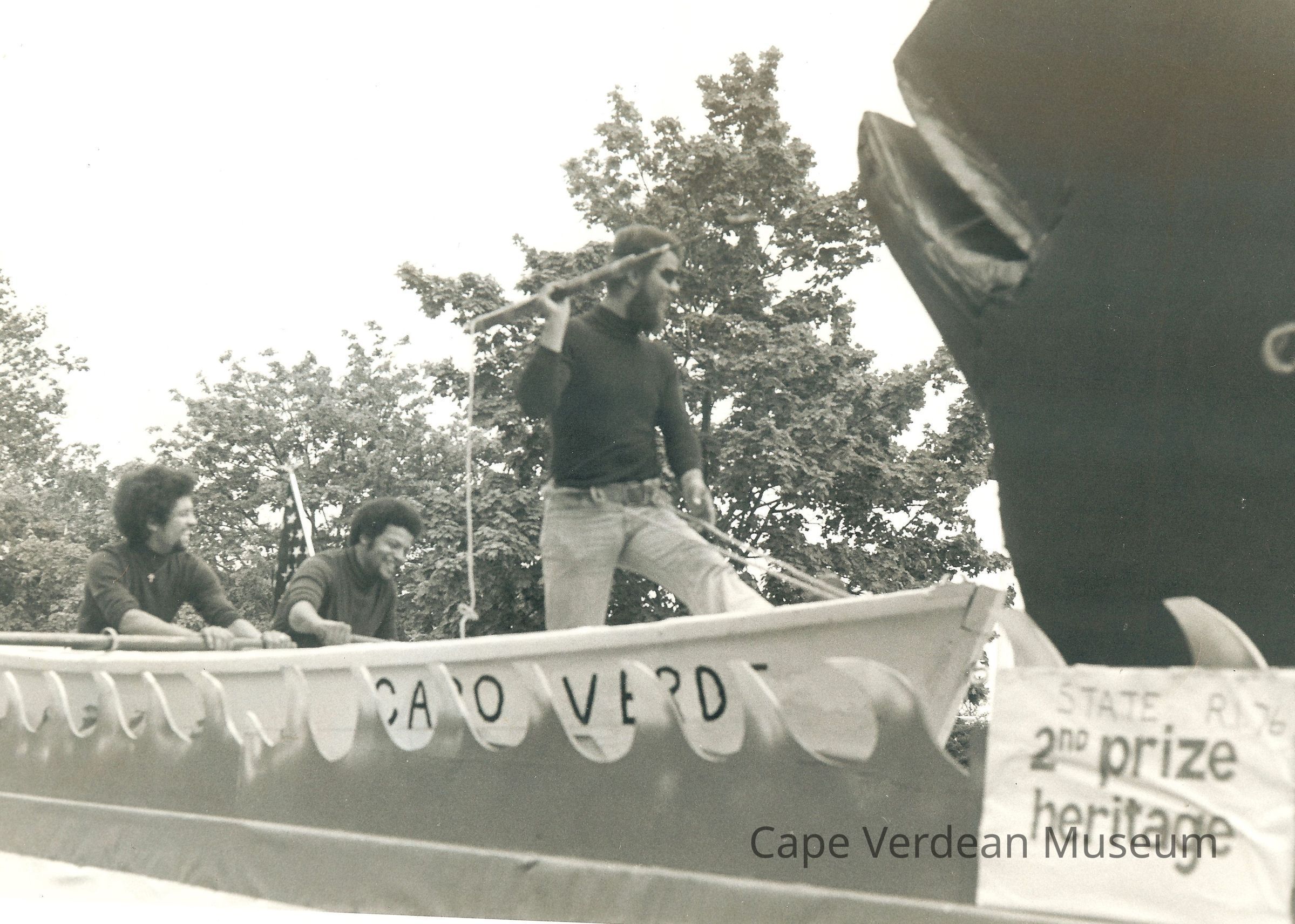
The group’s float depicted Cape Verdean-American’s role in the whaling industry. Johnnie Pina and the Leftovers performed and the Providence Journal noted, “The Cape Verdean dance band played the coladeira, an up-tempo style of Cape Verdean music, for what seemed to be the liveliest unit in the march, a group of women in long skirts who swung to the jazz-rock sound.”
These women, fronted by Alice Roberts of Providence, were dancers who carried floral arches representing each island of Cape Verde.
This was followed by a van of Cape Verdean elders (the only recognition of senior citizens in the parade). In the front seat sat Mathilda “Tilly” King, proudly waving the new Republic of Cape Verde flag, as well as the American flag.
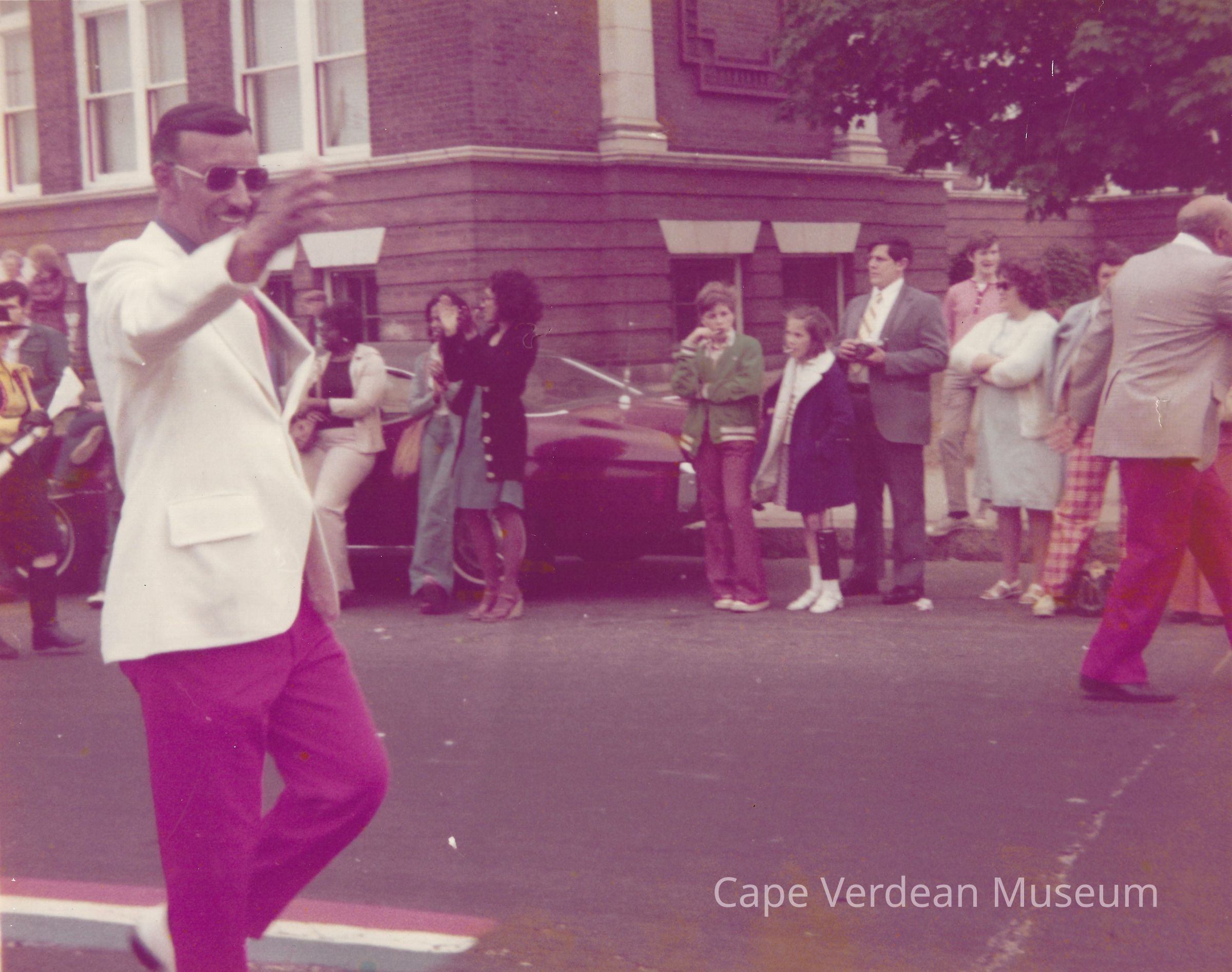
In all, 2,500 marchers took part in the day’s festivities before a large crowd of onlookers. Many Rhode Island politicians were in the procession, including Lt. Governor J. Joseph Garrahy and Representative Fernand St. Germain.
The Cape Verdean group’s whaling float won second prize in the heritage division, which itself was an important step in raising the visibility of the Cape Verdean community across the state.
Two weeks later, the parade was repeated in East Providence and this was followed by a reception at the Cape Verdean Progressive Center on Grosvenor Avenue.
The creation of the Cape Verdean Subcommittee in 1976 spurred further community action. A month after the parade, the Subcommittee helped sponsored the Mastro of St. Anthony at the Progressive Center, which was attended by 500 people. Next, they organized a fundraiser for the Schooner Ernestina which was covered by the Providence Journal.
The Cape Verdean Subcommittee’s most lasting impact, however, was with the stewardship of the Independence Day Festival in Providence’s Fox Point neighborhood, which they took over from its original founders. Today, the group – renamed RI Cape Verdean Heritage – does the hard work of organizing this large celebration every July, which brings together tens of thousands of Cape Verdeans from across southern New England to commemorate Cape Verdean independence from Portugal. The event highlights the fact that Cape Verdeans are a distinct and vital ethnic group in Rhode Island, showing that the original mission of that 1976 group continues to this day.Created By
ChrisCreate Date
November 17, 2026Updated By
ChrisUpdate Date
November 17, 2026