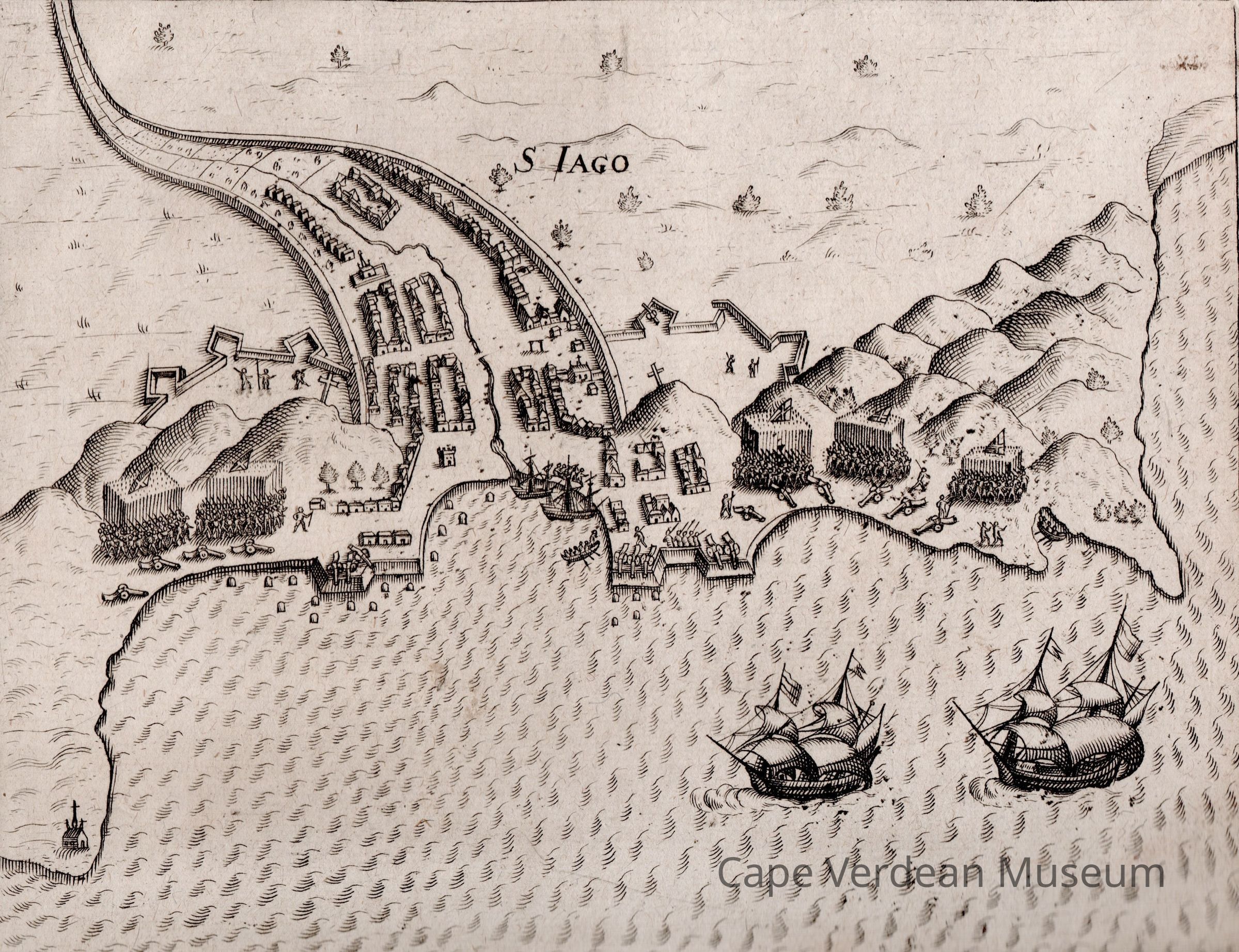
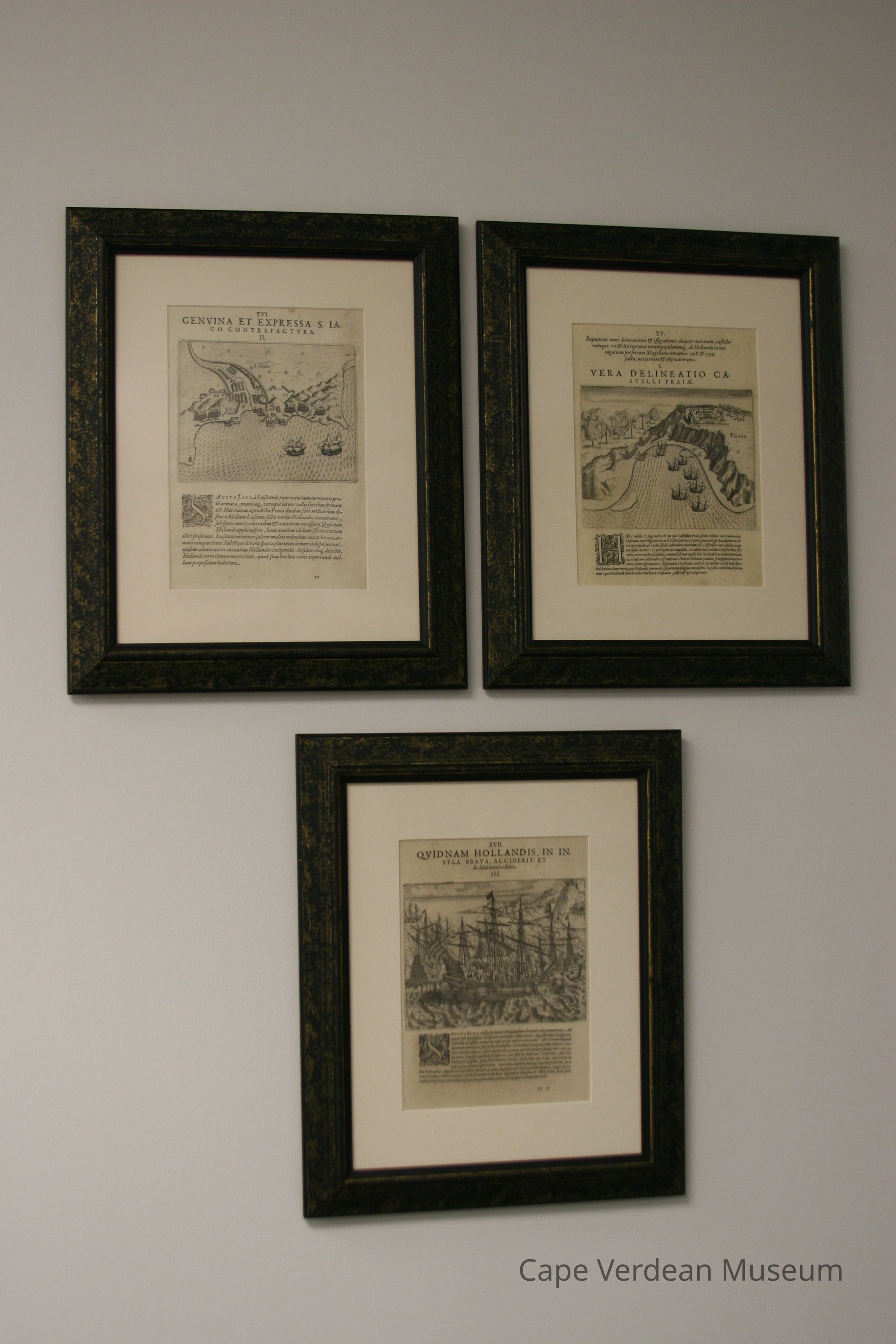
From Theodore de Bry. XVI, Gevina et Expressa S. Iago Contragactvra, II [engraving]. In: "General Voyages. Volume XI," Plate 16. Frankfurt: 1602.
The text that accompanies this engraving reads:
"While at Praia the Dutch were invited to visit the harbor about two miles along the coast. On arrival, they found it fortified with ramparts along the sea front and the Portuguese soldiers clad in armor, well armed with cannons, waiting for them at the water’s edge. However, on seeing how well guarded the harbor was, the Dutch decided it would be prudent to avoid serious loss at such an early stage of their voyage, and continued on their way without confrontation."
Context
Used in the Cape Verdean Museum's 2025 exhibition on enslaved people and Cape Verde.
Artwork Details
Subject
The oldest settlement in Cape Verde, Cidade Velha on the island of Santiago played a central role in the global slave trade and the Portuguese colonization of Africa and South America.
During the 15th and 16th centuries, when the city was known as Ribeira Grande, it was one of the largest outposts for slave trading in the Atlantic Ocean. It was also one of the richest ports in the Portuguese realm, which made it a target for pirates and other colonial powers.
Enslaved people from the African coast were regularly brought here and housed in the structures that are shown in the center of this image, snaking up to the left. Surrounding it is the Royal Fortress of São Filipe. About this time, the population of Santiago was 2,000 free inhabitants and 14,000 slaves.
Slaves sold at Ribeira Grande were divided into three types. The least valuable of these were the bocais, recently imported slaves who spoke only their native languages. Next in value were the ladinos, those who had been held here longer and had been baptized, “taught to work” and learned Krioulo. Finally, there were the naturais, slaves who were born in Cape Verde and considered the most valuable.