Treasure chest from the collection of Ferdinand II of Portugal

Name/Title

Treasure chest from the collection of Ferdinand II of Portugal

Description

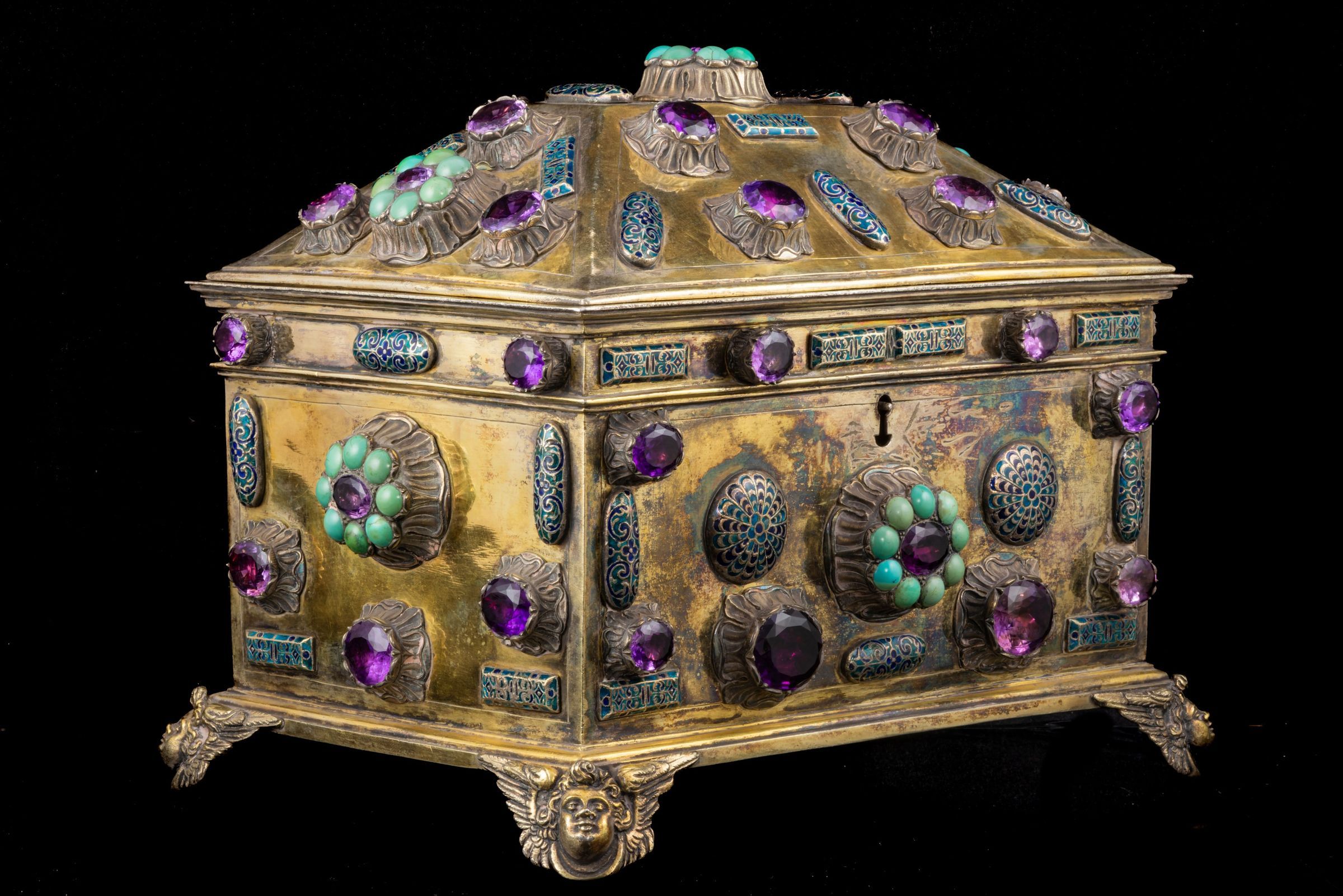
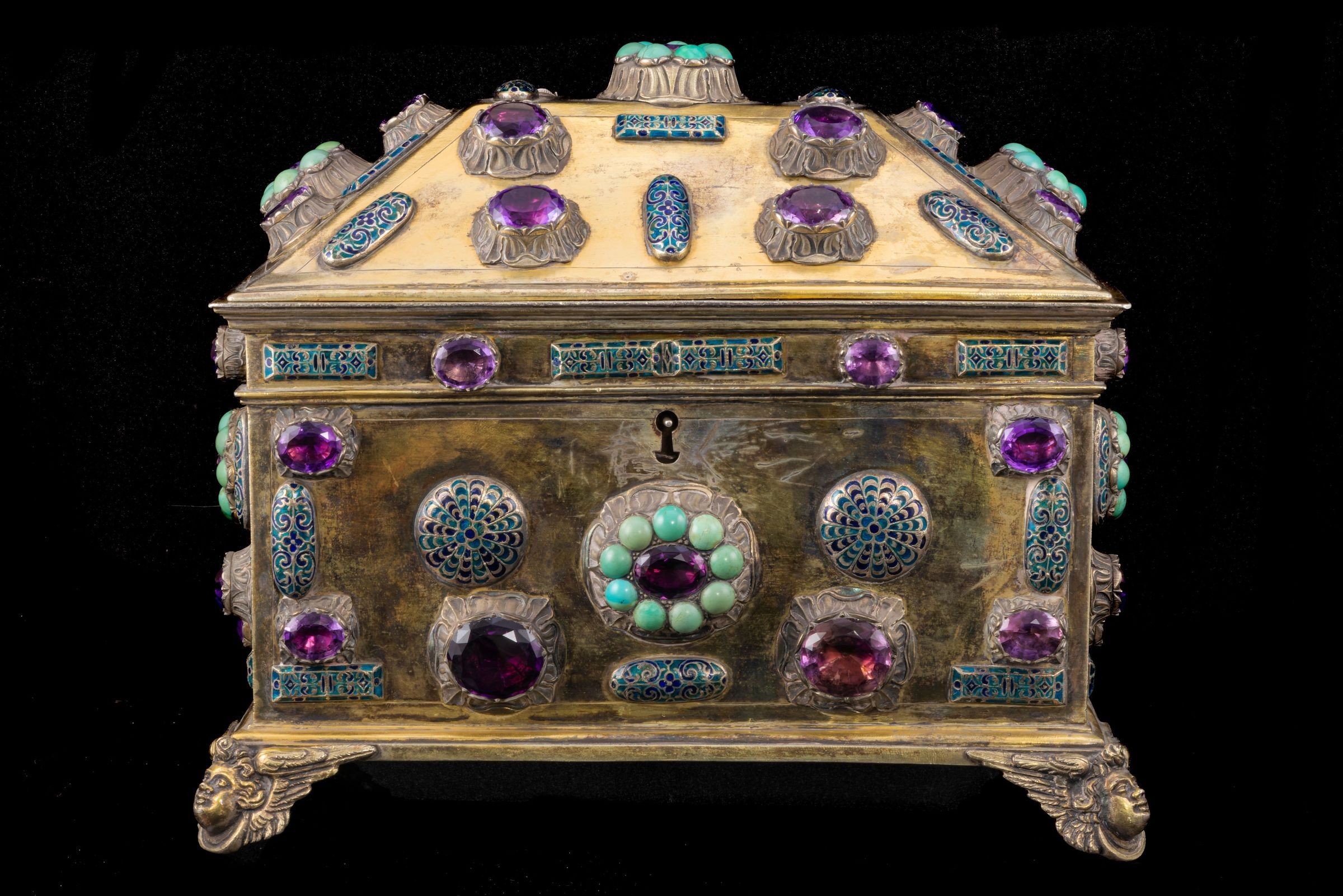
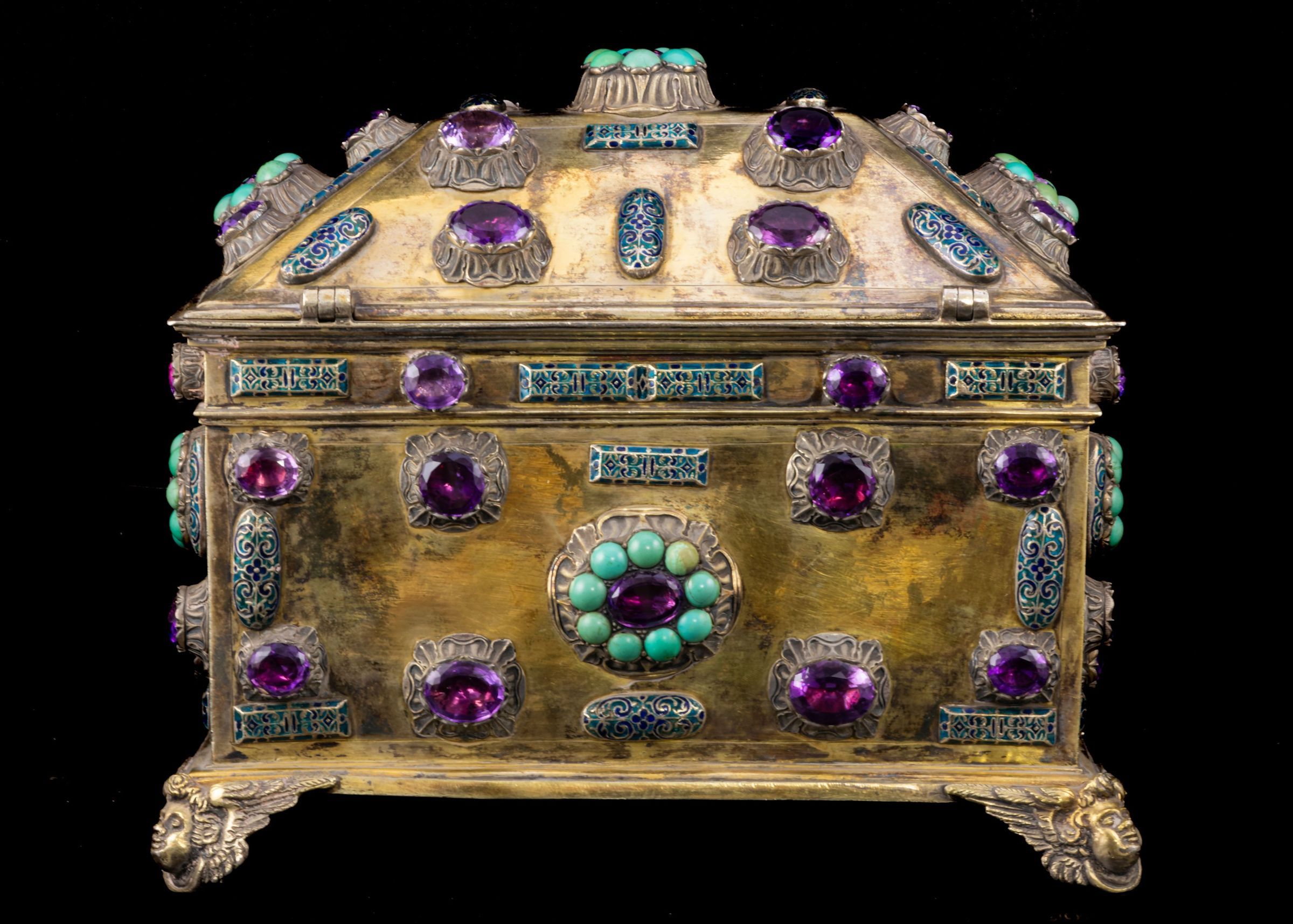
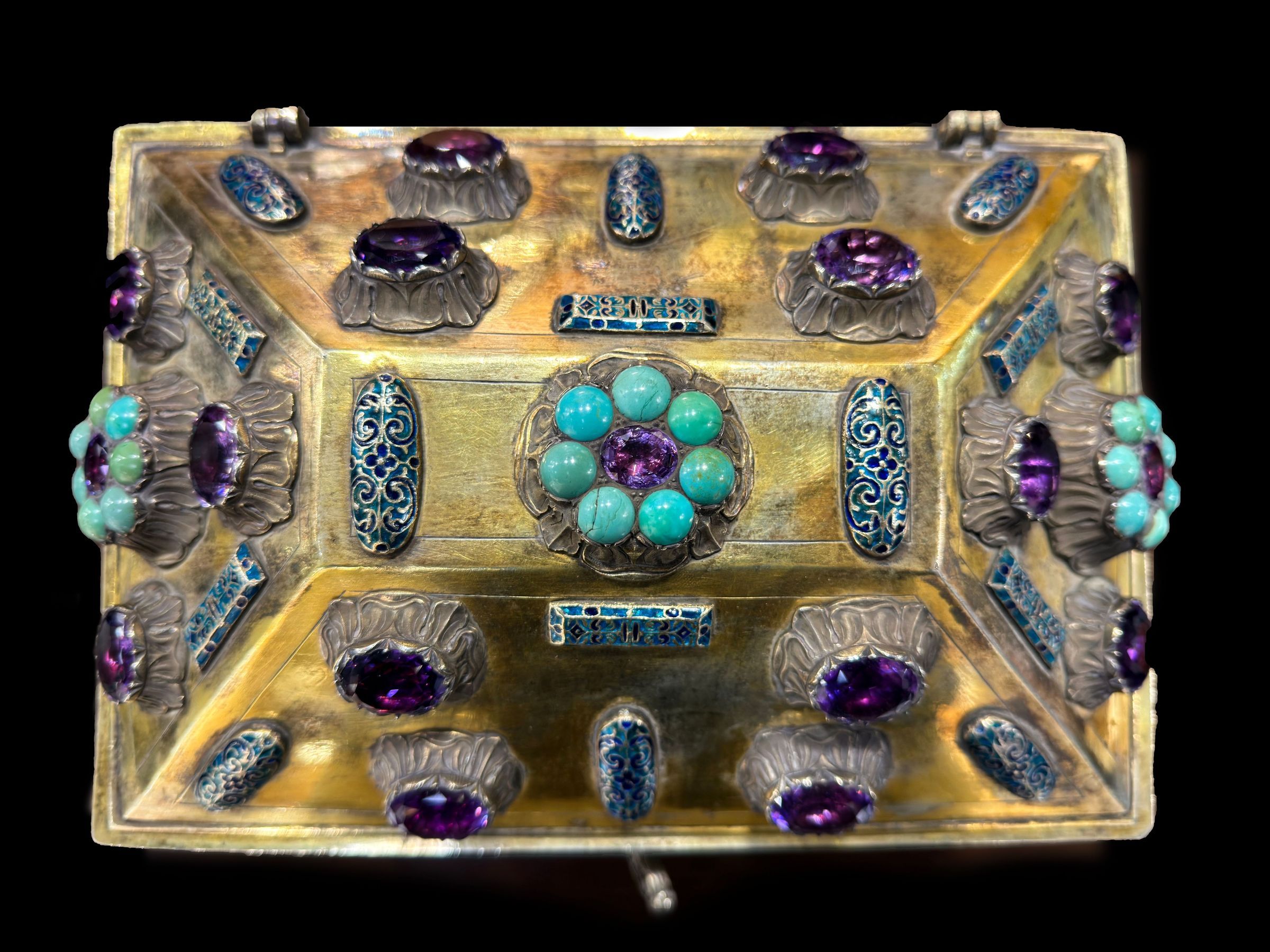
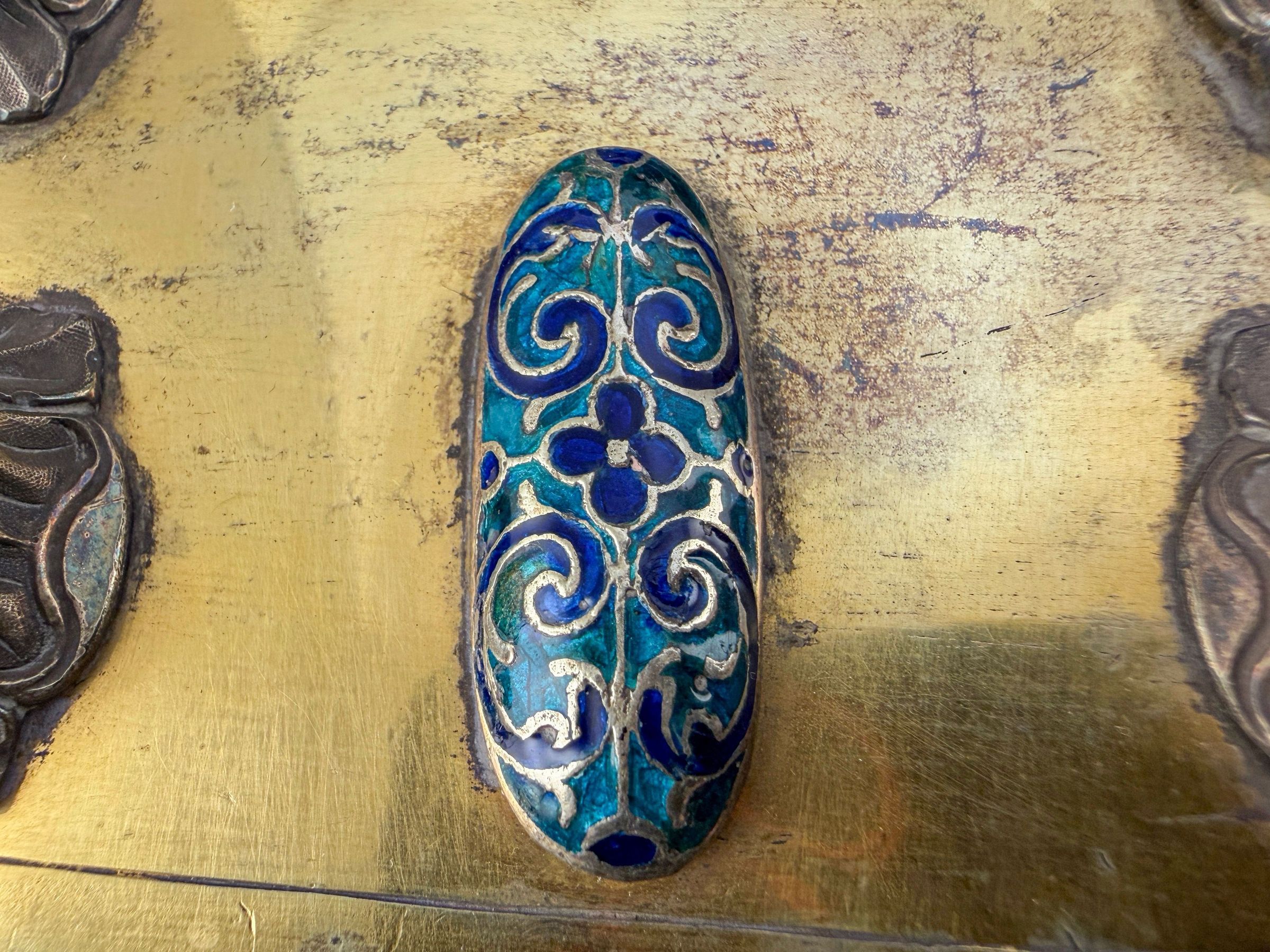
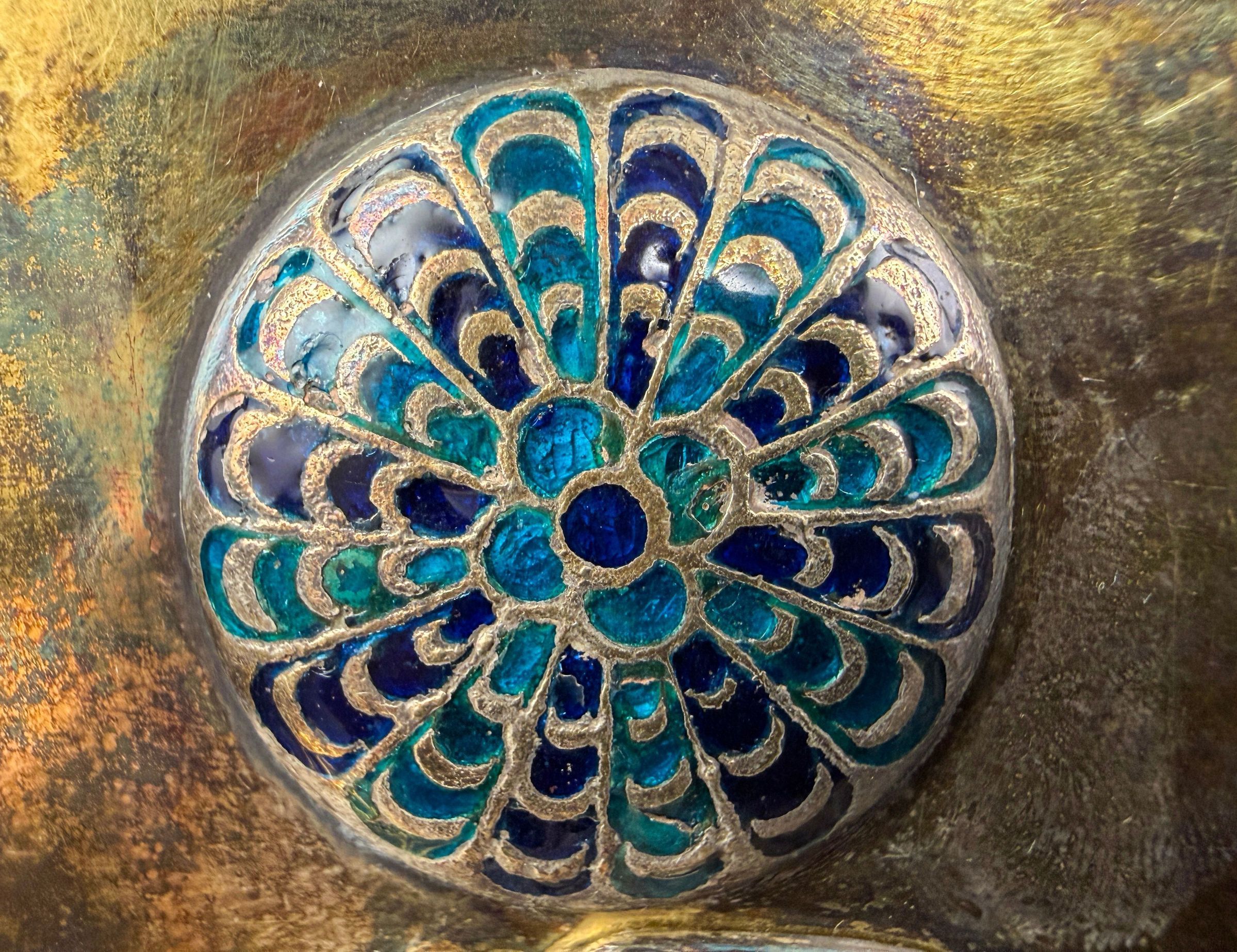
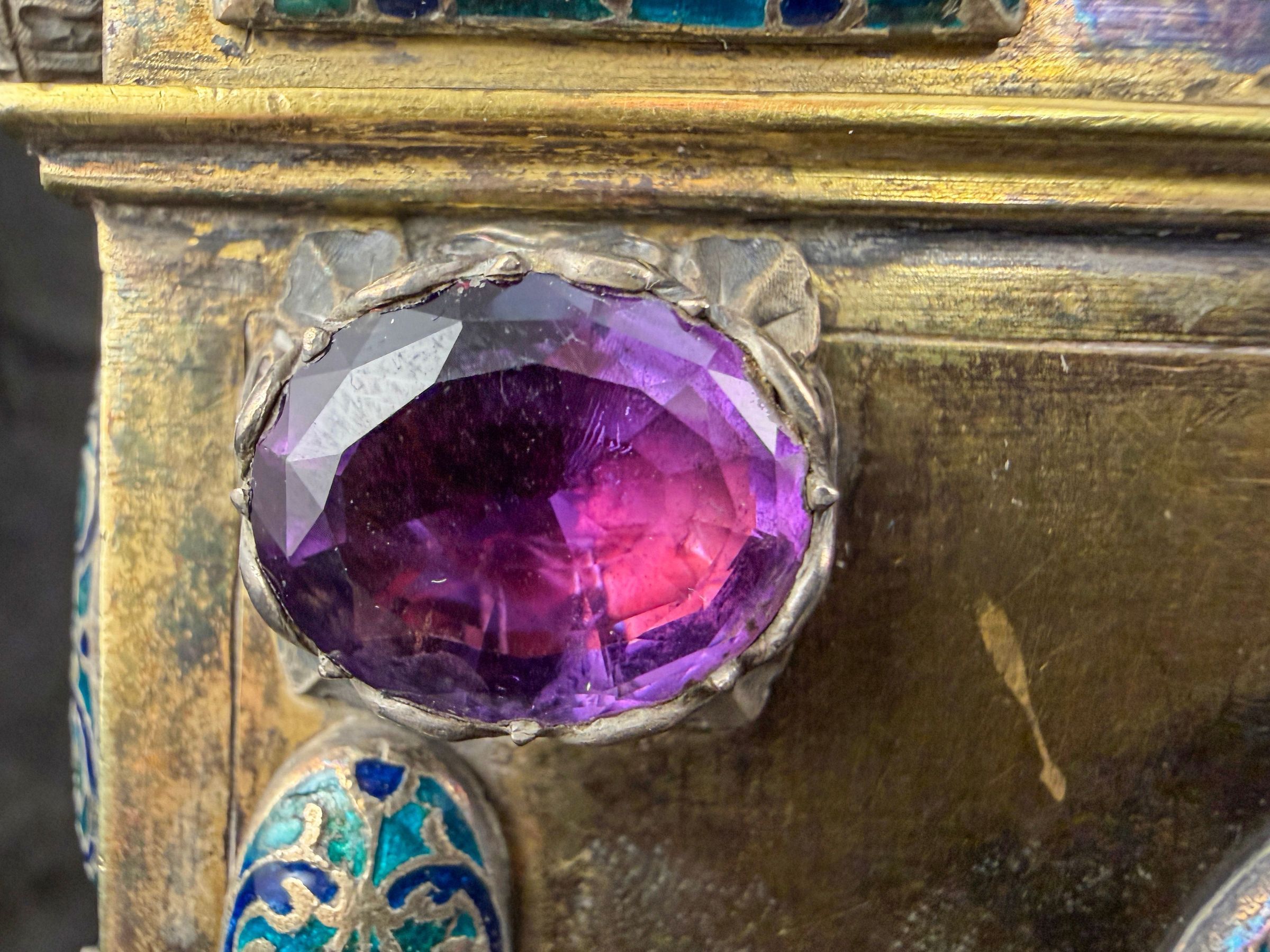
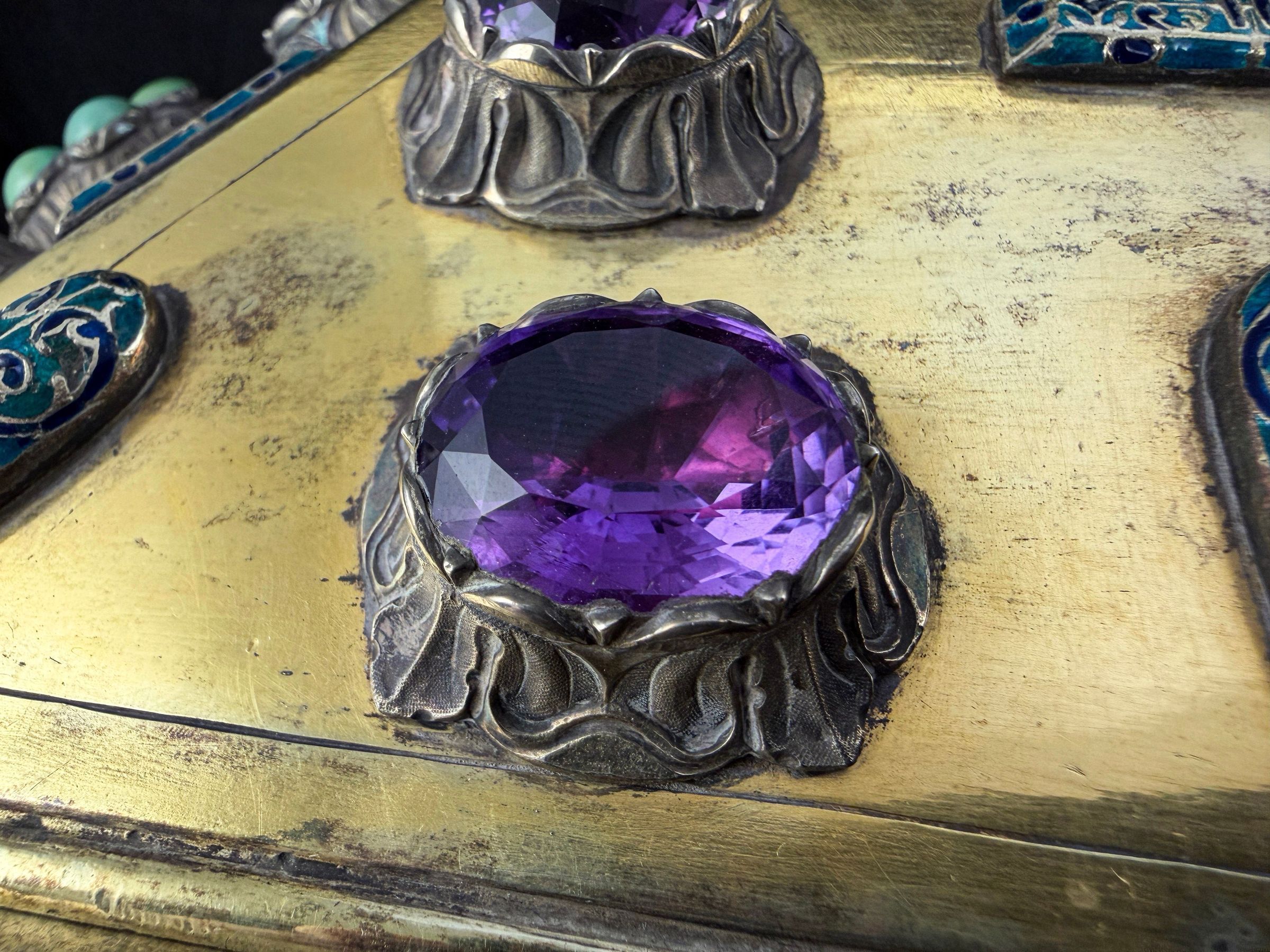
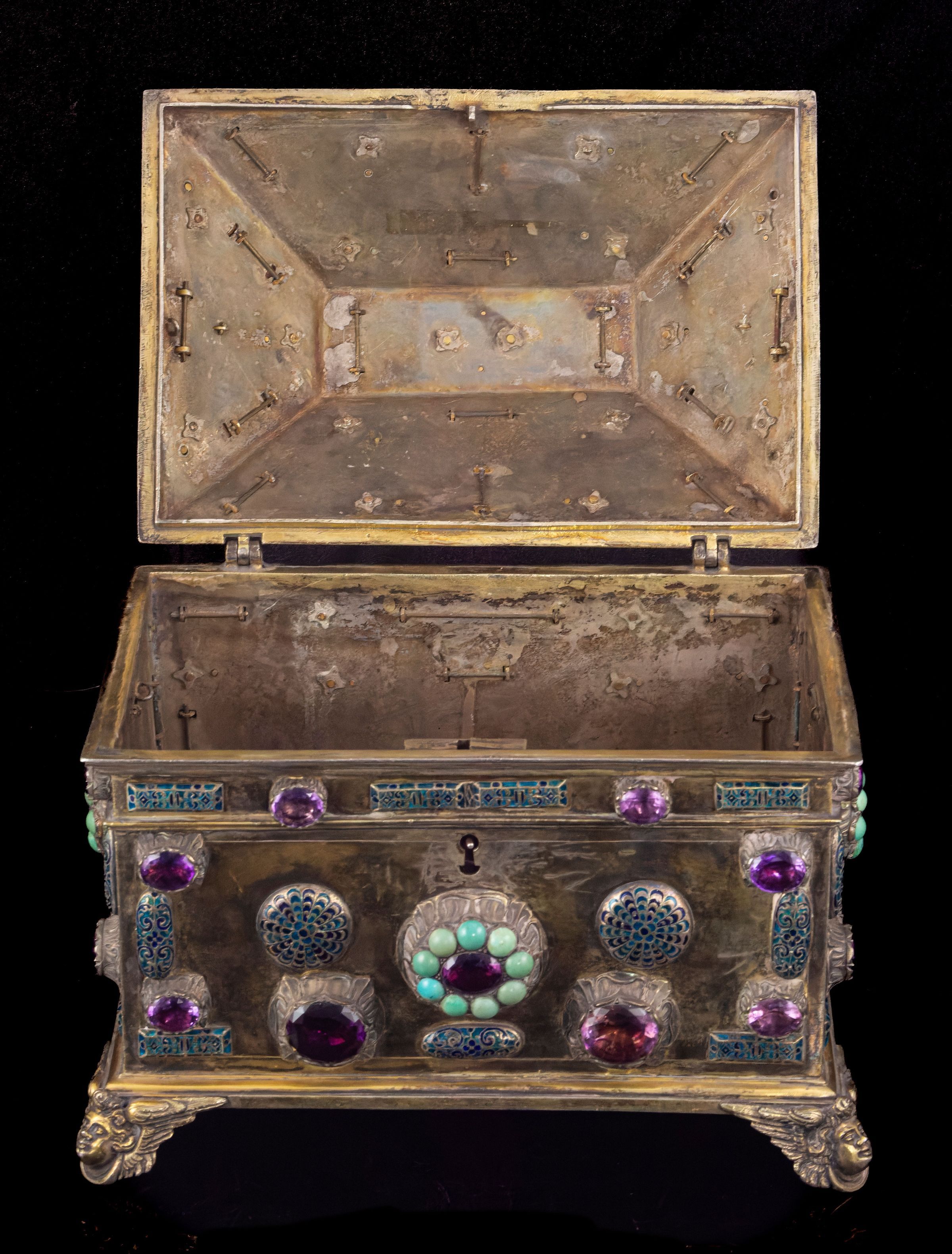
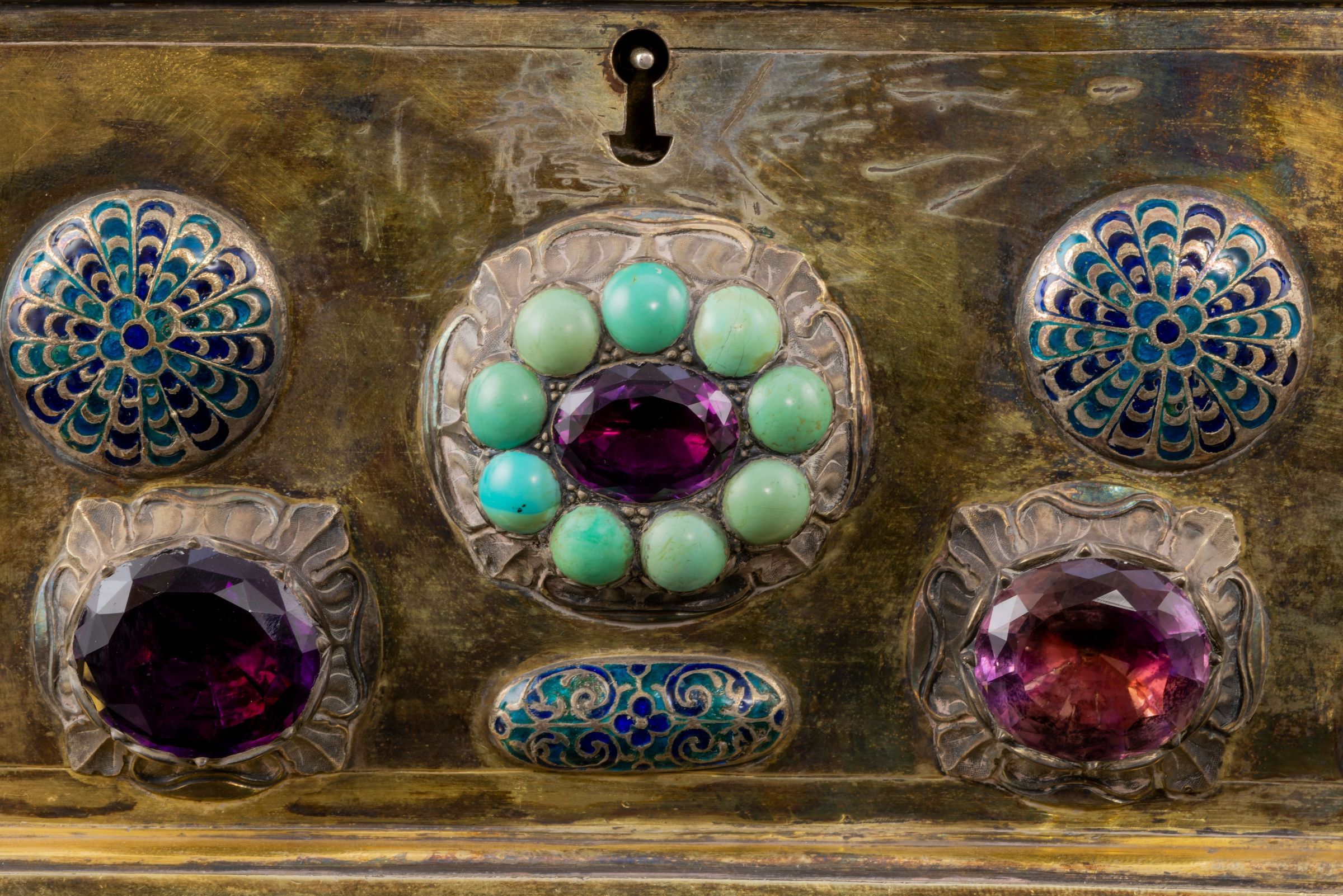
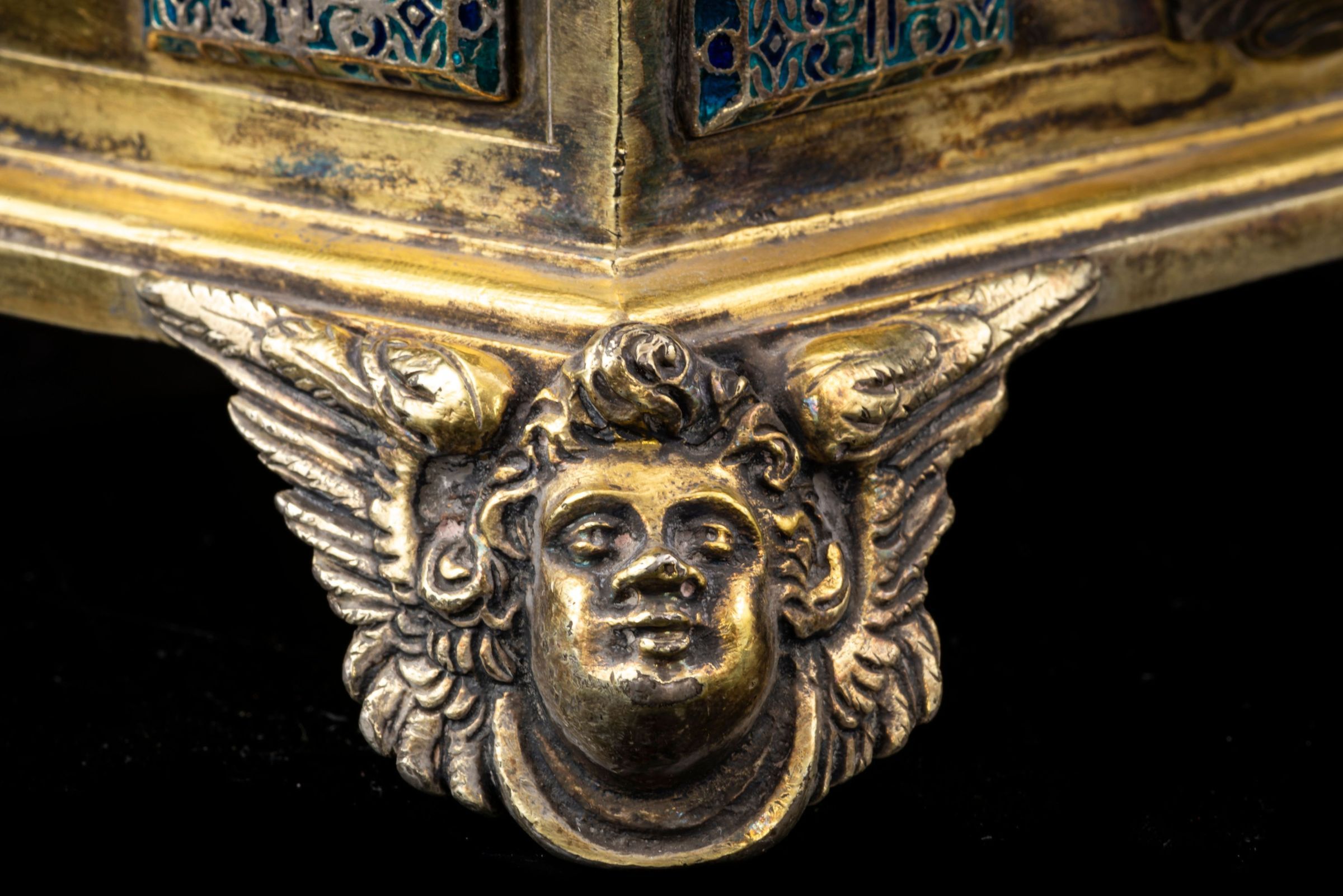
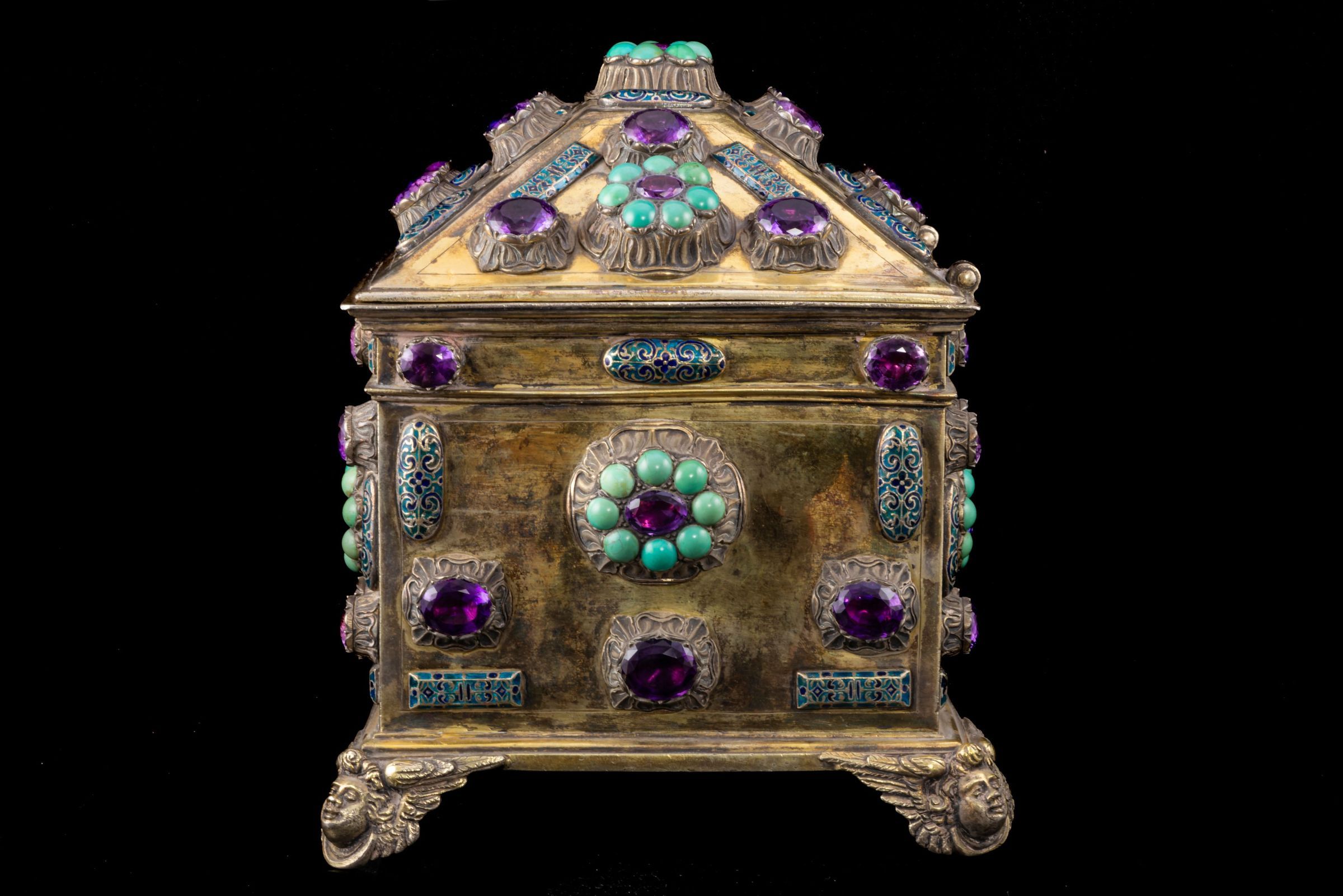
Gilded silver jewelry box decorated with amethyst, turquoise stones and enamel plaques from the collection of King Ferdinand II of Portugal.

Use

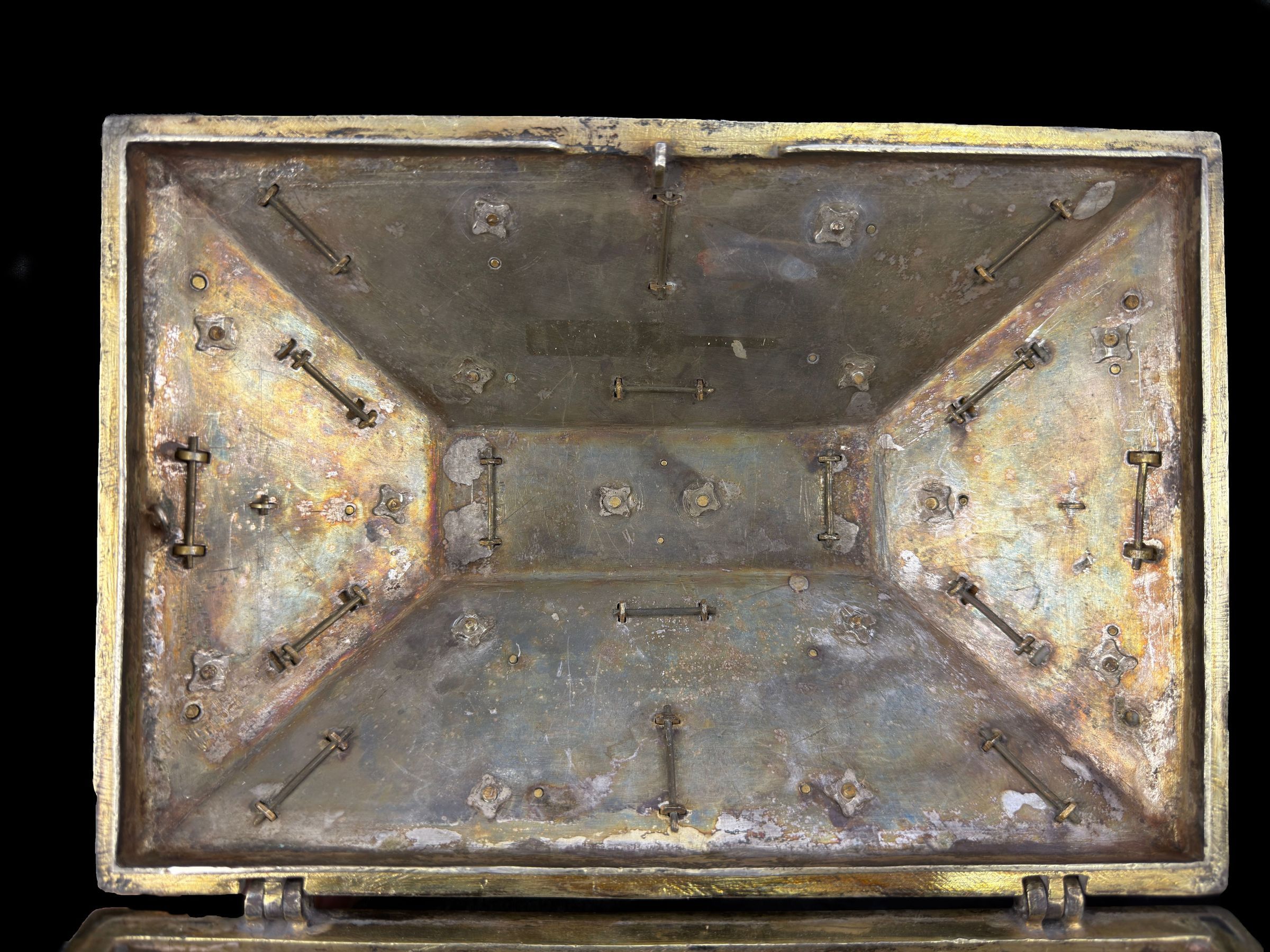
The silver chest was originally a Eucharistic chest, in which the consecrated host was kept during the Good Friday Mass. It was probably made for the Monastery of the Order of Christ in Tomar in the 17th century, where monastic life ceased in 1843, and then it was placed in the royal treasury. In the mid-19th century, it was desacralized (deprived of its ecclesiastical functions) and restored, at which time amethyst and turquoise stones and enamel panels were added to increase its aesthetic and material value.

Made/Created

Time Period

17th Century

Place

* Untyped Place

Portugal

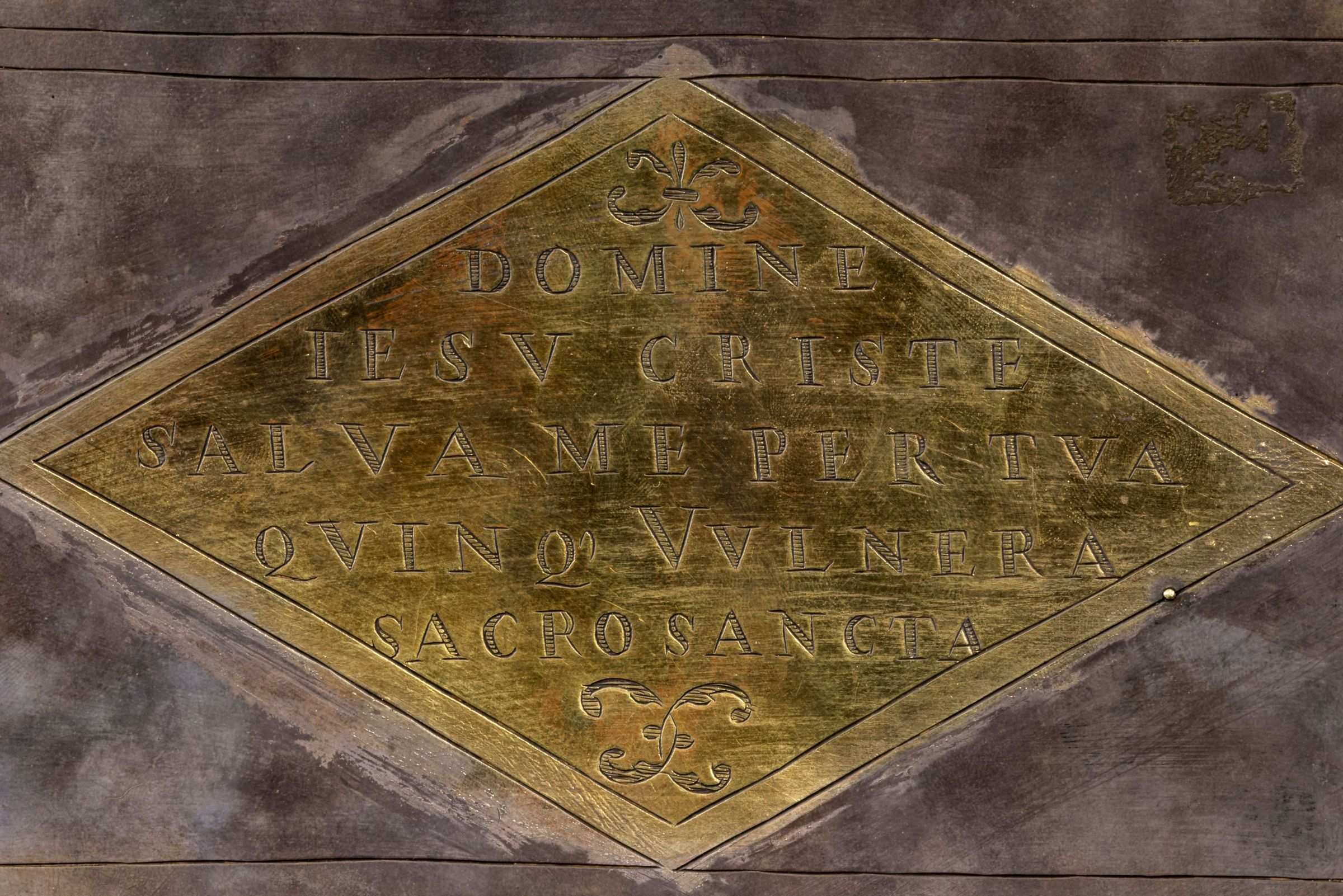
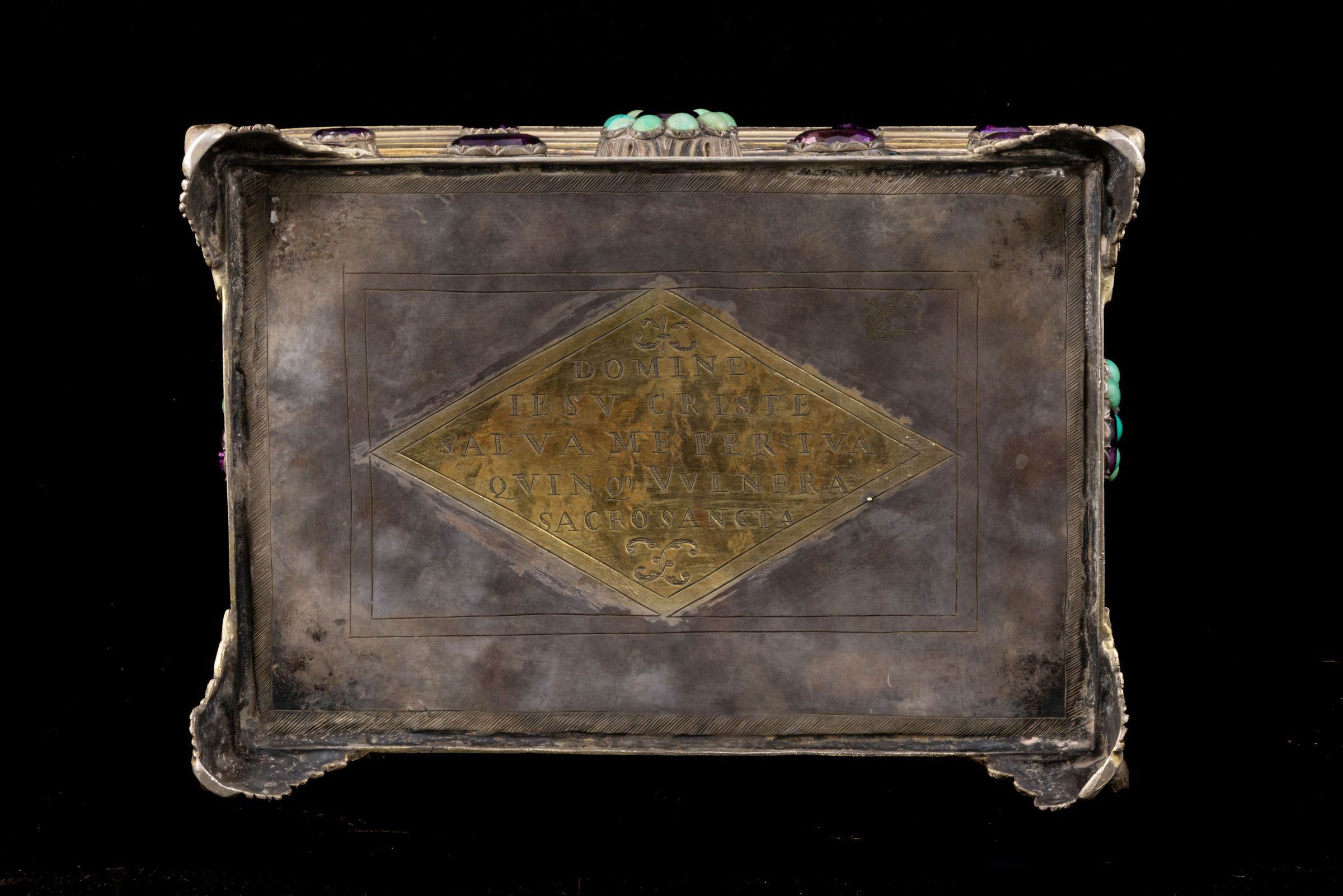
Inscription/Signature/Marks

Type

Engraving

Location

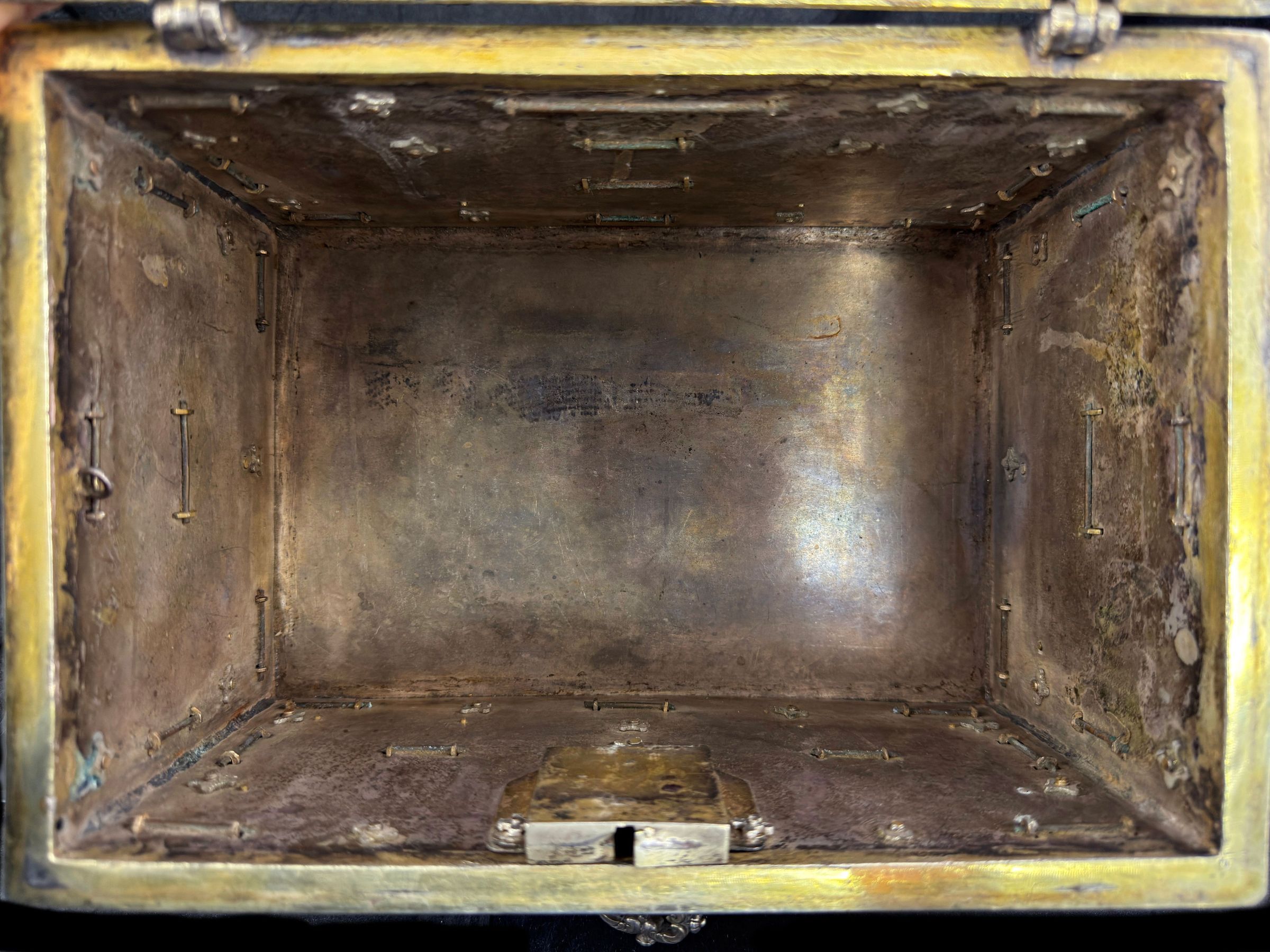
On the bottom of the chest

Transcription

"DOMINE IESU CRISTE SALVA ME PER TVA QVINQ'VVLNERA SACRO SANCTA"

Translation

"LORD JESUS ​​CHRIST, SAVE ME BY YOUR FIVE SACRED HOLY WOUNDS"

Dimensions

Height

22.5 cm

Width

25.5 cm

Depth

17.5 cm

Weight

4,030 g

Material

Gilt-silver

Conservation

Conservation Purpose

Gift for the king

Treatment

Date(s)

1853

Conservator

Pinto & Sousa

Requested By

Maria II of Portugal

Notes

The first wife of King Ferdinand II of Portugal, Queen Maria II (1819-1853), ordered the Pinto & Sousa goldsmiths to transform and restore the chest. The workshop completed the work on November 14, 1853, one day before the queen’s death. The tragic queen, who probably intended the chest as a gift for her husband, never saw it in this form again. The death of the queen affected the monarch so much that the royal court did not pay the fee (462$ 300Reis) to the Pinto & Sousa goldsmith’s workshop just six months later.

Provenance

Provenance Detail

Private collection of Ferdinand II of Portugal

Notes

The chest is also included in Ferdinand II’s 1866 manuscript inventory (inventory), where it is described as „um aparatoso cofre em prata dourada, incrustado com ametistas e turquesas” (an ornate gilded chest inlaid with amethysts and turquoises) and is described as „Belissima e muito estimável peça de grande efeito” (a beautiful and very precious piece with great effect). The king himself corrected the description with darker ink, and his second wife, Elise Friederike Hensler (1836-1929), also added notes. The artifact was exhibited in the Palácio das Necessidades (Palace of Necessidades), in Ferdinand II’s workroom. It was later placed in the boudoir of his second wife, Countess Edla, where it was placed on top of a piano. The chest was also captured in a photograph taken around 1870-1880 by the Italian photographer Francisco Rocchini (PNP inv. PNP 3644/2). The image shows the boudoir of the palace, where the object is located on top of the piano. The chest was also selected for Charles Thompson’s 1866 photographic campaign for the South Kensington Museum (now the Victoria & Albert Museum). The object was inherited by his second wife, the opera singer Elise Friederike Hensler (Countess of Edla), after the death of Ferdinand II (1885). She later sold it or may have given it away (the date is unknown), and it is no longer listed in her inventory after her death in 1929. It later appears in the collection of Pedro Rodrigues da Costa.