Illegal Alien's Guide to the Concept of Relative Surplus Value
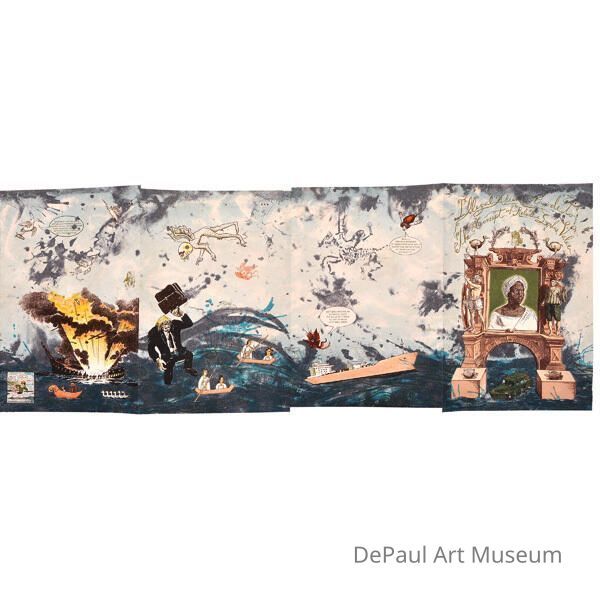
Name/Title
Illegal Alien's Guide to the Concept of Relative Surplus ValueEntry/Object ID
2010.05Description
Accordion book with a collage of images and text.Artwork Details
Medium
Color lithograph on Amate paperAcquisition
Notes
Collection of DePaul Art Museum, Art Acquisition EndowmentMade/Created
Artist
Chagoya, EnriqueDate made
2009Ethnography
Notes
North America Mexico born, United States American Mexico born North America, United StatesLexicon
Getty AAT
Concept
identity, metaphysical concepts, philosophical concepts, multiculturalism, culture-related concepts, colonialism, political concepts, social science concepts, slavery, social issues, sociological concepts, popular cultureHierarchy Name
Associated Concepts (hierarchy name)Facet
Associated Concepts FacetLOC Thesaurus for Graphic Materials
Marxism, CapitalismDimensions
Dimension Description
sheetWidth
80 inLength
15 inDimension Description
frameWidth
83-1/2 inDepth
3-1/2 inLength
19-1/2 inExhibitions
Fires Will Burn: Politically Engaged Art from the Permanent Collection
Highlights from the Permanent Collection 2012
Nexo/Nexus: Latino Artists in the Midwest
LATINXAMERICAN