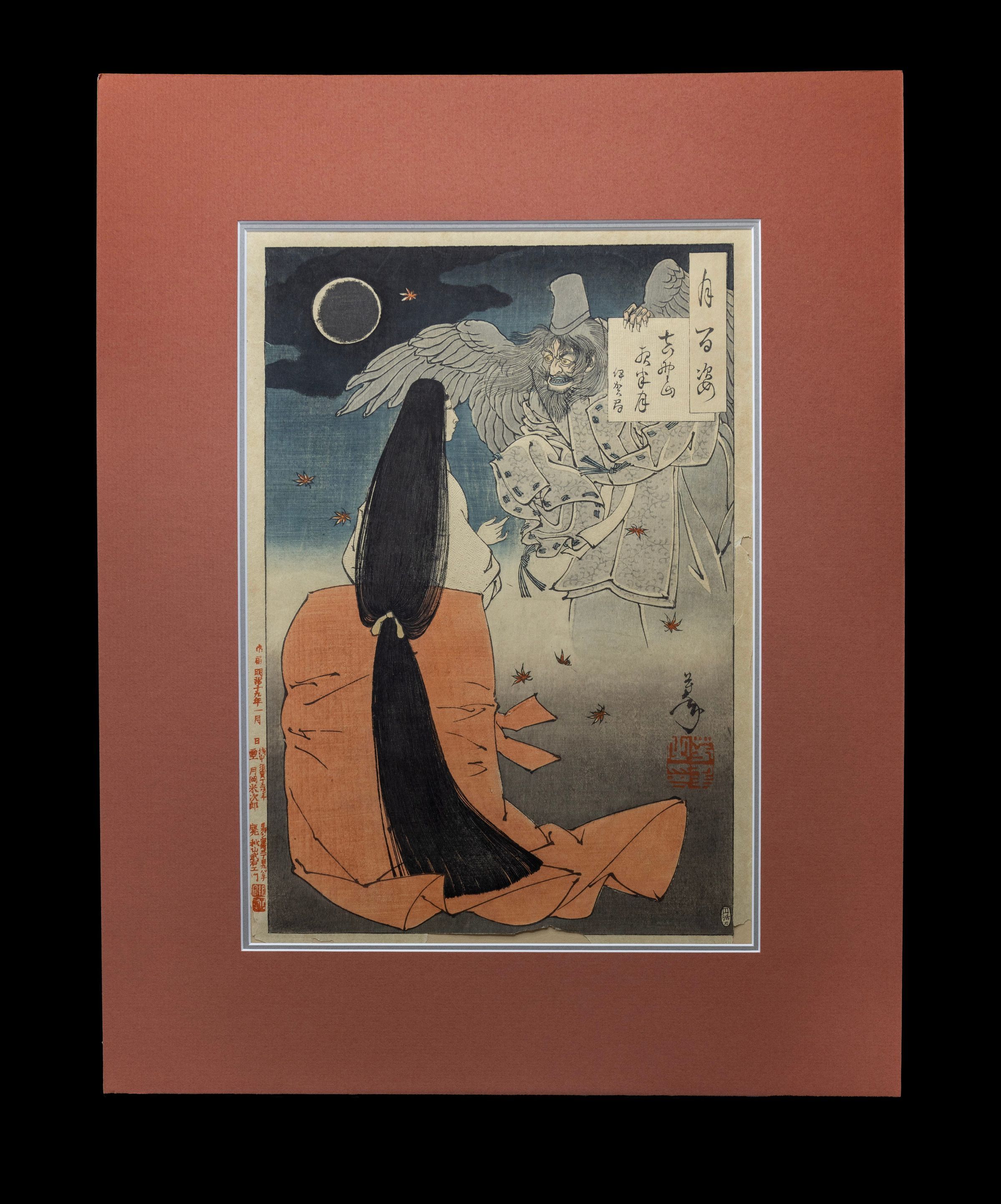
#2056, Photographed by Mary Elizabeth Kulesa, 2023
Recto
Artwork Details
Medium
Woodblock
Category
Print
Acquisition
Source (if not Accessioned)
James W. Paul, Jr., Philadelphia
Notes
Date: 1969
Credit Line: Gift of James W. Paul, Jr. to the Drexel Library then transferred to The Drexel Collection
Means of Accession: Transfer
Source: James W. Paul, Jr. Donated to the Drexel Library 1906-1907
Made/Created
Artist
Tsukioka Yoshitoshi
Date made
1886
Place
Country
Japan
Continent
Asia
Inscription/Signature/Marks
Notes
Publishing company, Akiyama Beumon
Dimensions
Height
13-1/8 in
Width
8-7/8 in
Exhibitions
Curator Pick of the Month
Arts of Asia: Selections from The Drexel Collection
Pictures of the Floating World: Ukiyo-e Woodblock Prints
Prints from the Drexel Collection: From Hogarth to Hiroshige to Rauschenberg
Interpretative Labels
Label Type
Curator Pick of the Month
Label
In the 19th century Tsukioka Yoshitoshi (1839–1892) made a series of 100 ukiyo-e, Japanese wood block prints, called One Hundred Aspects of the Moon that introduced Japanese and Chinese folklore during a period of increasing western presence. The moon symbolized different meanings in the prints depending upon whether it was waxing or waning.
This print tells the story of Sasaki no Kiyotaka, the winged ghost with blue lips commonly used to depict corpses, who was a high official forced to commit ritual suicide for ill-advising Emperor Go-Daigo in the 14th century. Kiyotaka's restless spirit haunted the court and no courtier was willing to face the angry ghost except lady Iga-no-Tsubone.
General Notes
Note Type
Cataloging Note
Note
Woodcut prints were typically carved from cherry blocks. Each color of a design had to have a separate block carved, except for the Japanese ukiyo-e artists who were able to print multiple colors from one block by painting the design using brushes and subtle coloring. The earliest European examples of woodblock prints were playing cards and religious images around the end of the 14th century. Woodcuts were also the main form of book illustration until the end of the 16th century. (Trench, Materials & Techniques in the Decorative Arts, 2000)
Note Type
Cataloging Note
Note
In the 19th century Tsukioka Yoshitoshi made a series of 100 ukiyo-e, Japanese wood block prints, called One Hundred Aspects of the moon that introduced Japanese and Chinese folklore during a period of increasing western presence. The Works captured "a moment in time and held suspended by a poetic dialogue with the moon." The moon symbolized different meanings depending upon whether it was a full moon or not. The moon's "waxing and waning", also used as the basis of the Japanese lunar calendar could illustrate what time of the month an event occurred and an ascribe a manner in was to be interpreted, such as the character's loneliness. (Yanrong Shen, 1/15/2016, quote from Wikipedia "Night in paintings")
Note Type
Cataloging Note
Note
The winged god/ghost in this design is Sasaki no Kiyotaka, who was a high official at the court of Emperor Go-Daigo in the 14th century. Forced to commit ritual suicide for ill-advising the emperior, Kiyotaka's restless spirit returned to haunt the court in exile of Yoshino Mountain. No courtier dared to face the angry ghost, except for the determined court lady Iga-no-Tsubone. Kiyotaka's blue lips follow the convention used for corpses. (Art Gallery, New South Wales)