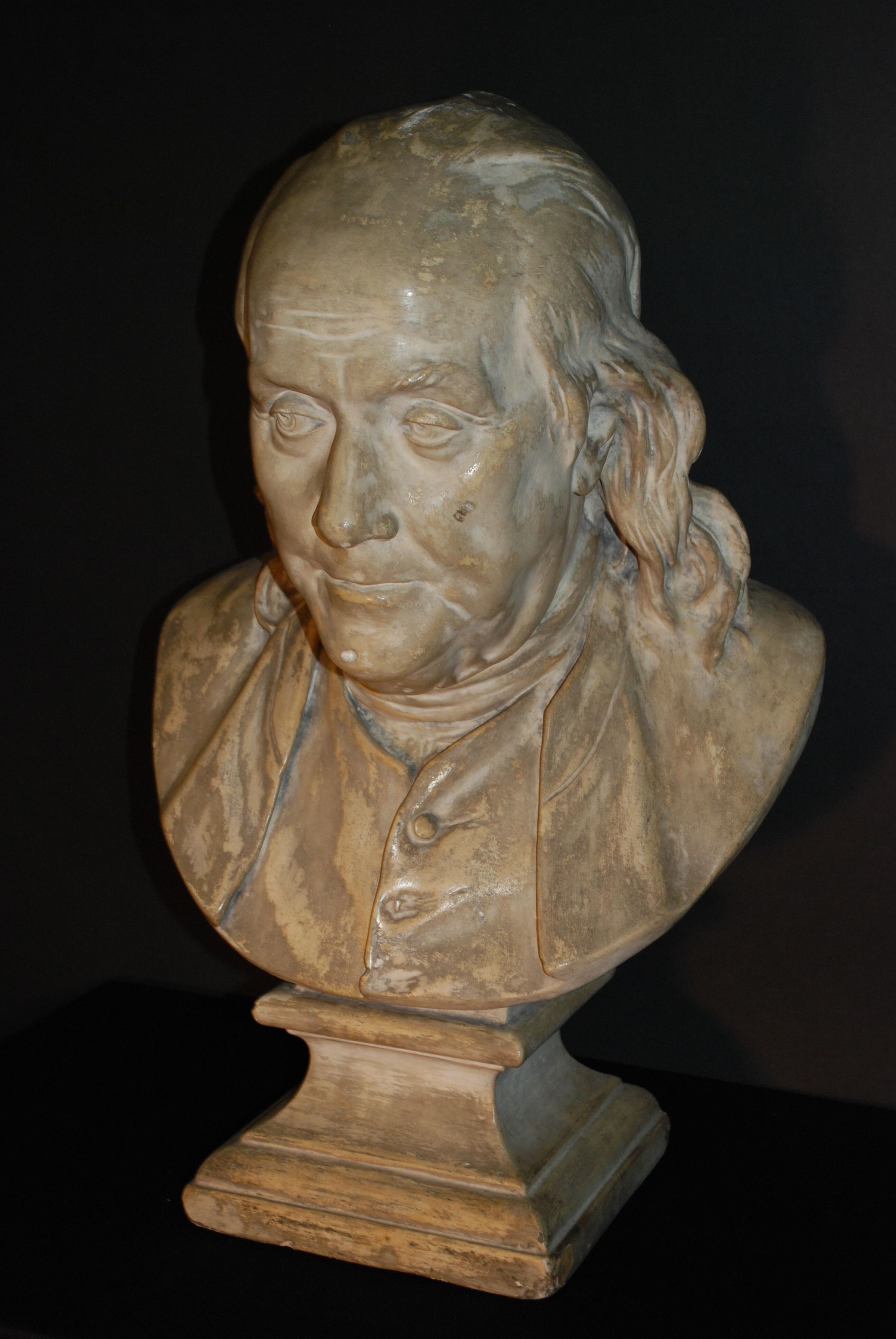
This bust of Benjamin Franklin was actually created without the subject sitting for the likeness. The subject is a well known founding father of the United States. He was also a scientist, politician, inventor, and author among other occupations. He was the first Ambassador to France for the United States, which is most likely when Houdon would see him enough to be able to carve a portrait. Houdon later put this bust on exhibition where people would be able to view it and request commissions or replica plaster busts, like the one currently in the Drexel Collection.
from The Philadelphia Museum of Art website and the Encyclopedia Britannica
Cast collections became especially prominent in the 15th century as a way to have many copies of the same work of art, which would allow pieces to become well known and also serve teaching purposes. Plaster casts in particular are very cheap and easy to make, and allow a famous work of art to be in many places at once. At Drexel, the plaster cast busts in the collection were most likely used as decorative purposes or for art students to learn from. A three-dimensional object is easier to learn from because of the detail preserved in pieces and by making pieces that are priceless more accessible.
from the Univeristy of Cambridge Cast Collection website and the Cornell Univeristy Library website
L. Bros 2/14/18