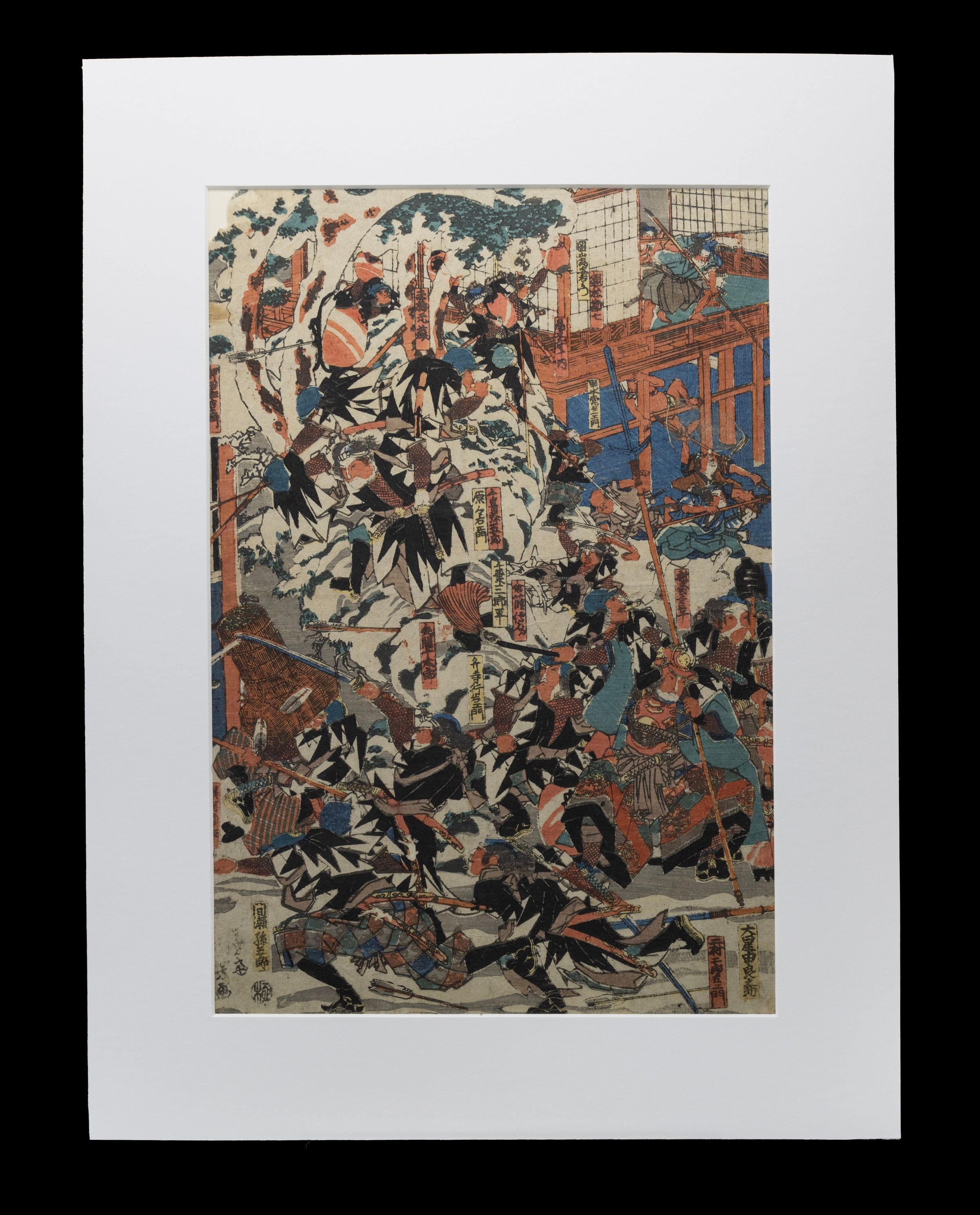
#2103, Photographed by Mary Elizabeth Kulesa, 2023
Recto
Artwork Details
Medium
Woodblock
Category
Print
Acquisition
Source (if not Accessioned)
James W. Paul, Jr., Philadelphia
Notes
Date: 1969
Credit Line: Gift of James W. Paul, Jr. to the Drexel Library then transferred to The Drexel Collection
Means of Accession: Transfer
Source: James W. Paul, Jr. Donated to the Drexel Library 1906-1907
Made/Created
Artist
Utagawa Kuniyoshi
Place
Country
Japan
Continent
Asia
Dimensions
Height
13-7/8 in
Width
9-1/2 in
Exhibitions
Pictures of the Floating World: Ukiyo-e Woodblock Prints
Reunion Tour
General Notes
Note
Woodcut prints were typically carved from cherry blocks. Each color of a design had to have a separate block carved, except for the Japanese ukiyo-e artists who were able to print multiple colors from one block by painting the design using brushes and subtle coloring. The earliest European examples of woodblock prints were playing cards and religious images around the end of the 14th century. Woodcuts were also the main form of book illustration until the end of the 16th century. (Trench, Materials & Techniques in the Decorative Arts, 2000)
Chushingura are the fictionalized accounts in literature, theater and film of the tale of the 47 Ronin. Akouroushi is a Japanese film from 1961 that depicts the history of the 47 Ronin or the Ako incident. (L. Clouser, 5/14/2018)
As per the Victoria & Albert Museum: The historical facts are that the imperial court in Kyoto sent envoys bearing New Year's greetings to the shogun in Edo (modern-day Tokyo). In 1701 Asano was asked to receive the envoys. The shogun's chief of protocol was Kira, who treated Asano disrespectfully. Eventually Asano became so angry that he drew his sword and attacked Kira. The act of drawing a sword in Edo Castle was illegal and Asano was ordered to commit suicide. His lands were confiscated by the shogun and his samurai became ronin.
Forty-seven of Ako’s former samurai vowed to avenge their lord's death and two years later they charged into Kira’s mansion and killed him. The warriors then marched to Sengakuji, the temple where Asano was buried, and offered Kira's head to their lord's grave. The Ako warriors' actions had violated the law by resorting to violence as a group, but they had also faithfully lived up to the samurai code of loyalty to their lord. Rather than being publicly executed, the ronin were ordered to commit suicide, an honourable samurai death. They were buried near their master's grave at Sengakuji. For their commendable actions and honourable death they were immediately regarded as heroes.