Note
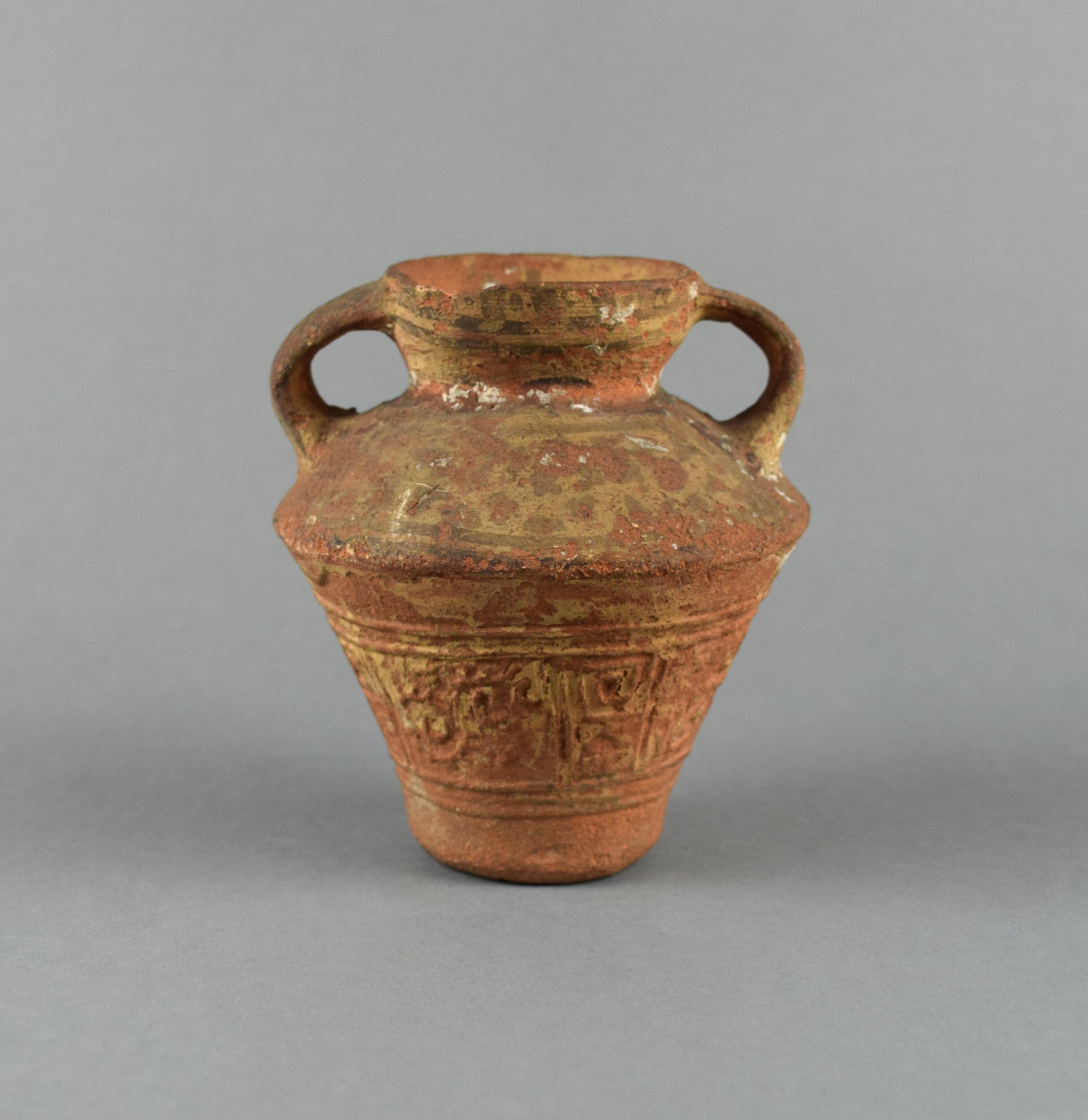
Per previous cataloguer this vessel was dated c. 1200-1500, but upon an appraisal by Christie's was categorized as not ancient. Most likely, it is a reproduction, a vessel made in the style of early Chimu ceramics.
Chimu civilization flourised on the northern coast of Peru between the 12th and 15th centuries CE. Chimu pottery is characterised by mold-made blackware and redware with sculpted decoration and a high polish. (L. Clouser, 5/14/2020)
The Chimu Culture, sometimes referred to as the Kingdom of Chimor, was situated on the northern coast of Peru between the tenth and fifteenth centuries CE. Unlike the Moche Culture, the Chimu, largely thought of as the cultural successor to the Moche, was not a loose confederation of groups, but a federation, with a capital city (Chan Chan), a four-tier hierarchal system, and a governing entity (elite class). The Chimu, widely renowned for their architecture, culture, and methods of regional governance, were able to forge the second largest empire in the history of the prehistoric Andes. The Chimu were so successful that the Inca, the cultural successors to the Chimu, would later go on to emulate the Chimu model of governance.
Chimu ceramics were either used as containers for use in daily tasks, or as ceremonial items in burials. Object 699 is likely modeled after a vessel that would not have been used in a ceremonial capacity. (B. Peters, 1/31/18)
Modern, made in the Chimu style