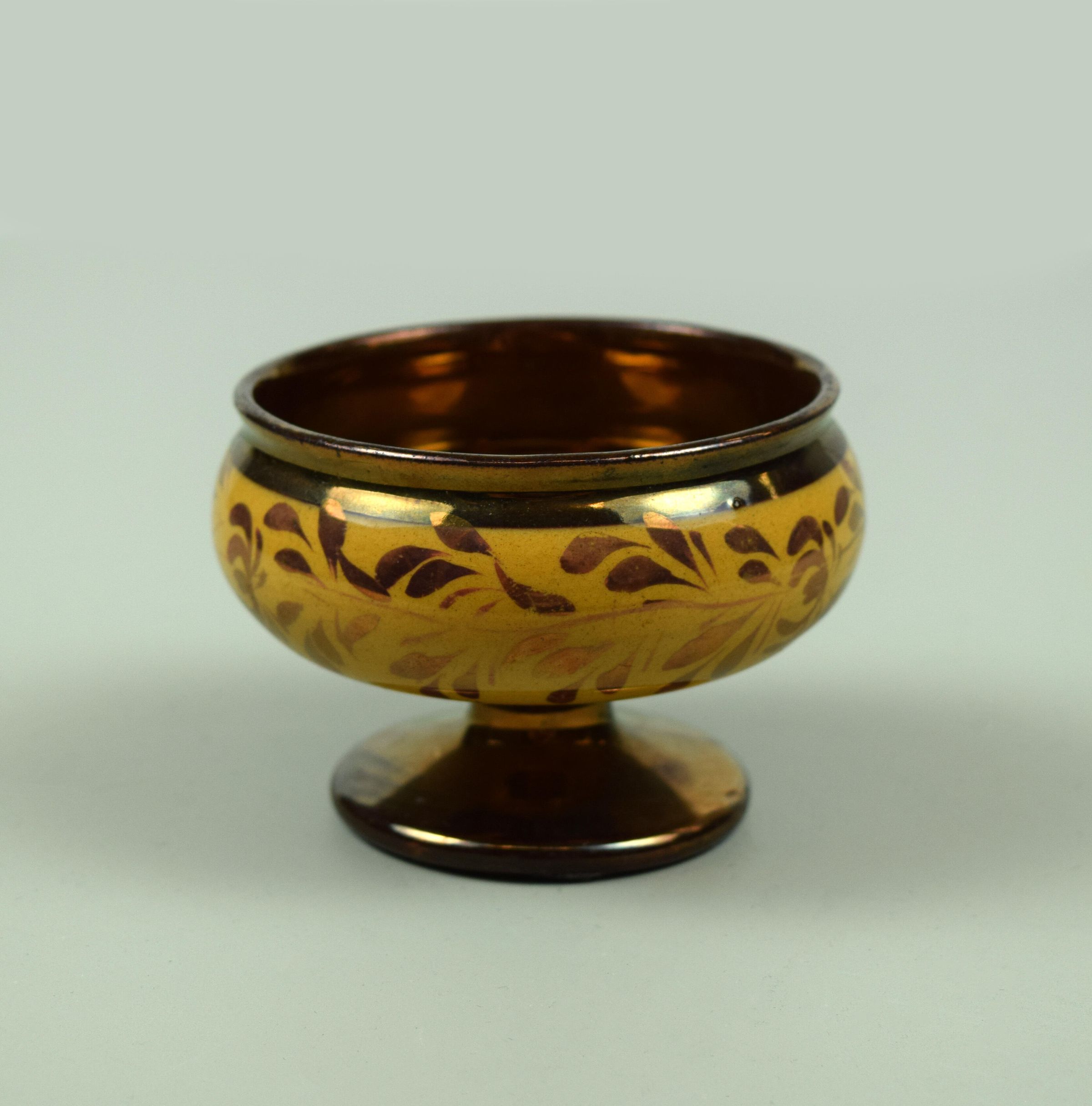
Date: 1976
Credit Line: Bequest of Marjorie Ellis Kroha, Class of 1914, Home Economics
Means of Accession: Bequest
Made/Created
Artist
Unidentified
Place
Country
United States
Continent
North America
Dimensions
Height
2 in
Diameter
3 in
Materials
Earthenware (lustreware), lead glaze
Exhibitions
The Drexel Collection: Celebrating 125 Years
General Notes
Note
Lustre is metallic decoration applied to ceramics through precipitation, using salts of silver, gold or copper that are dissolved and then mixed with an organic medium and painted onto the surface of the ceramic before firing. This style of decoration was invented in the Near East around the 9th century AD and then spread to the Islamic culture in Spain. The technique did not come to England until the 19th century when the potter William De Morgan began to develop lustrewares. (Trench, Materials & Techniques in the Decorative Arts, 2000)