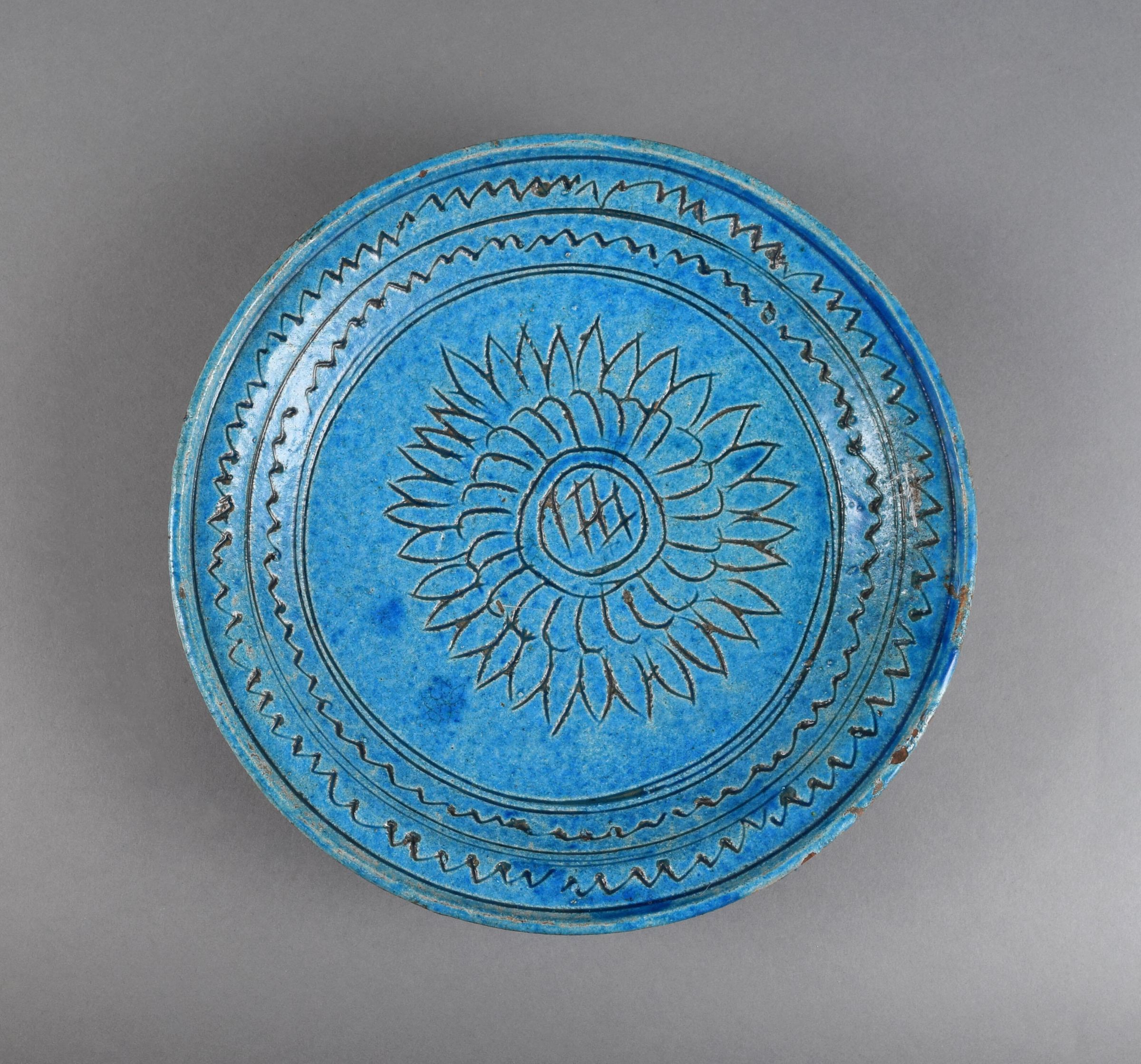
Dish
Category
Ceramic
Acquisition
Accession
1891.001Source or Donor
Anthony J. Drexel, PhiladelphiaAcquisition Method
GiftCredit Line
Gift of Anthony J. DrexelMade/Created
Artist
UnidentifiedPlace
City
ThattaState/Province
SindhCountry
PakistanContinent
AsiaInscription/Signature/Marks
Notes
Inscription: Underside, "363/ 11" handwritten in pencil Label: Underside, Torn, off-white rectangle with "#252 new/ number/ 98" handwritten in pencilDimensions
Height
1-3/4 inDiameter
9 inMaterials
Earthenware (redware), slip, glaze
Provenance
Notes
Purchased by James MacAlister in London, 1891Exhibitions
Curiouser & Curiouser: Beyond the Glass
Earliest Acquisitions at Drexel: President MacAlister's European Visit
The Drexel Collection: Celebrating 125 Years
Fired Works: Ceramics from Around the World
Arts of Asia: Selections from The Drexel Collection