Note
Accession Book, p. 975
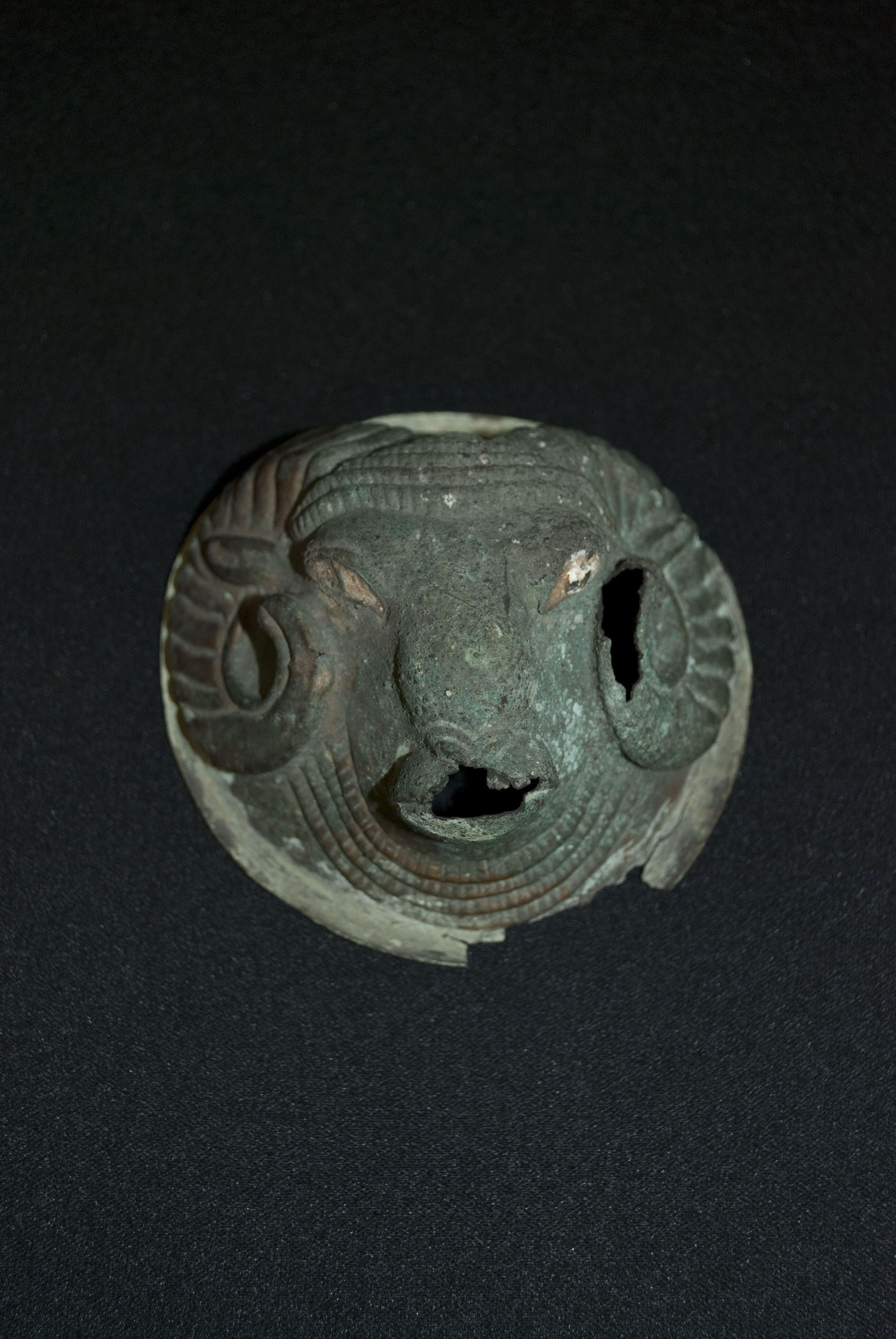
Per the Penn Museum's exhibit, Etruscans were a votive culture. Votives are gifts given to gods to ensure favorable response to prayers. Sheeps and goats are the conventional animals of sacrifice for many dieties. Romans later used term "do ut des", meaning "I am giving so that you will give". At Etruscan sanctuaries, grateful worshippers heaped offerings on alters or special pits. Offerings including prized jewelry or possesions, or objects made specificallly for votive use. Bronze and terracottas common. Etruscans known for their fine metal craft thanks to the high quality of ores in Tuscany.
Label 12/2014:
Etruria, modern day northern central Italy, was home to Italy’s earliest civilization. Known as the Etruscans, these inhabitants colonized wide areas of Italy and dominated the central Italian Peninsula from the 8th to 6th century BCE. The region’s abundance in metal ores enabled the Etruscans to cultivate their metalworking skills, and become especially known for the craftsmanship and quality of their bronzes. Etruscans had a wide range of commercial contacts, throughout Greece and its colonies, France, Spain and North Africa. Eventually the civilization was absorbed into the Roman Empire, when Rome conquered all of Italy in the 1st century BCE.
Very little is known about day to day life in Etruria. However, funerary practices have given us some insight into Etruscan life. Tomb paintings display a wide range of events, from ritual worship to civic ceremonies. Belongings found in the tombs also reveal what was important to the civilization. However, we do not know a lot about the average people in the culture because most Etruscans could not afford to be buried in chamber tombs and bring non-perishable items with them.
Label 12/2014:
Etruscans were especially known for their fine metal crafts, thanks to the high quality of copper and tin deposits in Tuscany. By the 9th century BCE, Etruscans had mastered mining and metalworking. By the 4th century BCE, foreign trade played a significant role in the metal industry, as Etruscans often exported their finished products. These high quality Etruscan bronzes were sought throughout the Mediterranean, by Greece in particular. While Greek bronzes of the same period were more decorated and detailed, Etruscan bronzes were known for their sturdiness and material value. The Greeks admired the Etruscan metalworkers greatly, recognizing the Etruscans as skilled craftsmen who loved their work. The Etruscans also used bronze to create small objects of daily use, such as storage jars, mirrors and decorative pieces.
Label 12/2014:
Etruscan daily life included a significant amount of time dedicated to votive worship. Votives are gifts given to the gods to ensure a favorable response to prayers. Animal depictions, such as sheep and goats, were common offerings because they were the conventional animals of sacrifice for most deities. This ornament from a votive shield depicts a ram’s head, and would have been made specifically for votive use.