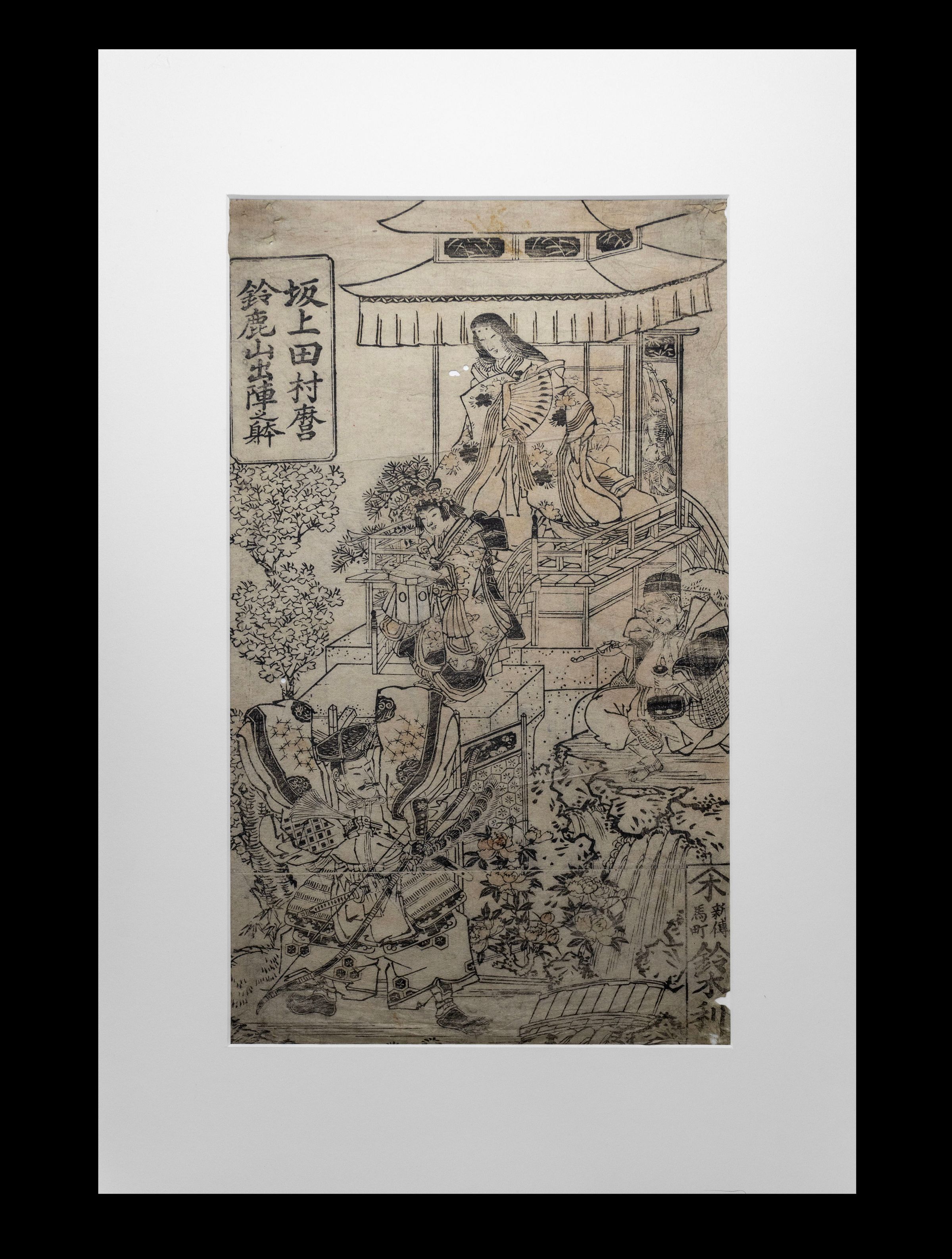
#2122, Photographed by Mary Elizabeth Kulesa, 2023
Recto
Artwork Details
Medium
Woodblock
Category
Print
Acquisition
Source (if not Accessioned)
James W. Paul, Jr., Philadelphia
Notes
Date: 1969
Credit Line: Gift of James W. Paul, Jr. to the Drexel Library then transferred to The Drexel Collection
Means of Accession: Transfer
Source: James W. Paul, Jr. Donated to the Drexel Library 1906-1907
Made/Created
Artist
Unidentified
Place
Country
Japan
Continent
Asia
Dimensions
Height
16-1/8 in
Width
9-1/2 in
Exhibitions
Pictures of the Floating World: Ukiyo-e Woodblock Prints
General Notes
Note
Woodcut prints were typically carved from cherry blocks. Each color of a design had to have a separate block carved, except for the Japanese ukiyo-e artists who were able to print multiple colors from one block by painting the design using brushes and subtle coloring. The earliest European examples of woodblock prints were playing cards and religious images around the end of the 14th century. Woodcuts were also the main form of book illustration until the end of the 16th century. (Trench, Materials & Techniques in the Decorative Arts, 2000)
Per Museum of Fine Arts Boston: (same print)
Catalogue Raisonné
General reference: Asano, "Sendai matsuri yamaboko zu kô," Bijutsukan benri 12 (Hiraki Ukiyo-e Mus., July 2000)
Sumizuri-e prints: Literally, "black-ink printed picture"; sumi is the name for black India ink. Hence sumizuri-e, a print done in black and white, although sometimes one finds shades of grey as well, as in Hokusai's famous and fabulous illustrated book, '100 Views of Fuji'. The first ukiyo-e prints were produced with this technique.
Sumizuri-e period/style