Haniwa - Terra cotta horse
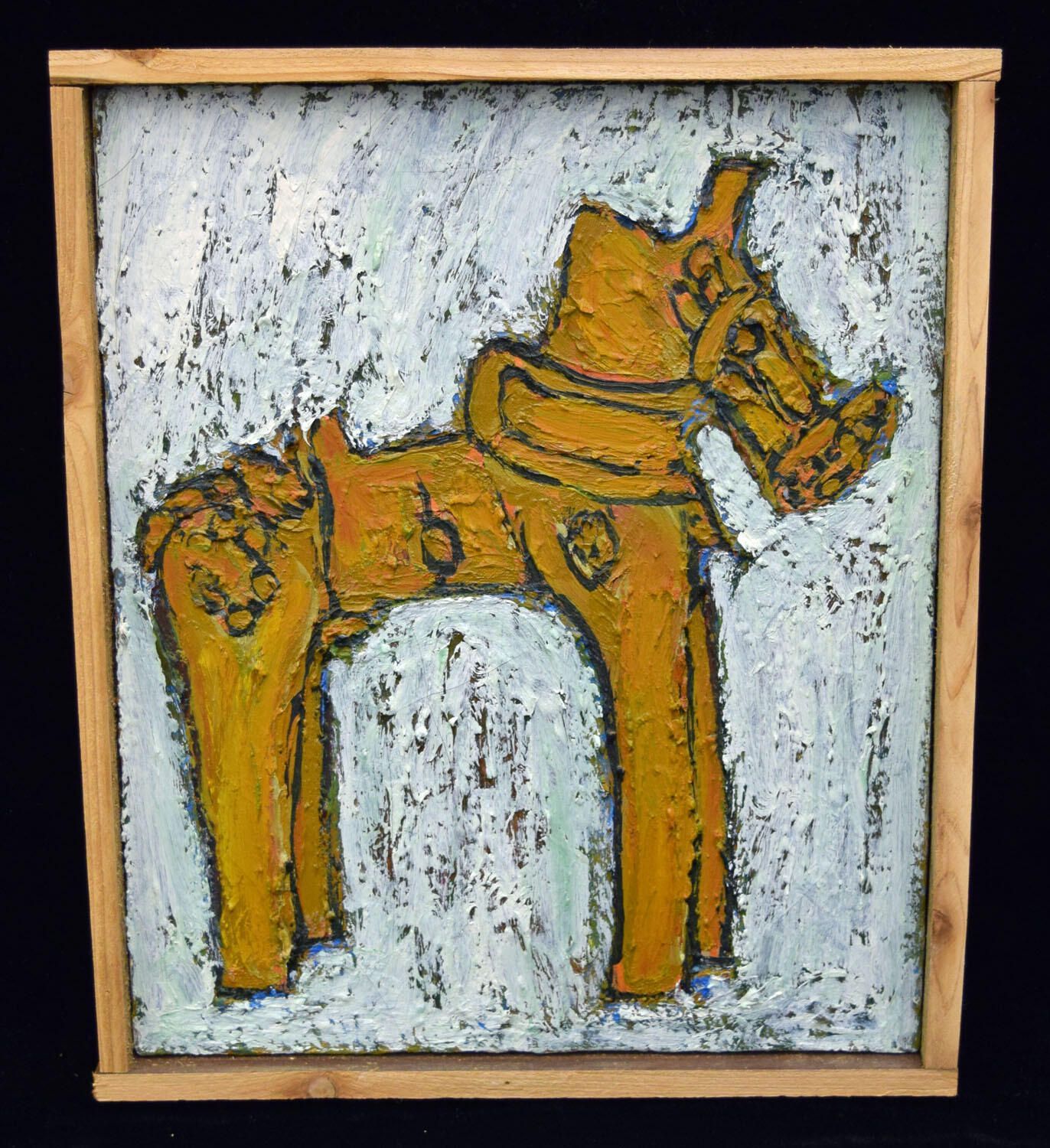
Painting

Object ID: 2017.001.0002

Drexel Founding Collection

Haniwa - Terra cotta horse

Artwork Details

Medium

Oil, on canvas

Category

Painting

Acquisition

Accession

2017.001

Source or Donor

Kristine A. Mulhorn

Credit Line

Gift of Kristine A. Mulhorn, PhD, and Ayumu Yokohama

Made/Created

Artist

Tokujiro Nishi

Dimensions

Dimension Description

Framed

Height

19 in

Width

16-1/8 in

Exhibitions

Tokujiro Nishi
New Acquisitions: Highlights from The Drexel Collection

General Notes

Note

Haniwa figures are funerary tokens for ritual use in Japan from the 3rd to 6th centuries. They are created using the Wazumi clay method, where coiled clay is built up and smoothed out with additional pieces attached and etched in. A piece like this would have traditionally been placed in a warrior's grave/ - Haniwa Horse, Museum of Fine Arts Houston 5/22/18 Impasto Method: Thick application of paint in layers, a style that the Impressionists and Post-Impressionists utilized. This method tends to eliminate the presence of actual brushstrokes, resulting in a more abstracted product. Often color is applied straight from the tube or in many layers to create texture and more dimensionality. Painting using this method often conveys a greater energy and meaning for the artist than with more traditional methods. - Impasto by Lyle Millard 5/22/18 Painting Style: Nishi paints in the style of Ernest Fenollosa, who helped introduce Japanese art to America. Fenollosa studied abroad in Japan and collected art work to take home to Philadelphia. The style of landscape painting he utilized is traditionally called Nihonga. - From Phila-Nipponica: An Historic Guide to Philadelphia and Japan (Ernest Fenollosa and Philadelphia: Treasures of Japanese Art by Masaharu Imai)