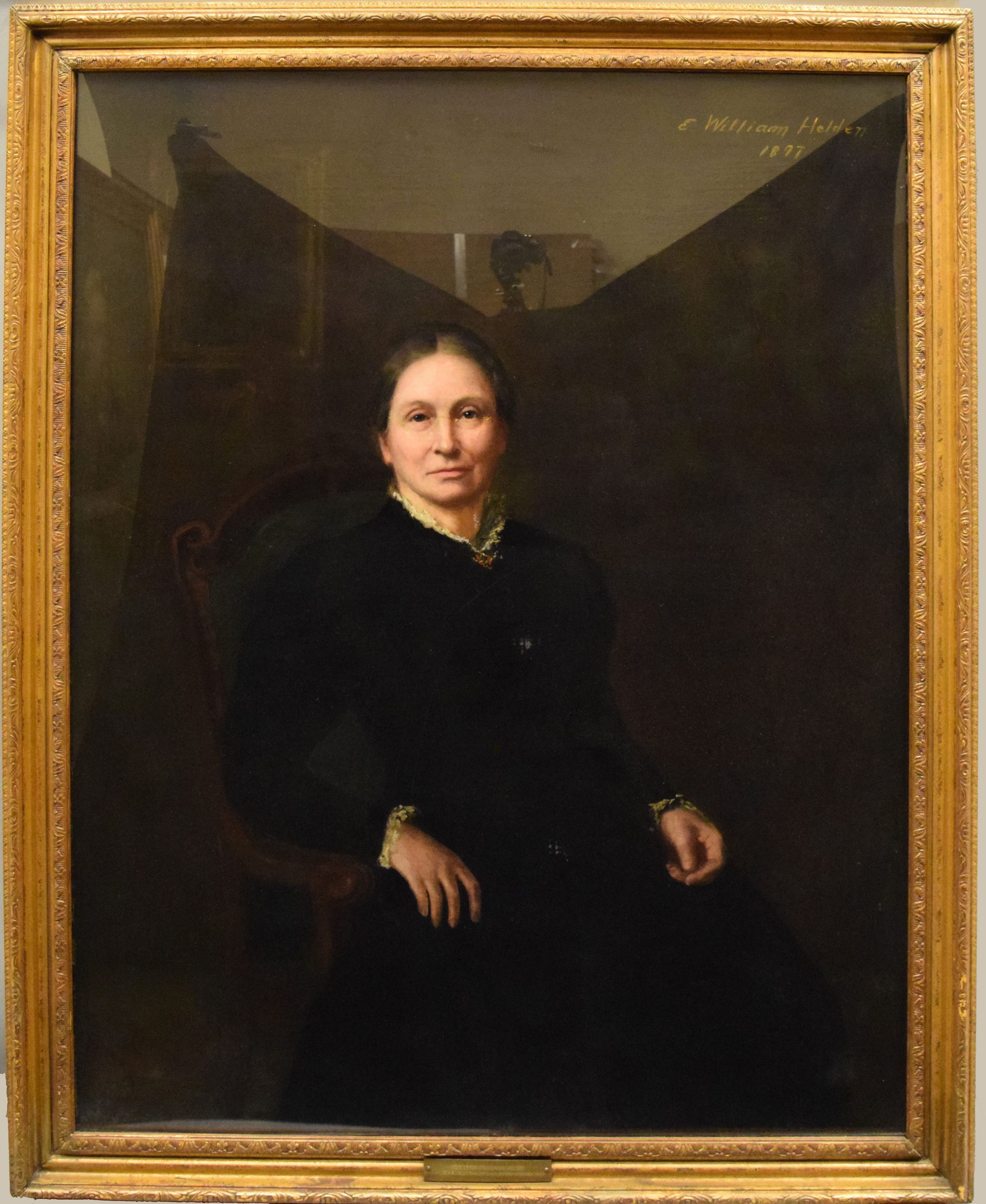
"HANNAH E. LONGSHORE, M.D. / WOMAN'S MEDICAL COLLEGE OF PENNSYLVANIA - 1851"
Language
English
Material/Technique
Inscribed
Notes
metal plaque, likely brass, attached to frame with two small brads, one on either side. plaque measures 5;7/8" x 1"
Type
Label
Location
Verso, upper rail of frame, ~10" from proper right corner
Transcription
"56"
Language
English
Material/Technique
Handwritten
Notes
in pencil
Type
Label
Location
Verso, on frame, upper rail
Transcription
"The <illegible>"
Language
English
Material/Technique
Printed text
Notes
rectangular paper label under tape. torn and incomplete, black ink printed on cream/white paper. ~3" long.
Dimensions
Dimension Description
Framed
Height
56 in
Width
47-1/2 in
Dimension Description
Unframed
Height
49 in
Width
39-1/2 in
Interpretative Labels
Label Type
Exhibition Label
Label
Hannah Longshore was the first woman doctor to start a private practice in Philadelphia. She was a member of the first graduating class of eight women from the Female Medical College of Pennsylvania on December 30, 1851. The awarding of M.D. degrees to women was then so controversial that five hundred male medical students and their friends protested the ceremonies and threatened to interrupt them. The mayor of Philadelphia had to assign a cordon of fifty policemen to Musical Fund Hall where the graduation was to take place so that order could be guaranteed.
Crowds gathered outside Dr. Longshore’s office to ridicule her at first. Druggists refused to fill her prescriptions, and many male physicians would have nothing to do with her. Her stamina, determination, and skill as a practicing physician led to her commanding a noble place in the history of women in medicine. She held the post of Demonstrator in Anatomy at the College until 1853, when she left to help establish the Female Department at Penn Medical University.