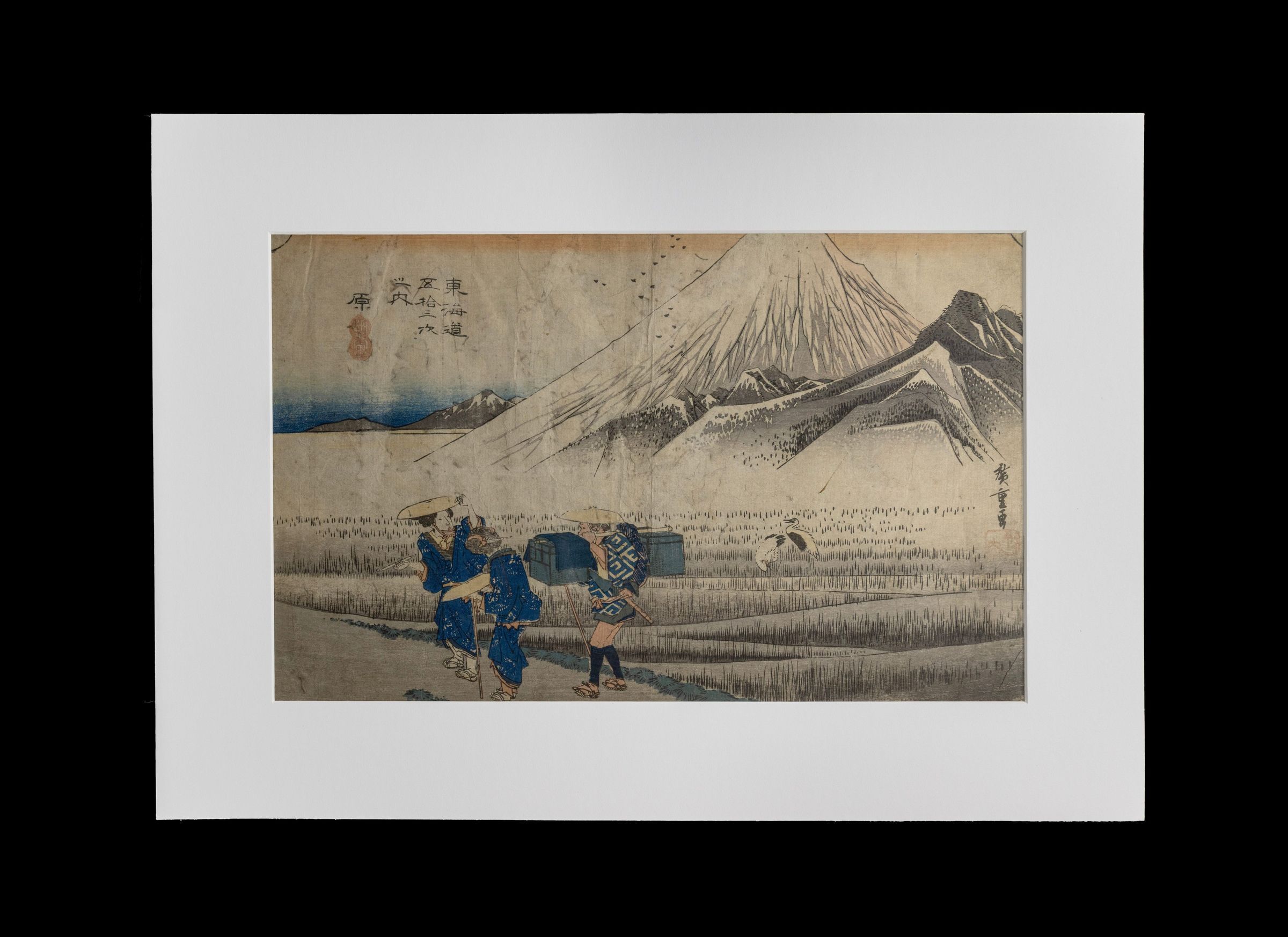
#2186, Photographed by Mary Elizabeth Kulesa, 2023
Recto
Artwork Details
Medium
Woodblock
Category
Print
Acquisition
Source (if not Accessioned)
James W. Paul, Jr., Philadelphia
Notes
Date: 1969
Credit Line: Gift of James W. Paul, Jr. to the Drexel Library then transferred to The Drexel Collection
Source: James W. Paul, Jr. Donated to the Drexel Library 1906-1907
Made/Created
Artist
Utagawa Hiroshige
Date made
circa 1831 - 1834
Place
Country
Japan
Continent
Asia
Inscription/Signature/Marks
Notes
Publishing company, Hoedo
Dimensions
Height
9 in
Width
13-5/8 in
Exhibitions
Pictures of the Floating World: Ukiyo-e Woodblock Prints
General Notes
Note Type
Cataloging Note
Note
Jessica Arntson had this labelled 2187.
This is the same as print 2150.
Note Type
Cataloging Note
Note
Woodcut prints were typically carved from cherry blocks. Each color of a design had to have a separate block carved, except for the Japanese ukiyo-e artists who were able to print multiple colors from one block by painting the design using brushes and subtle coloring. The earliest European examples of woodblock prints were playing cards and religious images around the end of the 14th century. Woodcuts were also the main form of book illustration until the end of the 16th century. (Trench, Materials & Techniques in the Decorative Arts, 2000)
Note Type
Historical Note
Note
The Hoeido Edition is the most famous. There are 55 total prints, one for each station and one at the start and the end. This series is from Utagawa Hiroshige's first trip along the Tokaido in 1832. The Tokaido Road links the Shoguns capital, Edo, to the Imperial capital, Kyoto. These prints established a new theme in ukiyo-e, landscapes with special focus on famous views. (L. Clouser, 5/14/2018)