Name/Title
Pathé N°4 Phonograph – “Système Vérité”Entry/Object ID
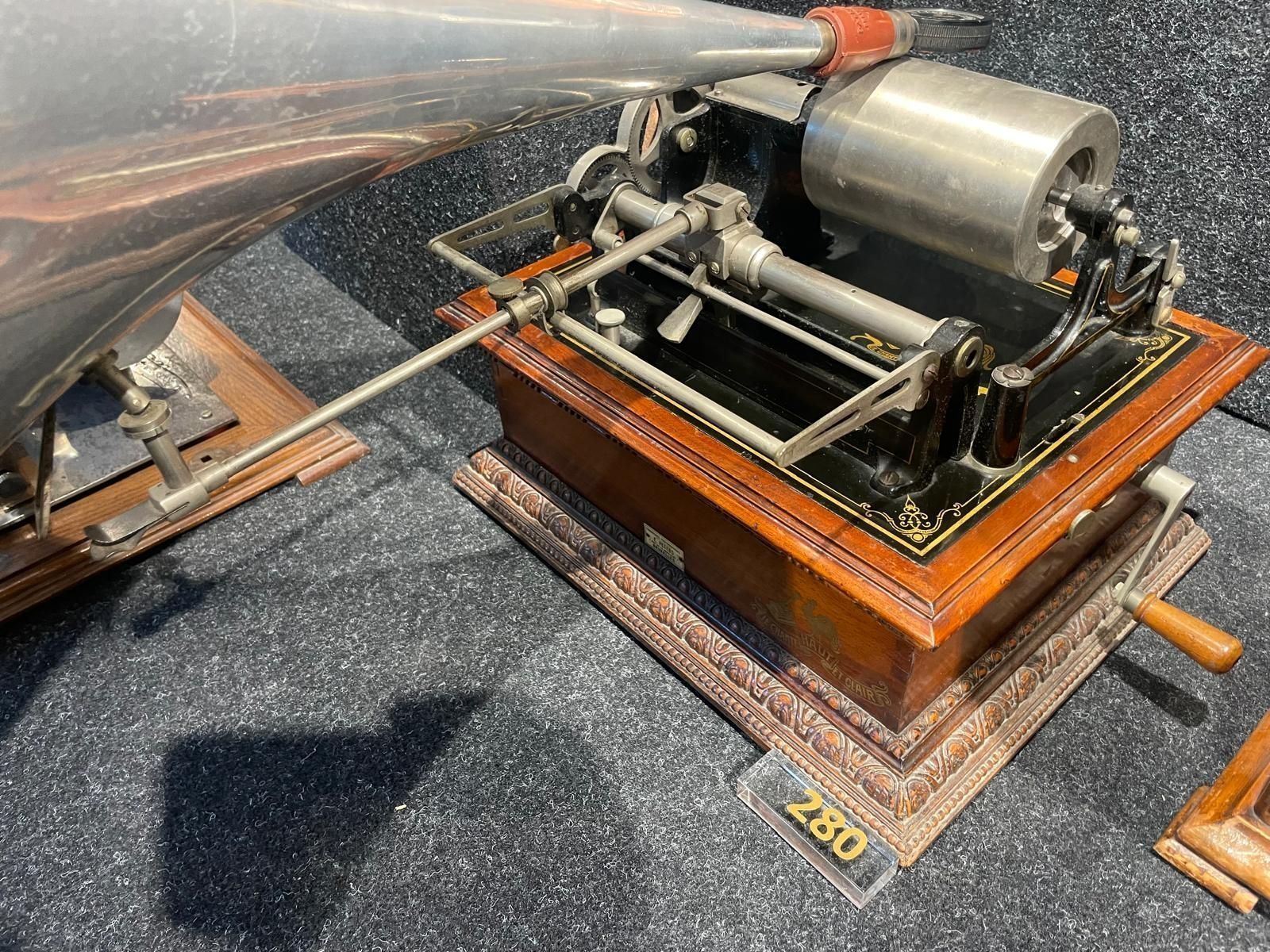
280Description
Pathé Frères, Paris – c. 1904–1908
Historical Background
At the turn of the 20th century, Pathé Frères was France’s leading manufacturer of sound recordings and playback machines. While Edison and Columbia dominated the American market with cylinder phonographs, Pathé pursued its own technical path – most notably the so‑called “Système Vérité” (“Truth System”).
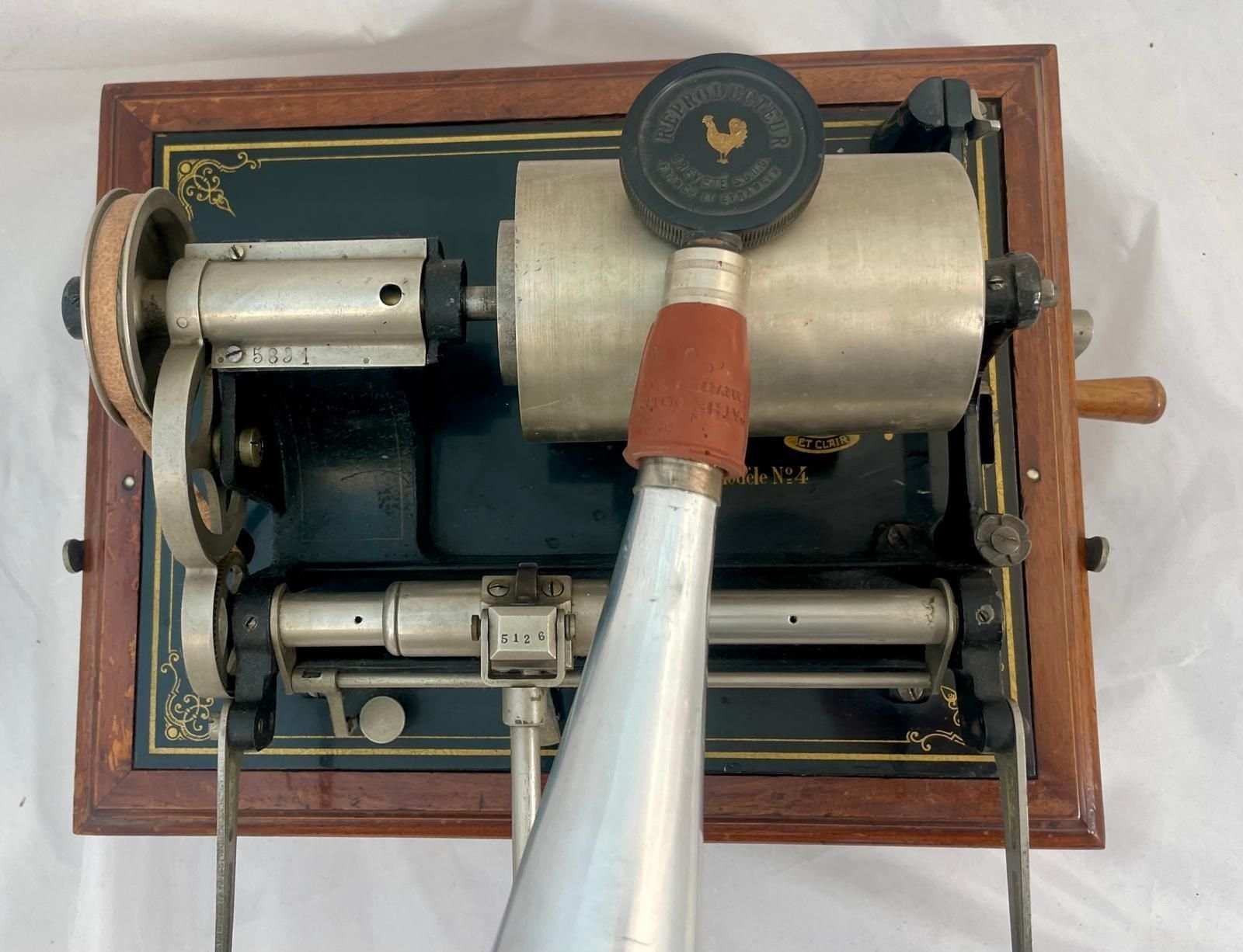
This system was designed to deliver especially natural‑sounding reproduction: Pathé cylinders featured a wide, vertically cut groove profile. Instead of a laterally moving stylus, the diaphragm moved vertically (“Hill‑and‑Dale” motion), a method that reduced distortion. The process required special reproducers and dedicated playback machines, effectively creating a self‑contained, proprietary market.
Cabinet & Features
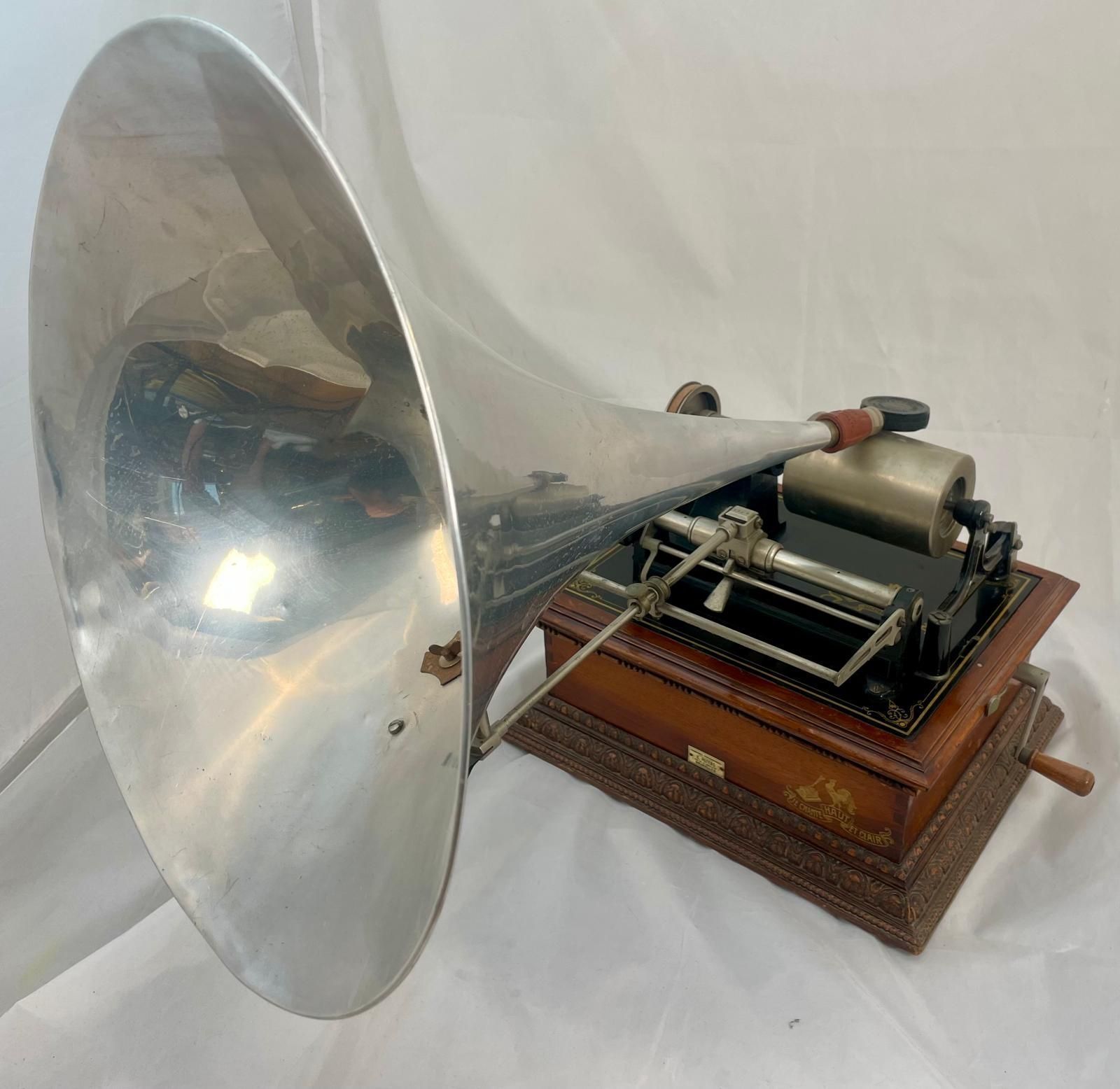
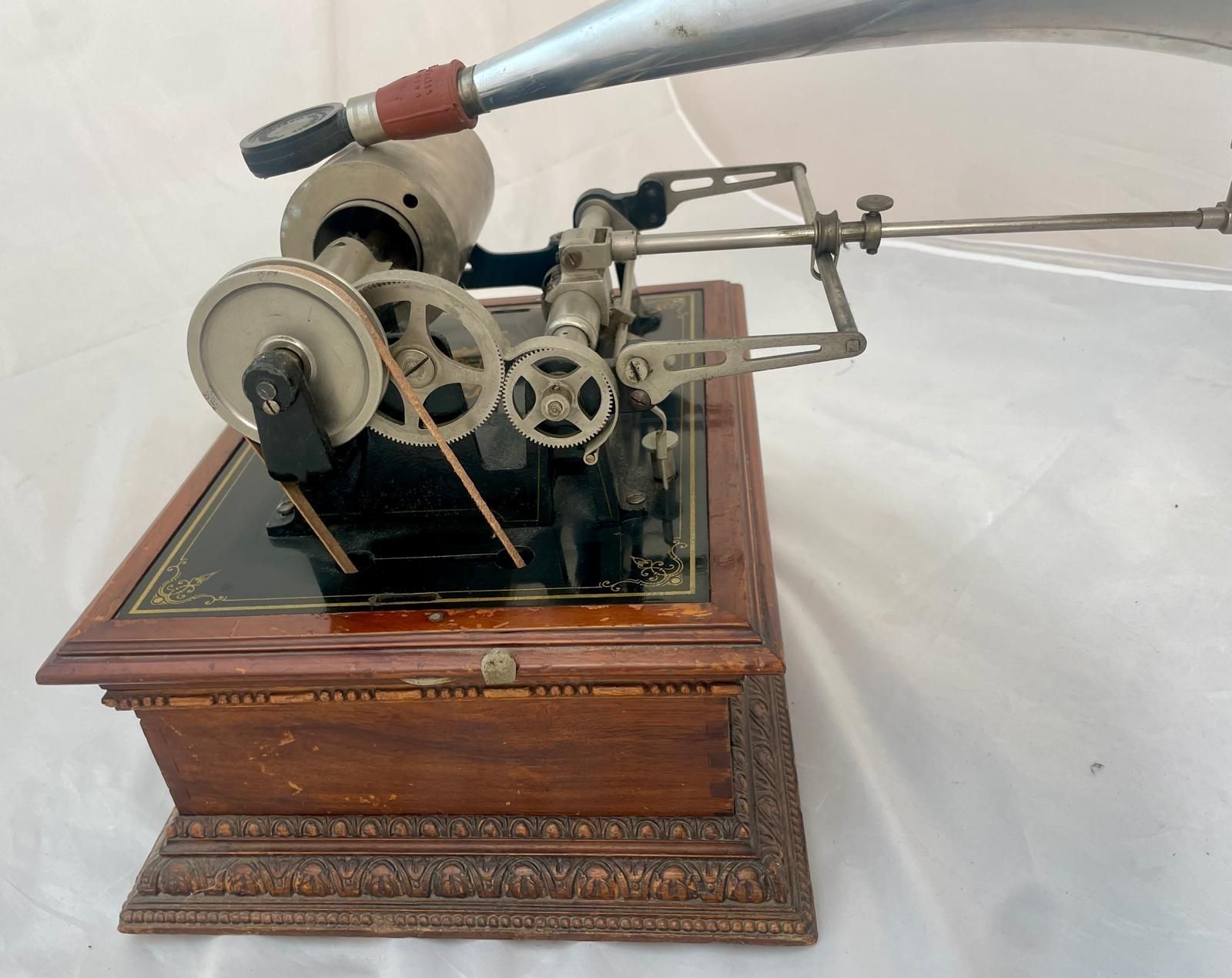
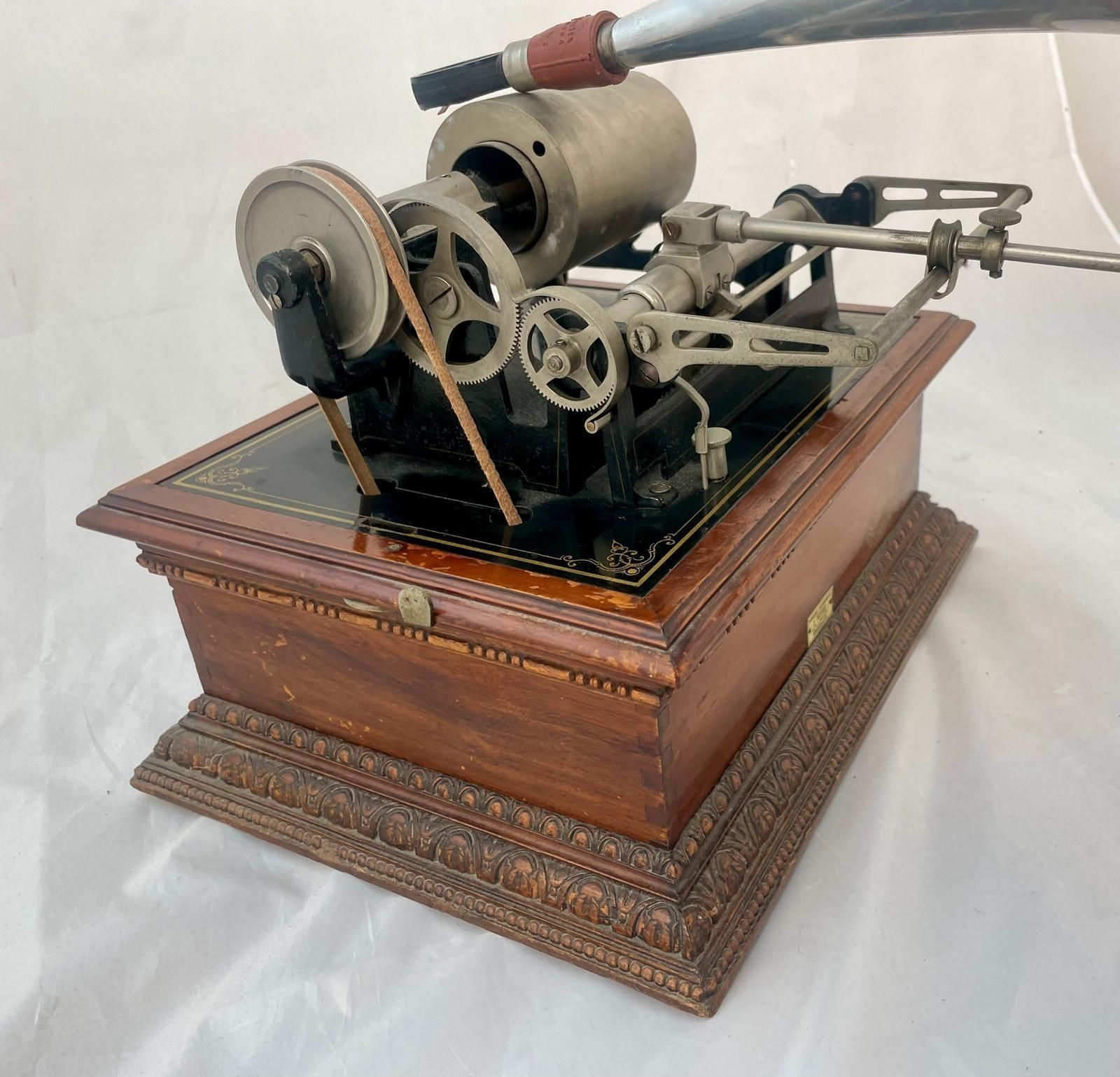
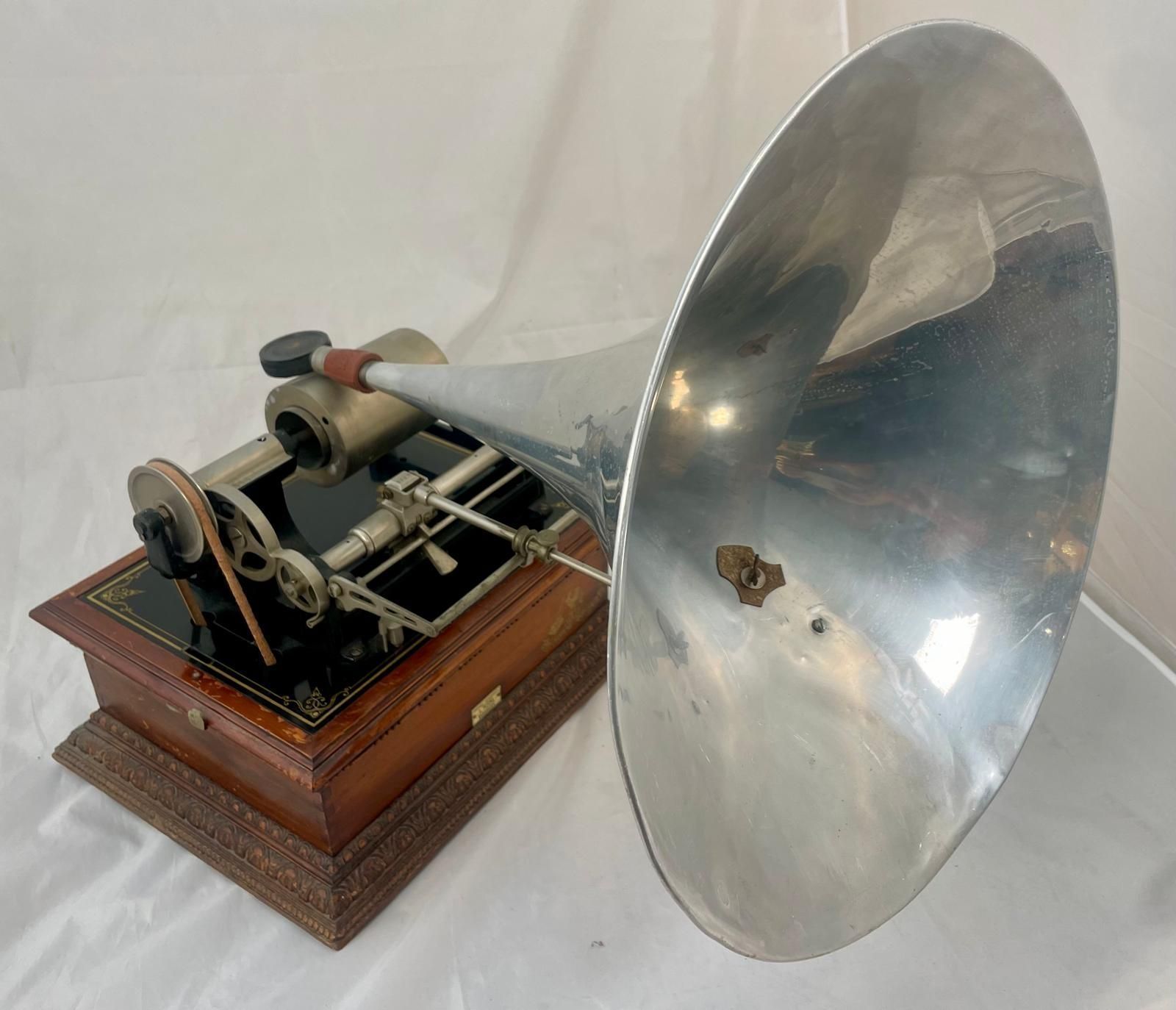
The Pathé N°4 was a high‑end home phonograph.
Key features:
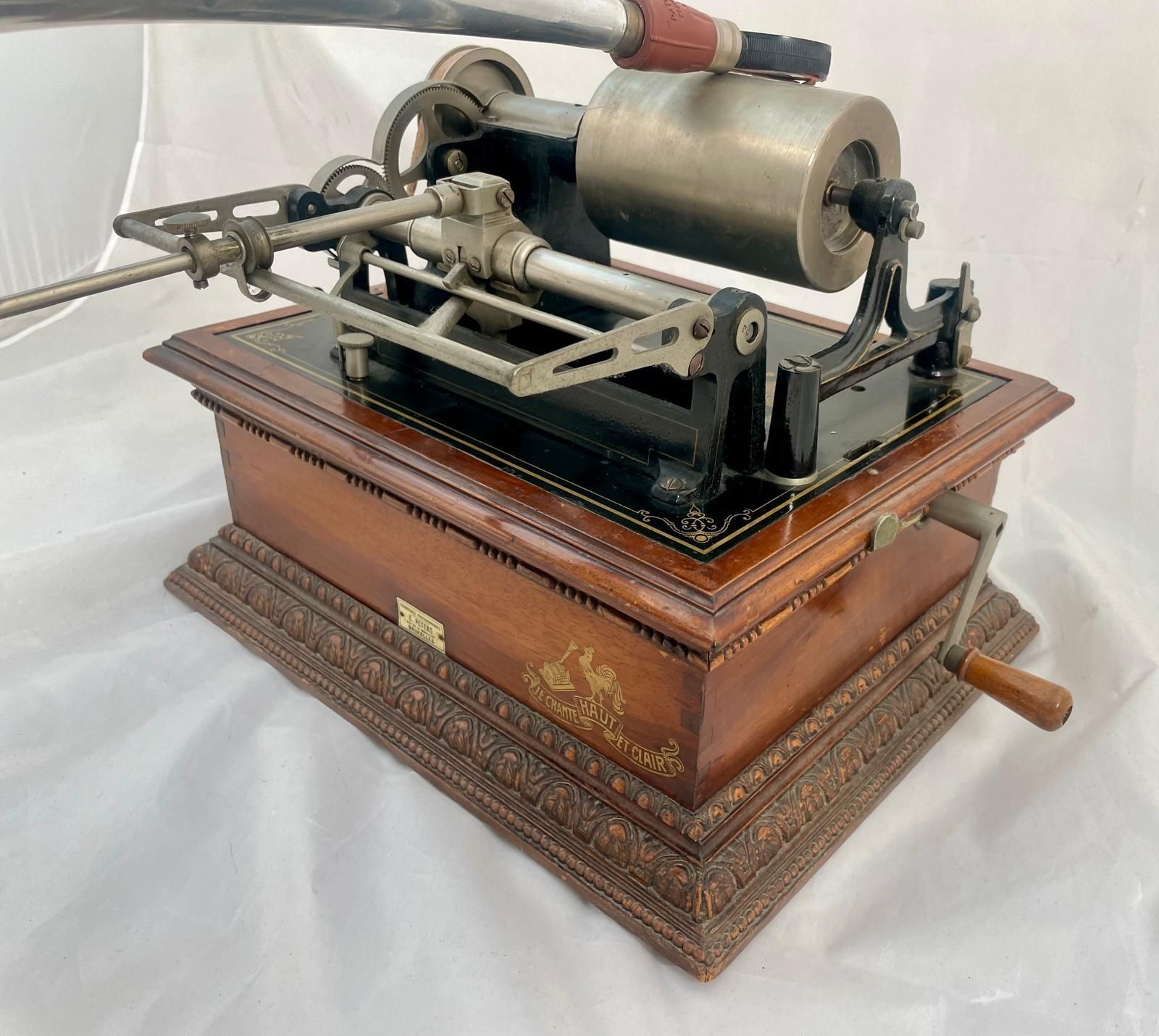
Solid mahogany case with finely moulded edges and decorative carving
Large, nickel‑plated metal horn for powerful sound projection
Iconic Pathé rooster decal with the motto “Je chante haut et clair” (“I sing loud and clear”) – symbolising volume and clarity
Dealer’s plaque E. Peters, Bruxelles – indicating Belgian distribution
Technical Details
Sound carrier: Pathé hard‑wax cylinders
Drive: Spring motor with hand‑crank winding
Transmission: Belt drive from motor to mandrel
Reproducer: Special “Système Vérité” reproducer for vertical‑cut grooves
Playback principle: Vertical diaphragm movement (“Hill‑and‑Dale”)
Market Position
Pathé promoted the N°4 as a living‑room‑worthy quality instrument for discerning music lovers. The “Système Vérité” was marketed as a superior alternative to competing systems. In France, Belgium, and parts of Europe it enjoyed wide popularity, while exports beyond the continent were more limited.
Significance
The Pathé N°4 represents the golden age of European cylinder phonographs, just before the final triumph of the disc record. It reflects:
Pathé’s technical ambition to establish a unique, exclusive format
The craftsmanship of early 20th‑century cabinet and horn making
The enduring branding power of the rooster emblem
With the transition to disc records from around 1908, the Pathé cylinder era came to a close – yet machines like the N°4 remain valuable witnesses to this distinctive chapter of French phonograph history.