Name/Title
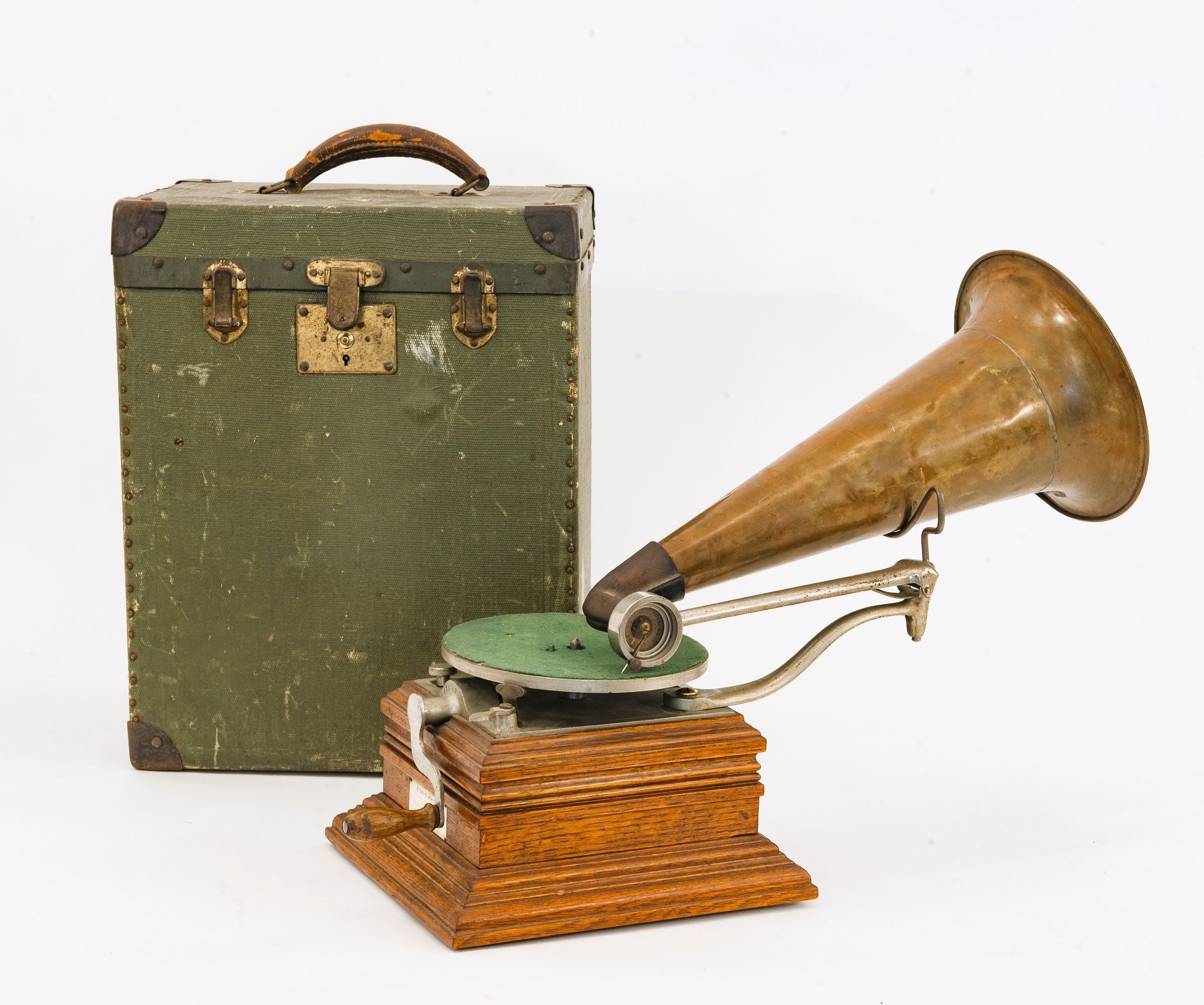
Zonophone "Type C" with Concert Sound Box and Travel CaseEntry/Object ID
139Description
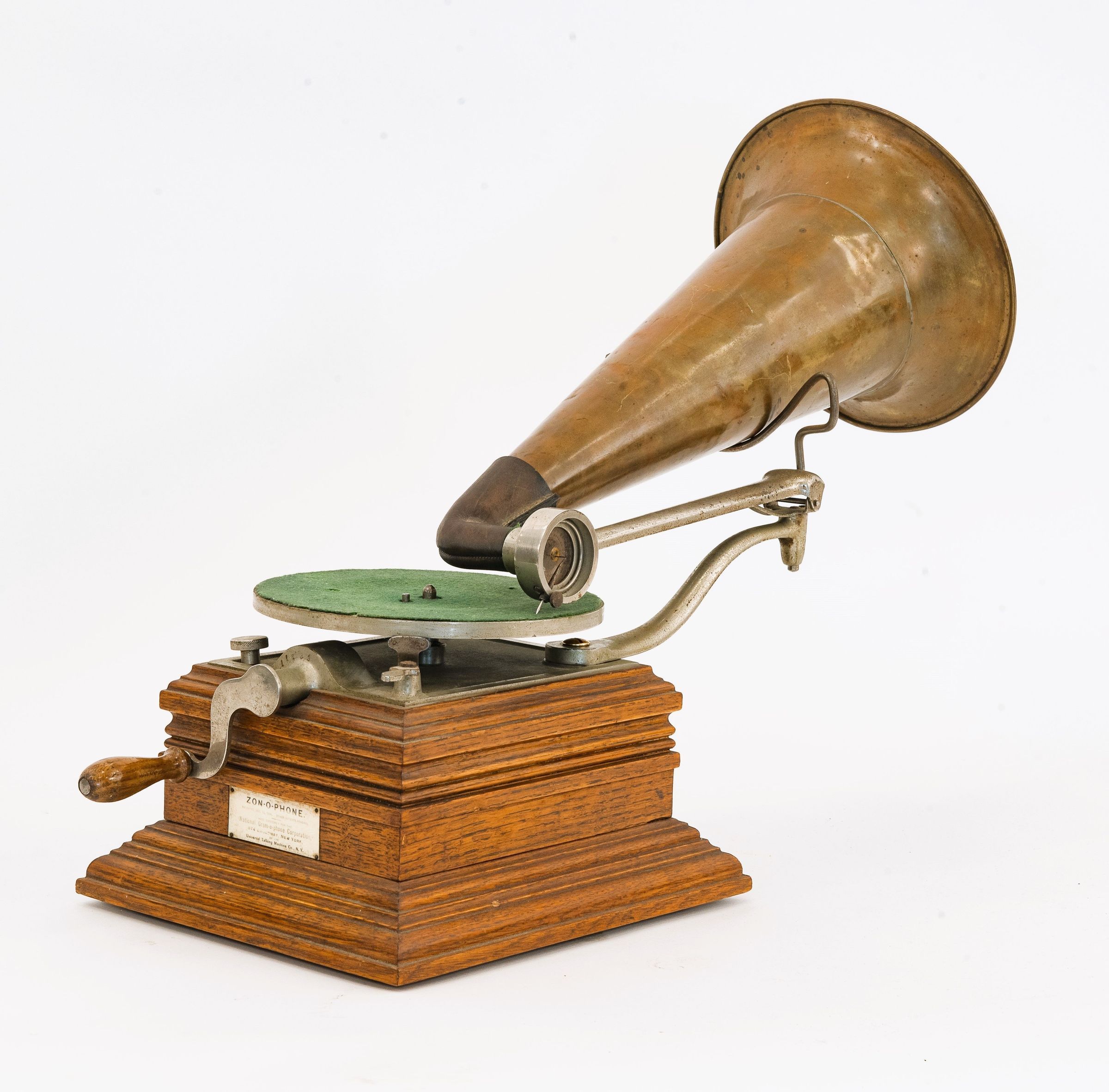
Zonophone Type C with Concert Sound Box
National Gramophone Corp., New York – ca. 1900
Mobile Shellac Disc Phonograph with Original Travel Case
Historical Background
The Zonophone Type C was introduced around 1900 as part of the early product line of the National Gramophone Corporation, founded by Frank Seaman following a dispute with the Berliner Gramophone Company. The aim was to create a high-quality yet competitively priced alternative to the Berliner Improved Gramophone.
Zonophone models were known for their solid construction, attractive cabinets, and horizontally mounted crank — a technical advancement over the vertically mounted mechanisms of Berliner machines. As early as 1900, Zonophones were already being exported to England. The Type C originally sold for $18, placing it below the price of the Berliner Improved Gramophone.
Technical Features
Cabinet: Solid hardwood housing with fine finish, decorative mouldings, and an inlaid metal plaque from the National Gramophone Corp.
Motor & Drive: Spring-driven motor with side crank; smooth and quiet operation thanks to horizontal crank positioning
Sound Box: Fitted with a V Concert Sound Box, a significant improvement over the original “V” version. This open needle-bar design delivered superior acoustic performance and was sold separately for $5 at the time.
Turntable & Mechanics: Robust turntable with bayonet mount and a rotating record hold-down pin, replacing the more fragile record clamp found on other machines
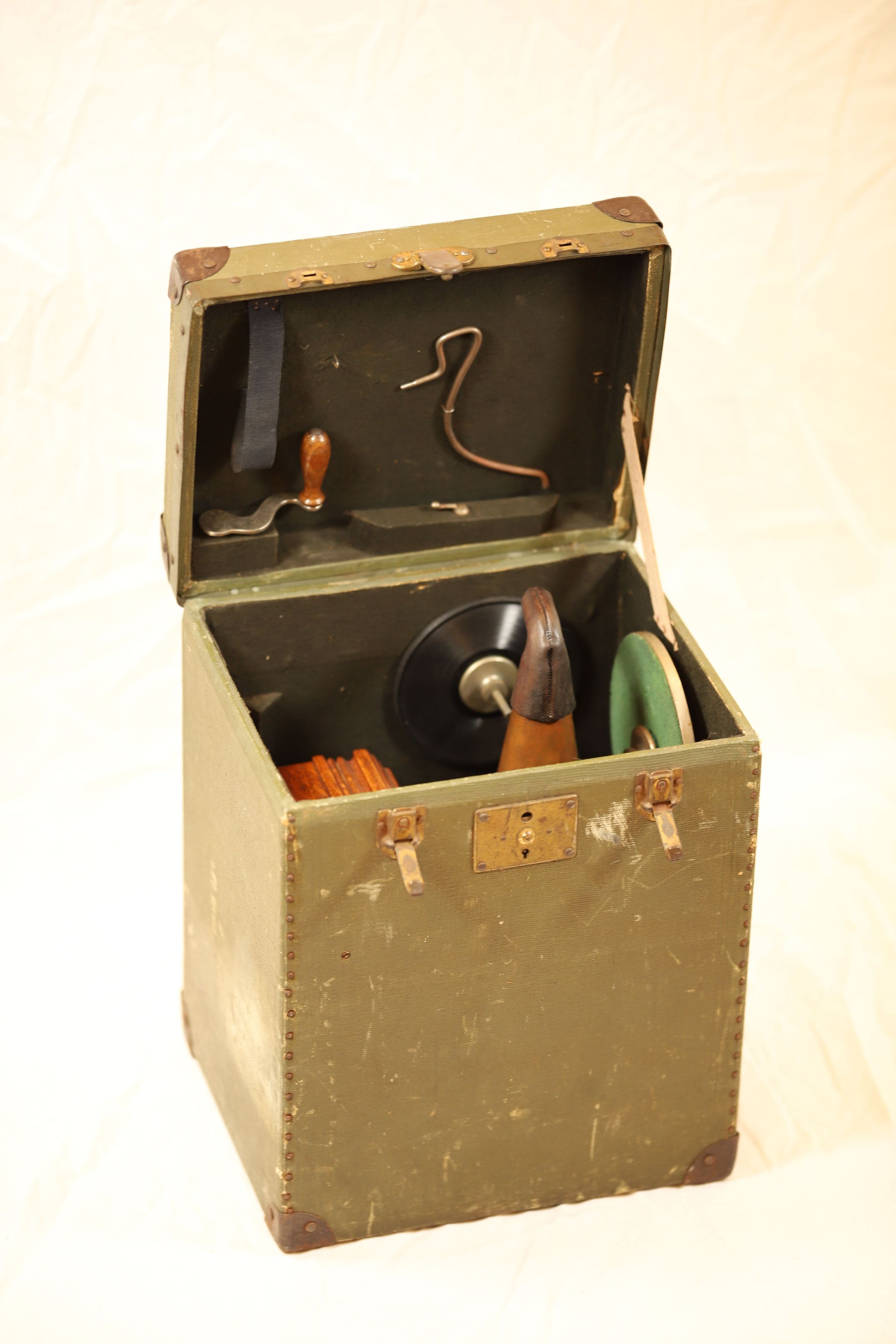
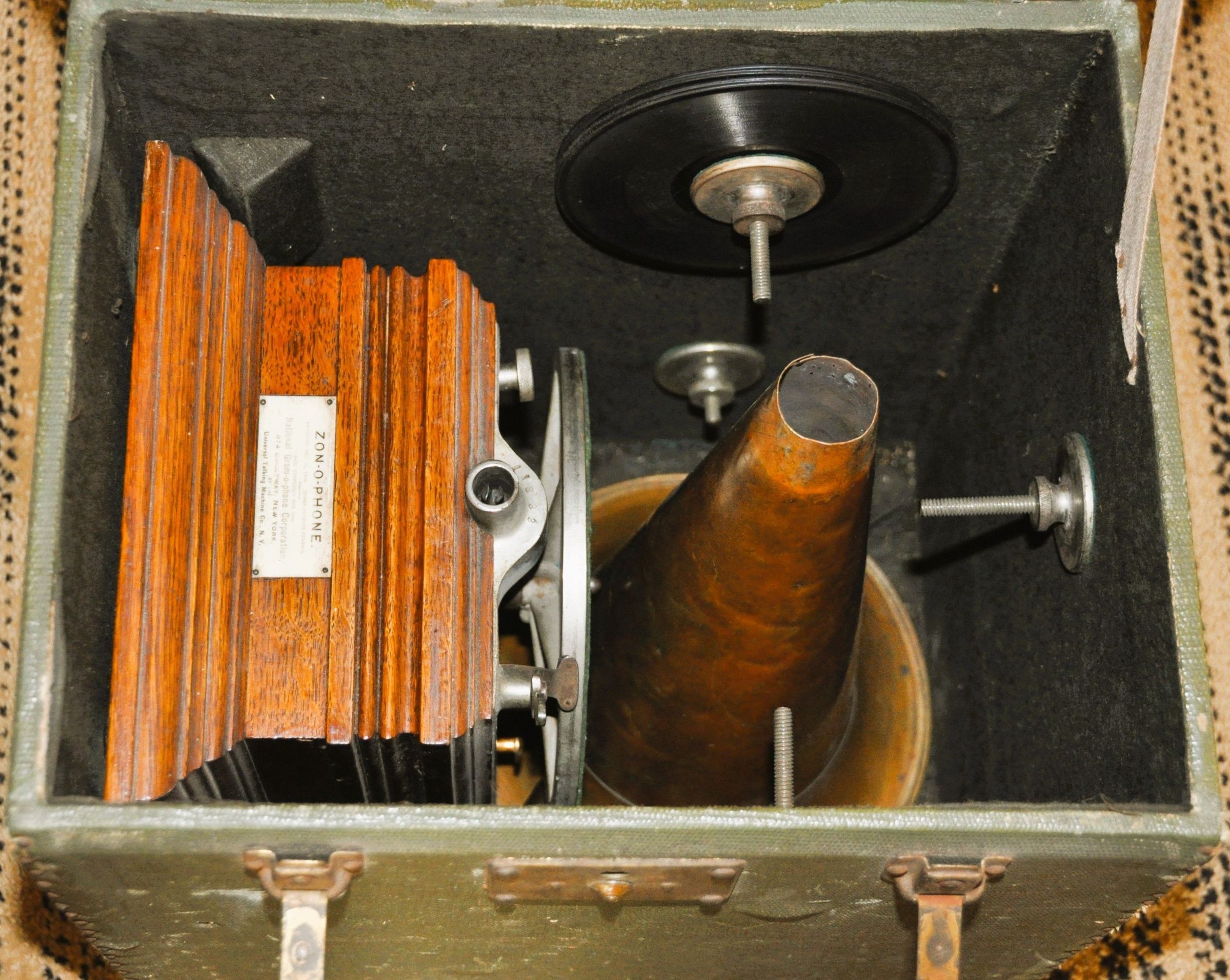
Original Travel Case
An exceptional rarity: This machine is housed in its original green travel case with reinforced metal corners. Such cases were offered as a premium option for safe transport to exhibitions, demonstrations, or outdoor musical gatherings. The case includes custom compartments for the machine, horn, crank, and records – a complete mobile solution for the traveling phonograph enthusiast.
Significance
The Zonophone Type C on display at the Edisonium Mariazell is a remarkable example of early disc phonographs before the rise of Victor dominance. It combines mechanical ingenuity with elegant craftsmanship and illustrates the inventive spirit of early 20th-century audio innovation.
The union of refined cabinet, high-end Concert sound box, and the original transport solution makes this ensemble one of the most visually and technically striking exhibits of early American disc phonograph history.