Name/Title
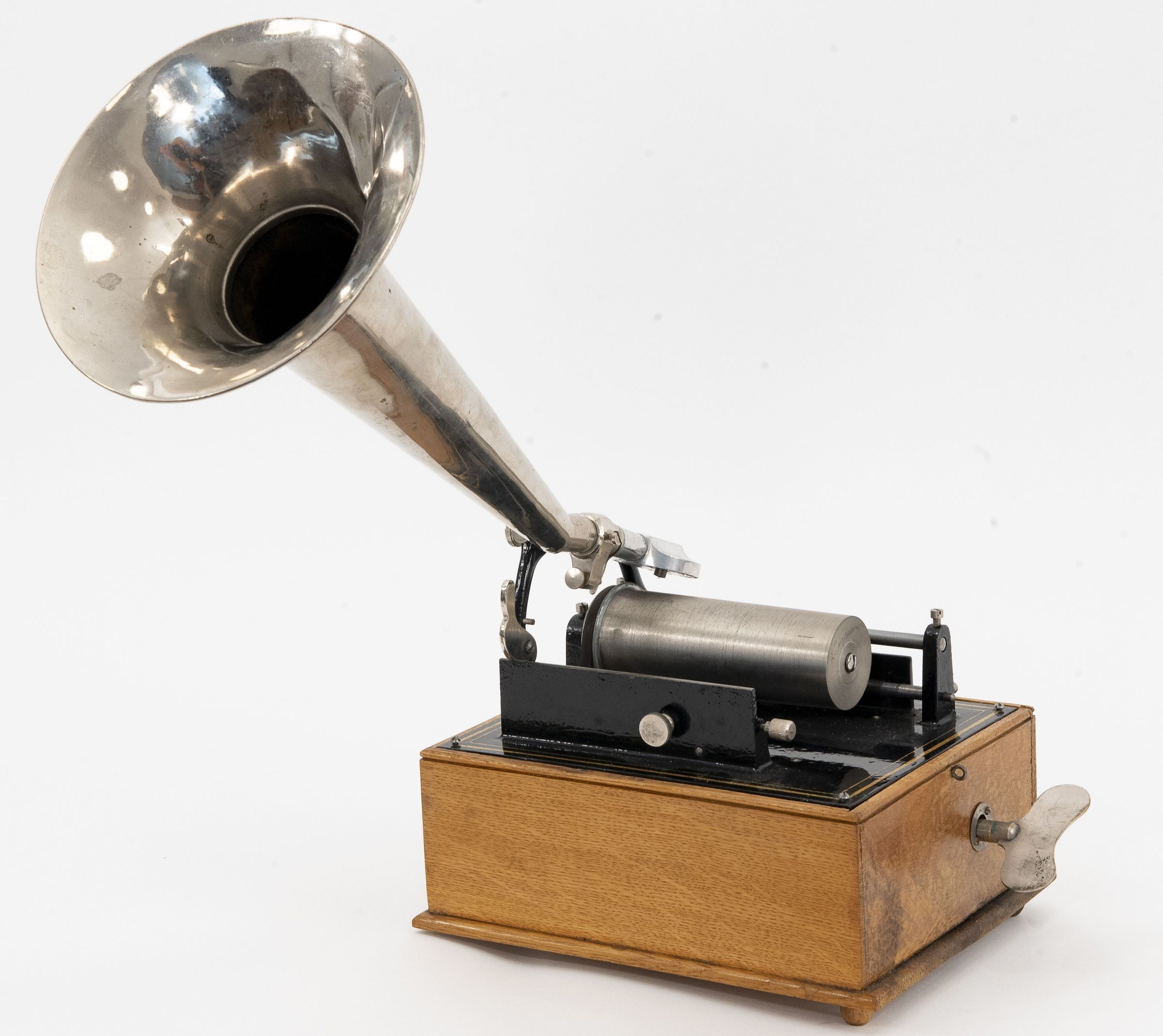
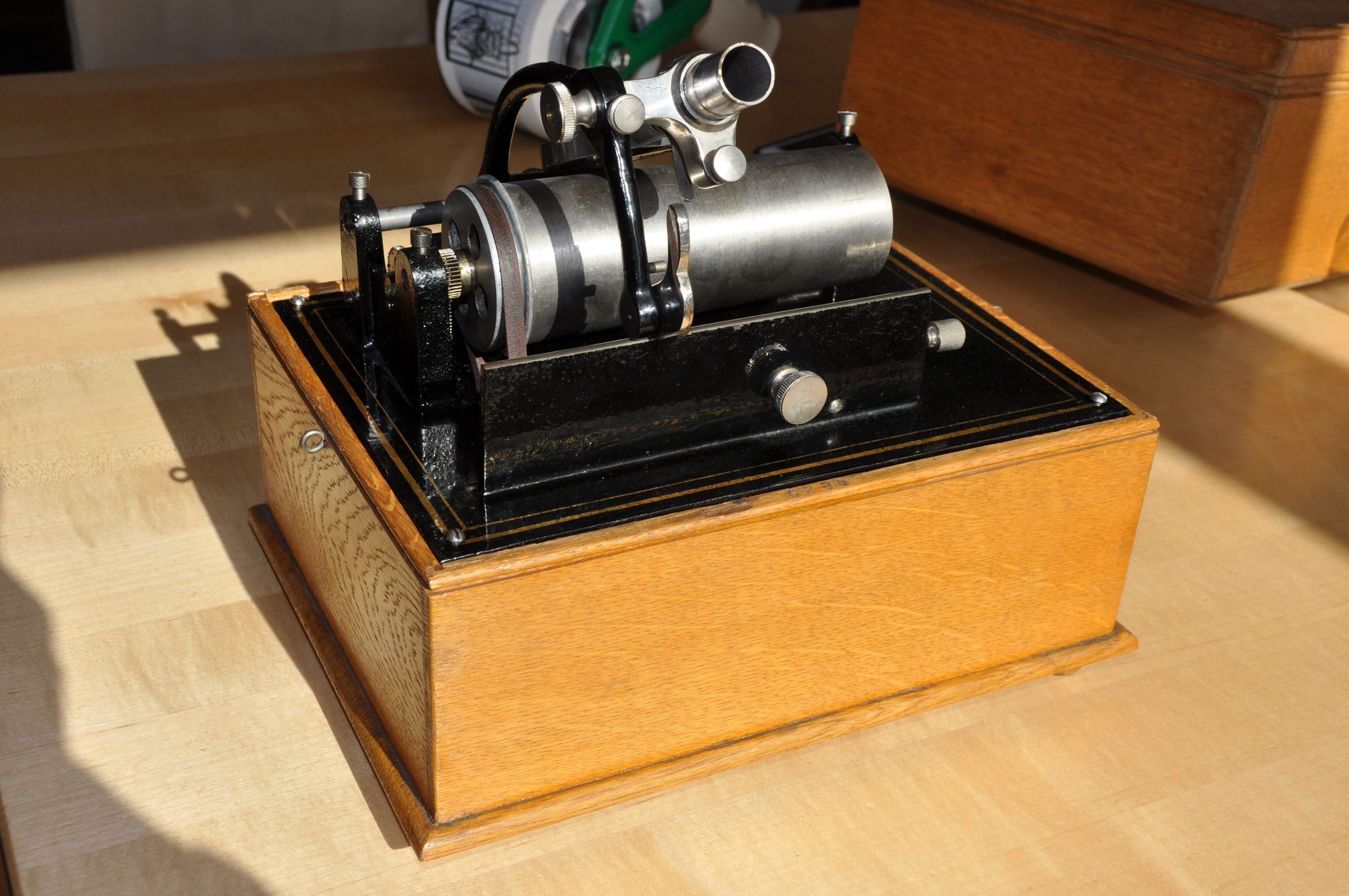
Allgemeine Phonographen Gesellschaft Krefeld – „Modell Tip Top“Entry/Object ID
210Description
Allgemeine Phonographen-Gesellschaft m.b.H., Krefeld, ca. 1900–1902
Historical Background
The Allgemeine Phonographen-Gesellschaft (APG) in Krefeld was one of the first major German manufacturers of phonographs. As early as 1893, the company filed patents to produce its own machines and to defend its position against international competition. By 1901, APG employed around 150 workers and was regarded as the largest company in the phonograph industry in the German Empire. In addition to cylinder phonographs, it also produced duplicating machines, since before the advent of mass pressing, mechanical copying was the only way to reproduce recordings in larger numbers.
The “Tip-Top” Model
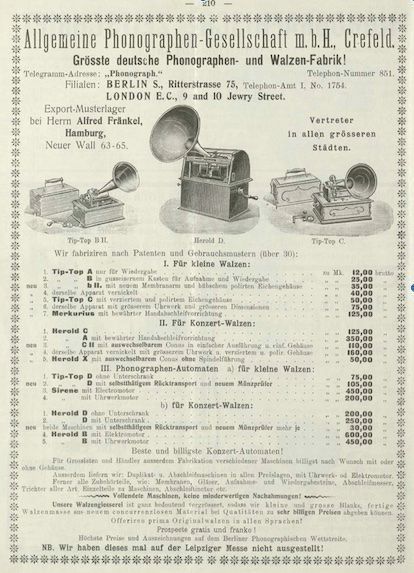
The phonograph shown here belongs to the Tip-Top series, which was produced around 1900–1902 in several variations. The line was aimed primarily at private households and educational institutions, and it was marketed in different price categories:
Tip-Top A: simple playback-only device
Tip-Top B I / B II: recording and playback, partly with improved soundboxes
Tip-Top C: expanded version with a more decorative case
Tip-Top D: luxury version
Prices ranged between 12 and 75 Marks, depending on equipment.
Technical Features
Drive: spring motor with hand crank
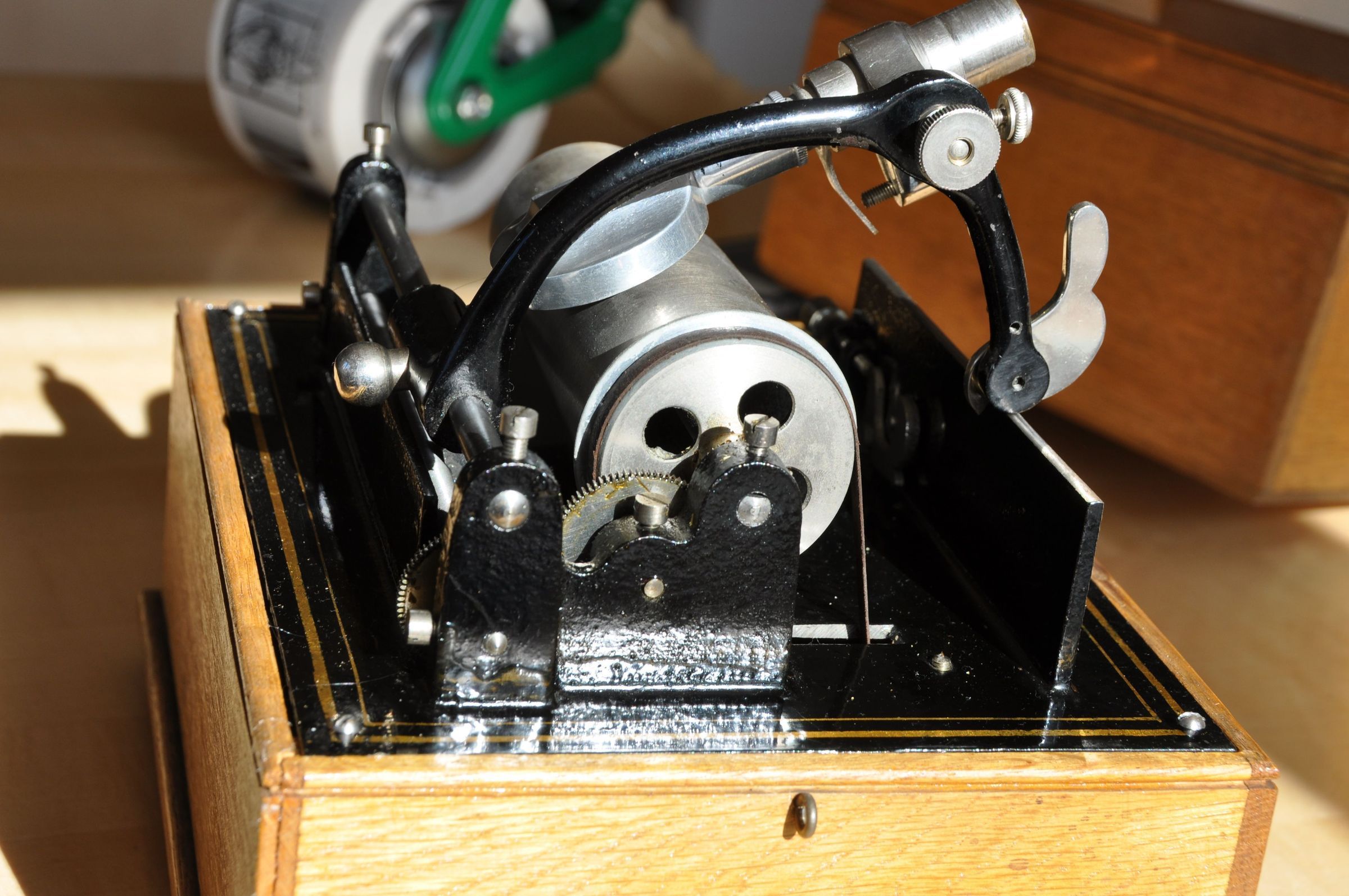
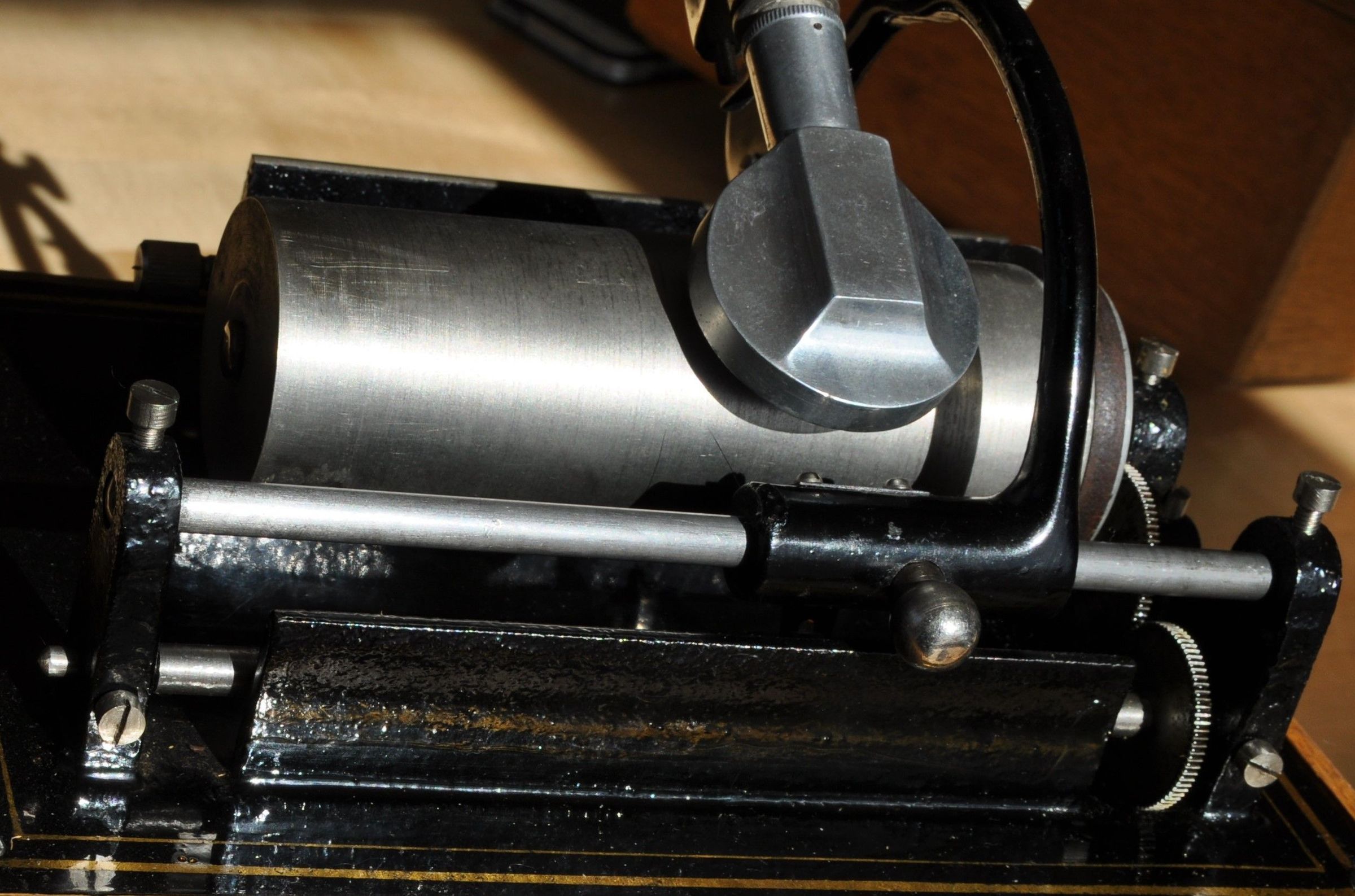
Cylinder format: small “Herold” cylinders (APG’s own system)
Reproducer: APG’s own design with improved membranes for clearer sound
Cabinet: simple wooden case, sometimes decorated with fine striping
Special feature: some models allowed users to shave and reuse cylinders — a particular advantage for schools, language students, and musicians.
Rarity and Significance
Today, APG machines are extremely rare, as the company went bankrupt as early as 1904. The Tip-Top series illustrates the efforts of German manufacturers to offer affordable and technically advanced alternatives to American Edison and Columbia phonographs.
The example displayed in the Edisonium Mariazell is a well-preserved specimen of this series, showing how German phonograph production was organized at the turn of the century.