Name/Title
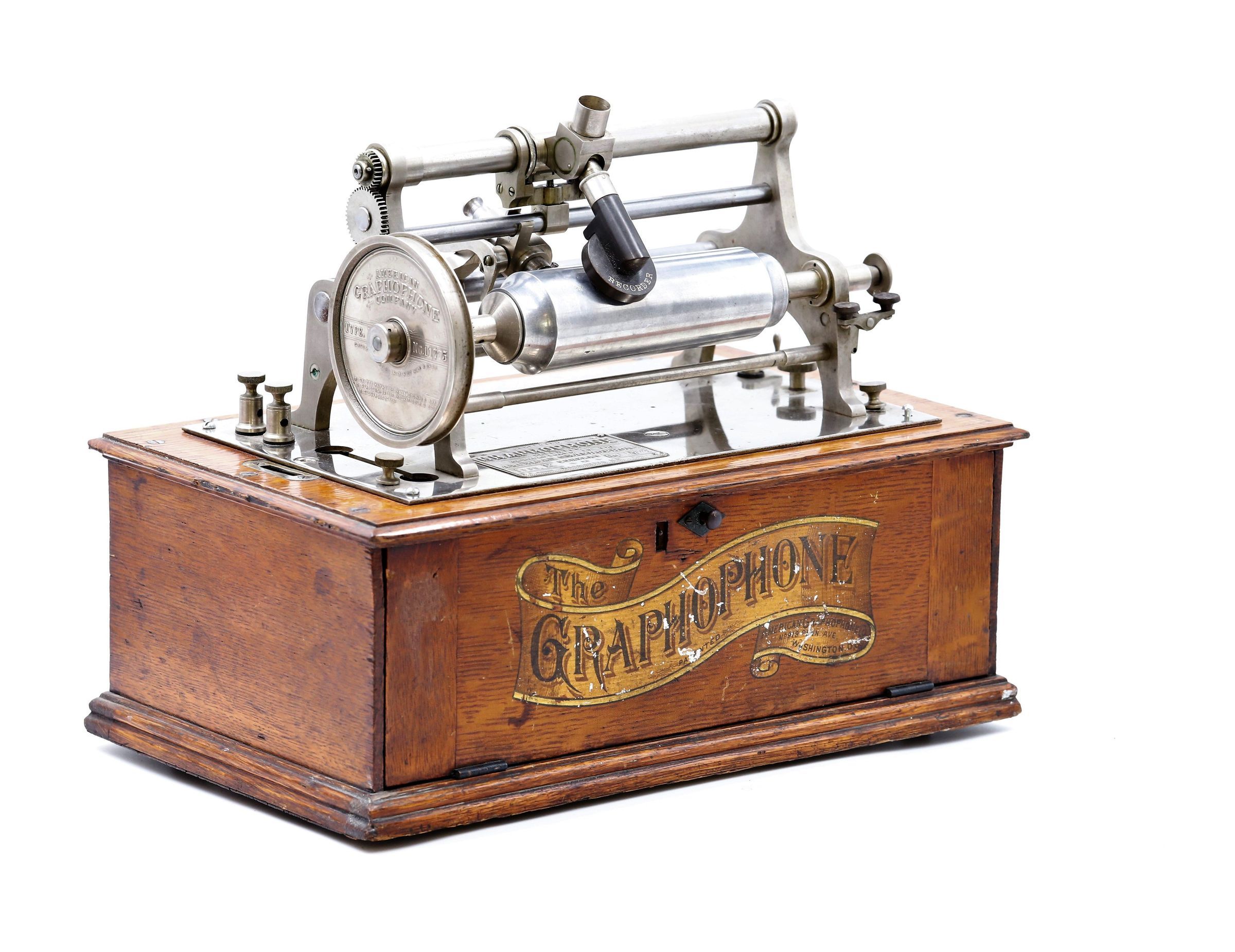
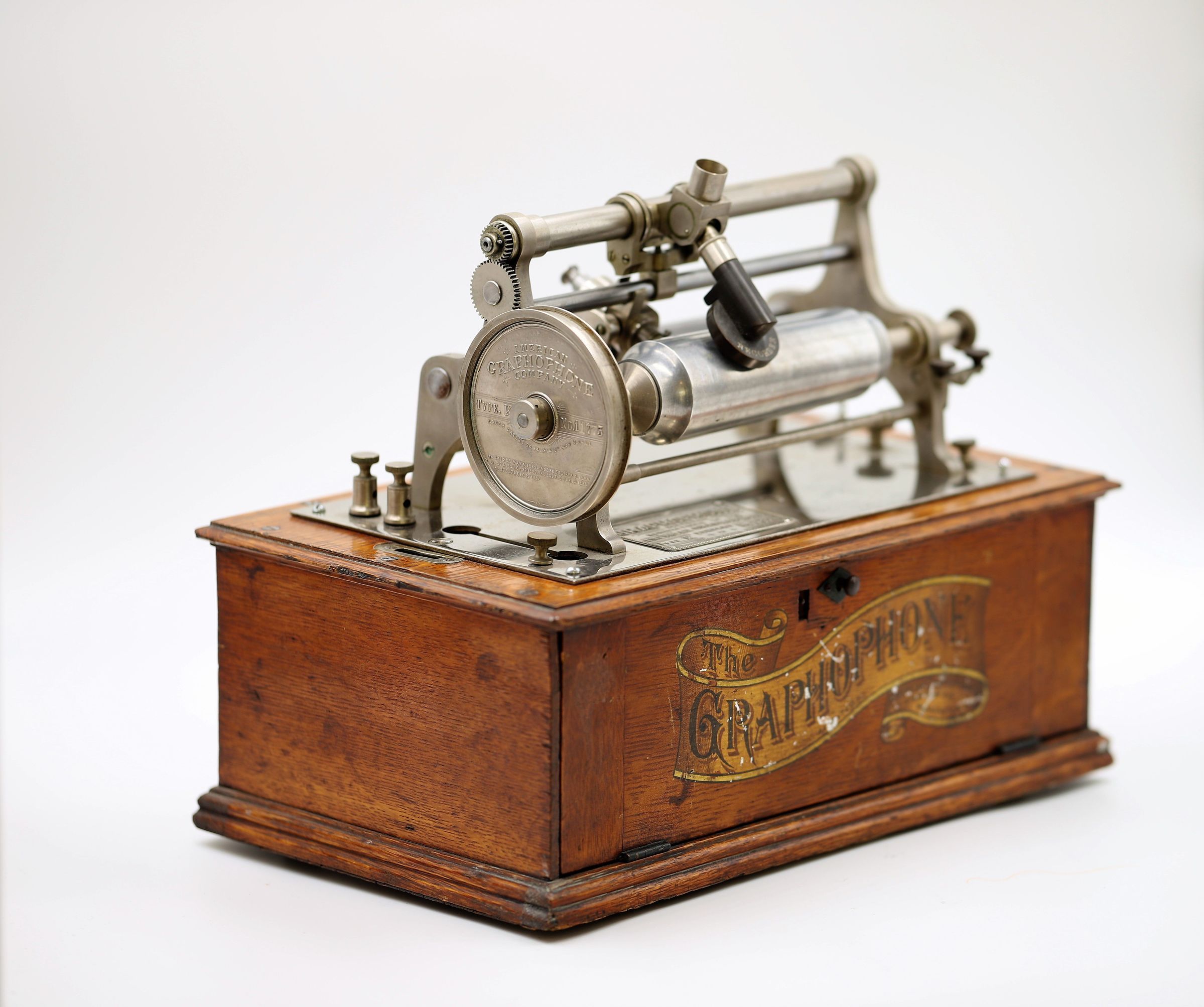
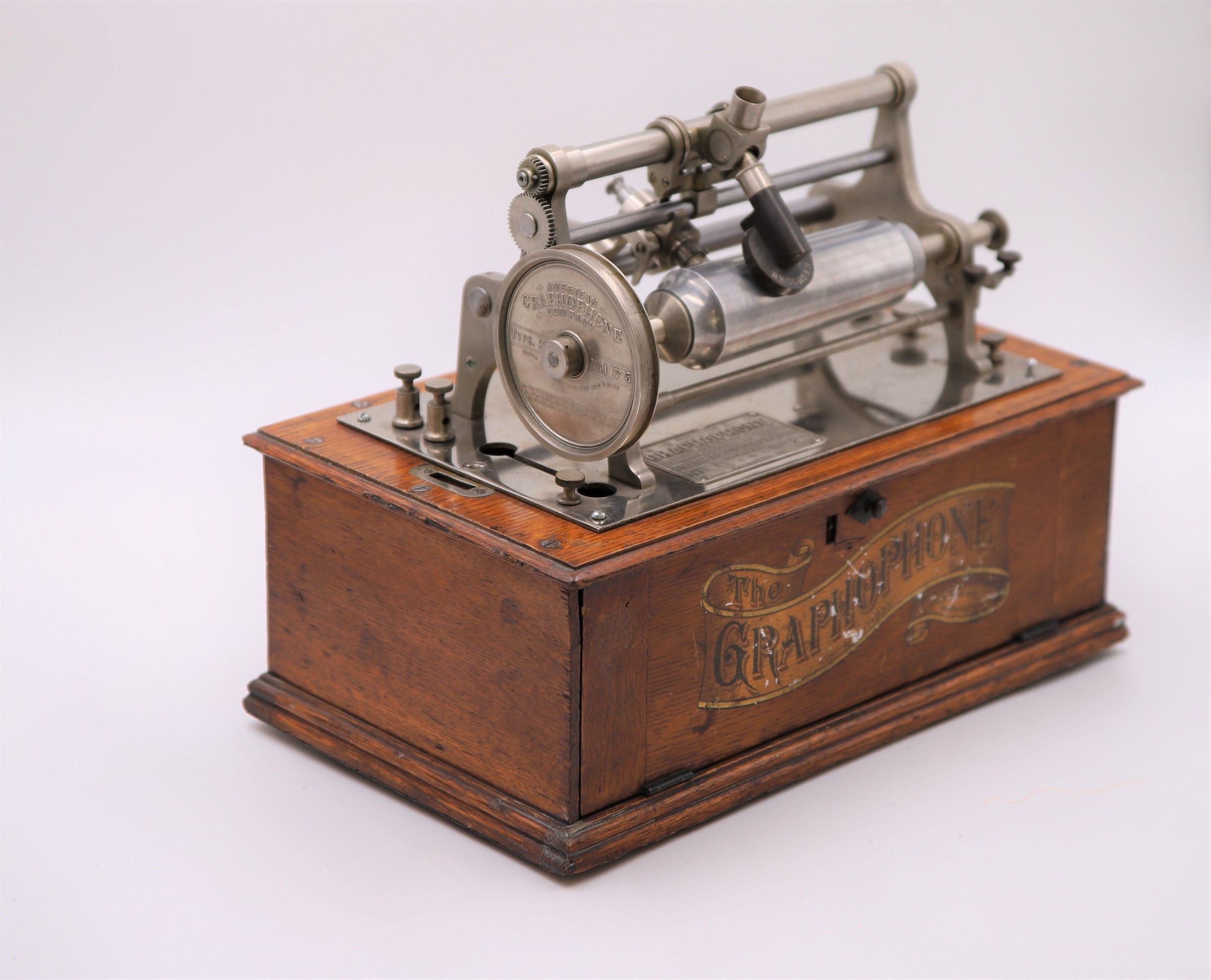
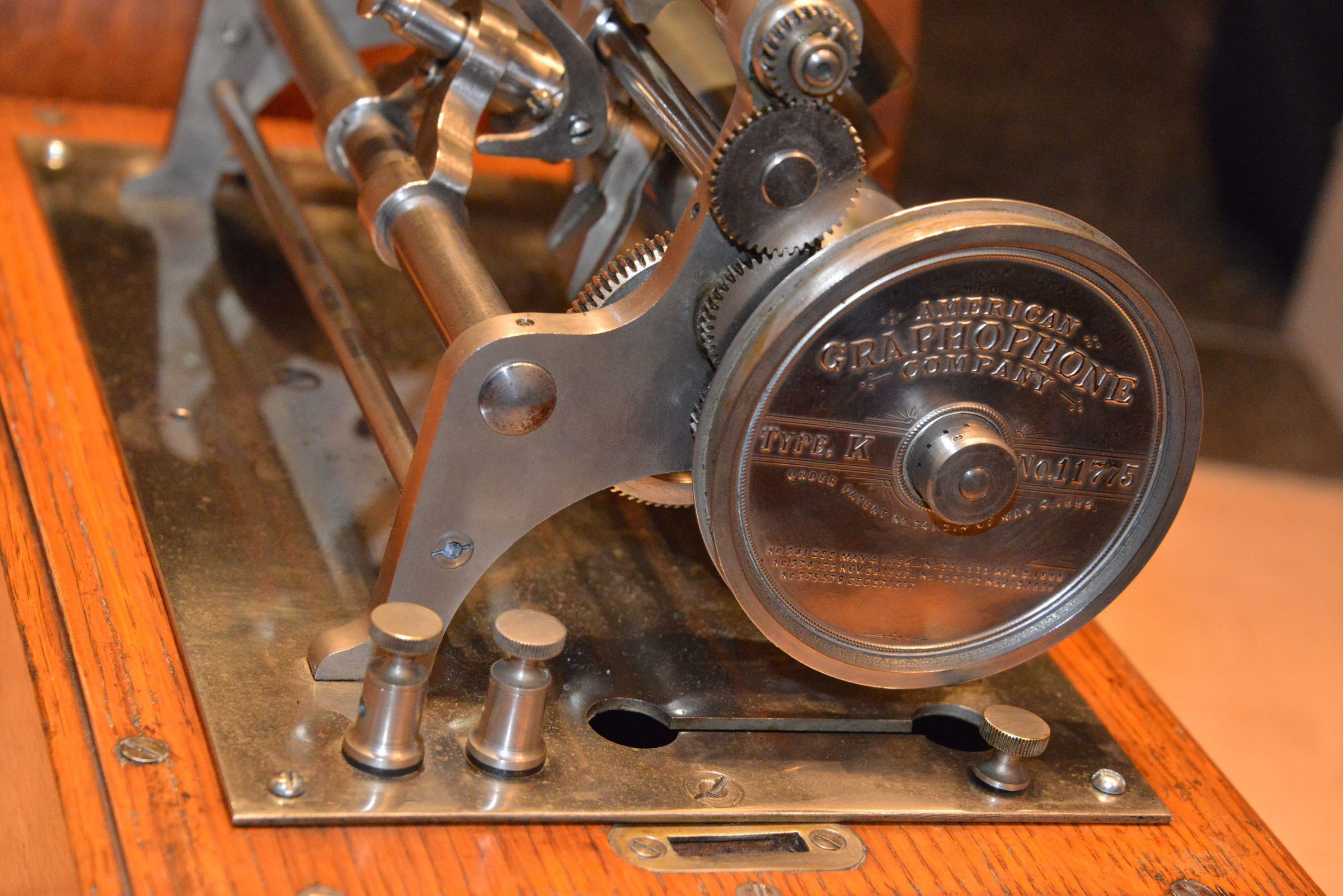
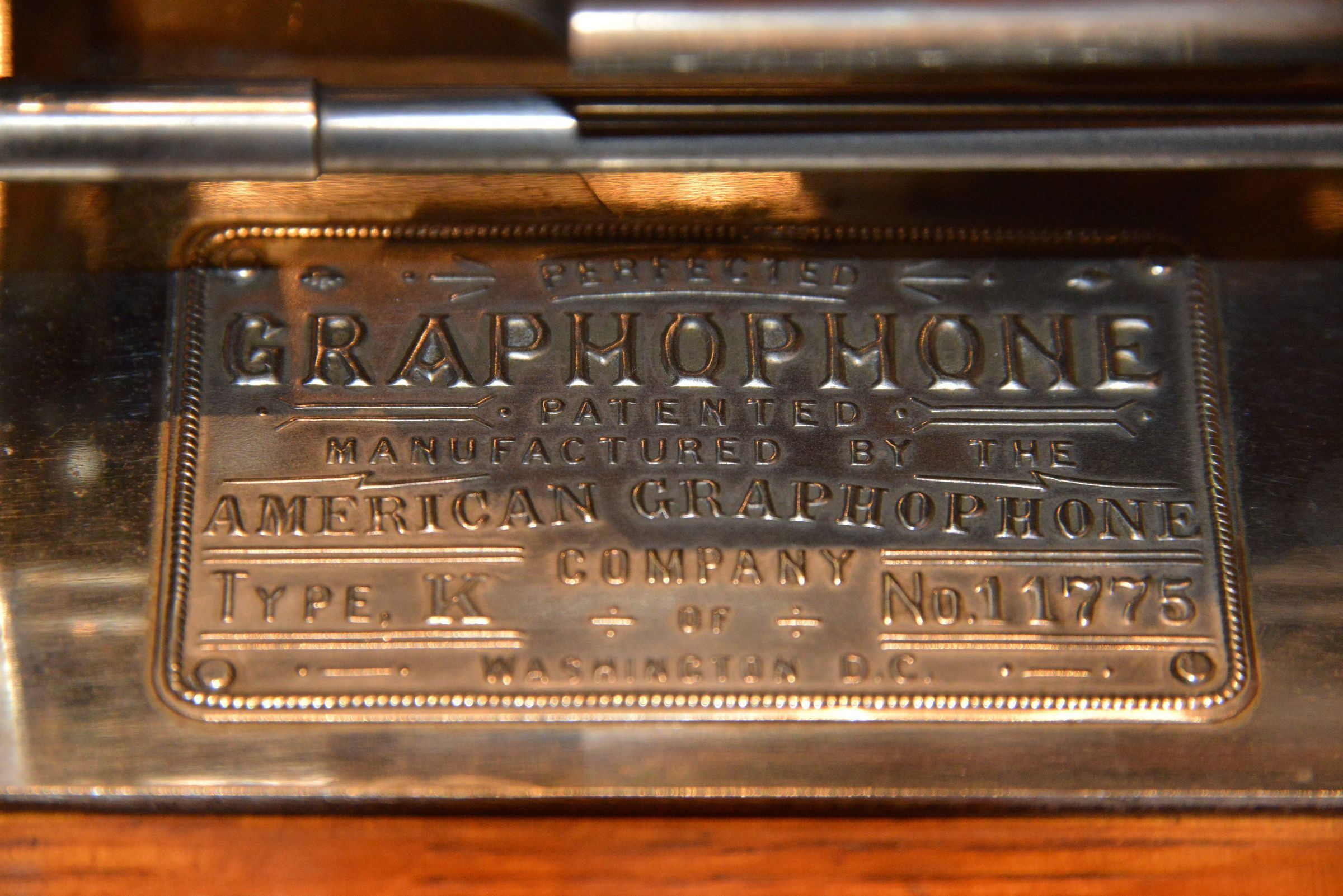
Graphophone "Type K” – Commercial Electric, “Bell‑Tainter” TypeEntry/Object ID
146Description
American Graphophone Company, Washington D.C. – Early 1895
Early Electric Dictation Graphophone (“Bell‑Tainter” Type) – One of the Rarest Commercial Talking Machines
Historical Background
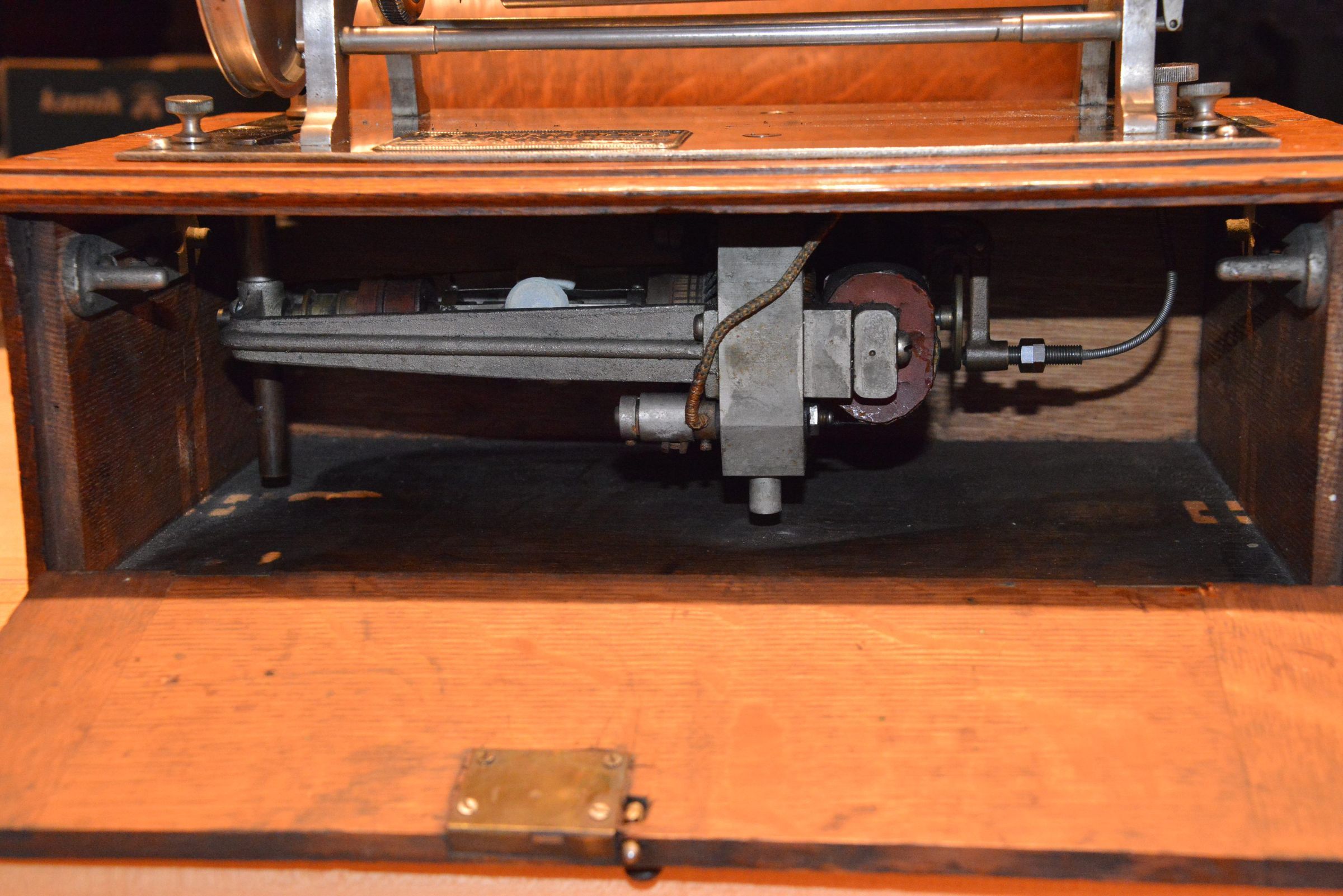
The Graphophone Type “K” was introduced in early 1895 during a transitional period between purely mechanical and electrically powered phonograph technology. It was developed in a time of financial strain: in 1894, the American Graphophone Company was left with large stocks of unsold treadle‑operated Graphophones. To make use of these, the upper works from treadle machines were mounted on new bases, paired with a newly developed electric motor, and marketed as the “Type K.” (One of these rare treadles is also on display here at the Edisonium!)
These machines were not aimed at the entertainment or music market but at offices, courts, and business professionals as professional dictation devices. The design directly descended from the patents of Alexander Graham Bell and Charles Sumner Tainter, making it a true successor to the original Graphophone patent system.
Technology & Features
Drive: 2‑volt battery‑powered electric motor (later versions also offered with spring motor)
The motor ran continuously; two gutta‑percha buttons allowed the feed mechanism to be engaged or disengaged, starting or pausing recording or playback.
Cylinder Mandrel: Removable aluminum mandrel for standard Edison‑type 2″ cylinders.
To place a cylinder, the entire mandrel had to be removed – inconvenient by modern standards but a practical solution at the time.
Shaver: Integrated shaving mechanism for resurfacing wax cylinders – an essential feature for professional, repeated use.
Reproducer: Gutta‑percha soundbox.
Cabinet: Solid oak case with front maintenance panel for motor access; front panel decorated with Columbia’s signature gold‑leaf “The Graphophone” logo.
Speed Control: Precision four‑ball governor for smooth, consistent running speed.
Use & Target Audience
The Type “K” was never intended as a music machine – it was a serious professional tool. Typical applications included:
Dictating business correspondence
Court stenography and legal records
Technical and scientific reporting
Internal office communications (“talking memos”)
The built‑in shaver allowed wax cylinders to be reused multiple times, making the machine highly economical for offices and institutions.
Market & Economics
With a retail price of $150 – an enormous sum for the period – the Type “K” was far too expensive for the general public. Sales were modest, and the requirement to remove the entire mandrel for every cylinder change made it less convenient for heavy‑duty use. Only with the introduction of the more affordable and user‑friendly Type “N” (late 1895) did Columbia achieve real commercial success.
Rarity & Significance
Produced in extremely small numbers in its electric version – today far rarer than the Edison Class M.
Closely related to the earliest “Bell‑Tainter” designs.
An important example of the earliest attempts to commercialize sound recording for office use rather than public entertainment.
Conclusion
The Graphophone Type “K” – Commercial Electric in the Edisonium Mariazell is a landmark artifact of early sound technology. It represents not only the technical shift toward electric drive systems but also one of the first serious attempts to integrate sound recording into everyday office work.