Name/Title
Edison “Black Gem” PhonographEntry/Object ID
267Description
Thomas A. Edison, Orange, New Jersey, USA – ca. 1905–1913
Historical Background
The Edison Gem was the most affordable model in Edison’s phonograph range, first introduced in 1899. It was designed as a compact, budget‑friendly machine for the mass market, offering the same essential function as Edison’s more expensive models – recording and playing sound on wax cylinders.
Over the years, the Gem was produced in several versions that differed in design, case material, and technical details. The “Black Gem” belongs to the later versions, marketed from around 1905 onwards.
Distinctive Features of the “Black Gem”
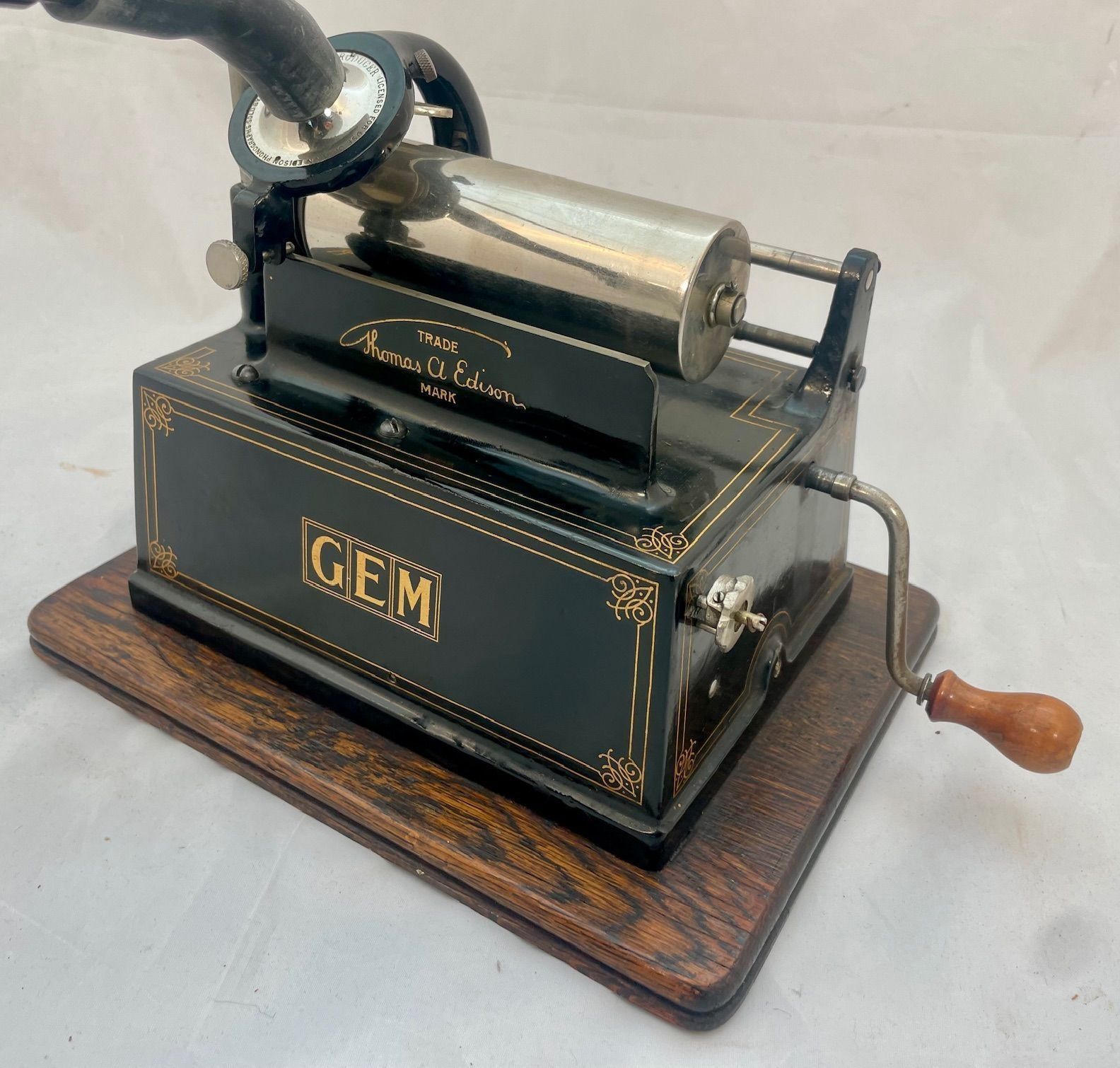
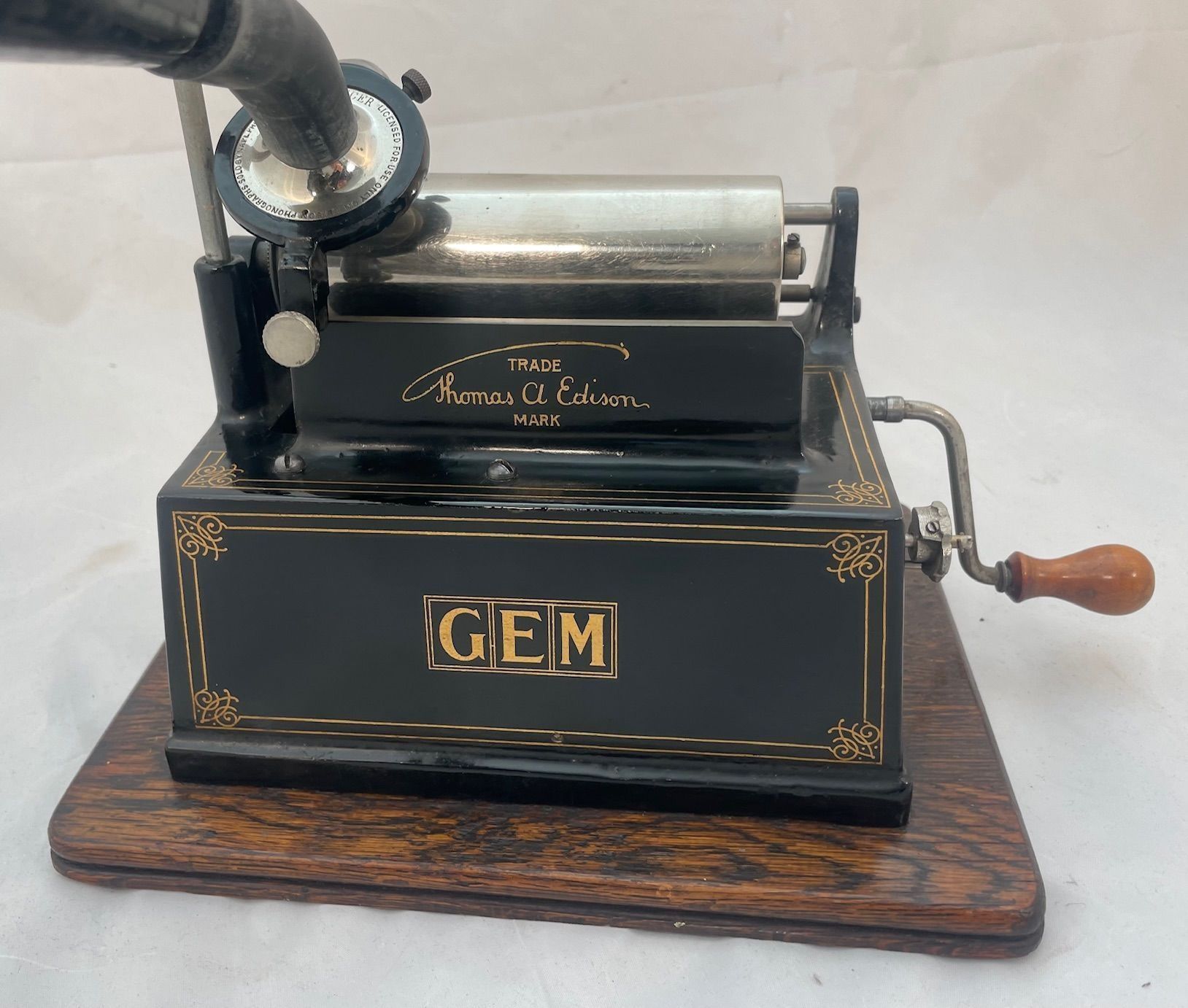
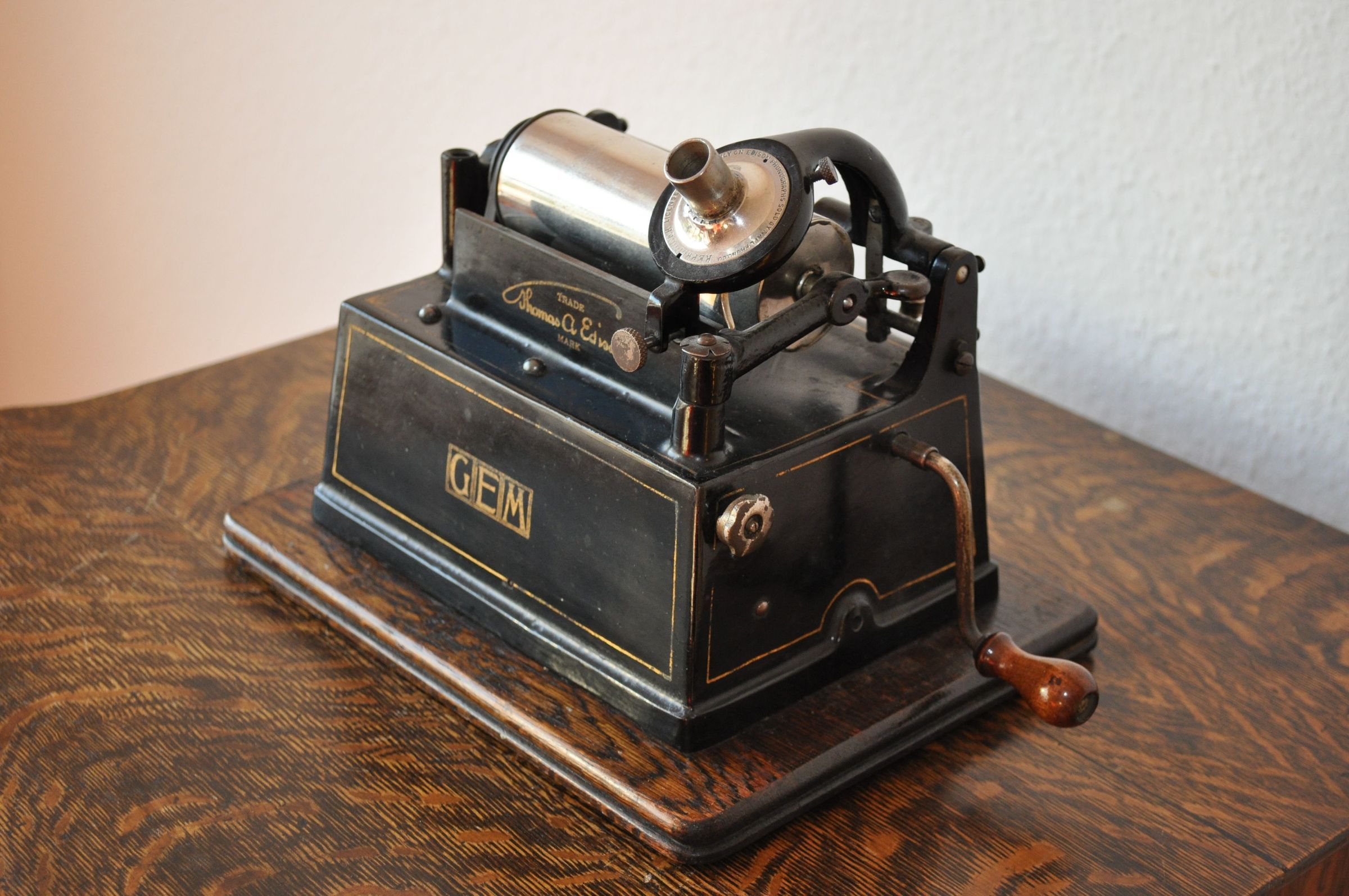
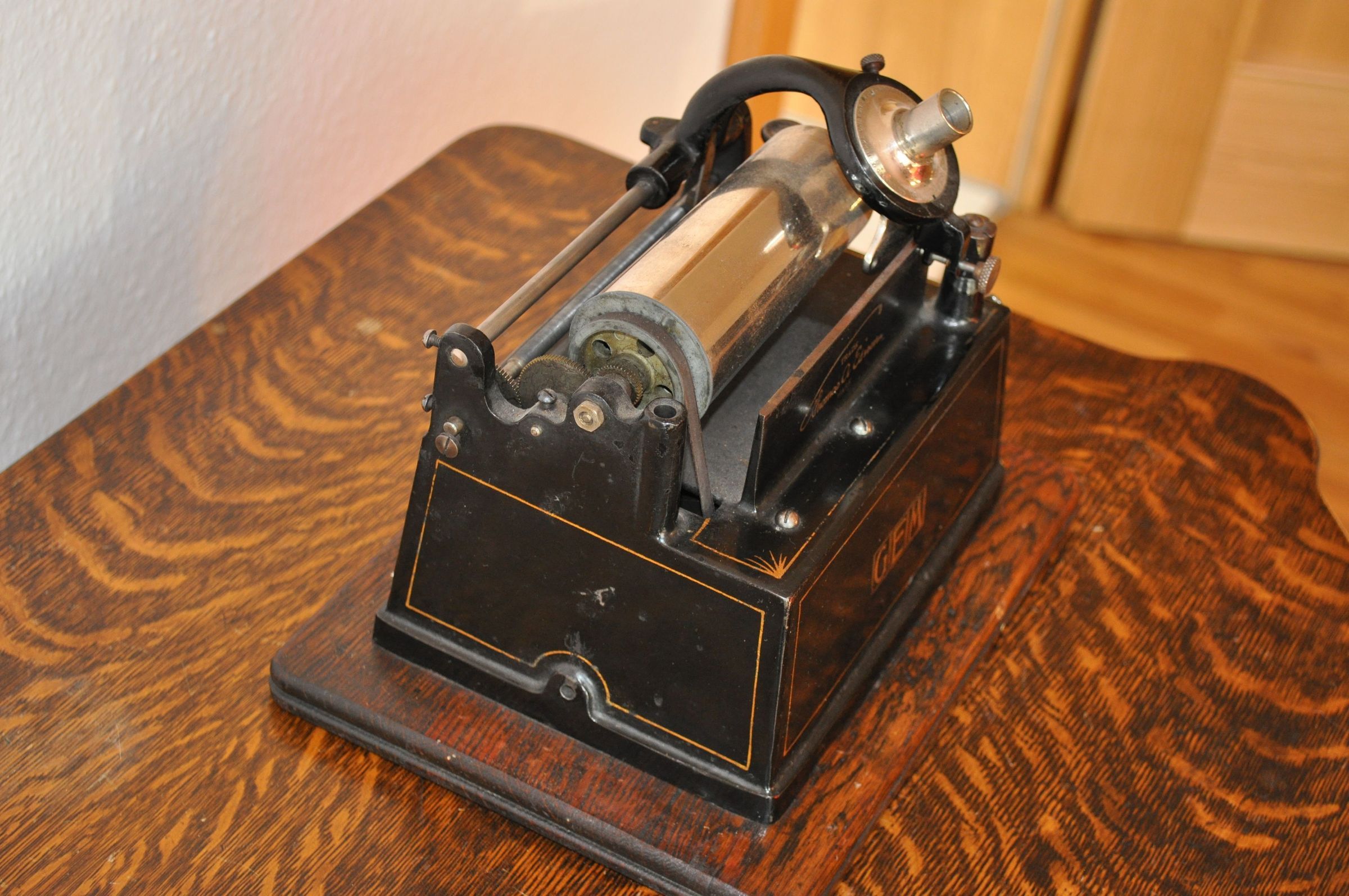
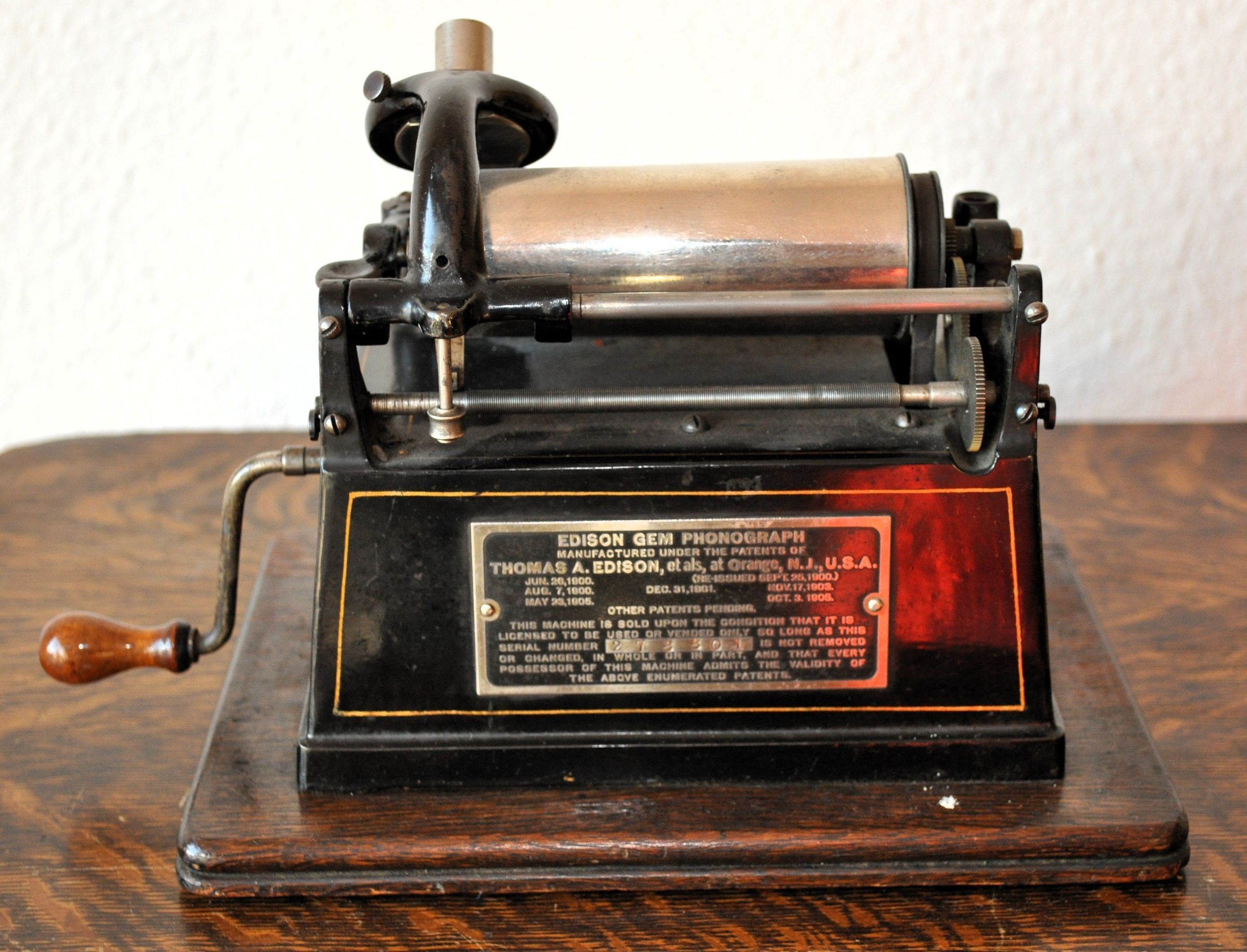
Cast‑metal chassis – unlike early Gem models with open wooden bases, the Black Gem featured a compact, black‑enameled cast‑metal case with gold lining.
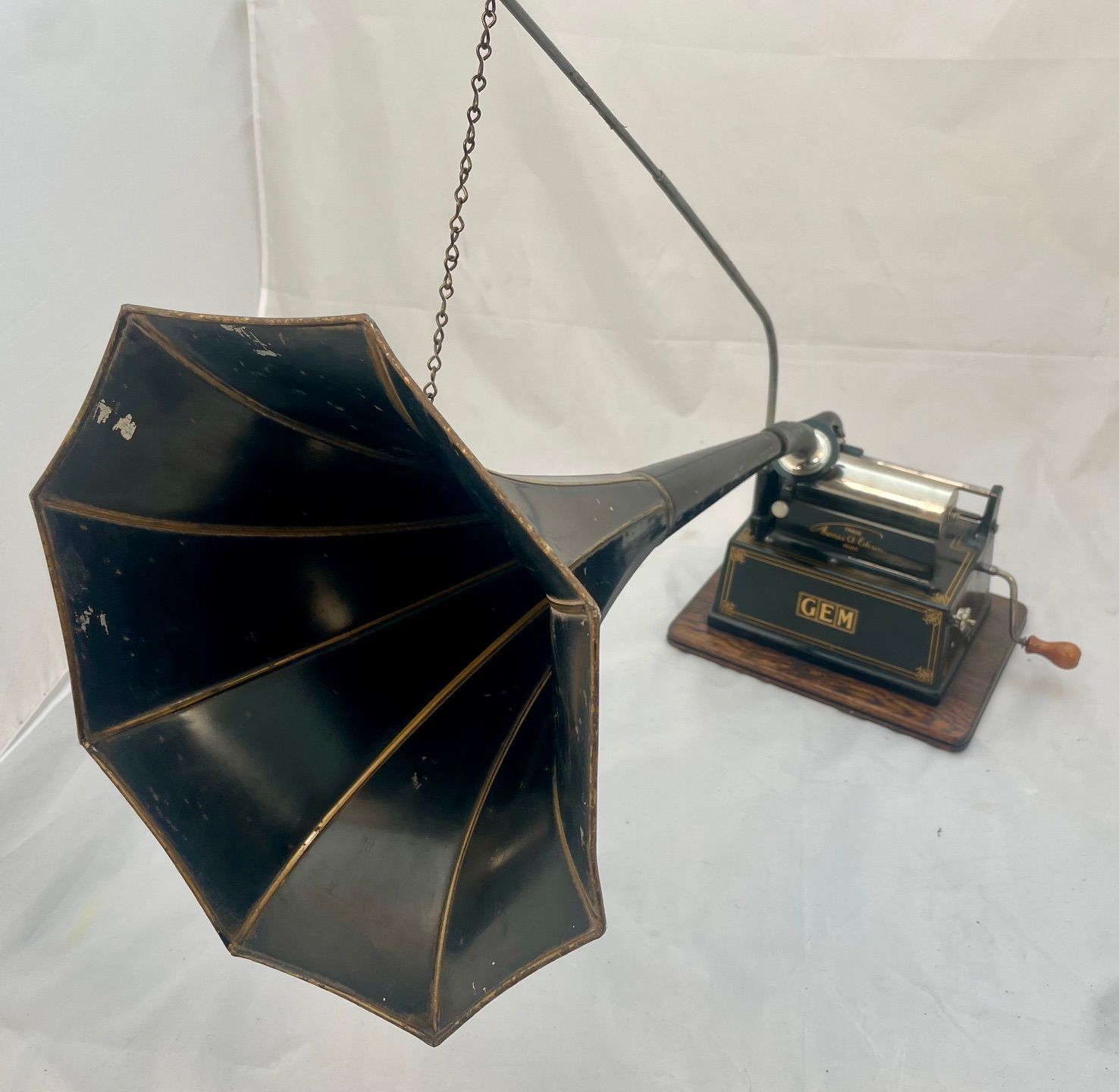
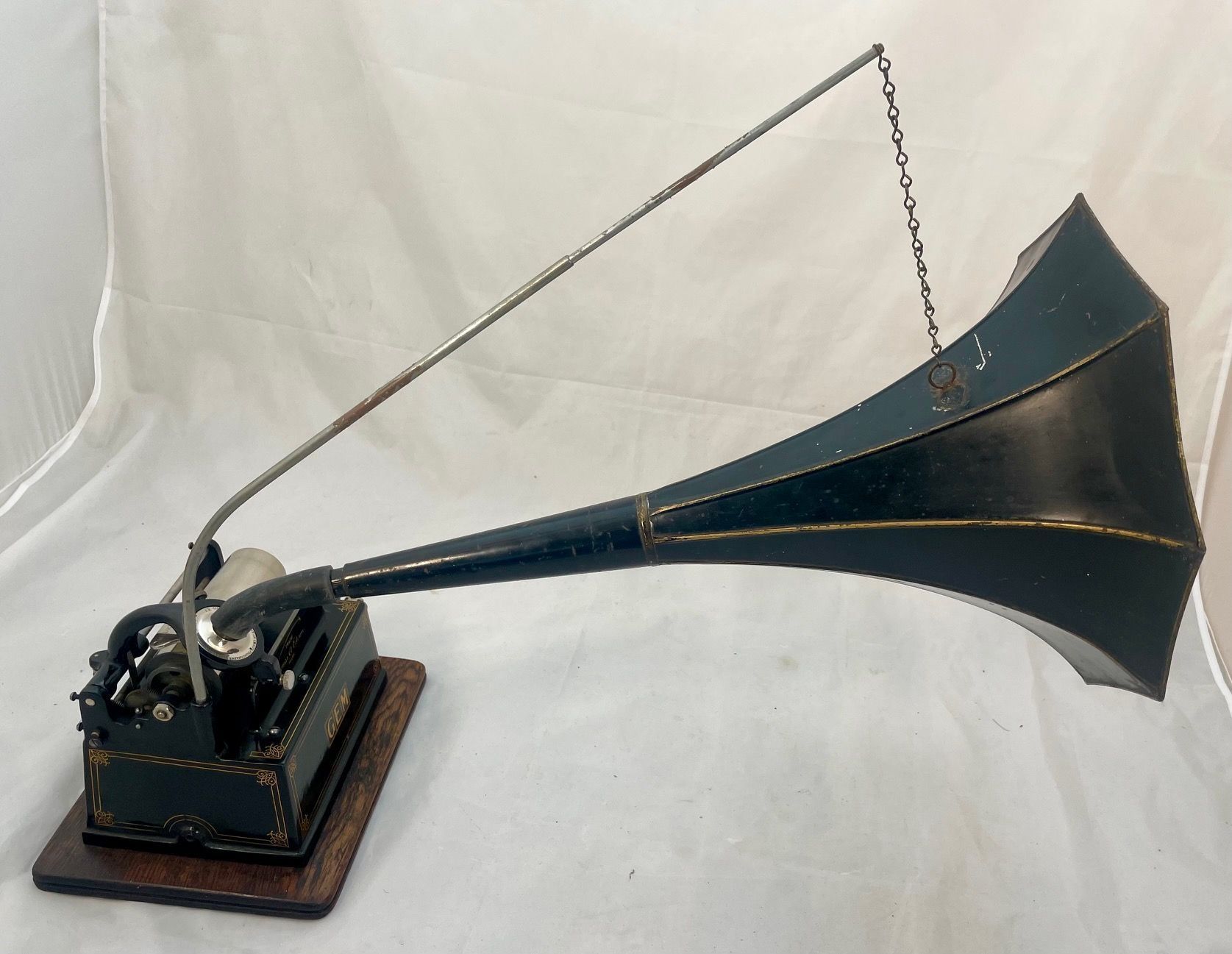
Black metal horn – a hallmark of this version, paired with a nickel‑plated tone tube.
Gold block‑letter “GEM” logo on the front panel.
Vertically mounted, detachable crank for winding the spring motor.
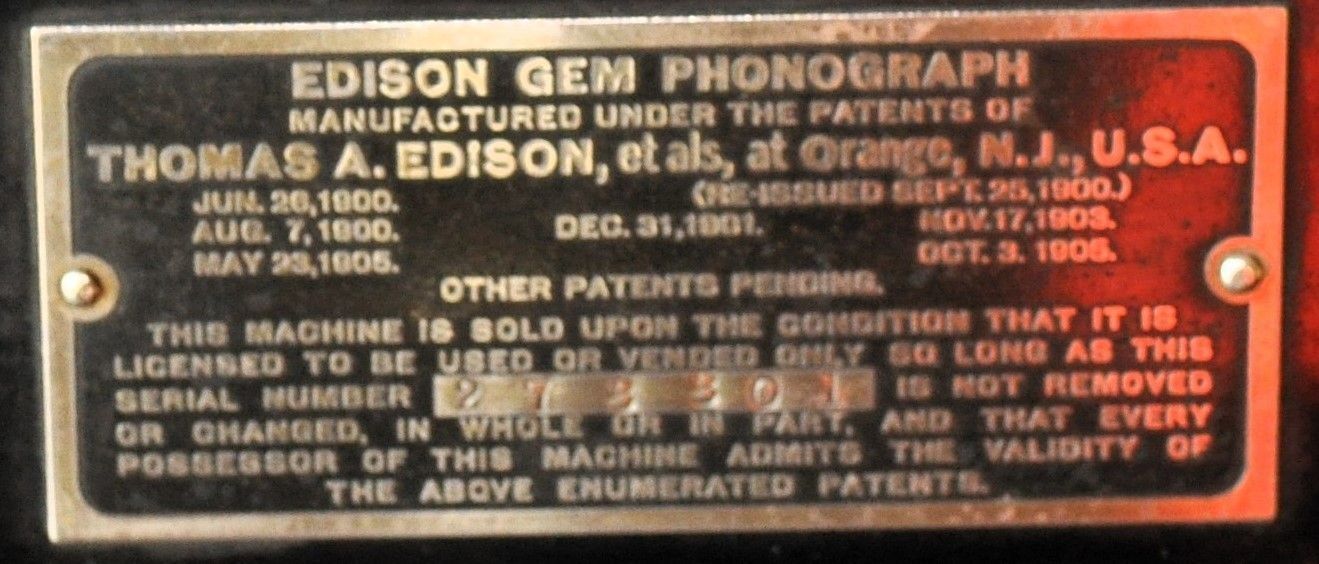
Manufacturer’s plate listing multiple Edison patents (e.g., June 26 1900, August 7 1900, May 25 1905) and the serial number – here: 272301.
Technical Details
Drive: Spring motor wound by hand crank.
Cylinder format: Standard 2‑minute wax cylinders; later models could be adapted for 4‑minute cylinders.
Reproducer: Typically fitted with Edison Model C or Model H.
Horn support: Overhanging support rod with chain suspension.
Construction: Compact layout with side‑mounted gear drive, spindle driven via intermediate gear.
Market Position
The Edison Gem was conceived as the “people’s phonograph.” In the USA it cost only a fraction of larger table or floor‑standing models, making it affordable to average households. It was also exported worldwide, including to Europe.
The “Black Gem” was an improved version with a sturdier cast‑metal case and updated styling – ideal for everyday use.
Significance
While the Edison Gem was among the simplest of Edison’s machines, it played a key role in bringing the phonograph into private homes. Today, the “Black Gem” is a sought‑after collector’s item, especially with its original black horn, intact finish, and original patent/serial‑number plate.
The example on display at the Edisonium is an authentic representation of Edison’s strategy to offer high‑quality technology in compact, affordable form – helping to place the phonograph in virtually every home.