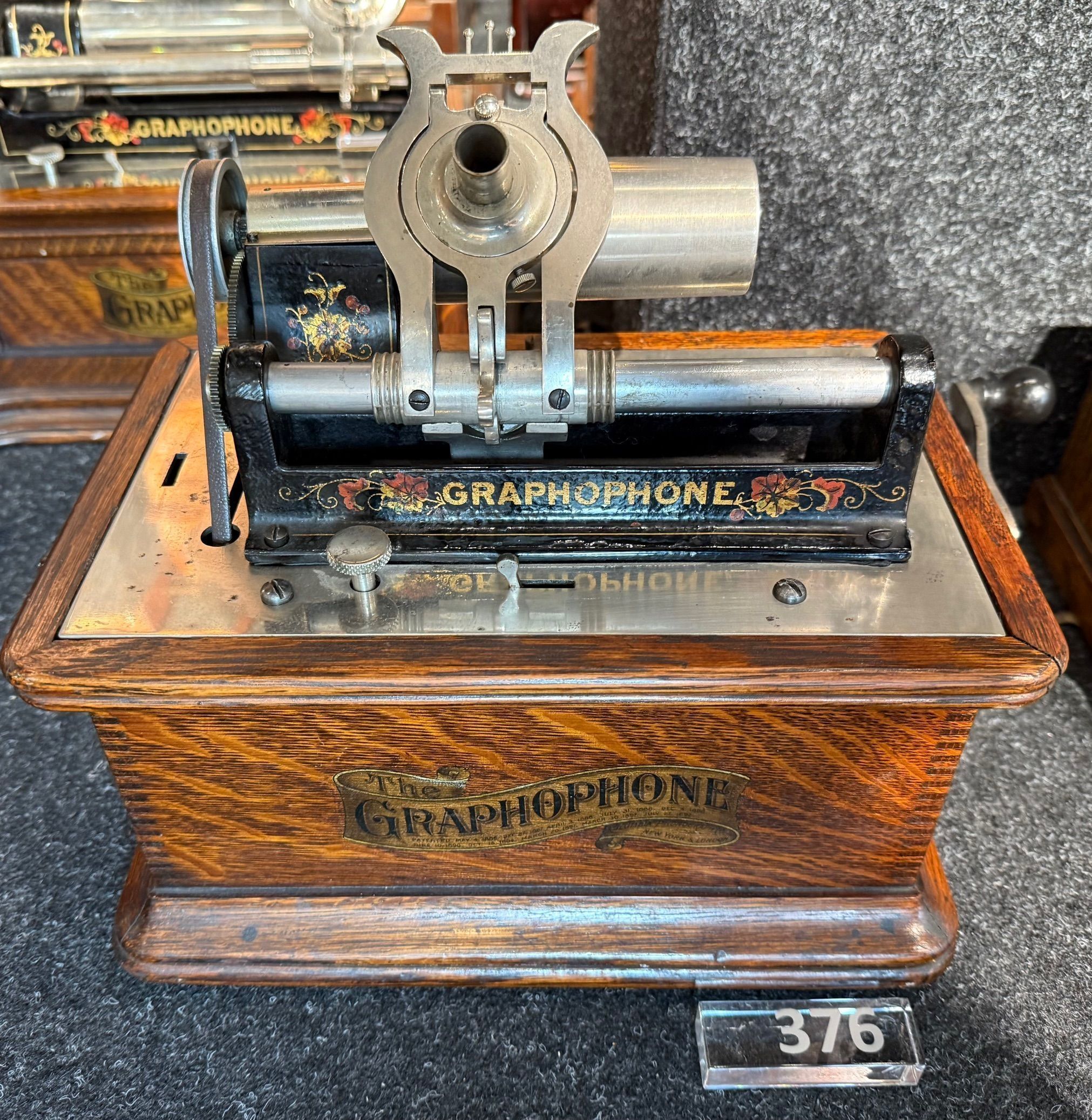
Name/Title
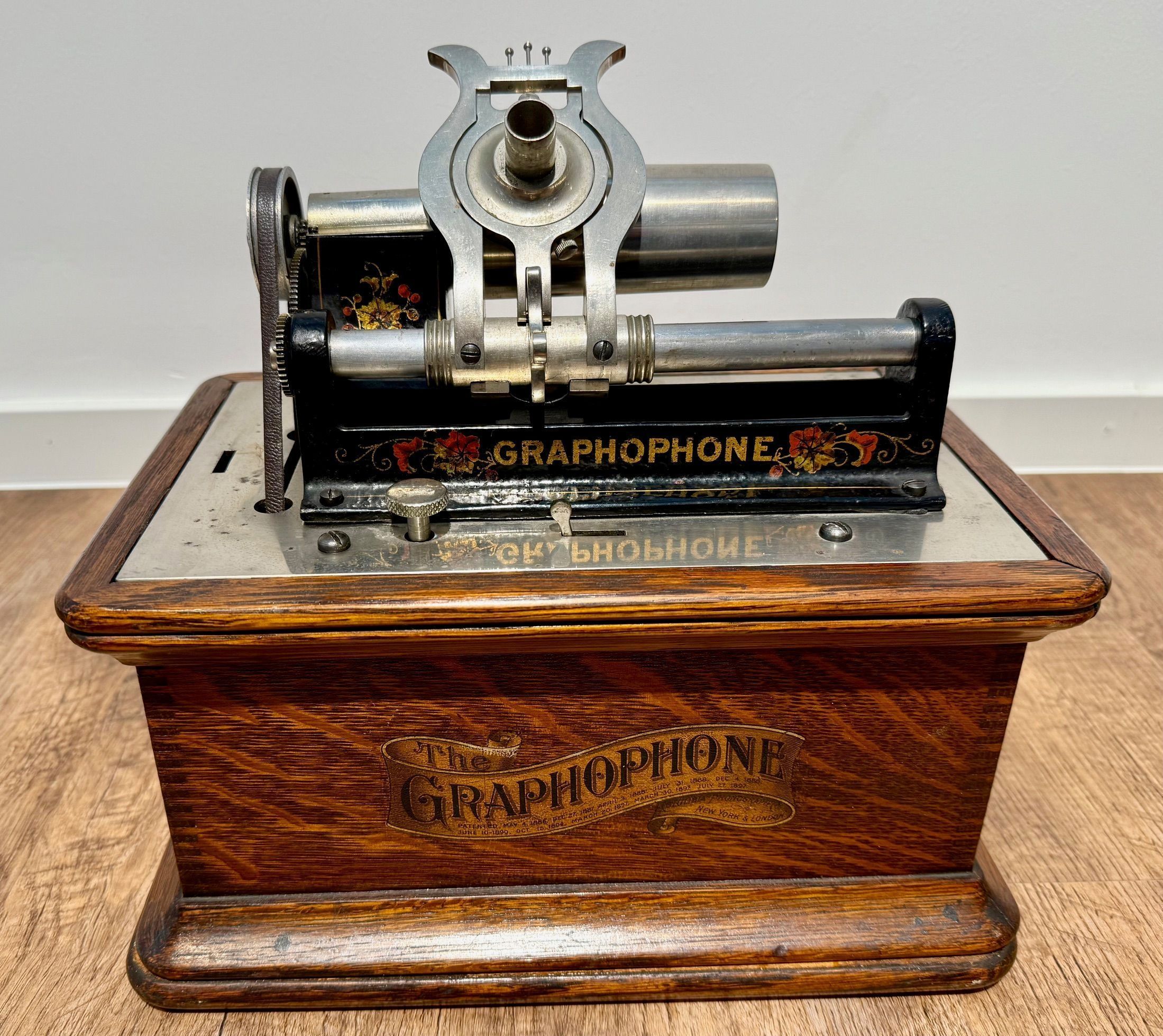
Graphophone "Type AZ"Entry/Object ID
376Description
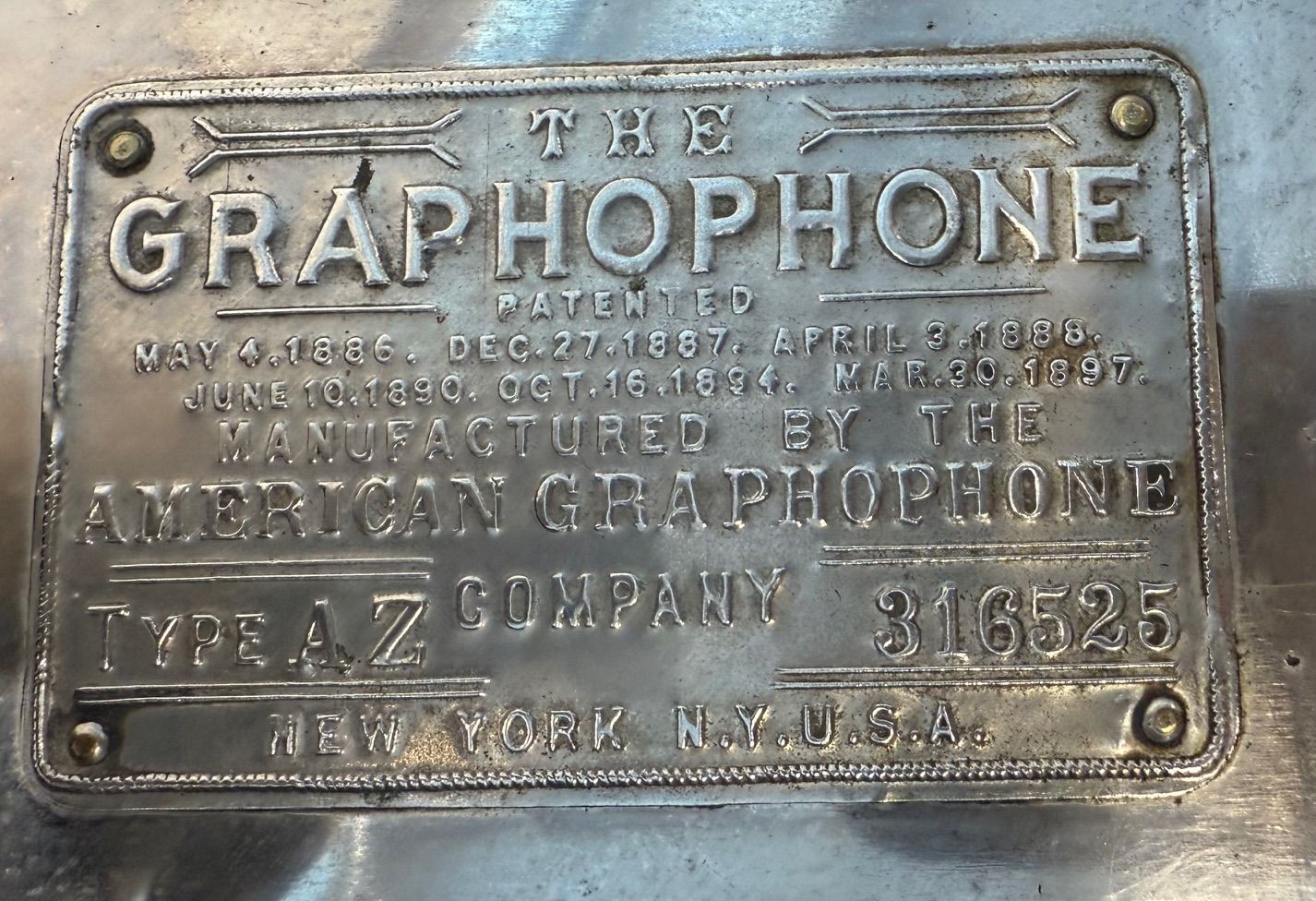
American Graphophone Company, New York
ca. 1903–1905 | Serial No. 316525 | Price: approx. $20–25
Historical Background
The Type AZ was one of the most successful later Columbia Graphophones. Introduced around 1903, it was designed as an affordable home machine and remained in production for several years. With this model, cylinder technology reached a broad middle-class audience before the disc record finally took over the market.
Columbia marketed the AZ as a robust yet compact model, equally suitable for music and speech. Due to its low price, it became known as a true “people’s phonograph.”
Technical Features
Motor: single-spring clockwork with centrifugal governor
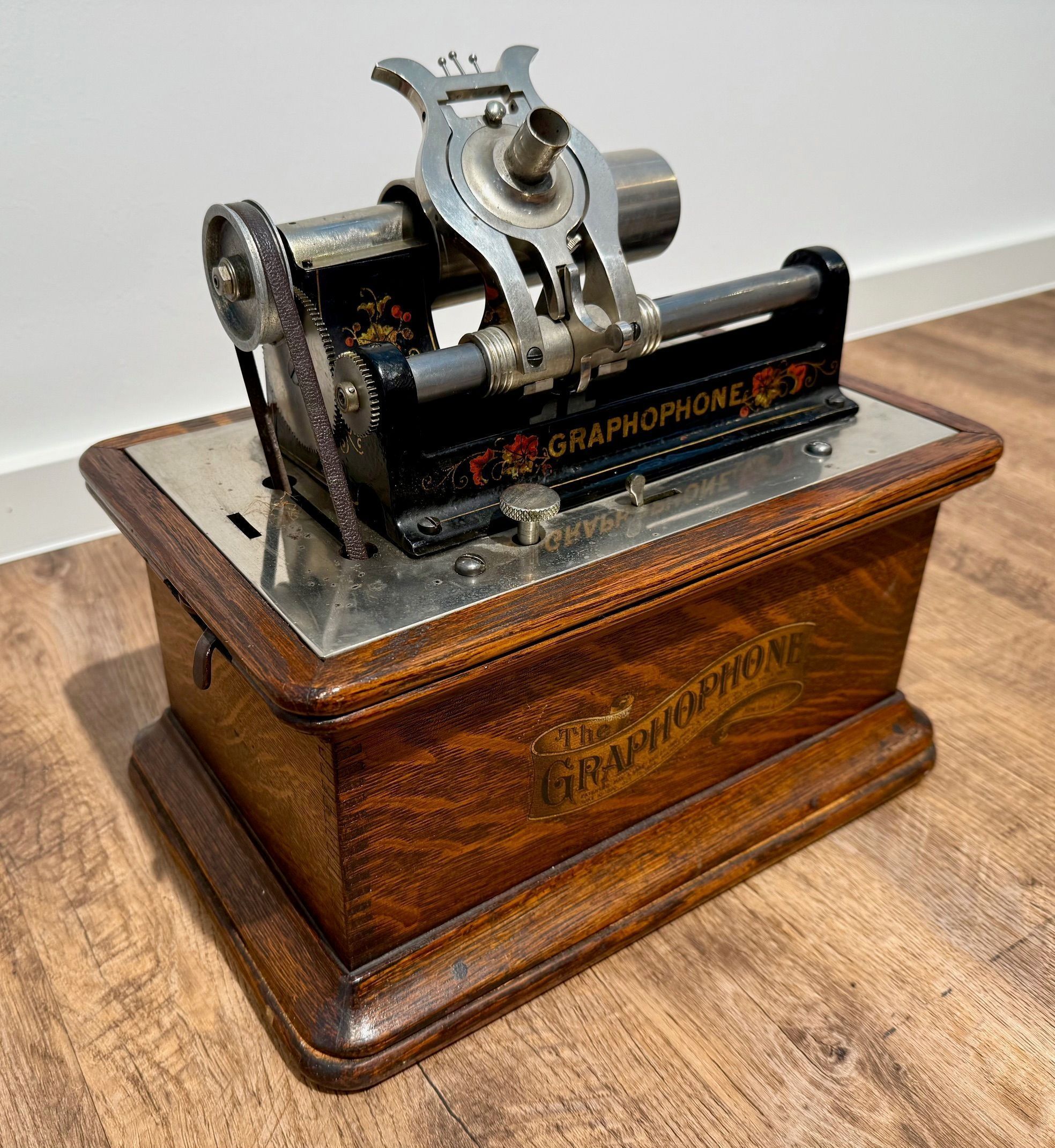
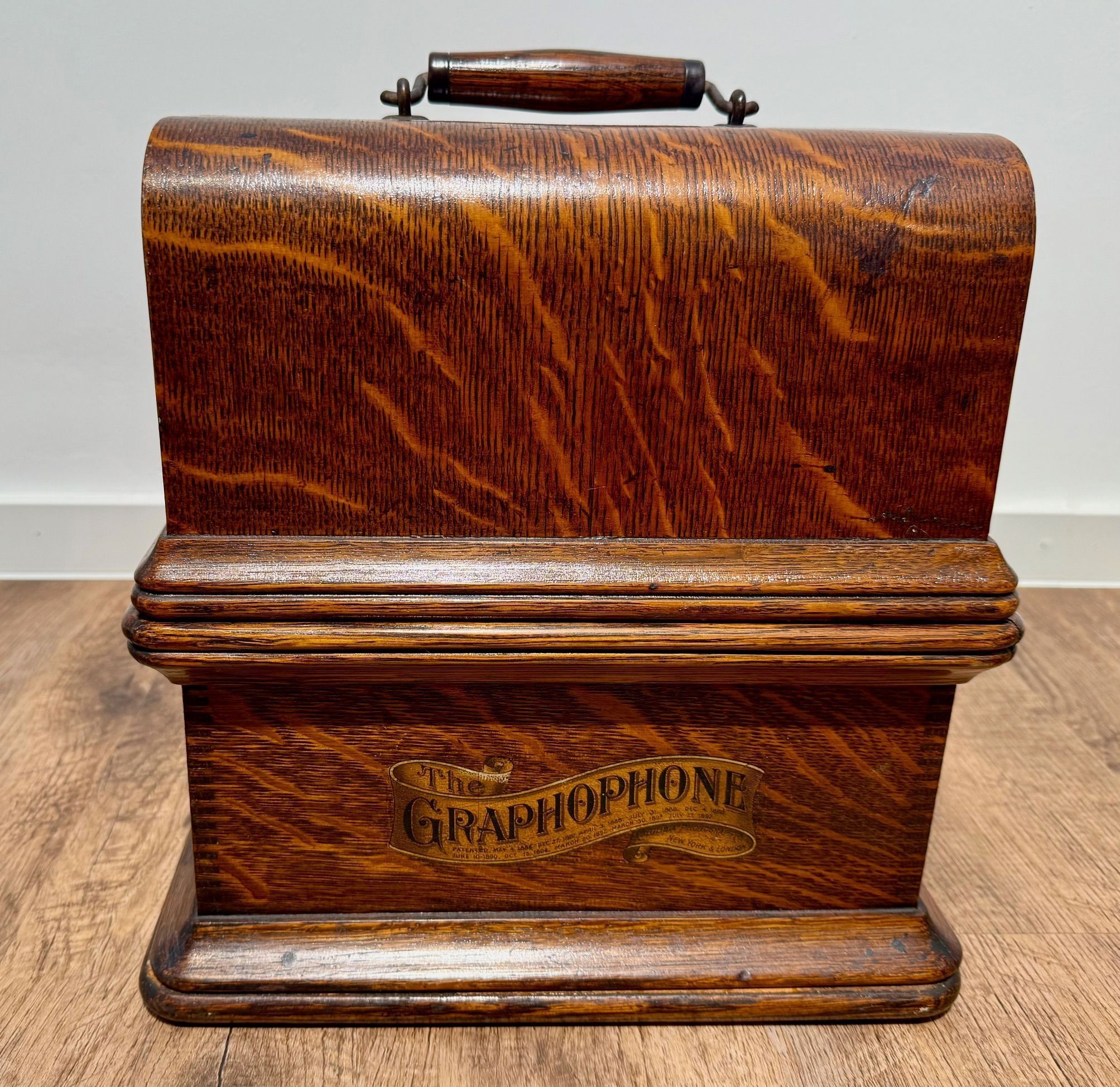
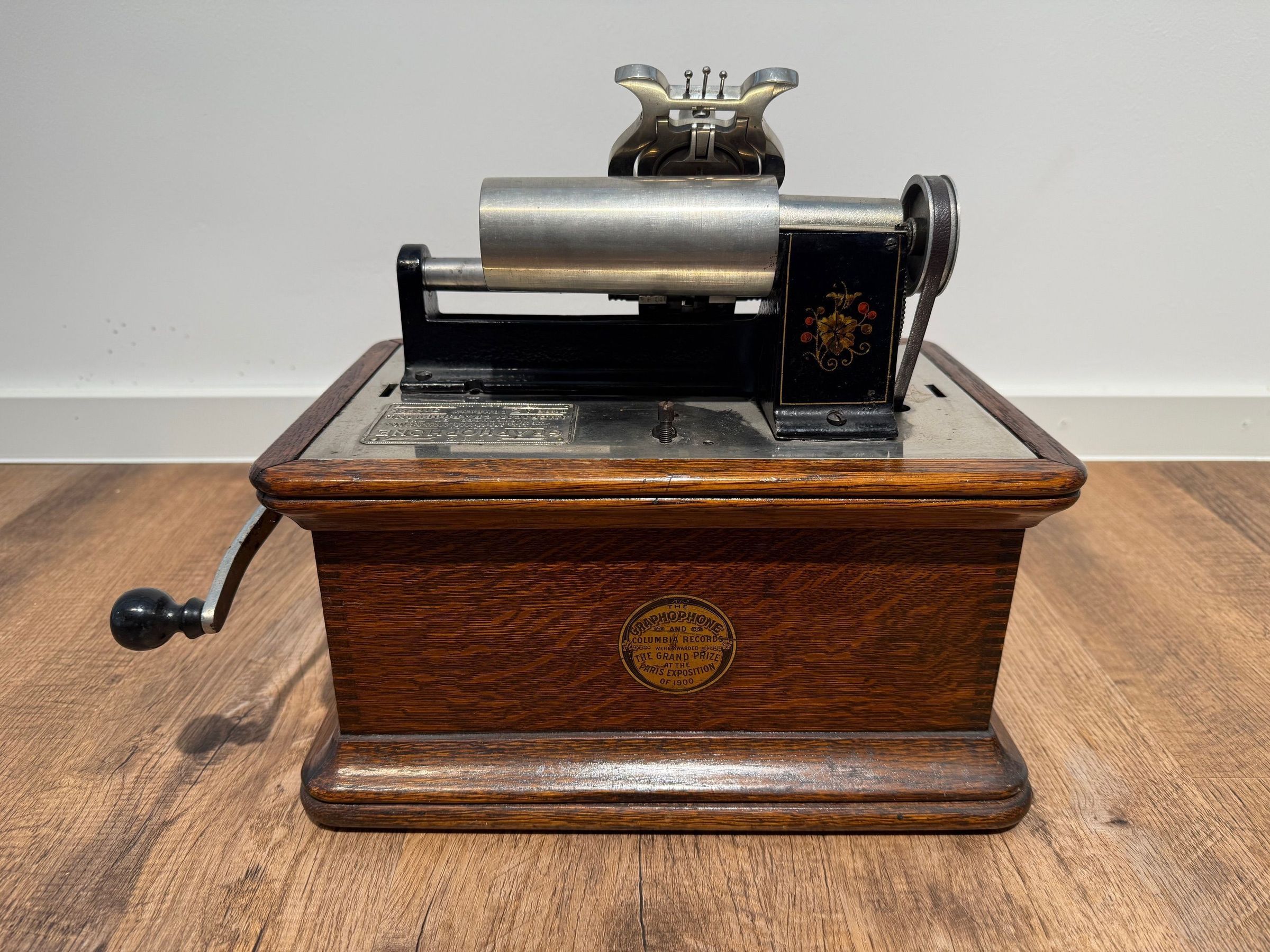
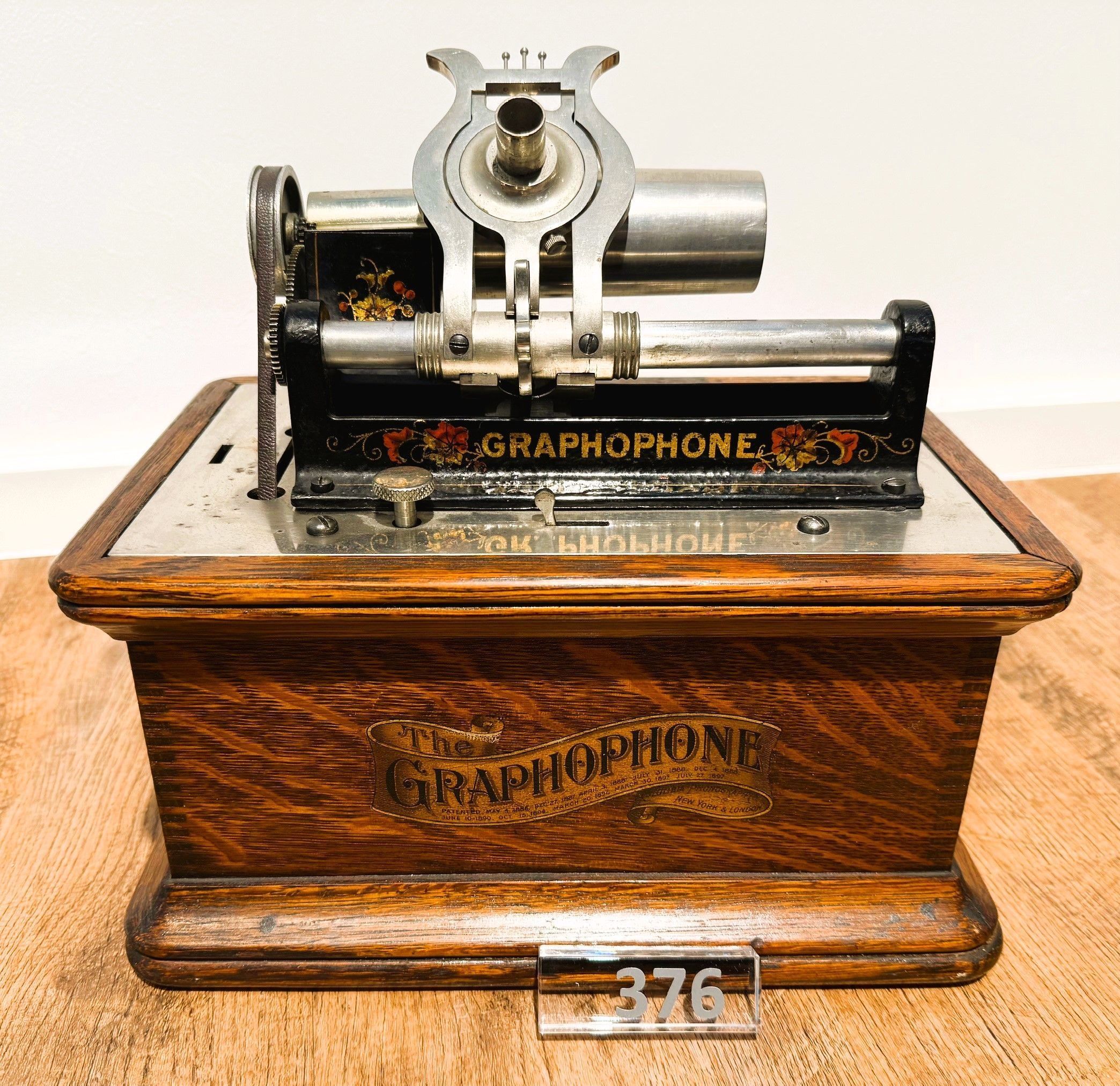
Cabinet: oak, dark-stained, with gold “The Graphophone” banner decal
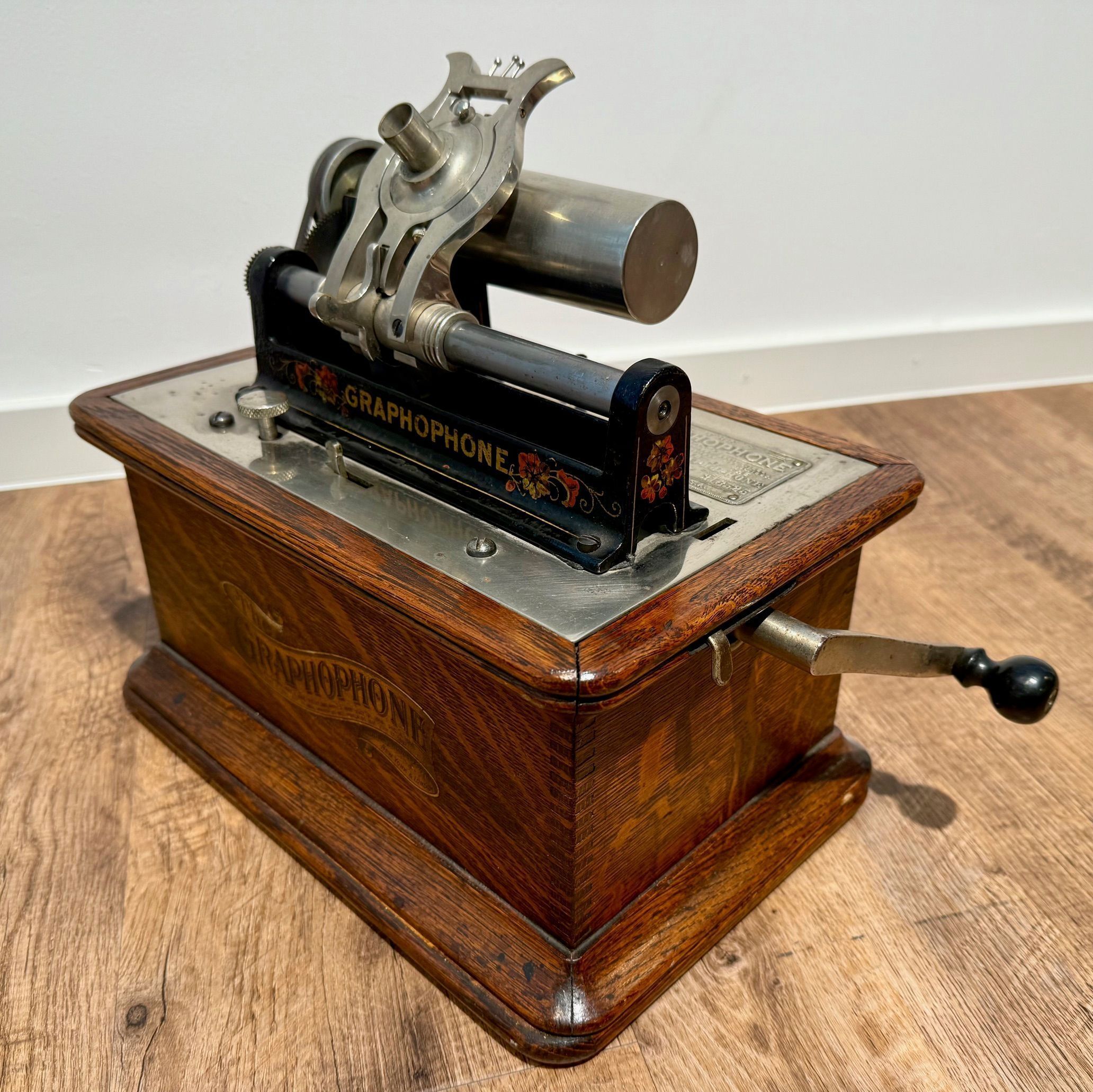
Decoration: black enameled chassis with floral details
Serial numbers: above 300,000 – late production in New York
Horn: originally supplied with a polished brass horn (approx. 14 in.)
Drive: side crank, feedscrew carriage for reproducer travel
Reproducer and Sound
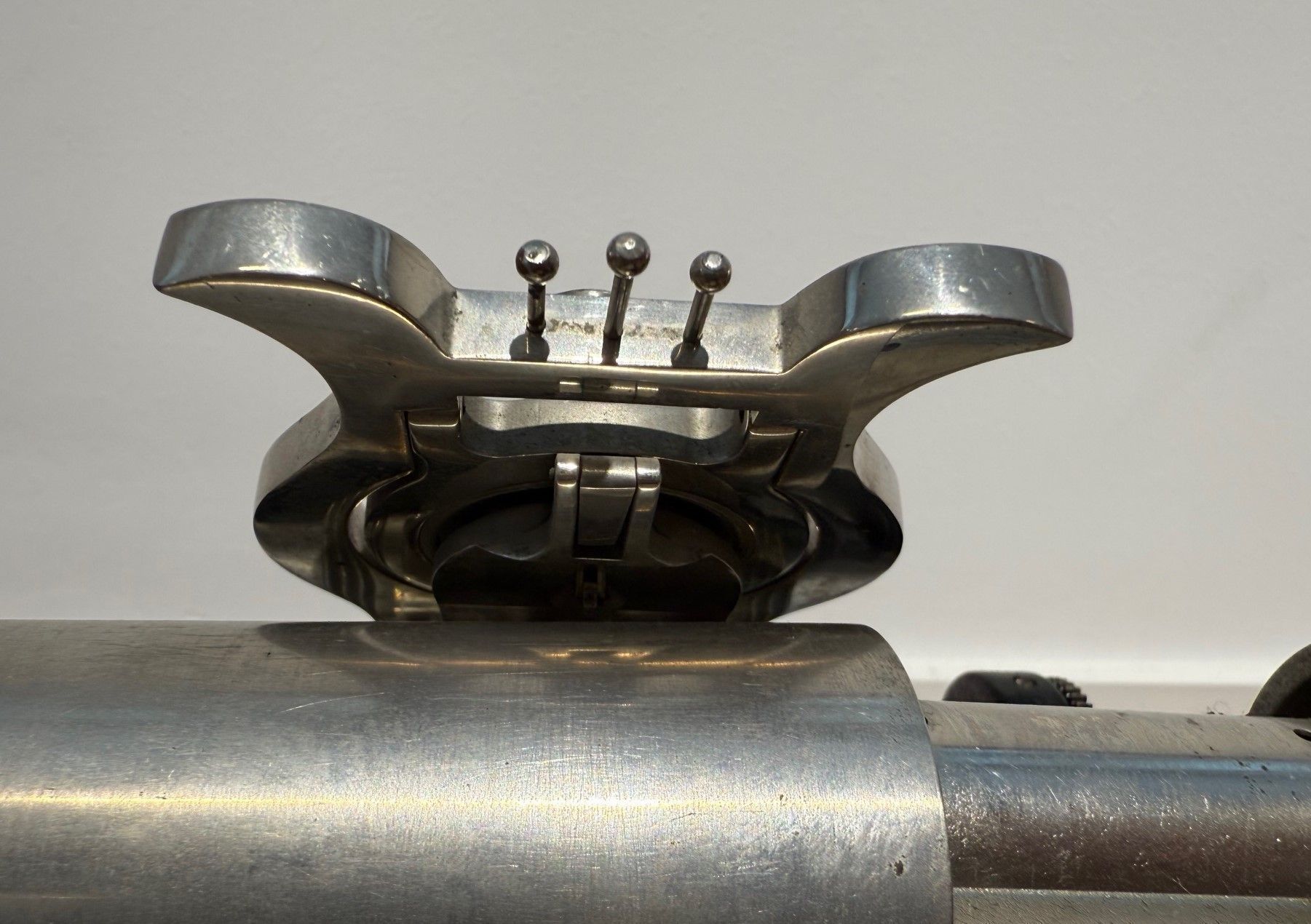
The Type AZ was equipped with the Columbia Lyric Reproducer as standard.
Fixed in the carriage, unlike the removable reproducers of the earlier A/N models
Made of aluminum with a thin mica diaphragm, providing clearer and louder sound
Improved stability reduced wear on the wax cylinders
Advertised as “Lyric – for unmatched pure and melodious tone reproduction”
This fixed Lyric system marked the transition from the experimental early reproducers to a standardized, industrially optimized design.
Contemporary Advertising (Columbia Phonograph Co., ca. 1904)
“Solid, reliable, affordable”
“The ideal entertainment machine for home and family”
“Pure, powerful tones – easy to operate”
Significance and Rarity
The Graphophone Type AZ represents Columbia’s last major effort to expand the cylinder market before discs became dominant. With its high serial number 316525, this example belongs to the late production period and stands as a vivid witness to the popular music culture of the early 20th century.