Name/Title
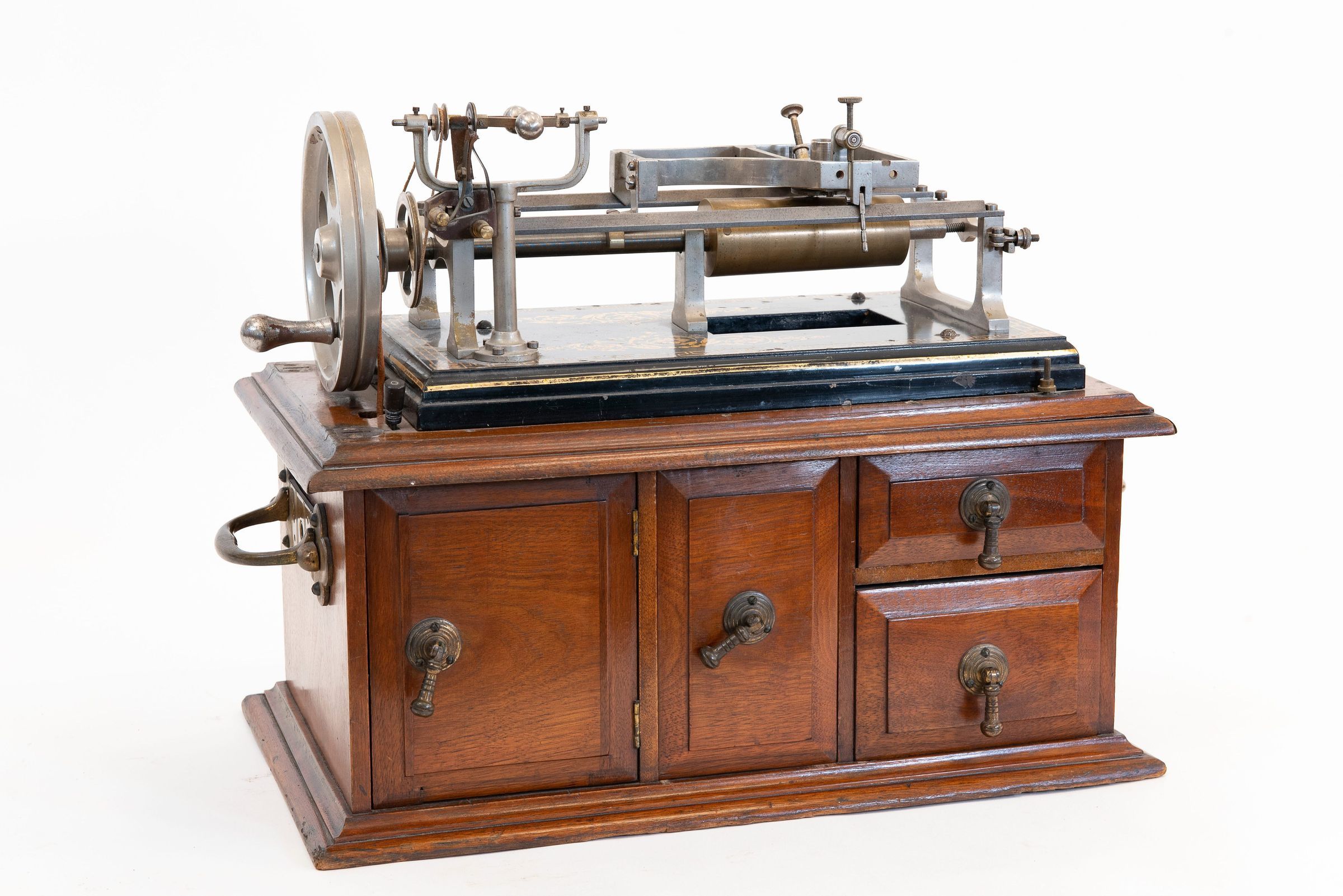
Phonograph System KöltzowEntry/Object ID
121Description
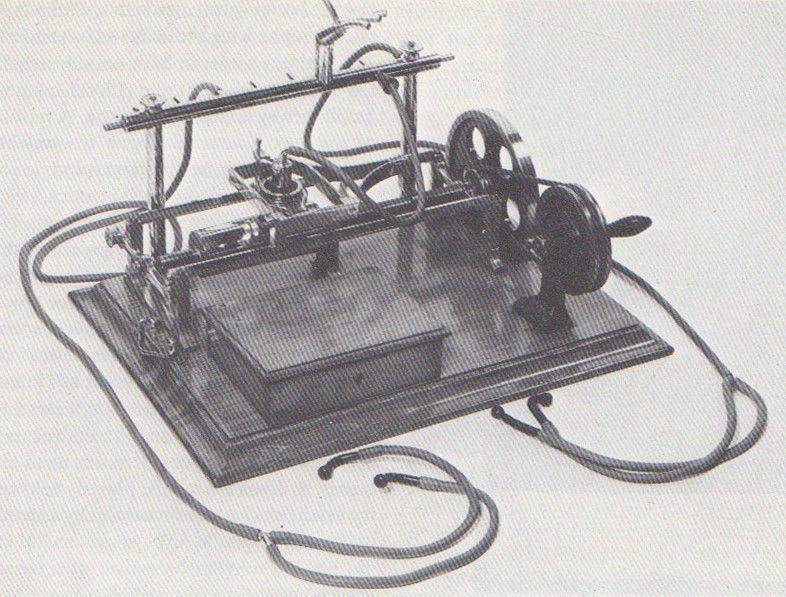
Albert Költzow, Berlin, around 1893
One of the earliest sound reproduction devices built in Germany – on display here at the Edisonium
Historical Background
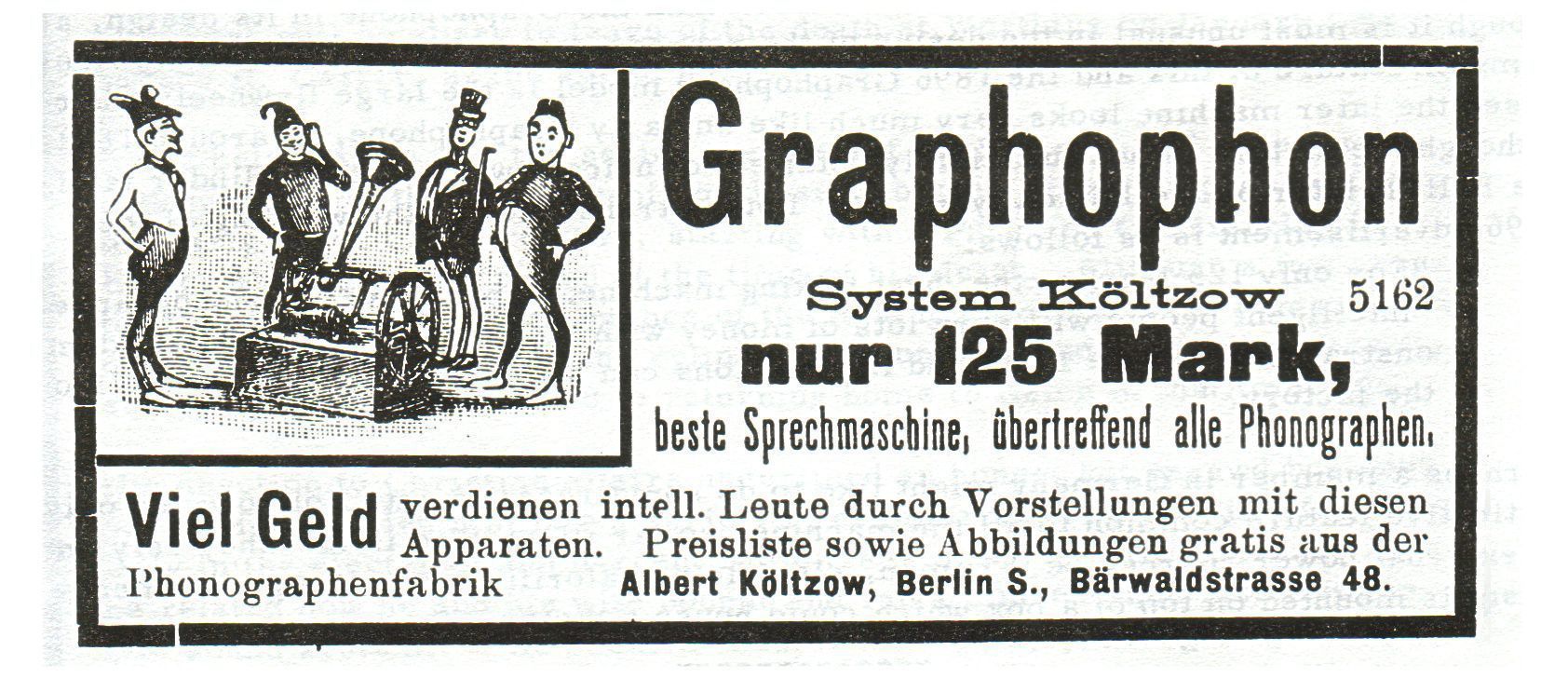
On April 1, 1890, Albert Költzow founded the first German workshop for the production of phonographs in Berlin. This makes him one of the pioneers of the German talking machine industry. His main customers were showmen, innkeepers, and later also government offices. In his advertisements he promised earnings of 60–80 Marks per day – an enormous sum compared to an average monthly wage of around 100 Marks.
In addition to exhibition models, Költzow also produced miniature phonographs for schools and children’s rooms, which operated without a leadscrew and were guided directly by the groove.
Technology and Special Features
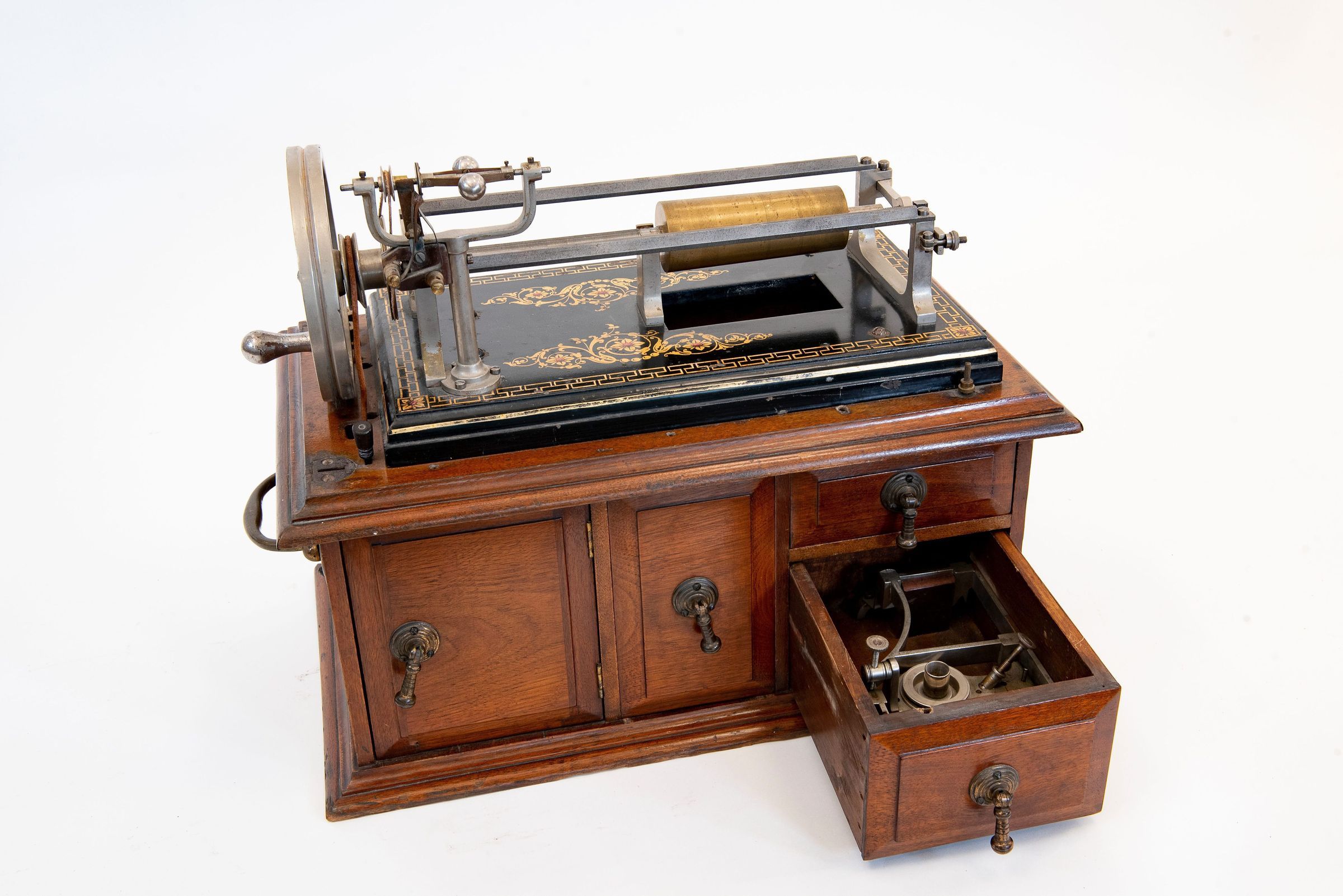
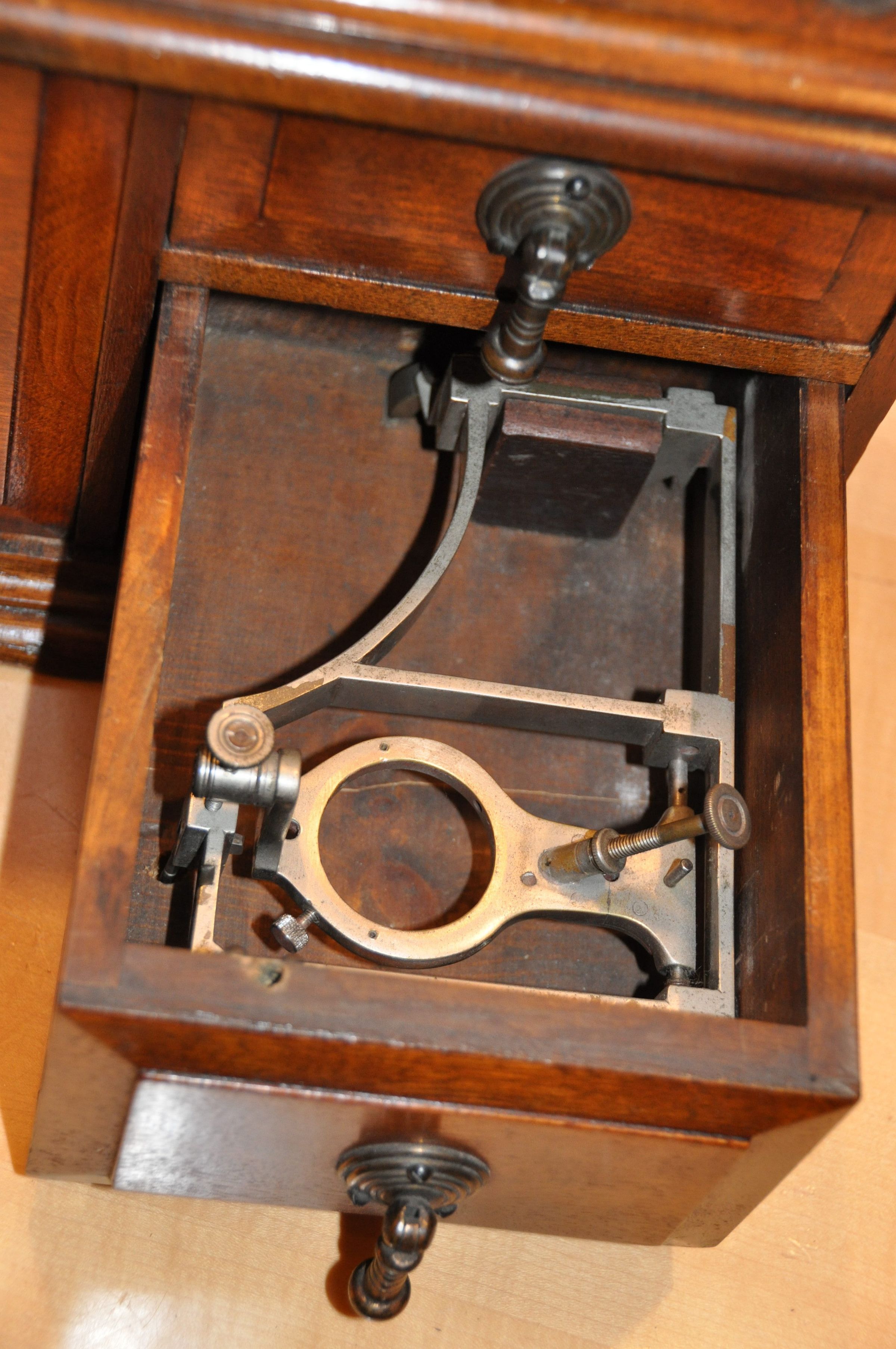
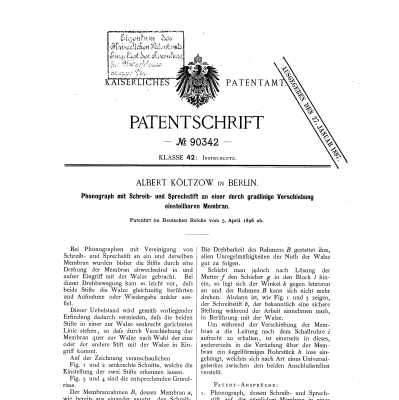
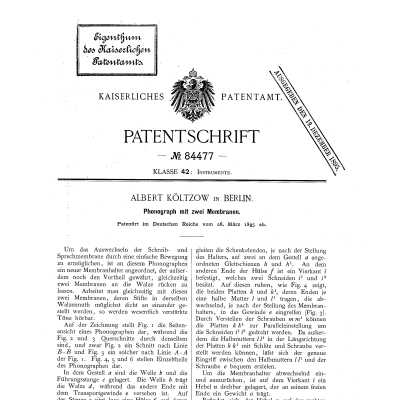
Patented A-shaped tone arm with central pivot, stable and technically independent.
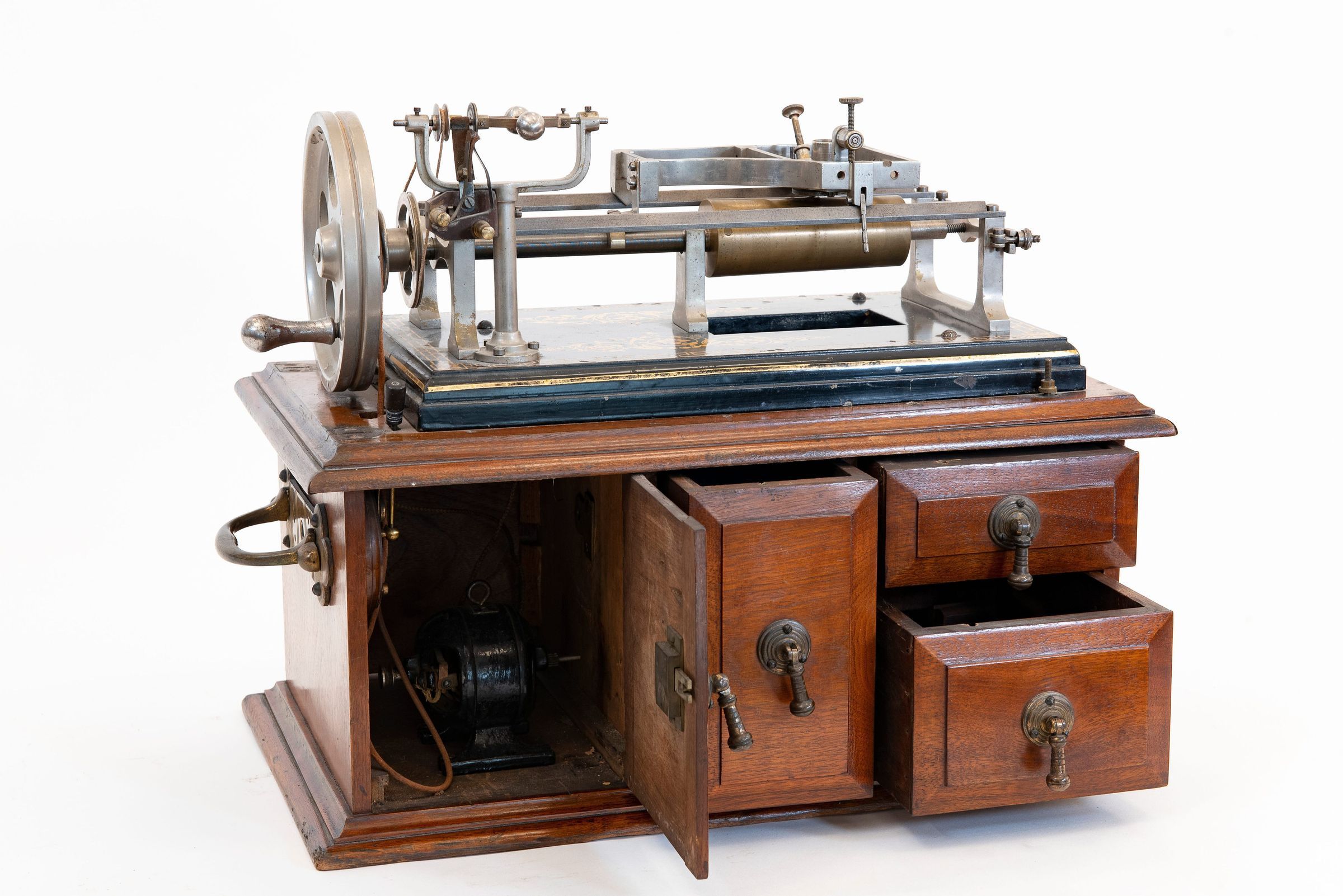
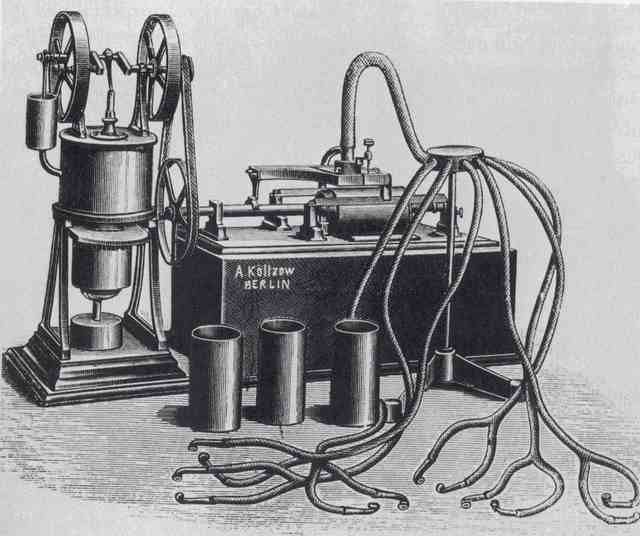
Drive operated either by hand crank, electric motor, or hot-air engine with vertical piston.
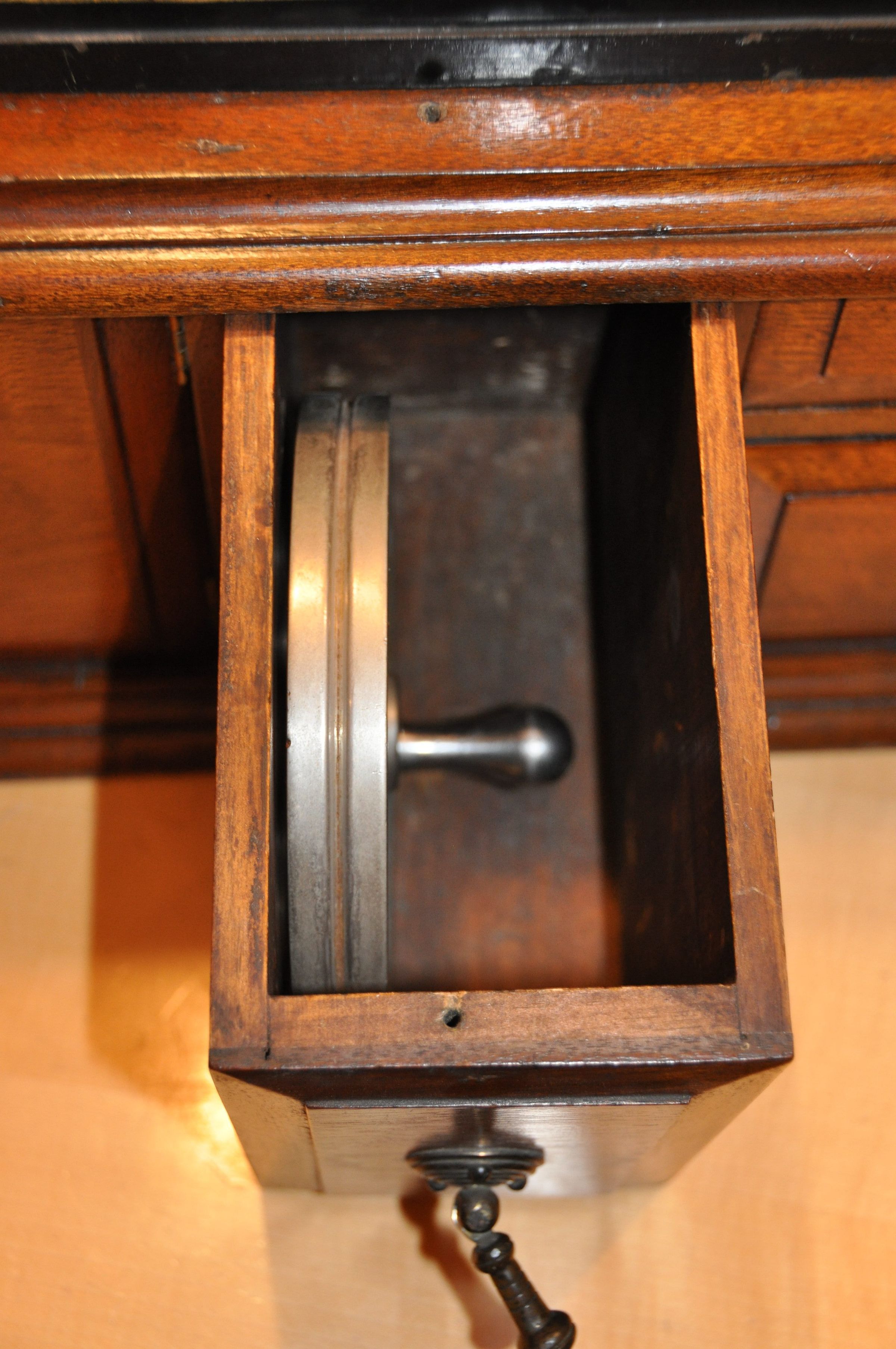
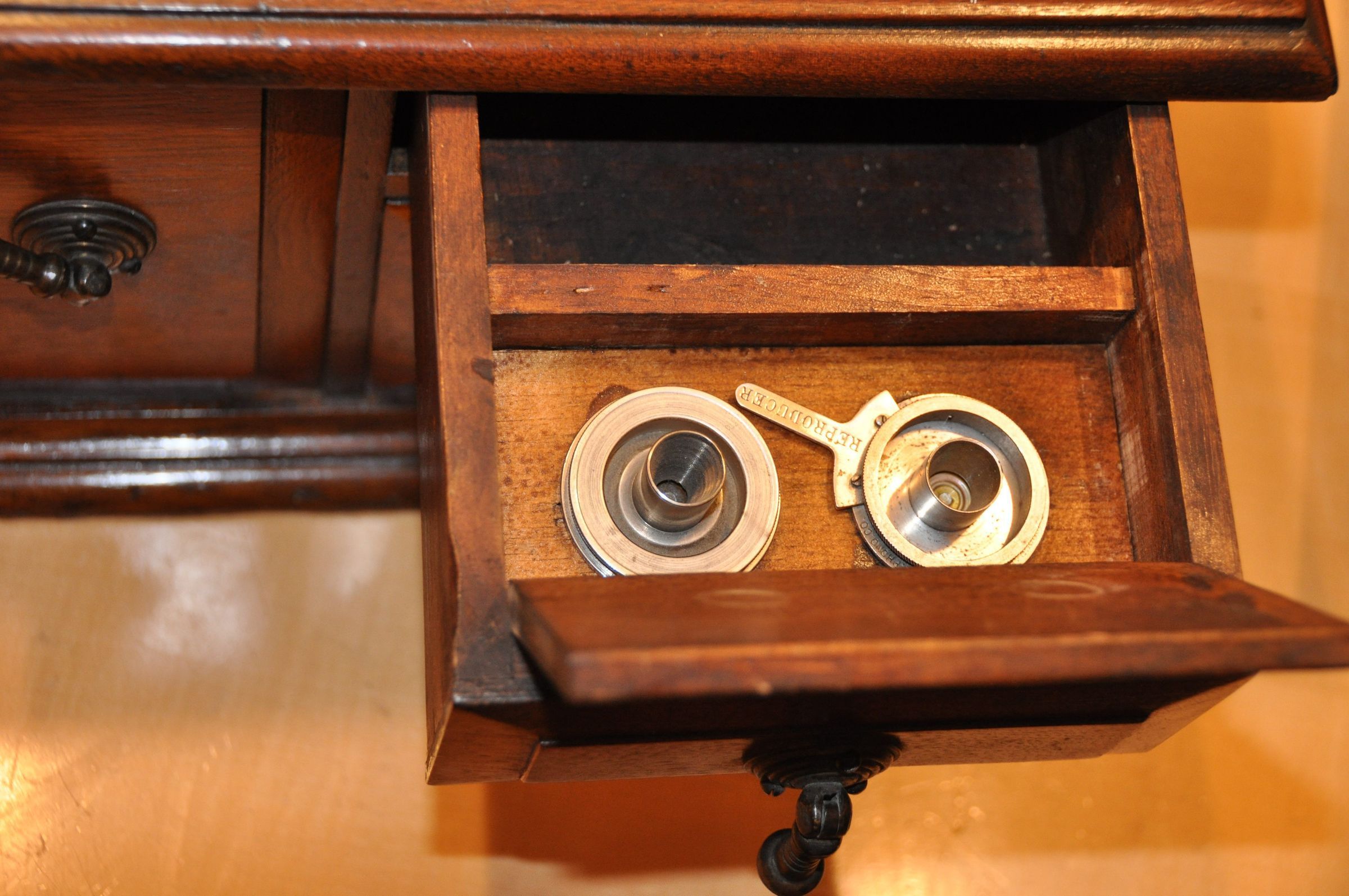
Sturdy construction with heavy flywheel, solid mandrel, and wooden case with compartments for accessories.
Multi-listener system with up to twelve ear tubes for fairground use.
Cylinders made of hard soap, allowing several thousand playbacks.
Use and Innovations
As early as 1891, a Költzow phonograph was used in the Karlsruhe state parliament for stenographic recording. Several typists could listen to the same speech simultaneously and transcribe it – an early form of the dictation machine. Költzow’s devices were also used in science, for example in acoustic research and in medical examinations of hearing.
Competition and Conflicts
From 1894 onwards, further suppliers entered the market, including Wilhelm Bahre, who imported Edison and Columbia machines. In 1895, Ludwig Stollwerck secured the German rights to Edison phonographs. As a result, Költzow and other manufacturers were declared patent infringers, which led to lawsuits and serious economic setbacks.
Rarity and Surviving Examples
Today only a few original Költzow machines are preserved. A showman’s model with twelve ear tubes is held in Edinburgh, and two more are in the National Technical Museum in Prague. The example displayed at the Edisonium, with its A-shaped tone arm and electric motor, is one of the most authentic surviving witnesses to early German phonograph engineering.