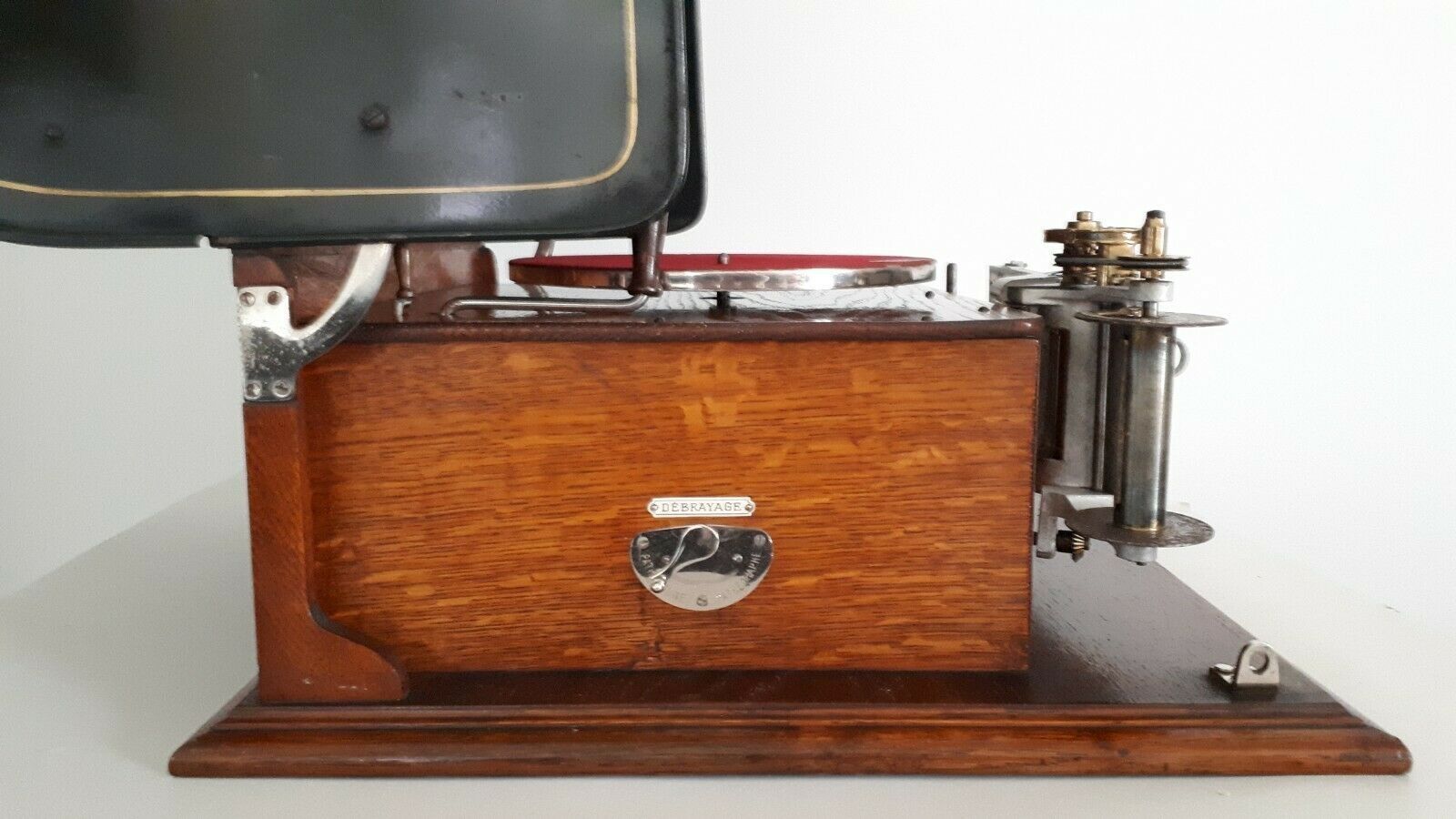
Name/Title
Pathégraphe – The World’s First Language Learning MachineEntry/Object ID
289Description
France, 1912. Mechanical multimedia for education – an early language lab
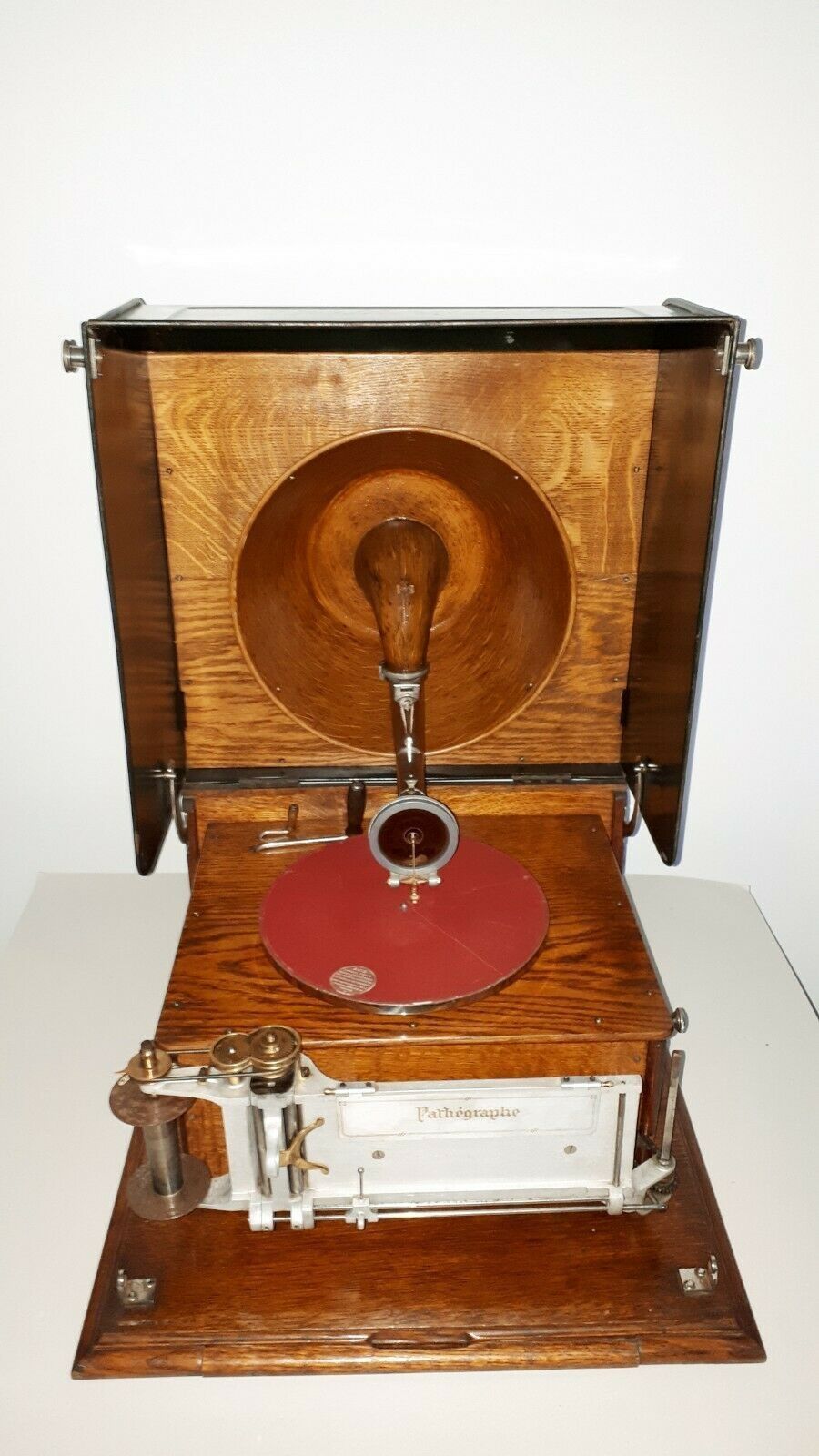
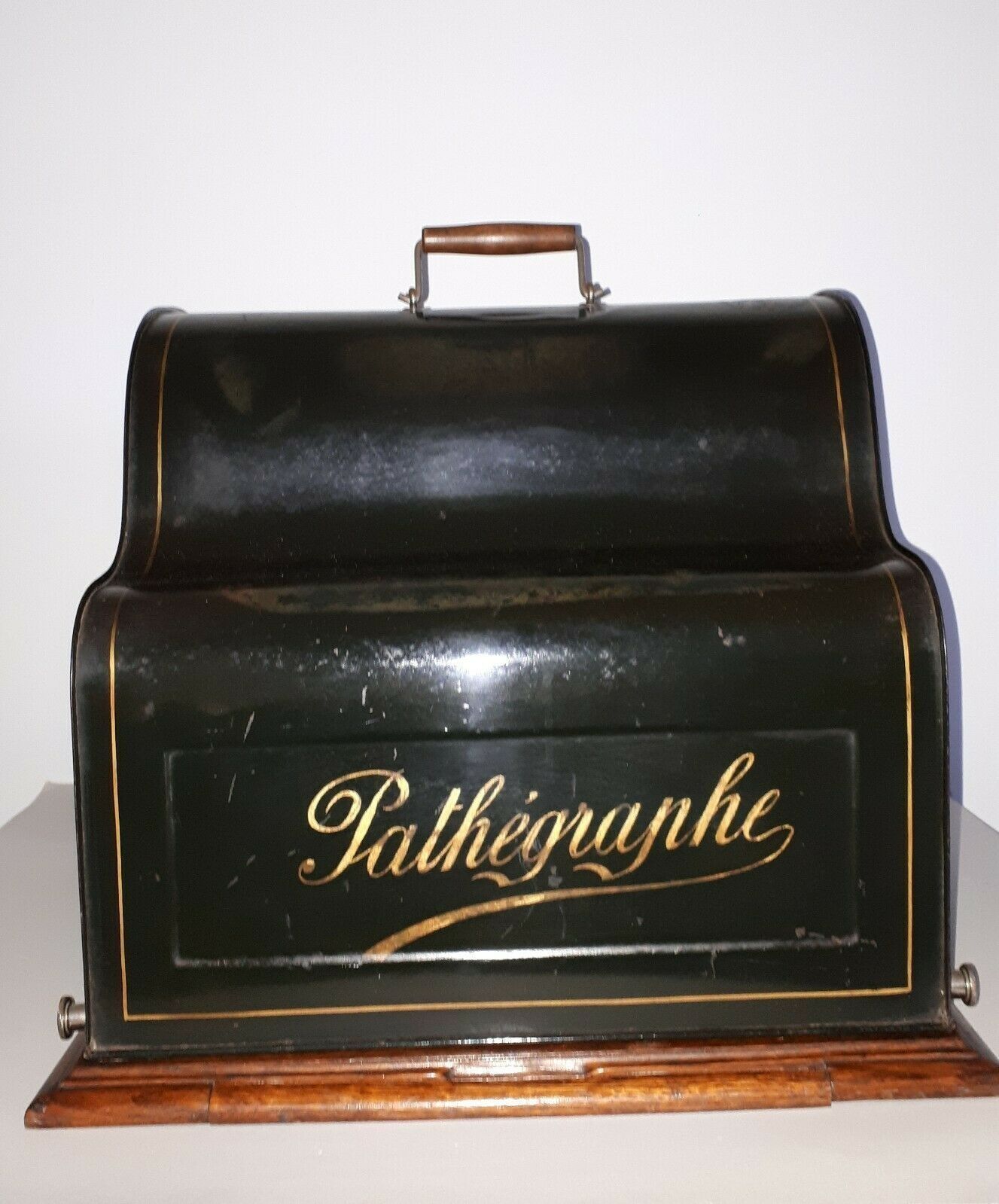
The Pathégraphe, produced by Pathé Frères in Paris, is considered the first acoustic-mechanical machine designed specifically for language learning. This visionary device combined spoken language recordings with synchronized printed text – a true forerunner of modern audio-based learning systems.
Design and Function
Each lesson included:
A language phonograph disc (35 cm diameter) featuring the spoken foreign language,
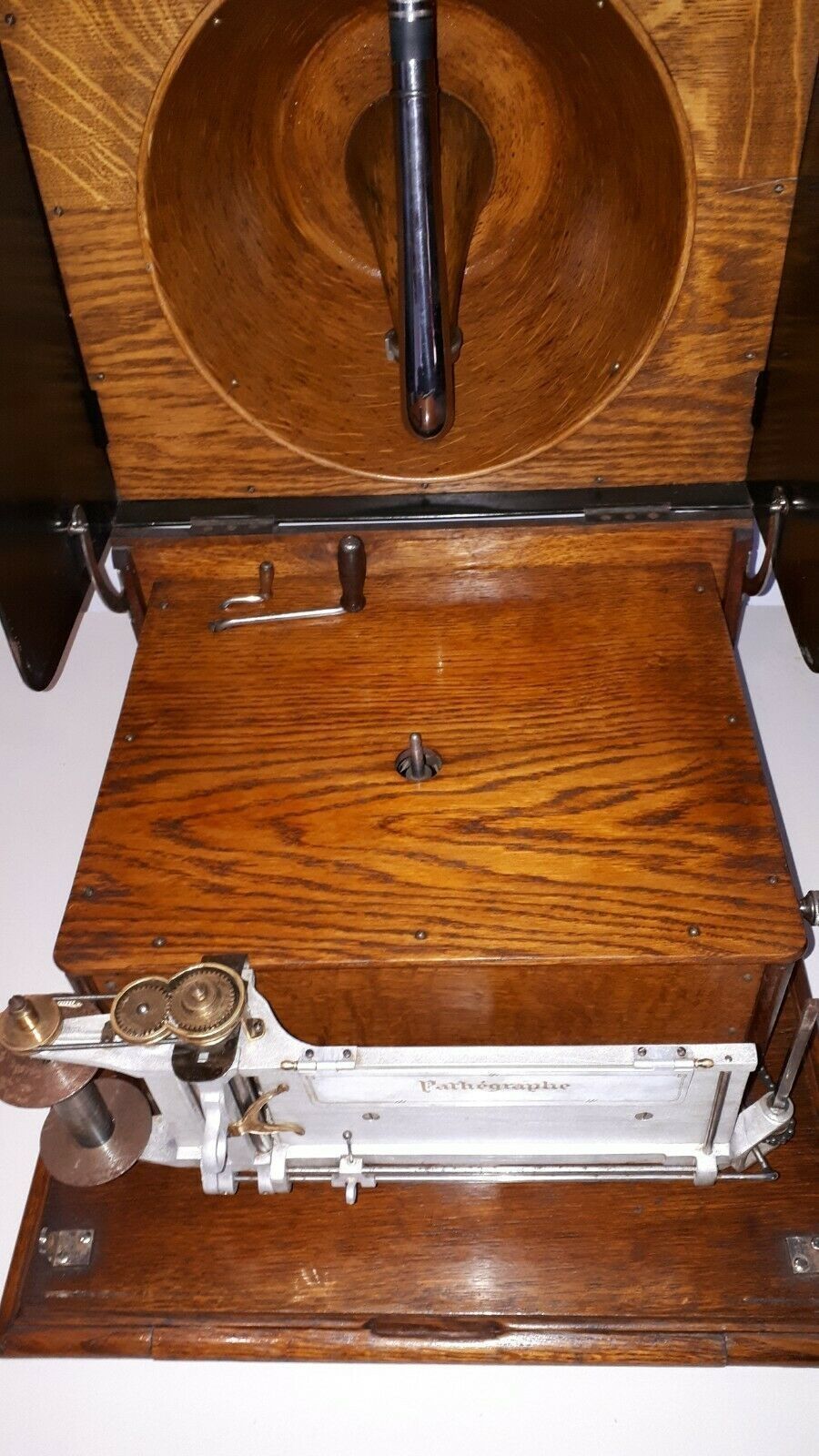
A paper roll displaying the corresponding translated text,
And a flip-down blind that could cover the translation if desired.
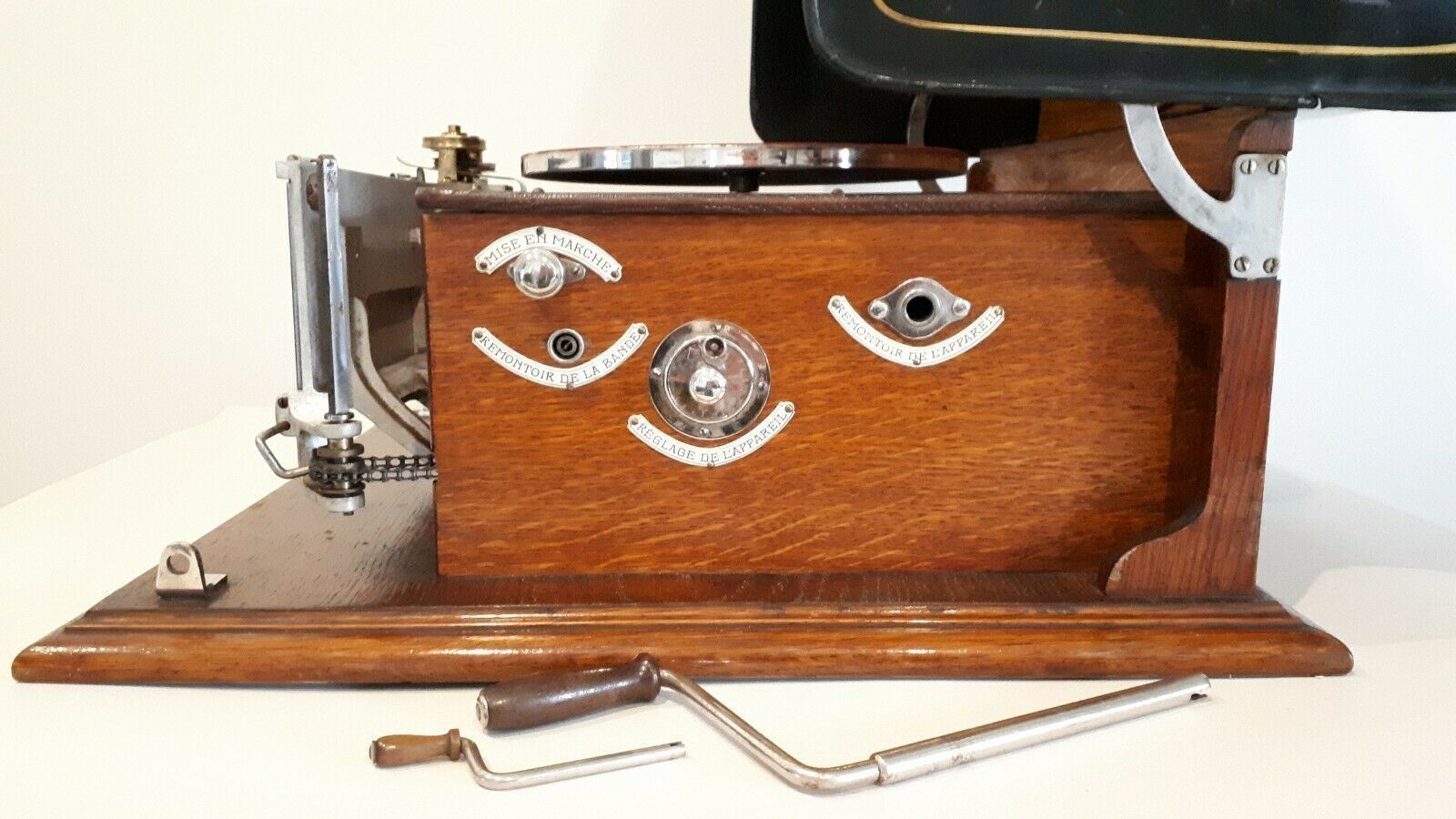
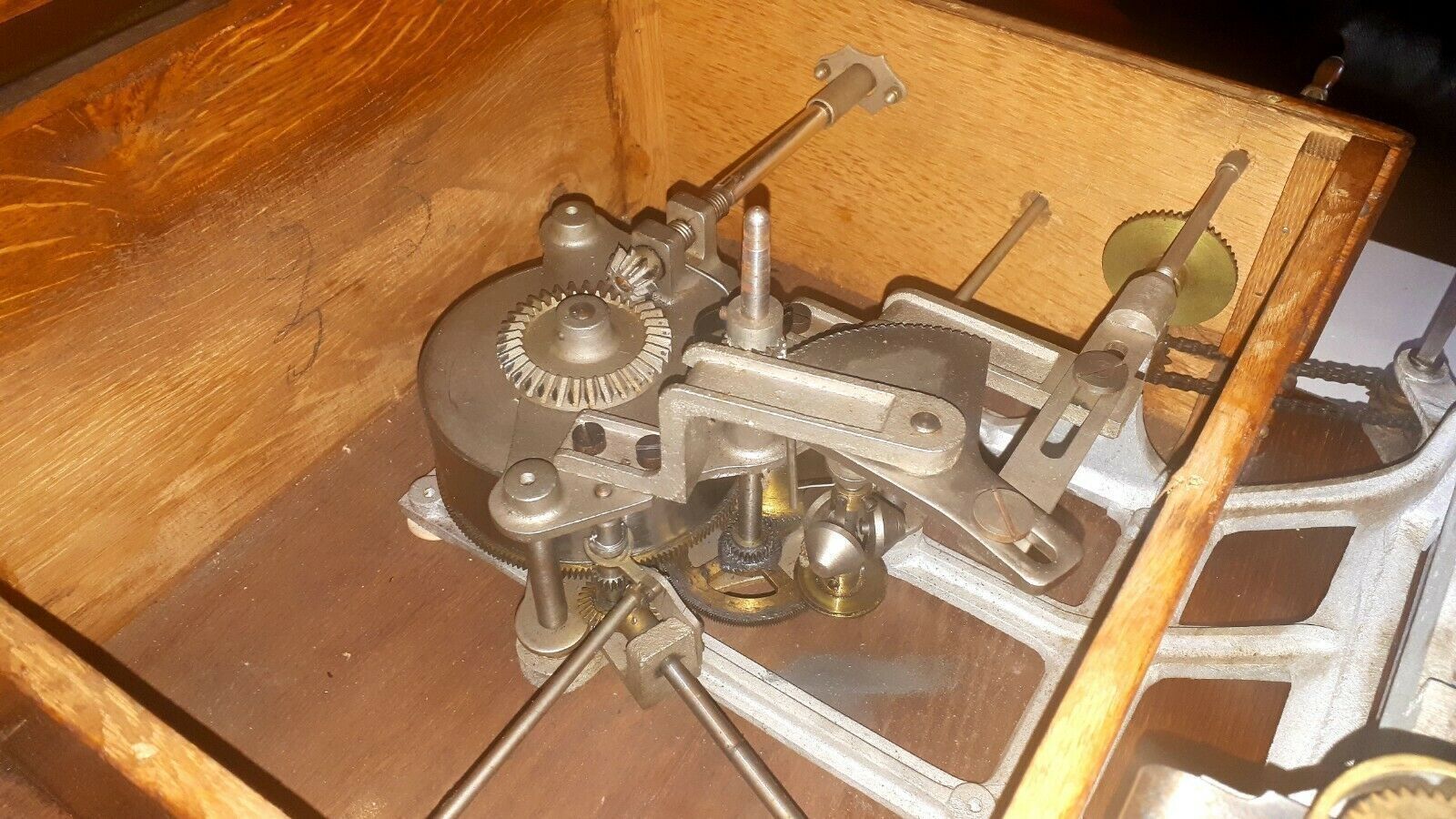
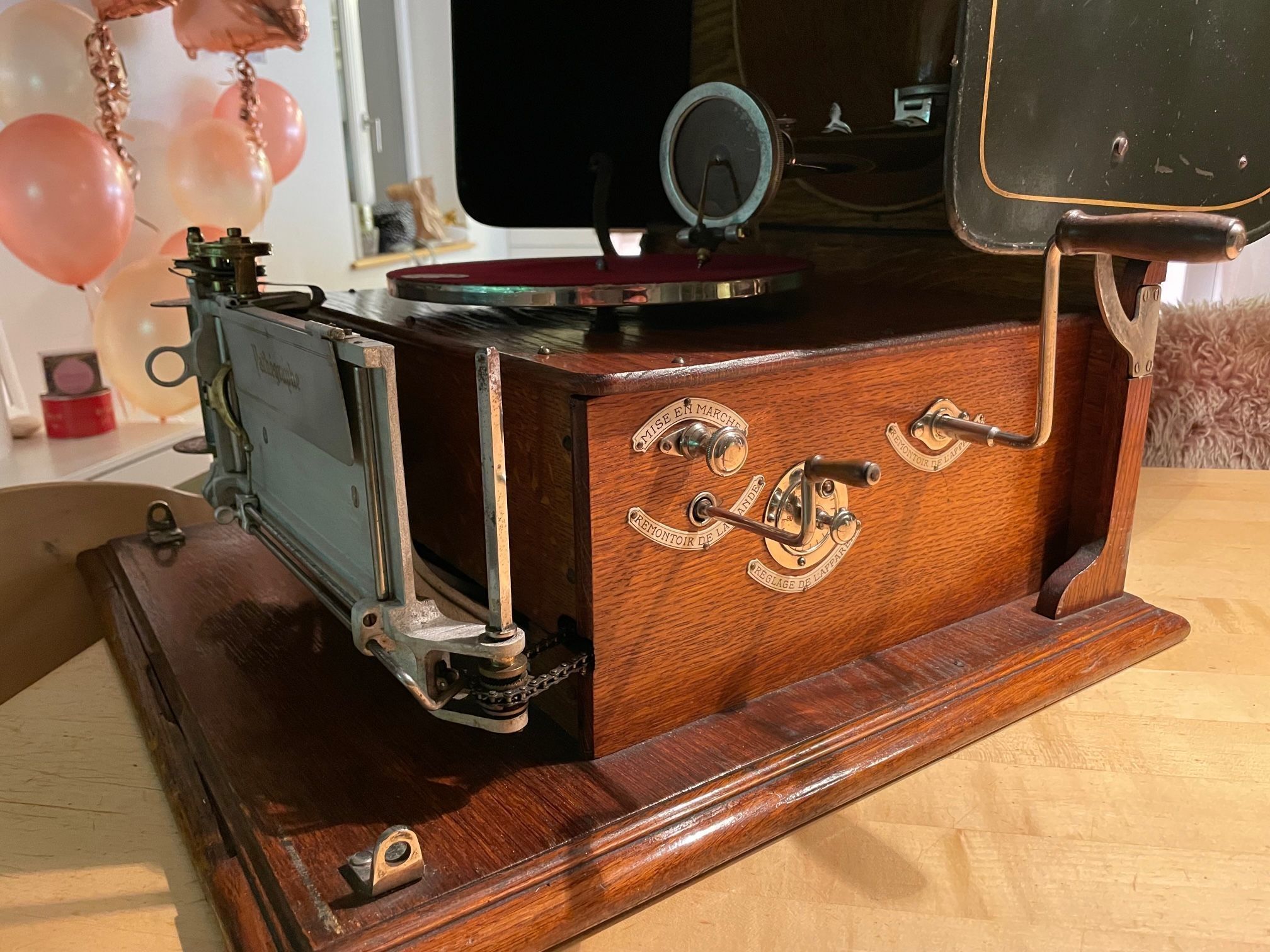
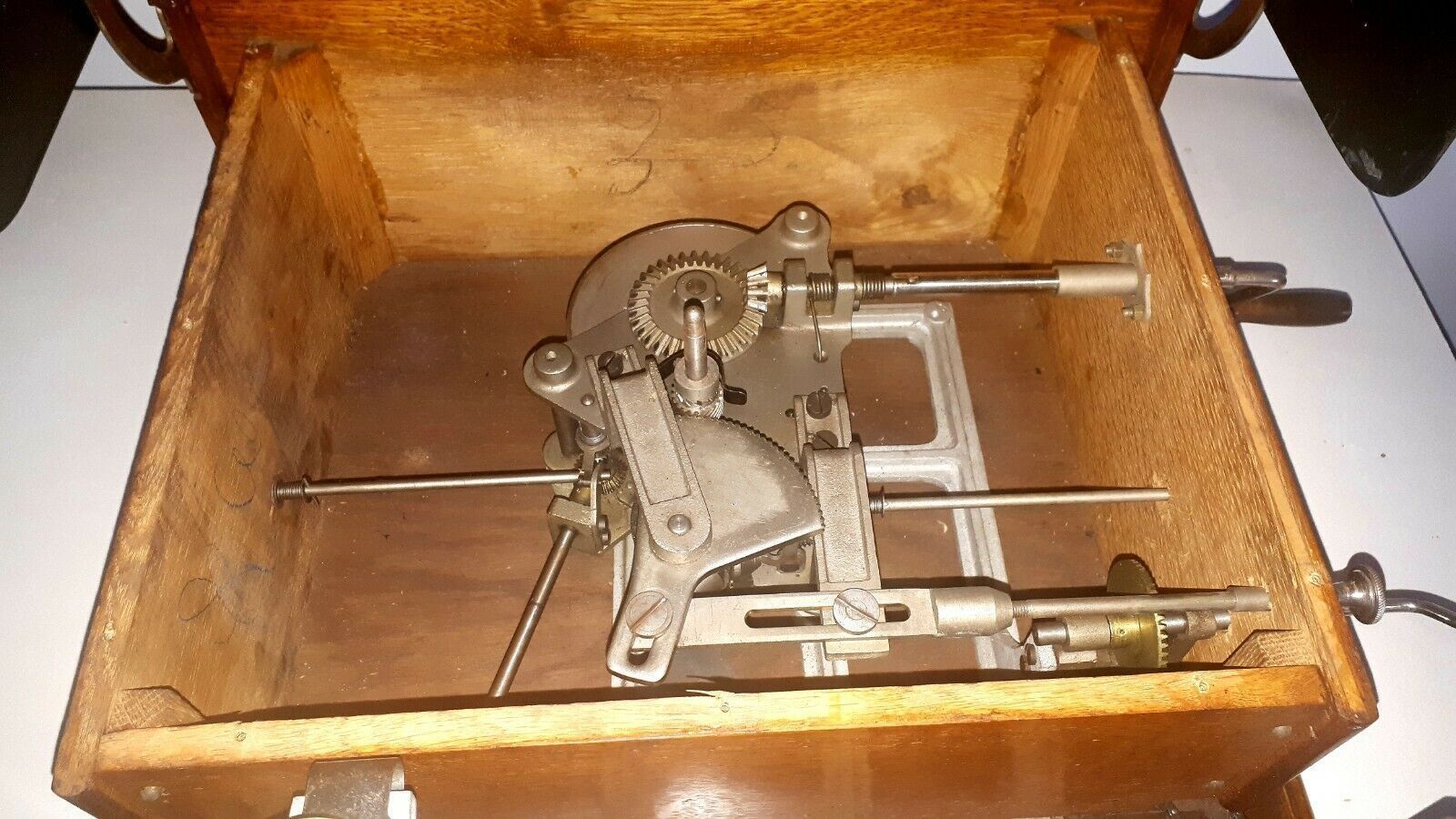
While the record – in German, Spanish or another language – played, the learner could follow the printed translation scrolling by on the paper roll. The roll was manually advanced with a small crank; the turntable was driven separately by a spring motor.
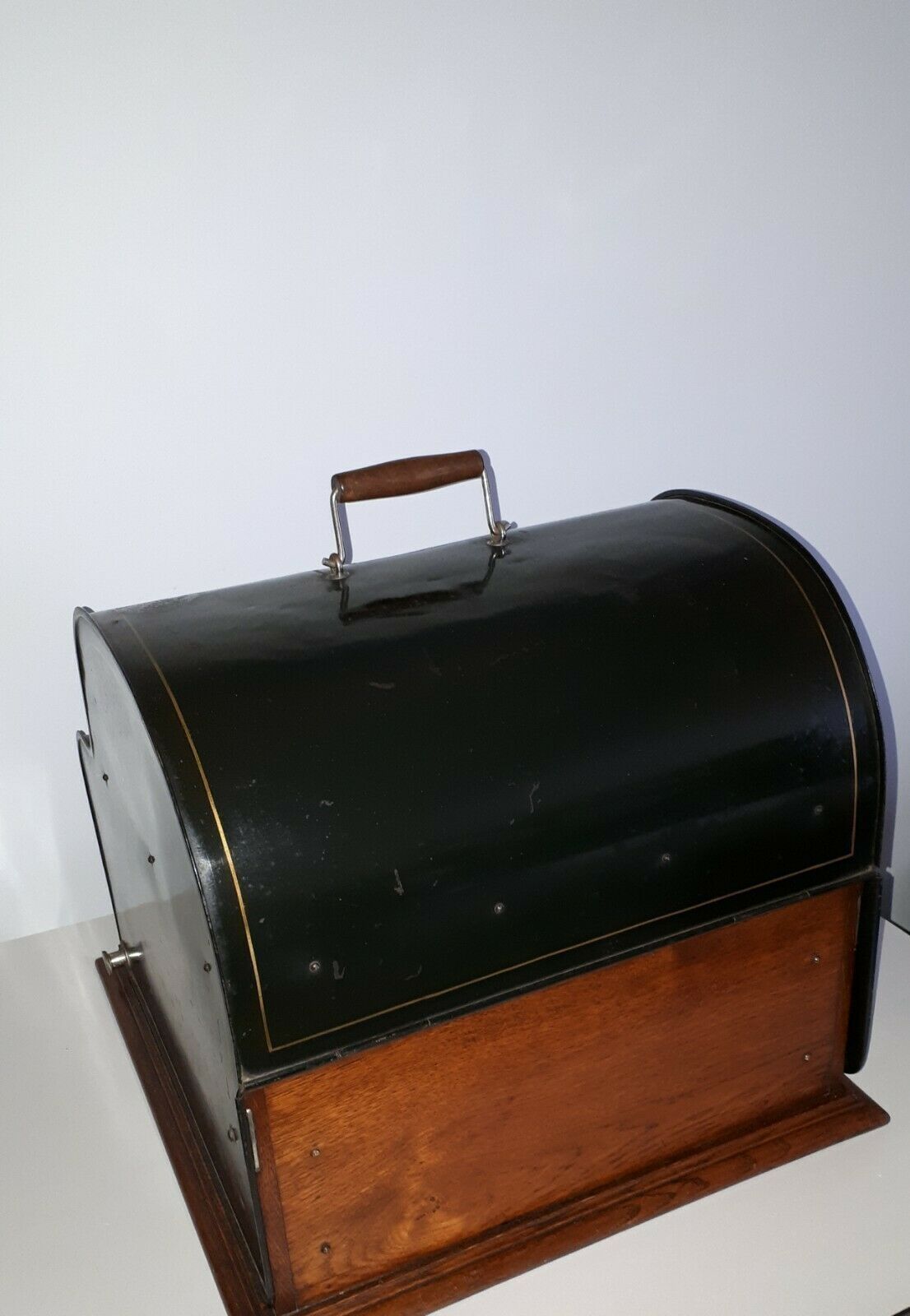
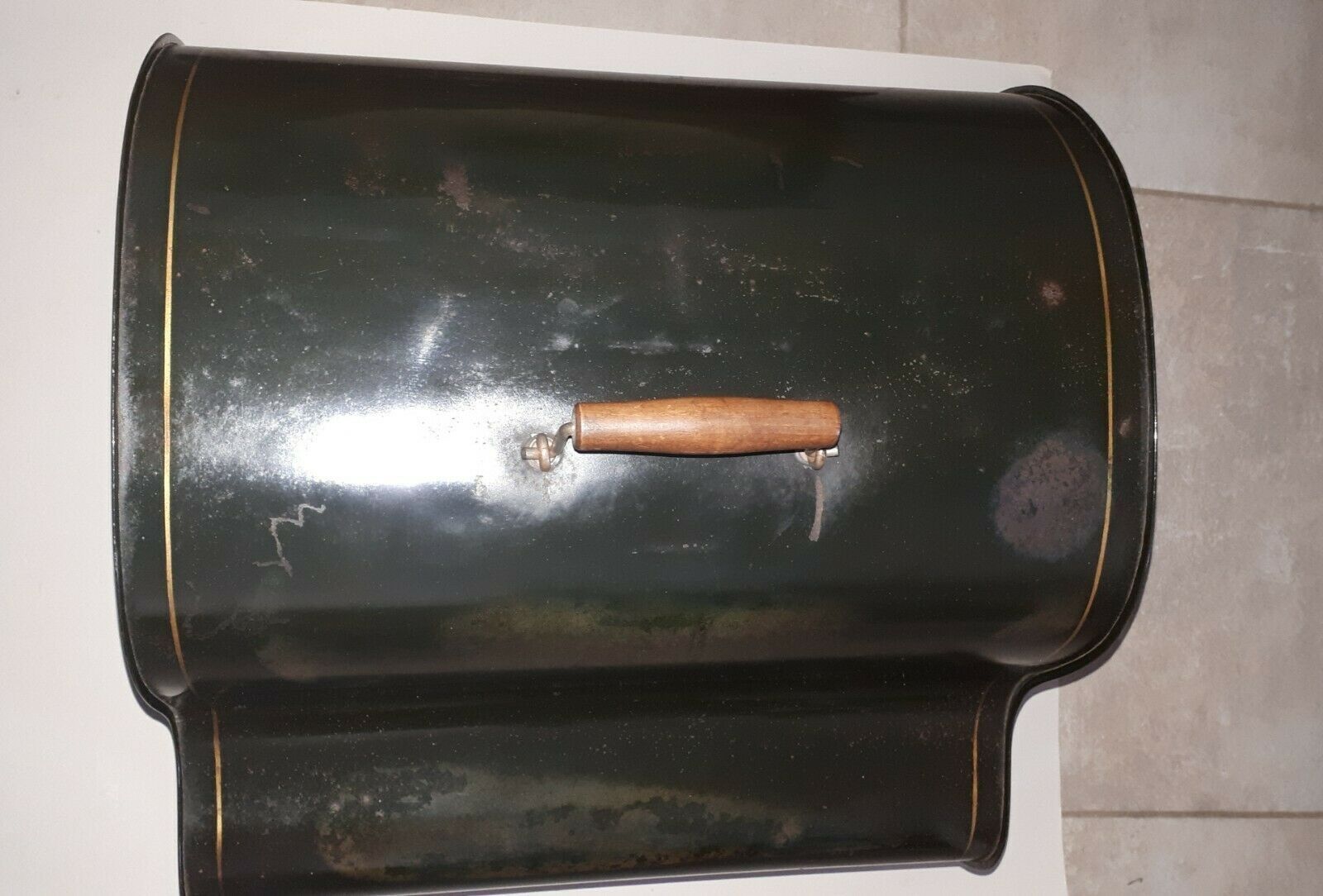
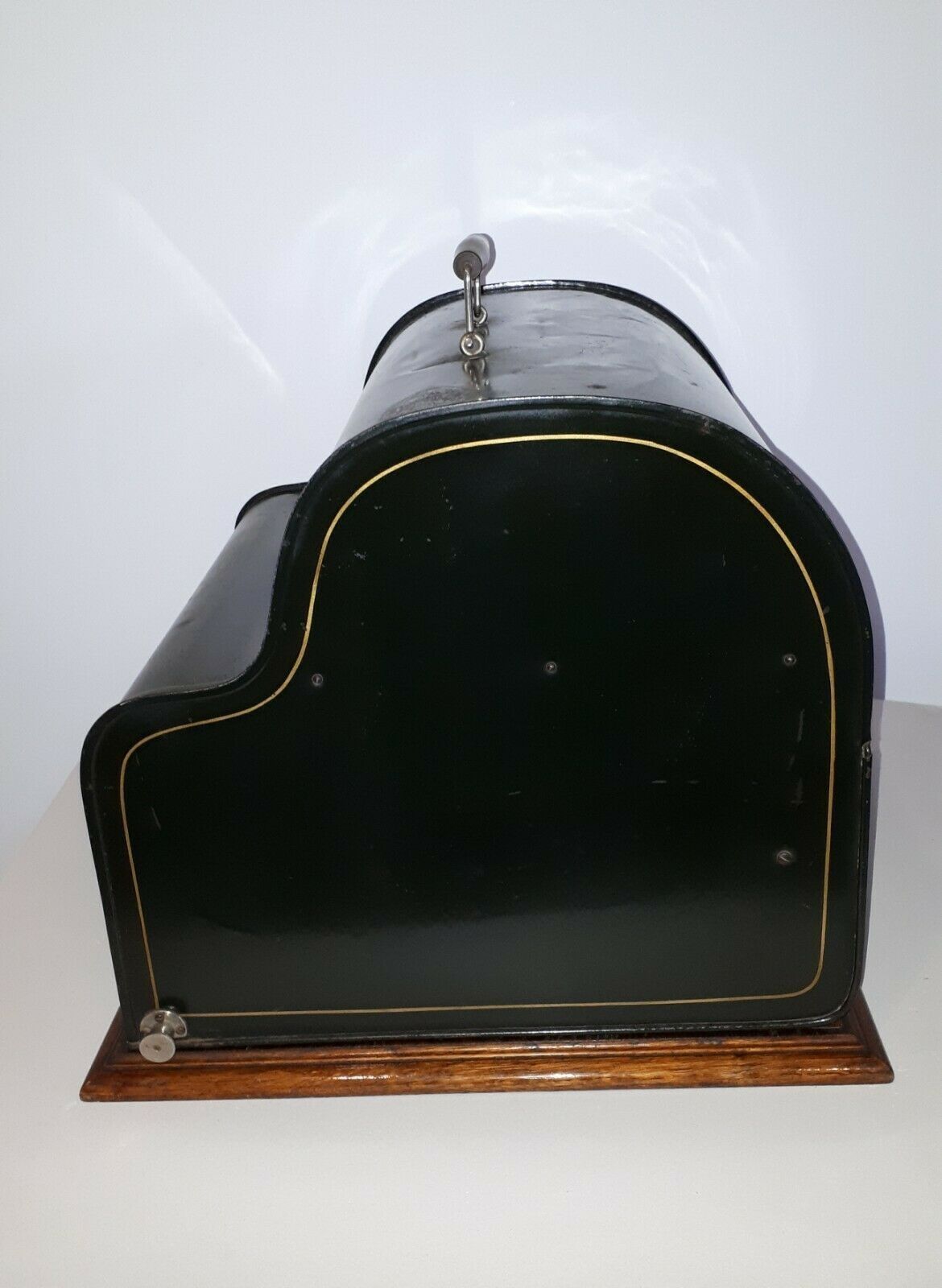
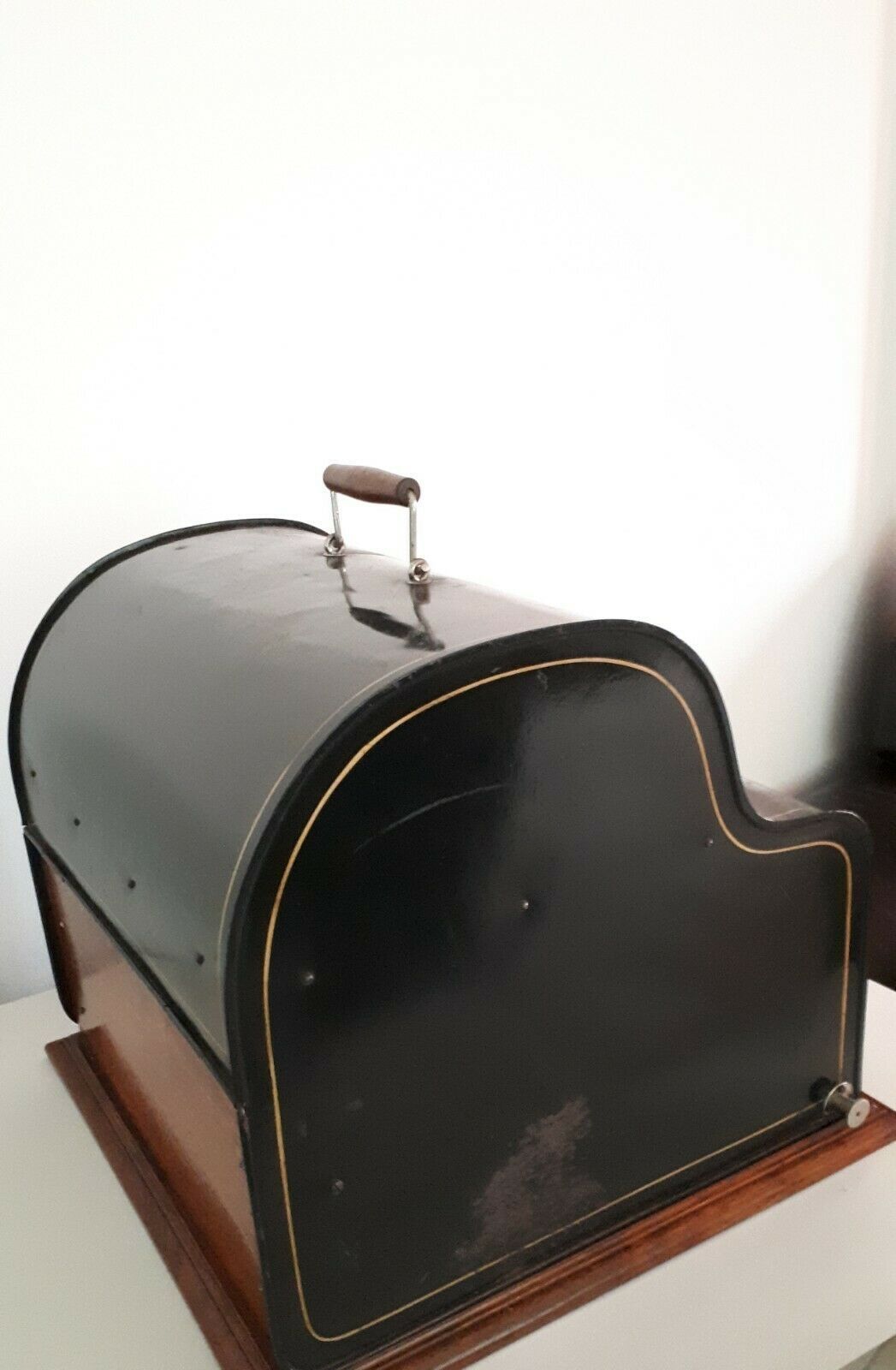
The machine used Pathé’s “Reflex” system, with the horn integrated directly into the lid – allowing for strong sound projection despite its compact design. Its appearance resembled a typewriter or school case, clearly reflecting its educational purpose.
Language and Pedagogical Scope
A basic Pathégraphe set originally included:
14 phonograph discs with spoken lessons,
26 paper rolls with translations in the learner’s native language,
A robust player with an enamelled lid and built-in horn,
A printed textbook and teaching manual (e.g., the Méthode Laudenbach).
Extended sets included up to 39 complete lessons in German, French, and Spanish. All content was spoken slowly and clearly – perfect for reading along, repeating, and practicing pronunciation.
Significance in Technology and Education
World first: This was the earliest device to combine audio and synchronized text for language instruction.
Innovation: Without any electricity, Pathé created a functional multimedia learning system – decades before tape recorders or cassettes.
Pedagogical milestone: The Pathégraphe marked the beginning of structured, audio-based language education.
A Rare and Complex Masterpiece
Despite its brilliance, the Pathégraphe was not a mass-produced item. Its mechanical complexity and high production costs limited its use to schools, language institutes, or affluent private customers. Today, only a few complete systems with accessories have survived worldwide.
The unit on display at the Edisonium Mariazell is among the best preserved – featuring original discs, paper rolls, instructional booklets, and full working mechanics in outstanding condition.