Name/Title
Early Edison Class‑E Dictation Phonograph / Table‑MountedEntry/Object ID
183Description
North American Phonograph Company, USA – ca. 1890
Serial No. 9941
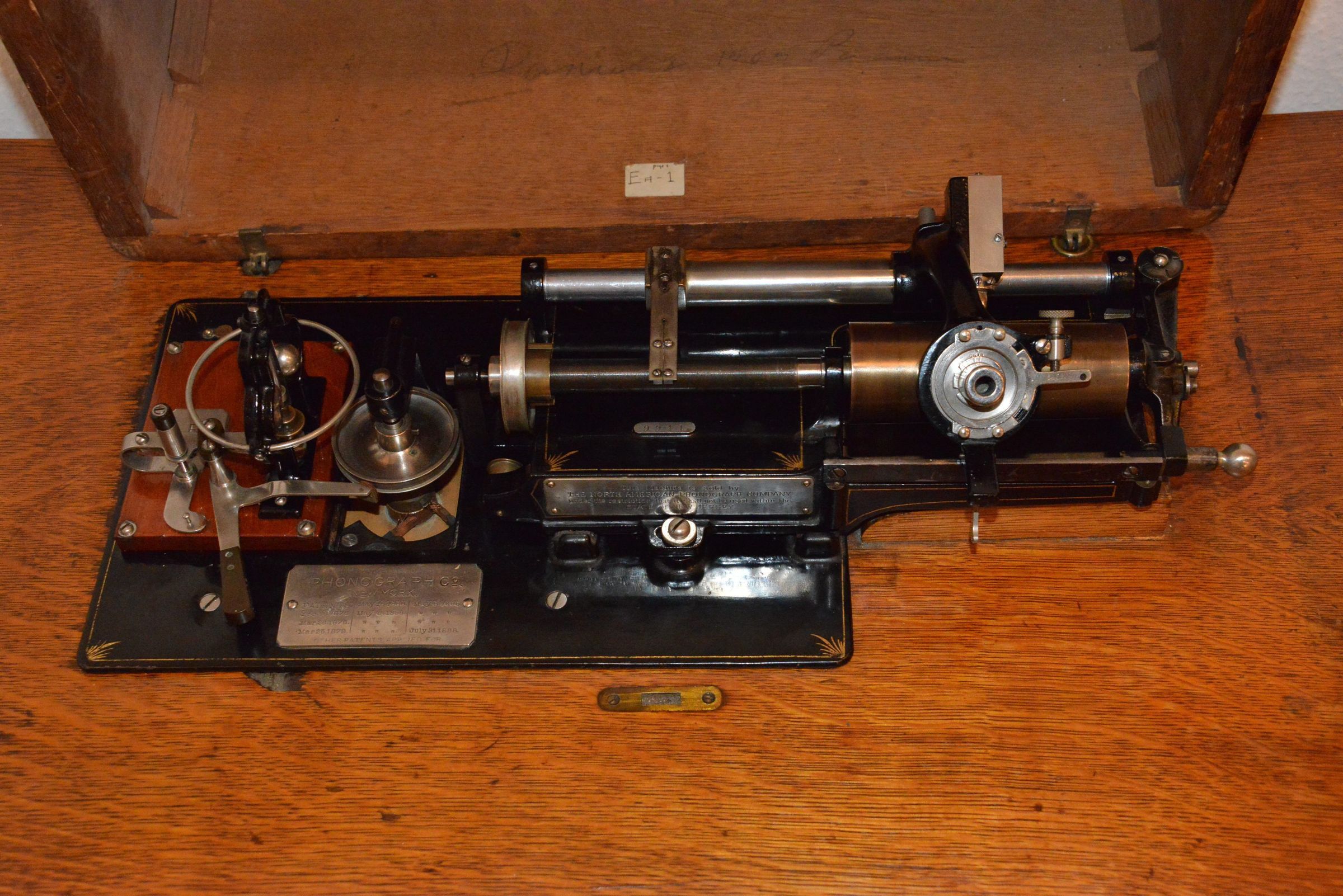
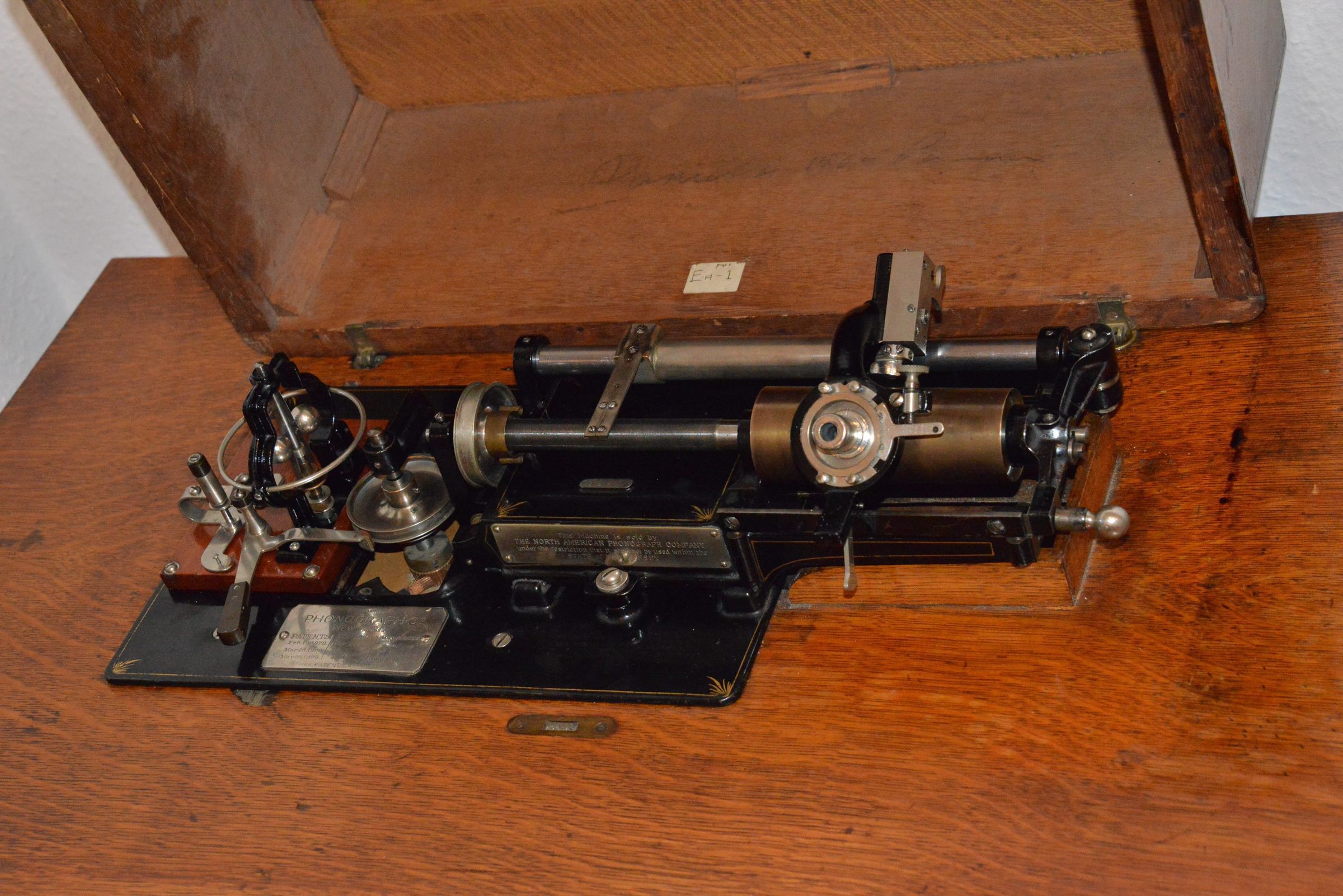
This extremely rare dictation machine is among the earliest surviving examples of commercial sound recording equipment. Only three examples are known worldwide. It comes from the transitional period when Edison’s phonographs were first adapted specifically for office and dictation use.
Technical Features:
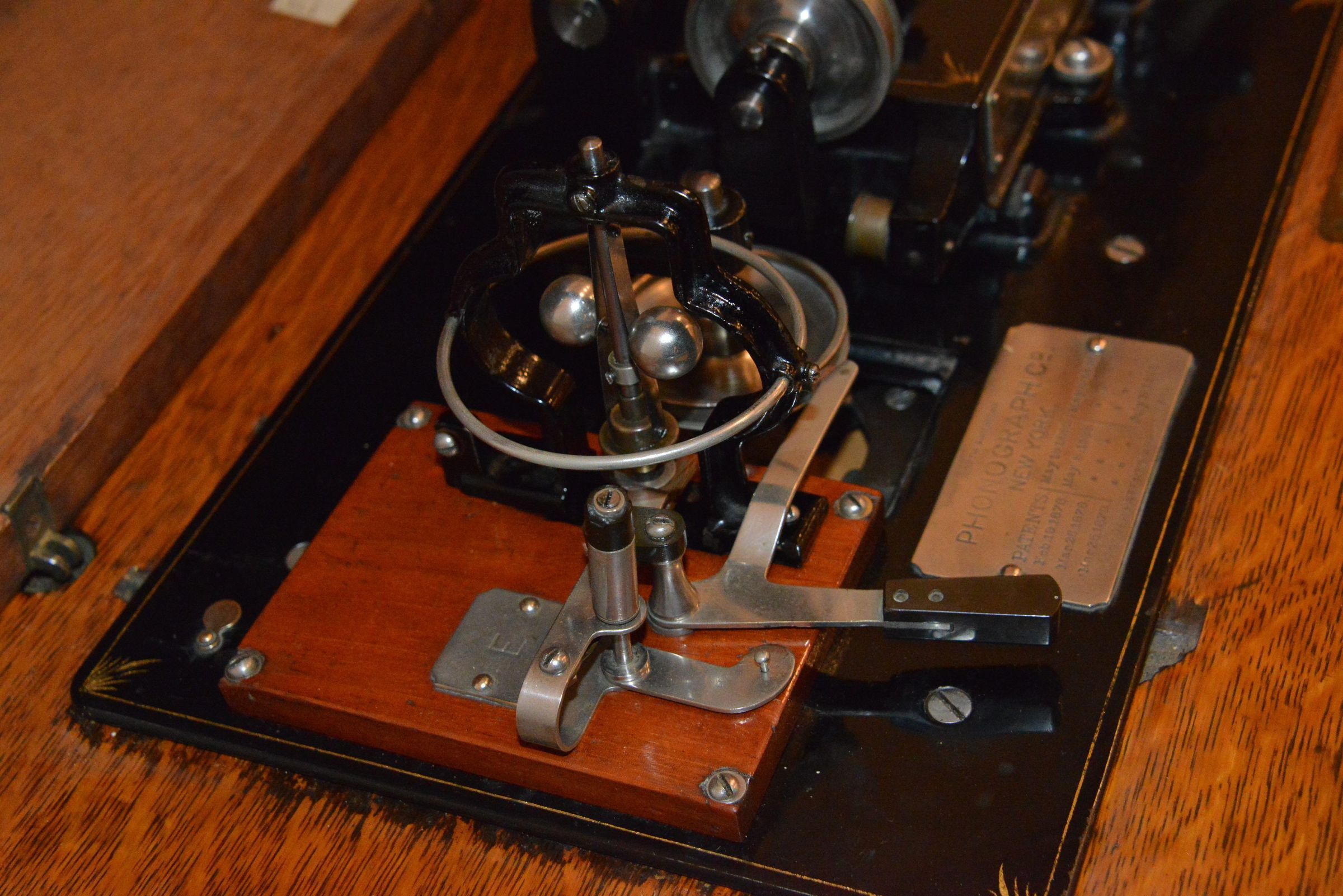
Class‑E electric motor (110‑volt DC)
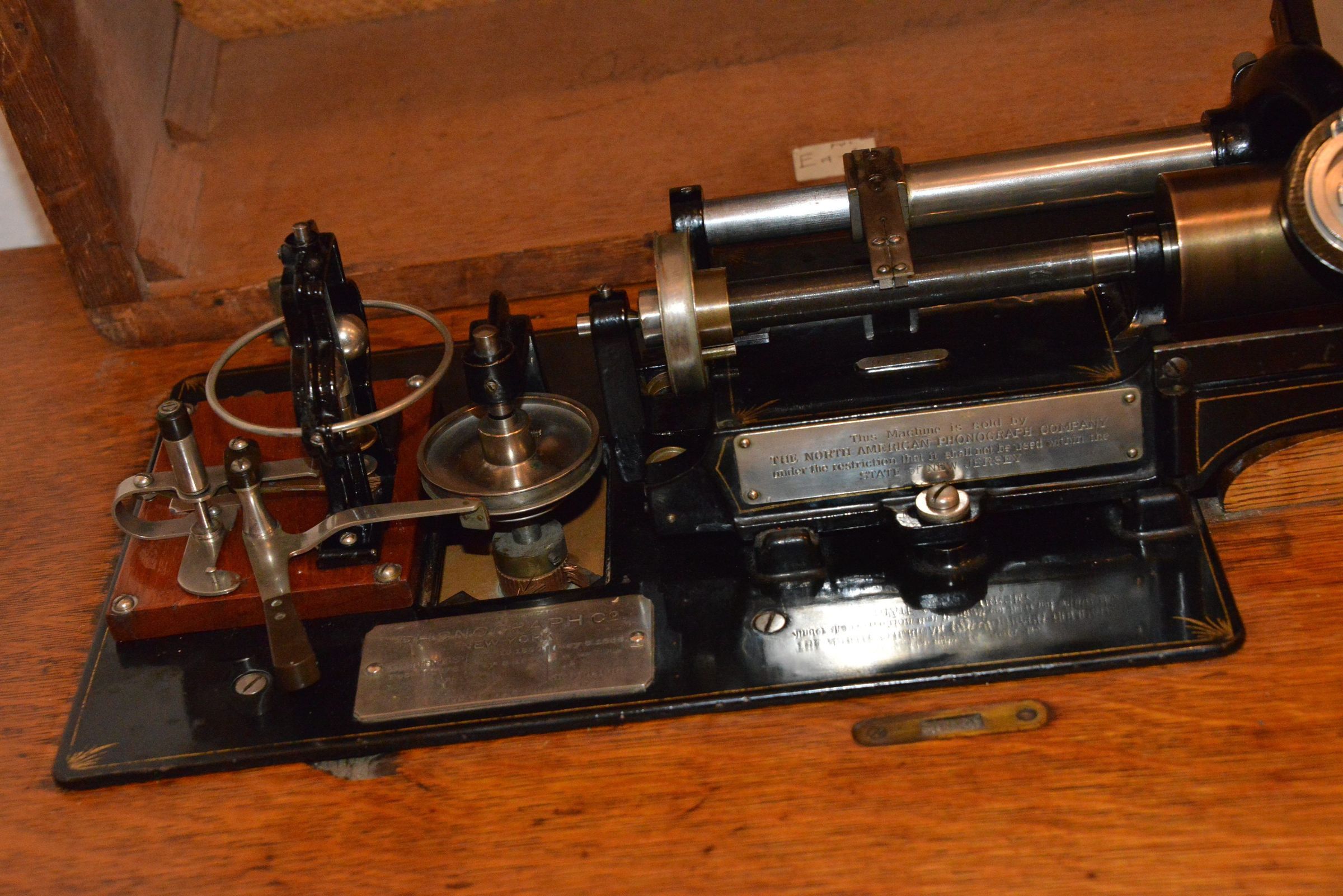
Clearly marked “Class E” on a small metal plate at the governor
Mechanically very similar to the well‑known Class‑M Phonograph, but designed for 110‑volt operation
Serial number 9941 on the main plate
Latest patent date on the plate: July 31, 1888
Cabinet and Design:
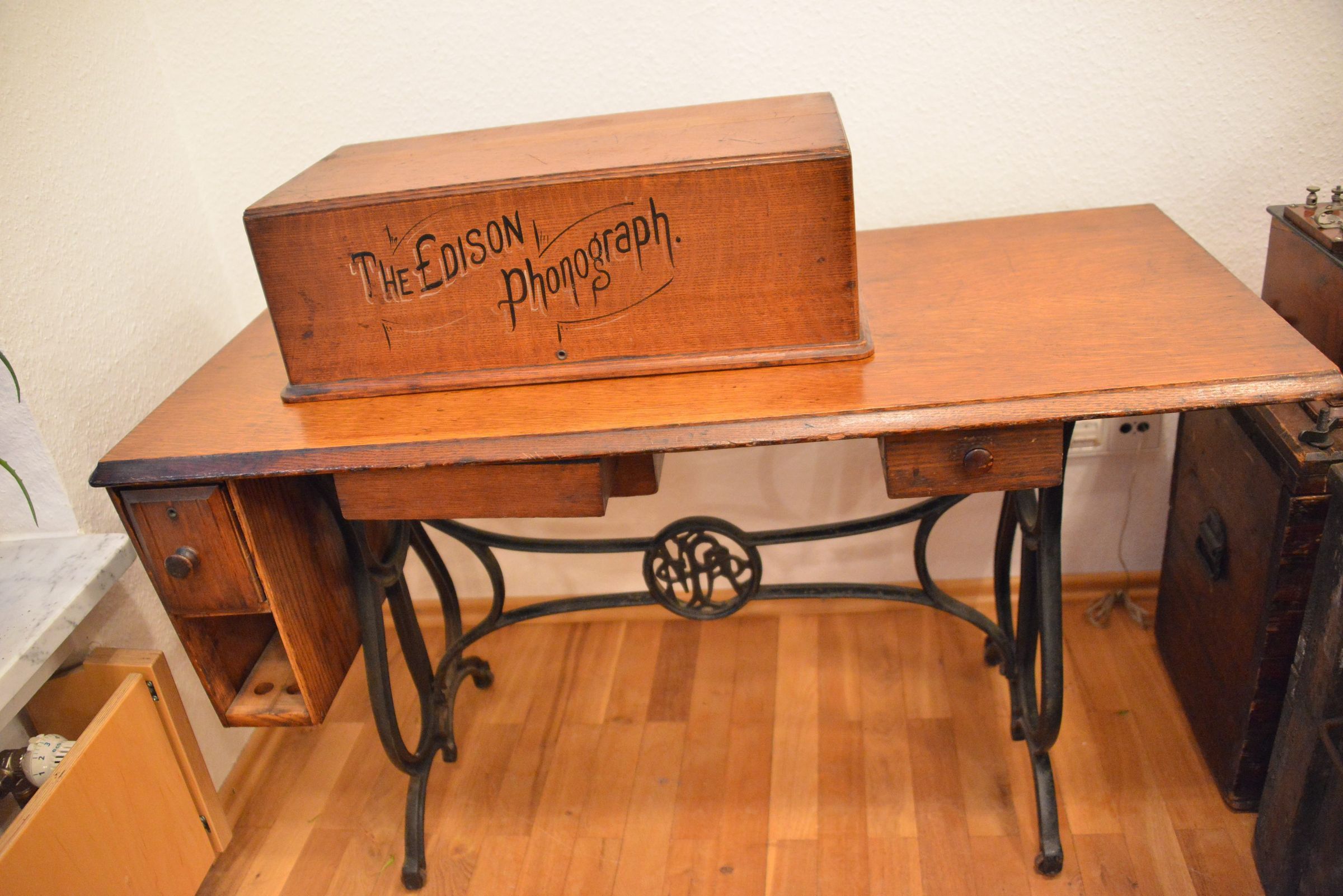
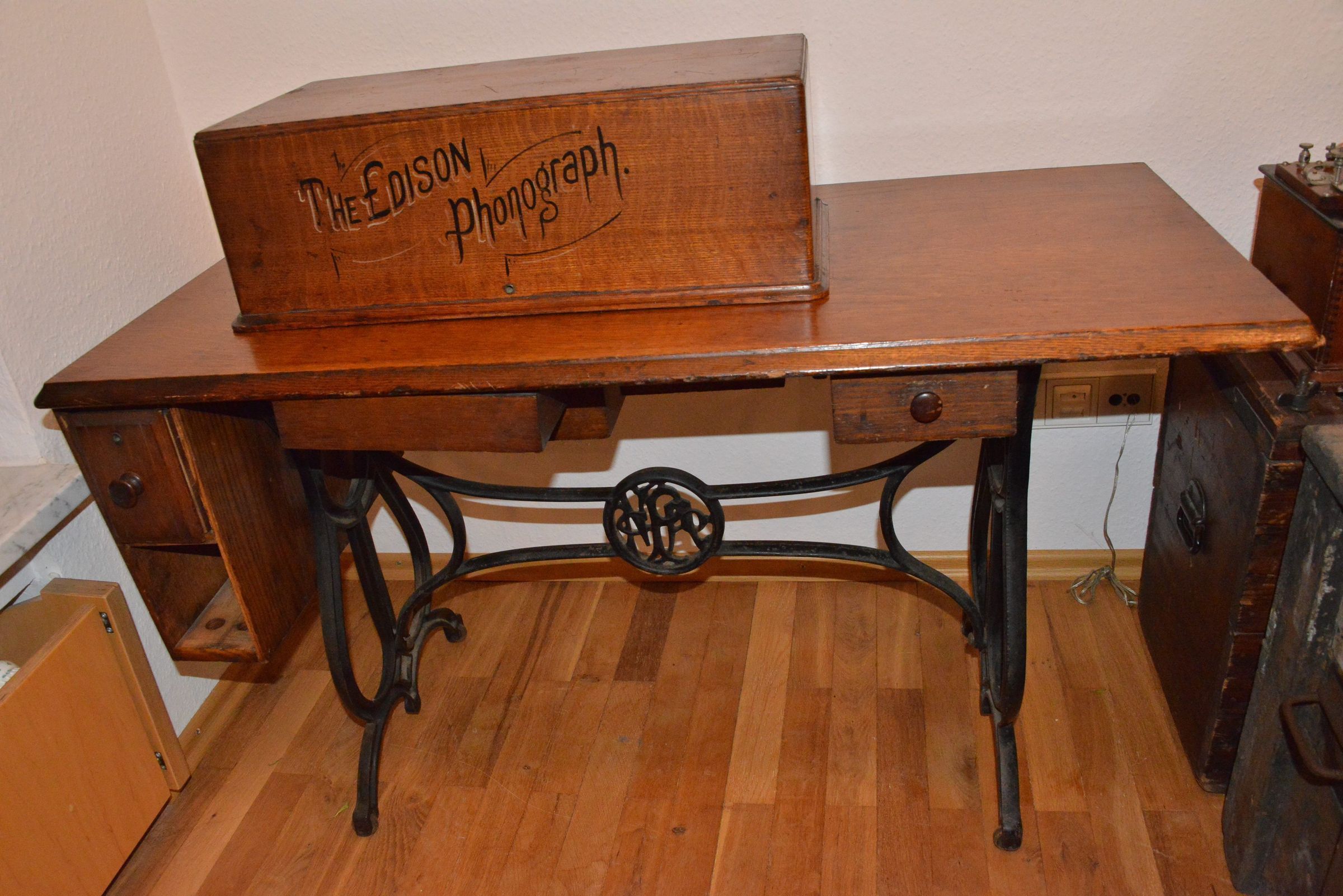
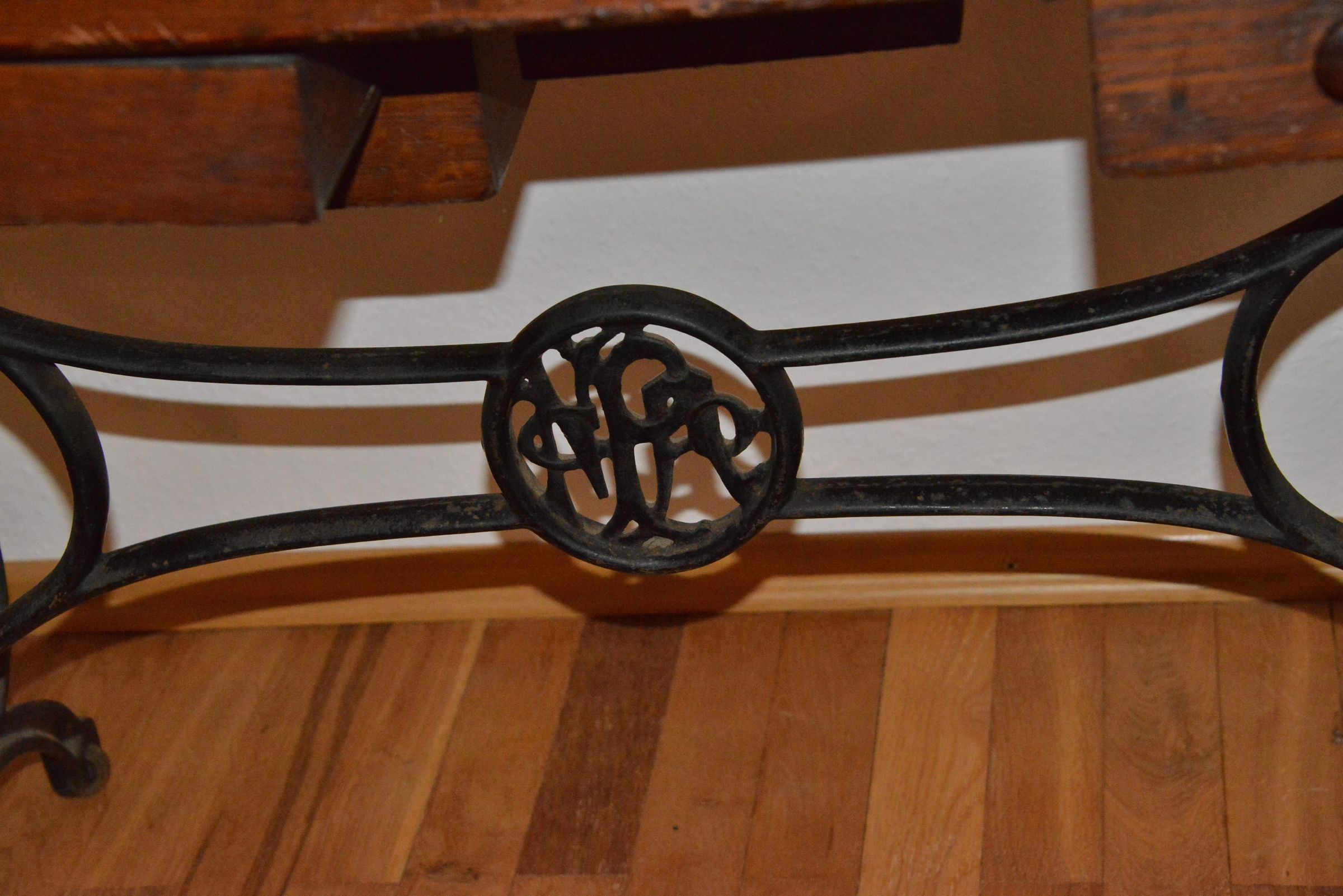
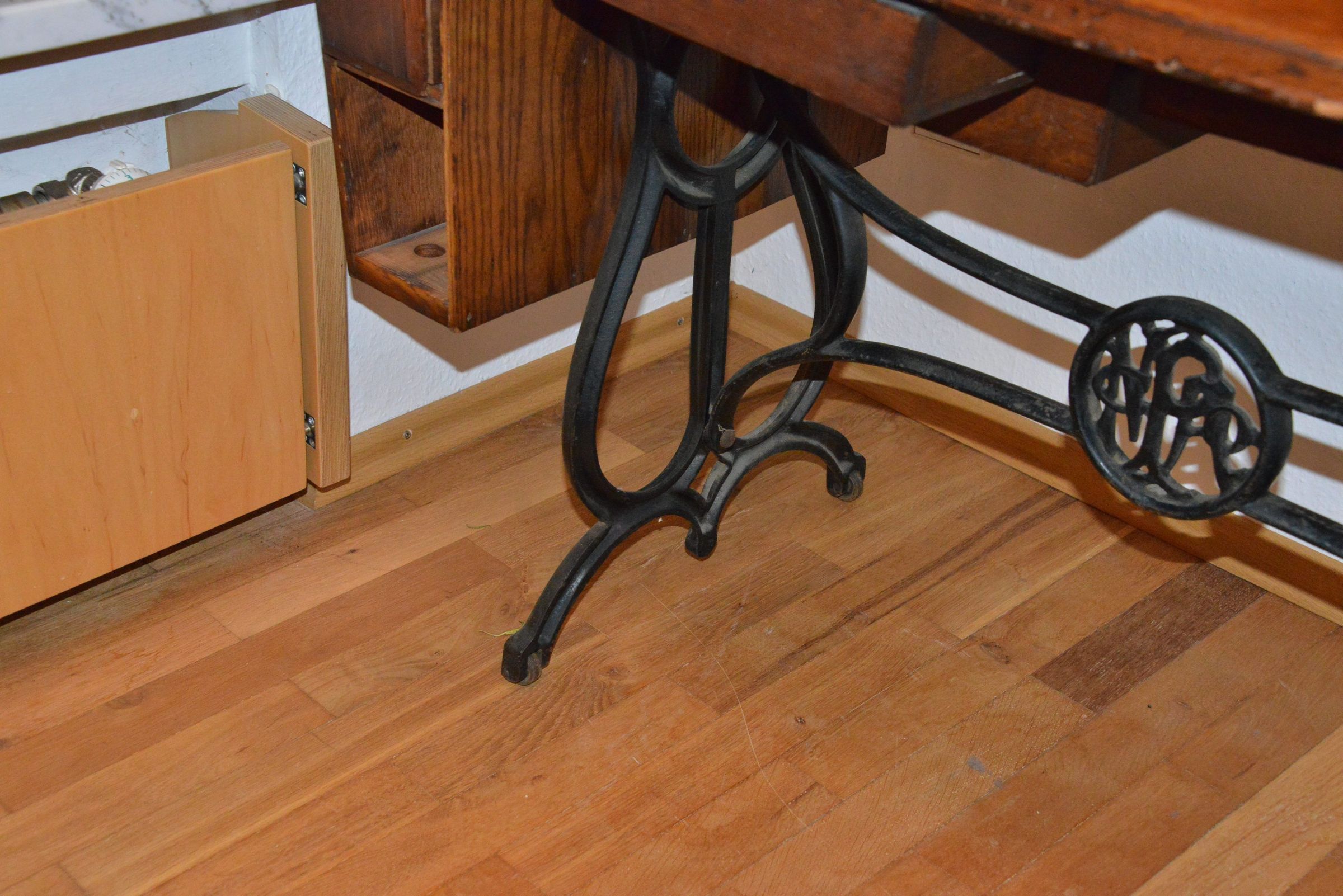
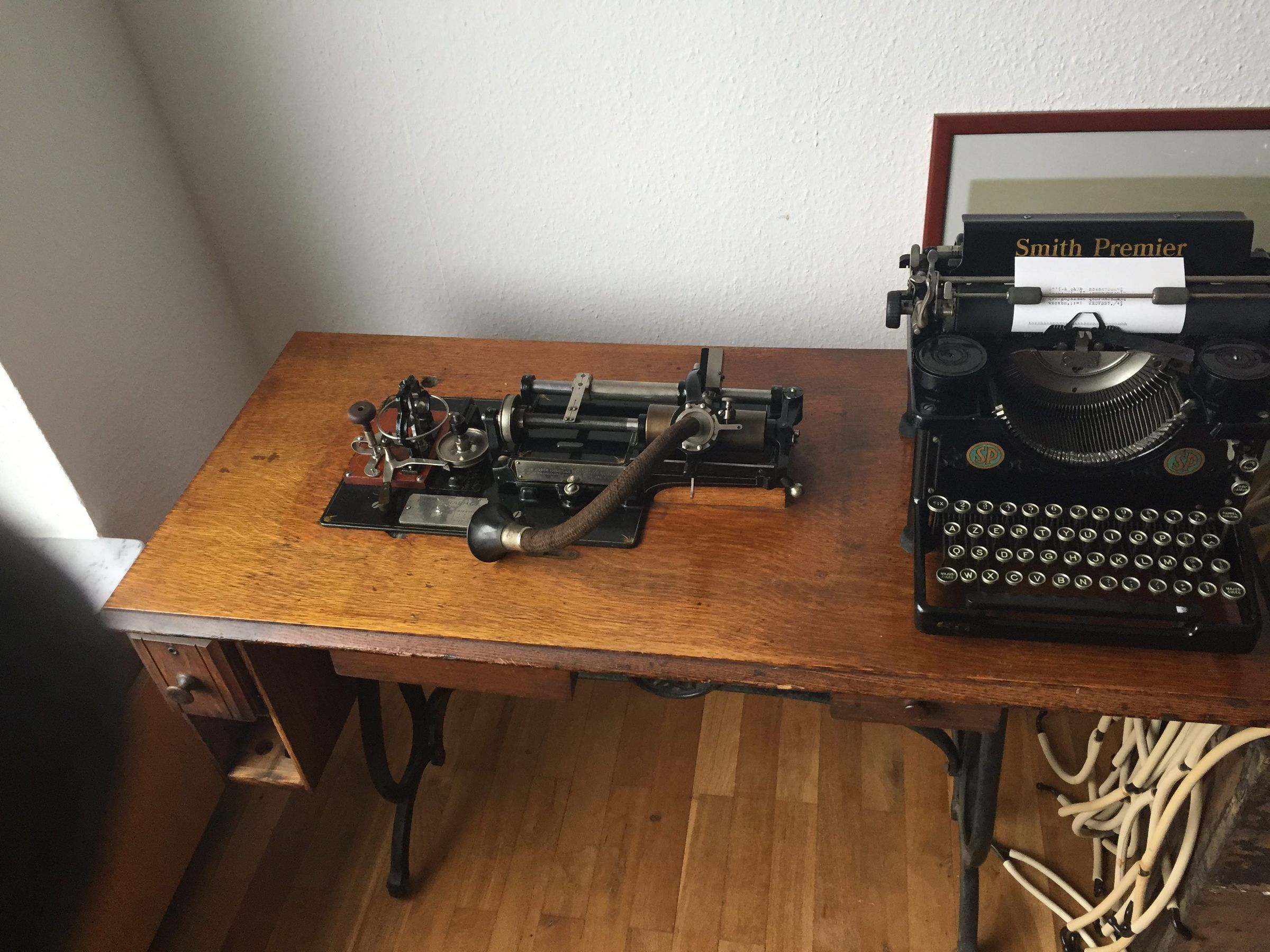
Originally mounted in a special table frame with cast‑iron legs – similar in form and style to sewing‑machine tables
Tabletop provided additional space for a typewriter (as displayed in the Edisonium)
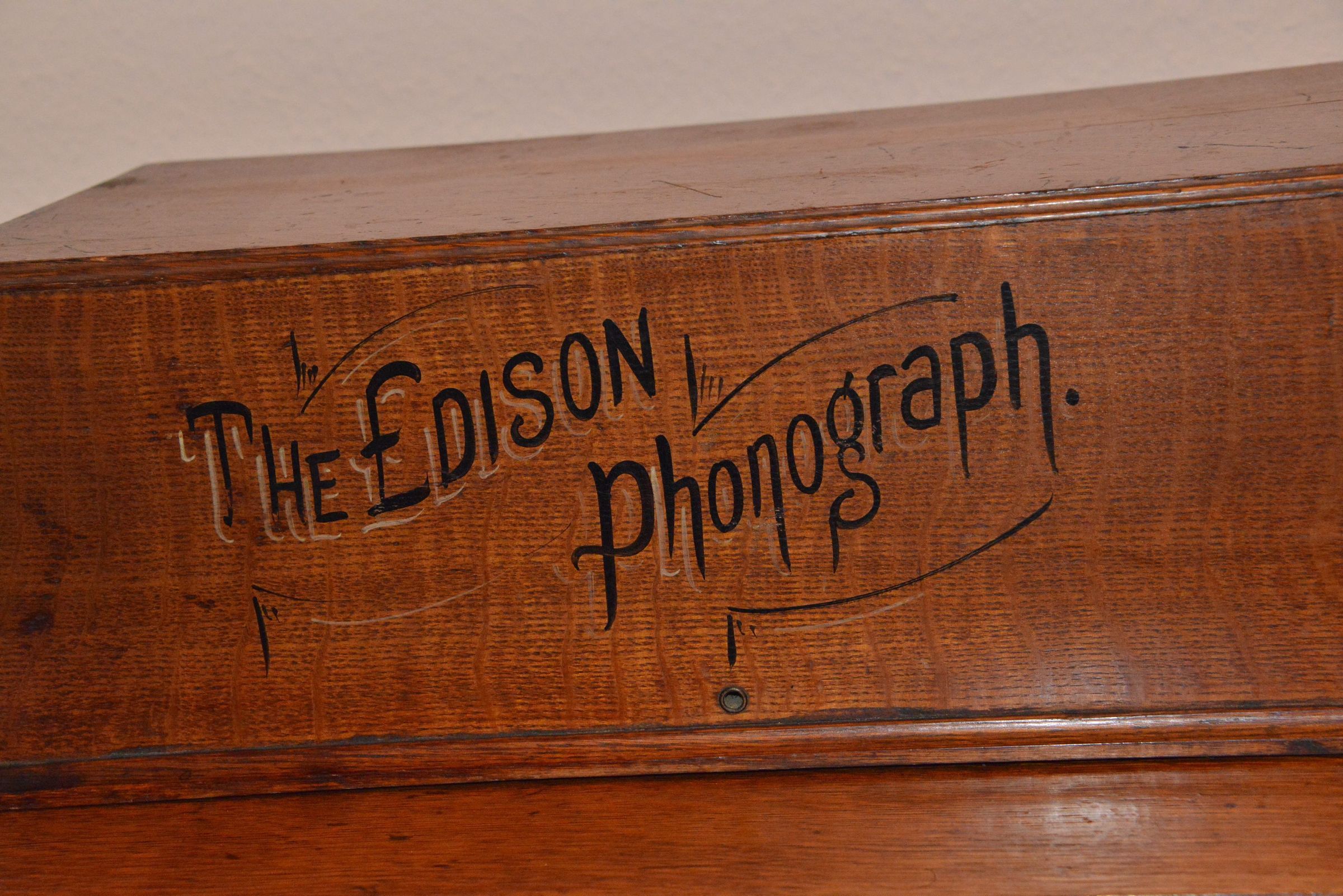
Removable wooden cover with hand‑painted lettering: “The Edison Phonograph”
Heavy‑duty mechanism with open works and nickel‑plated components
Function and Use:
Designed for recording and reproducing speech in an office environment, this early dictation machine combined electric direct drive, stable table‑mounted construction, and integrated workspace for a typewriter. It was ideal for use in law offices, administrative departments, and editorial offices.
Historical Context:
The North American Phonograph Company was founded in 1888 to market Edison’s phonographs. It distributed machines to regional licensees across the United States and sought to establish the phonograph both as an entertainment device and as a business machine. Due to financial difficulties and internal disputes, the company was liquidated by 1894. In its brief existence, it produced some of the most important and rarest phonograph models, including this Class‑E variant.
Provenance:
From the noted collection of Lawrence A. Schlick, a prominent American collector of early sound recording equipment. The machine was first documented publicly in a 1963 newspaper article.